
How to Use Optocoupler: Examples, Pinouts, and Specs
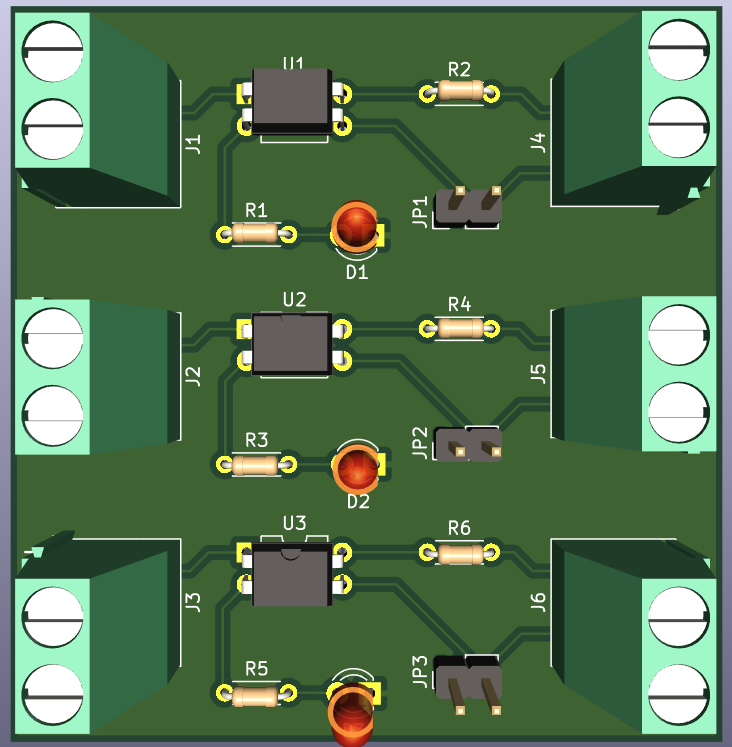
 Design with Optocoupler in Cirkit Designer
Introduction
An optocoupler, also known as an optoisolator, is an electronic component that transfers electrical signals using light waves to provide electrical isolation between its input and output. The Toth Opto CH-3 is a versatile optocoupler designed for applications requiring signal isolation, noise reduction, and protection of sensitive components from high voltages or transients.
Explore Projects Built with Optocoupler
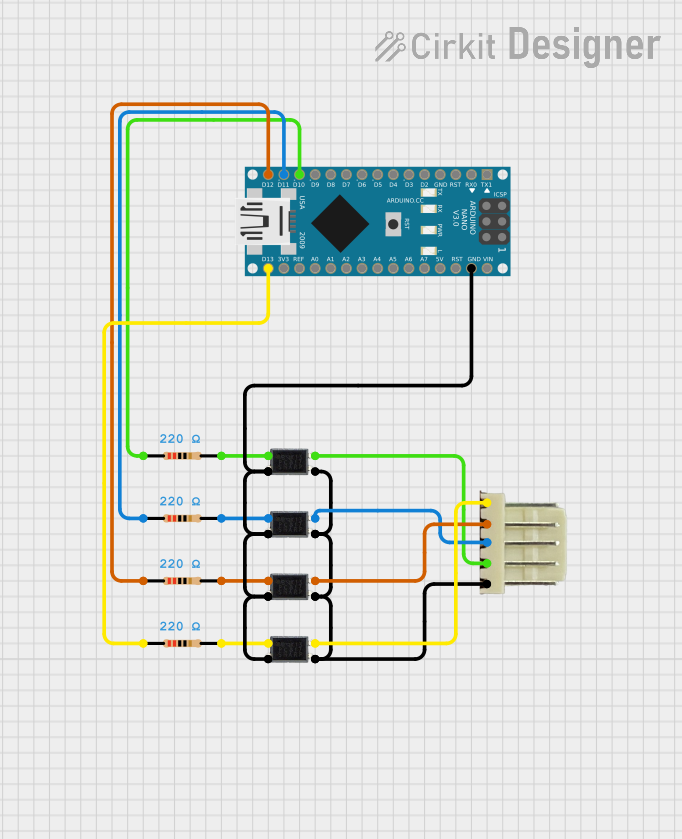 Open Project in Cirkit Designer
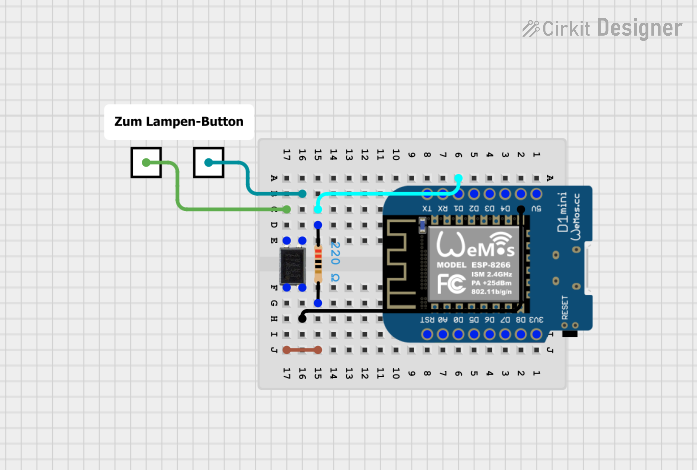 Open Project in Cirkit Designer
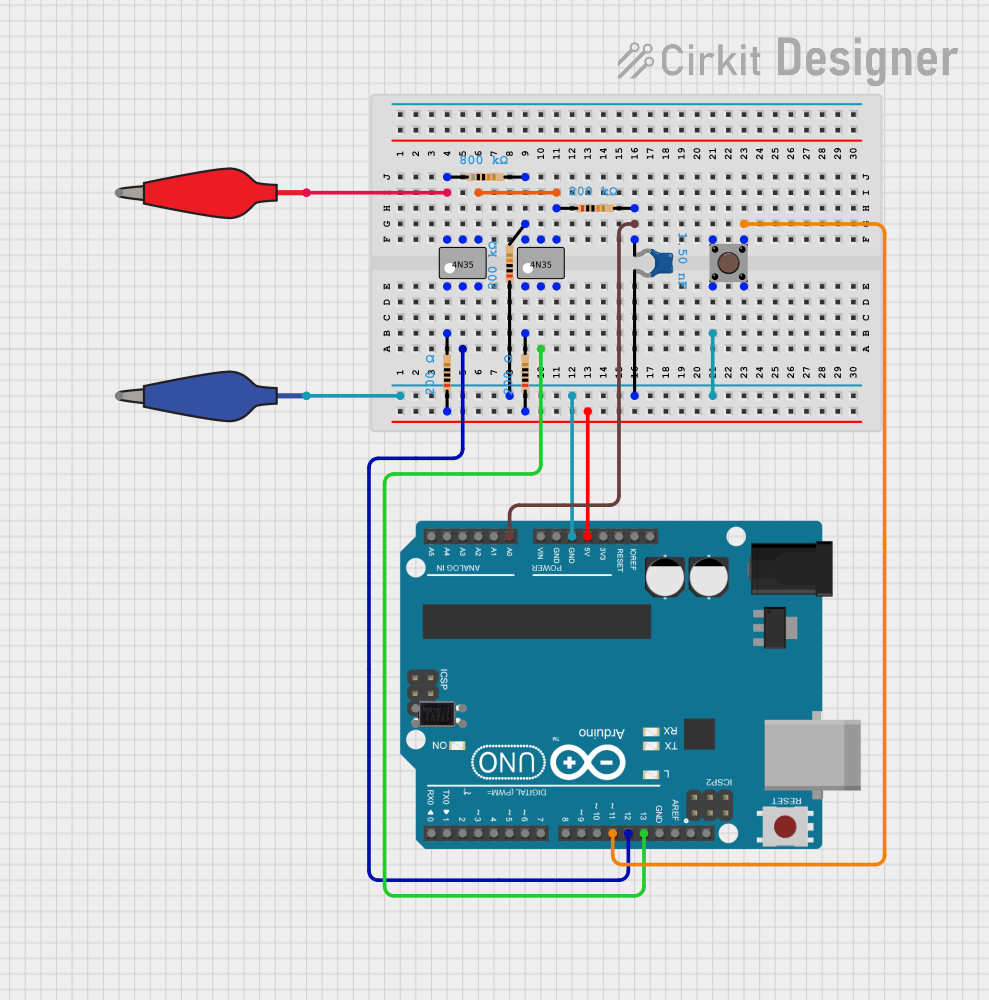 Open Project in Cirkit Designer
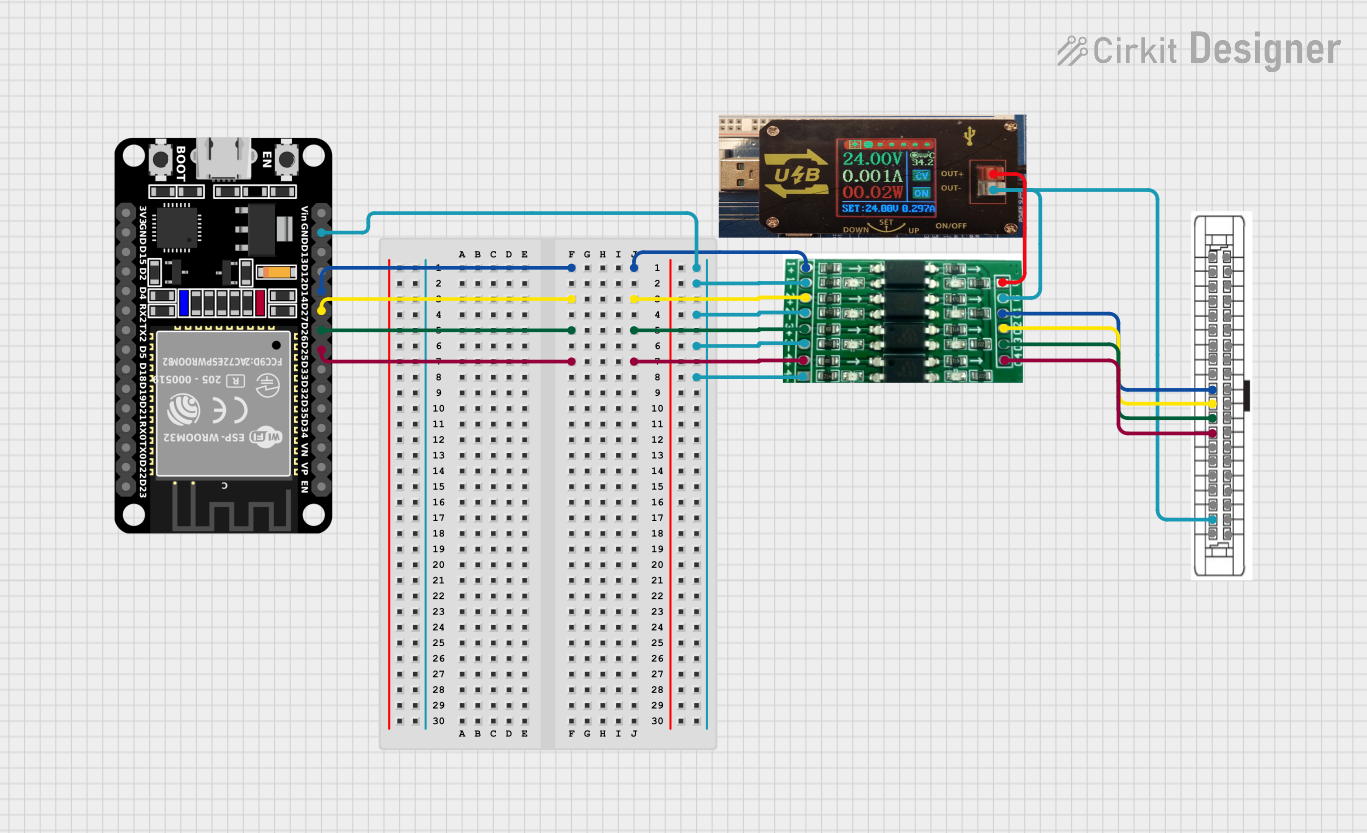 Open Project in Cirkit Designer
Explore Projects Built with Optocoupler
Open Project in Cirkit DesignerOpen Project in Cirkit DesignerOpen Project in Cirkit DesignerOpen Project in Cirkit DesignerCommon Applications and Use Cases
- Isolation between high-voltage and low-voltage circuits
- Signal transmission in noisy environments
- Microcontroller interfacing with high-power devices
- Protection of sensitive components from voltage spikes
- Industrial automation and motor control systems
Technical Specifications
The Toth Opto CH-3 optocoupler is designed for reliable performance in a wide range of applications. Below are its key technical specifications:
| Parameter | Value |
|---|---|
| Manufacturer | Toth |
| Part ID | Opto CH-3 |
| Input Forward Voltage (Vf) | 1.2V typical, 1.4V max |
| Input Forward Current (If) | 10mA typical, 20mA max |
| Output Voltage (Vce) | 70V max |
| Output Current (Ic) | 50mA max |
| Isolation Voltage | 5000Vrms |
| Response Time | 4µs typical |
| Operating Temperature | -40°C to +85°C |
| Package Type | 4-pin DIP |
Pin Configuration and Descriptions
The Toth Opto CH-3 optocoupler has a 4-pin configuration as shown below:
| Pin Number | Pin Name | Description |
|---|---|---|
| 1 | Anode | Positive terminal of the LED (input side) |
| 2 | Cathode | Negative terminal of the LED (input side) |
| 3 | Emitter | Emitter of the phototransistor (output side) |
| 4 | Collector | Collector of the phototransistor (output side) |
Usage Instructions
To use the Toth Opto CH-3 optocoupler in a circuit, follow these steps:
Connect the Input Side (LED):
- Connect the anode (Pin 1) to the positive side of the input signal through a current-limiting resistor.
- Connect the cathode (Pin 2) to the ground of the input circuit.
Connect the Output Side (Phototransistor):
- Connect the collector (Pin 4) to the positive voltage supply of the output circuit through a pull-up resistor.
- Connect the emitter (Pin 3) to the ground of the output circuit.
Choose a Suitable Resistor:
- Calculate the current-limiting resistor for the LED using the formula: [ R = \frac{V_{in} - V_f}{I_f} ] where (V_{in}) is the input voltage, (V_f) is the forward voltage of the LED, and (I_f) is the desired forward current.
Verify Isolation:
- Ensure that the input and output circuits share no direct electrical connection to maintain isolation.
Example: Interfacing with an Arduino UNO
Below is an example of how to use the Toth Opto CH-3 optocoupler to interface a 5V Arduino UNO with a 12V relay module:
Circuit Diagram
- Connect the Arduino digital pin (e.g., D2) to the anode (Pin 1) of the optocoupler through a 220Ω resistor.
- Connect the cathode (Pin 2) to the Arduino ground (GND).
- Connect the collector (Pin 4) to the 12V relay module input.
- Connect the emitter (Pin 3) to the ground of the 12V power supply.
Arduino Code
// Example code to control a relay using the Toth Opto CH-3 optocoupler

const int relayPin = 2; // Arduino pin connected to the optocoupler input

void setup() {
  pinMode(relayPin, OUTPUT); // Set relayPin as an output
}

void loop() {
  digitalWrite(relayPin, HIGH); // Turn on the relay
  delay(1000);                  // Wait for 1 second
  digitalWrite(relayPin, LOW);  // Turn off the relay
  delay(1000);                  // Wait for 1 second
}
Important Considerations and Best Practices
- Always use a current-limiting resistor on the input side to prevent damage to the LED.
- Ensure the pull-up resistor on the output side is appropriately sized for the application.
- Verify the isolation voltage rating to ensure it meets the requirements of your circuit.
- Avoid exceeding the maximum ratings for voltage, current, and temperature to prevent damage.
Troubleshooting and FAQs
Common Issues and Solutions
LED Not Lighting Up:
- Check the polarity of the LED connections (anode and cathode).
- Verify the current-limiting resistor value and ensure sufficient input voltage.
No Output Signal:
- Ensure the pull-up resistor is connected on the output side.
- Verify that the input signal is within the specified voltage and current range.
Signal Distortion or Delay:
- Check the response time of the optocoupler and ensure it is suitable for your application.
- Minimize noise in the circuit by using proper grounding and shielding techniques.
Loss of Isolation:
- Ensure there is no direct electrical connection between the input and output circuits.
- Verify the isolation voltage rating and avoid exceeding it.
FAQs
Q: Can the Toth Opto CH-3 handle AC signals?
A: Yes, the optocoupler can handle AC signals on the input side, but you may need to use a rectifier circuit to ensure proper operation.
Q: What is the maximum switching speed of the Toth Opto CH-3?
A: The typical response time is 4µs, making it suitable for most low- to medium-speed applications.
Q: Can I use the Toth Opto CH-3 for PWM signals?
A: Yes, the optocoupler can handle PWM signals, but ensure the frequency is within the component's response time limits.
Q: How do I calculate the pull-up resistor value?
A: The pull-up resistor value depends on the output voltage and desired current. A typical value is 10kΩ for most applications.