
How to Use ir sensor : Examples, Pinouts, and Specs
 Design with ir sensor in Cirkit Designer
Introduction
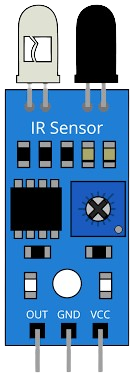
An infrared (IR) sensor detects infrared radiation, which is invisible to the human eye but can be emitted by objects as heat or transmitted by IR LEDs. IR sensors are widely used in various applications, including proximity sensing, motion detection, and remote control systems. These sensors are versatile, cost-effective, and easy to integrate into electronic circuits, making them a popular choice for hobbyists and professionals alike.
Common applications of IR sensors include:
- Obstacle detection in robotics
- Line-following robots
- Motion detection for security systems
- Remote control signal reception
- Automatic door systems
Explore Projects Built with ir sensor
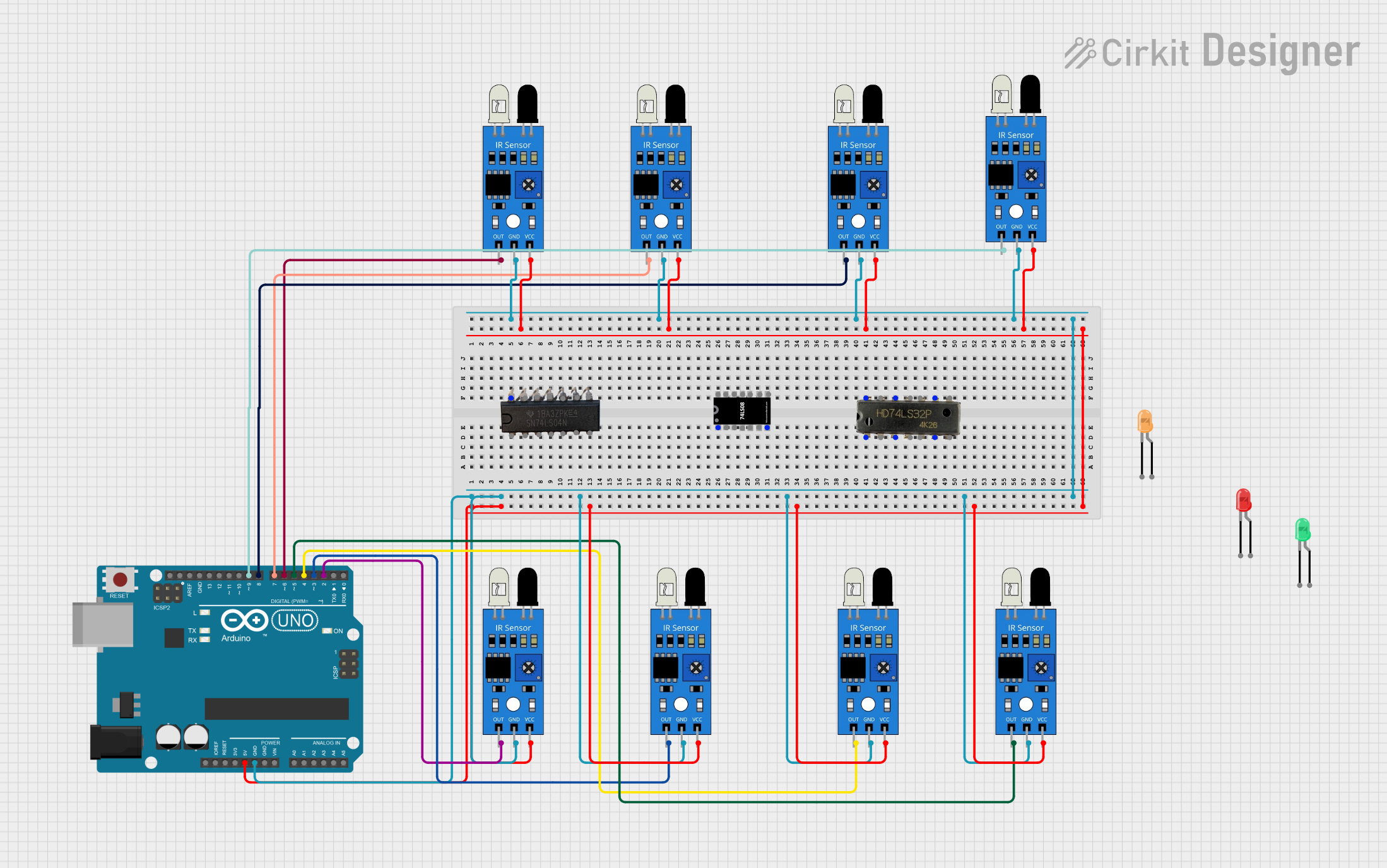 Open Project in Cirkit Designer
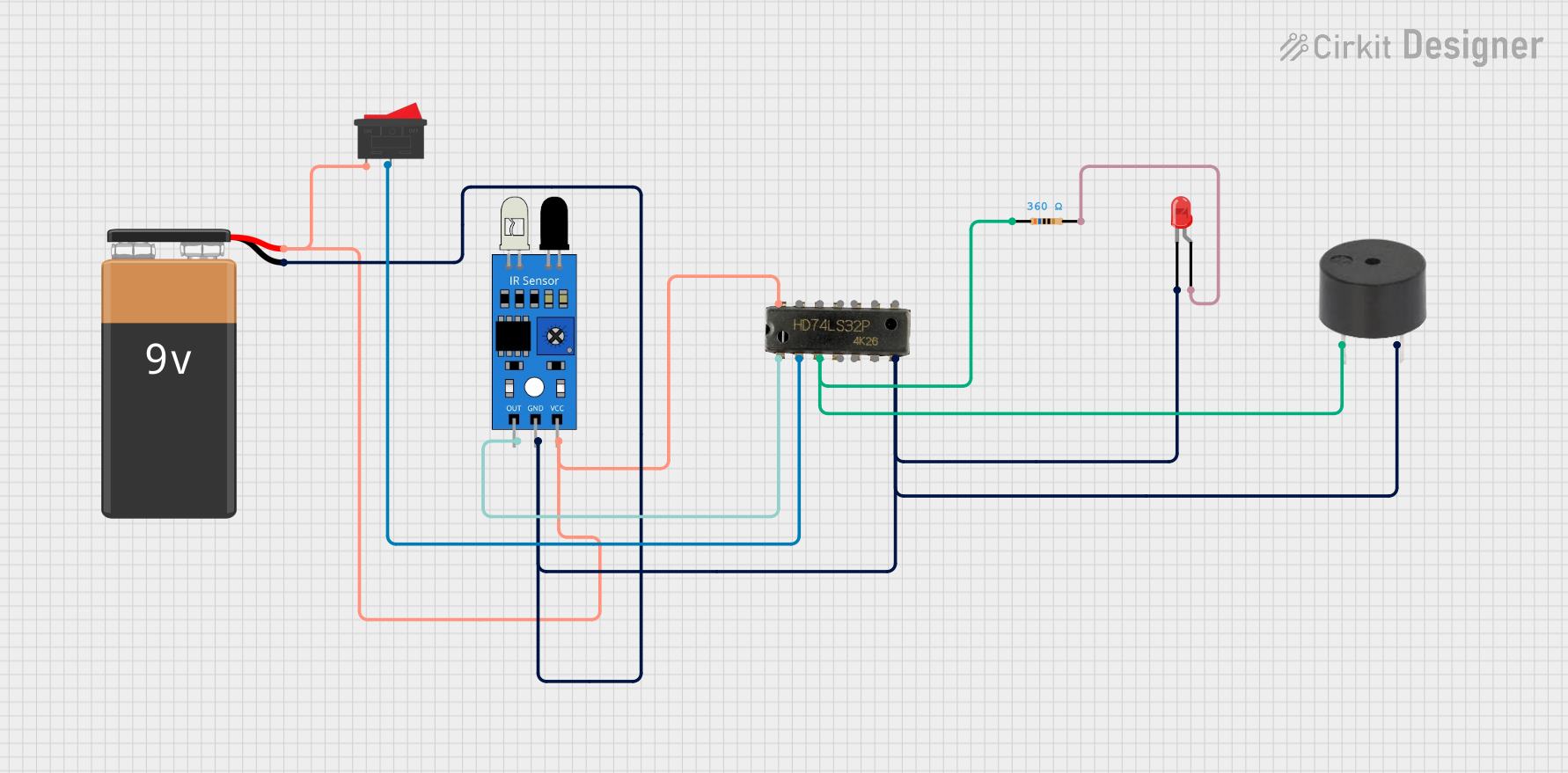 Open Project in Cirkit Designer
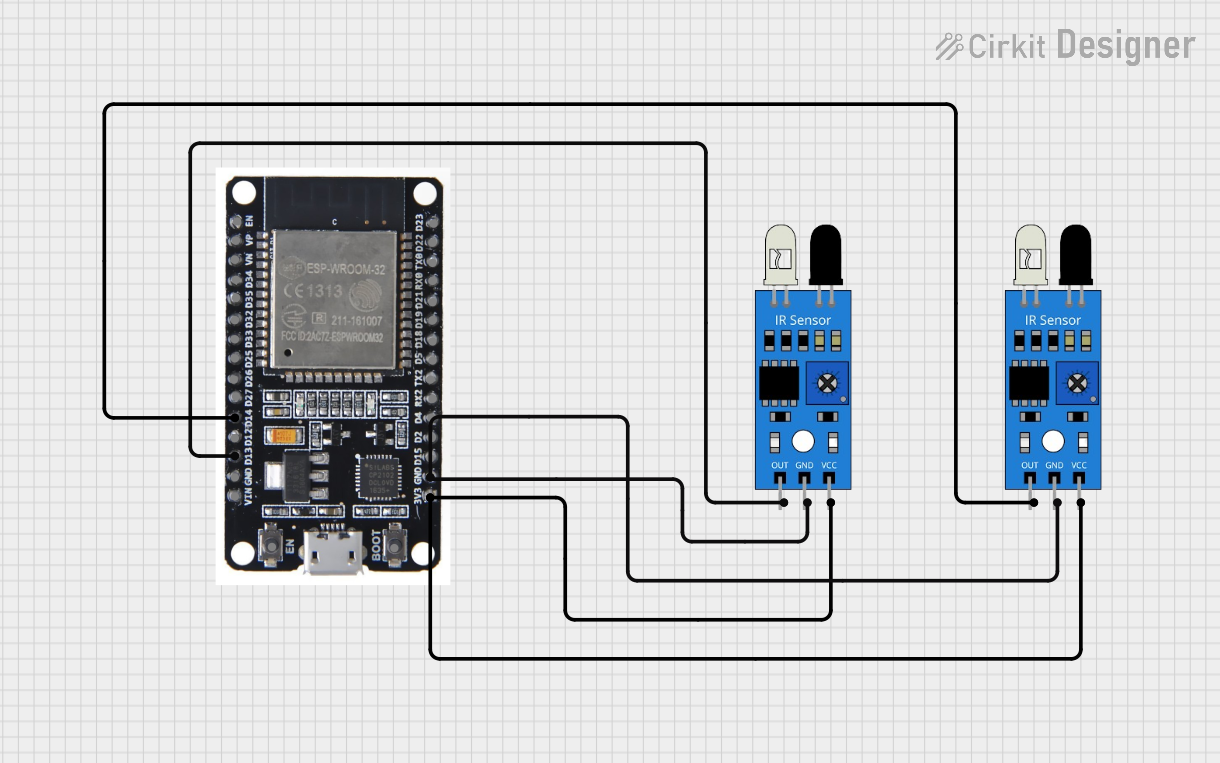 Open Project in Cirkit Designer
 Open Project in Cirkit Designer
Explore Projects Built with ir sensor
Open Project in Cirkit DesignerOpen Project in Cirkit DesignerOpen Project in Cirkit DesignerOpen Project in Cirkit DesignerTechnical Specifications
Below are the general technical specifications for a typical IR sensor module:
| Parameter | Value |
|---|---|
| Operating Voltage | 3.3V to 5V |
| Operating Current | 20mA (typical) |
| Detection Range | 2cm to 30cm (varies by model) |
| Output Type | Digital (High/Low) or Analog |
| Wavelength Sensitivity | ~940nm (infrared spectrum) |
| Response Time | ~10ms |
| Operating Temperature | -25°C to 85°C |
Pin Configuration
The IR sensor module typically has three pins. Below is the pin configuration:
| Pin | Name | Description |
|---|---|---|
| 1 | VCC | Power supply pin (3.3V to 5V) |
| 2 | GND | Ground connection |
| 3 | OUT | Output pin (Digital or Analog, depending on the model) |
Usage Instructions
How to Use the IR Sensor in a Circuit
- Power the Sensor: Connect the VCC pin to a 3.3V or 5V power source and the GND pin to the ground of your circuit.
- Connect the Output: Attach the OUT pin to a microcontroller's input pin (e.g., Arduino) or to another circuit component, such as an LED or buzzer.
- Adjust Sensitivity (if applicable): Some IR sensor modules include a potentiometer to adjust the detection range. Turn the potentiometer clockwise or counterclockwise to fine-tune the sensitivity.
- Test the Sensor: Place an object within the detection range and observe the output signal. The OUT pin typically goes HIGH (logic 1) when an object is detected and LOW (logic 0) otherwise.
Important Considerations and Best Practices
- Ambient Light Interference: IR sensors can be affected by sunlight or other strong light sources. Use them in controlled lighting conditions or shield the sensor from direct light.
- Reflective Surfaces: Detection accuracy may vary depending on the reflectivity of the object. Highly reflective surfaces may increase the detection range, while dark or matte surfaces may reduce it.
- Power Supply Stability: Ensure a stable power supply to avoid erratic behavior.
- Avoid Overheating: Do not exceed the recommended voltage and current ratings to prevent damage to the sensor.
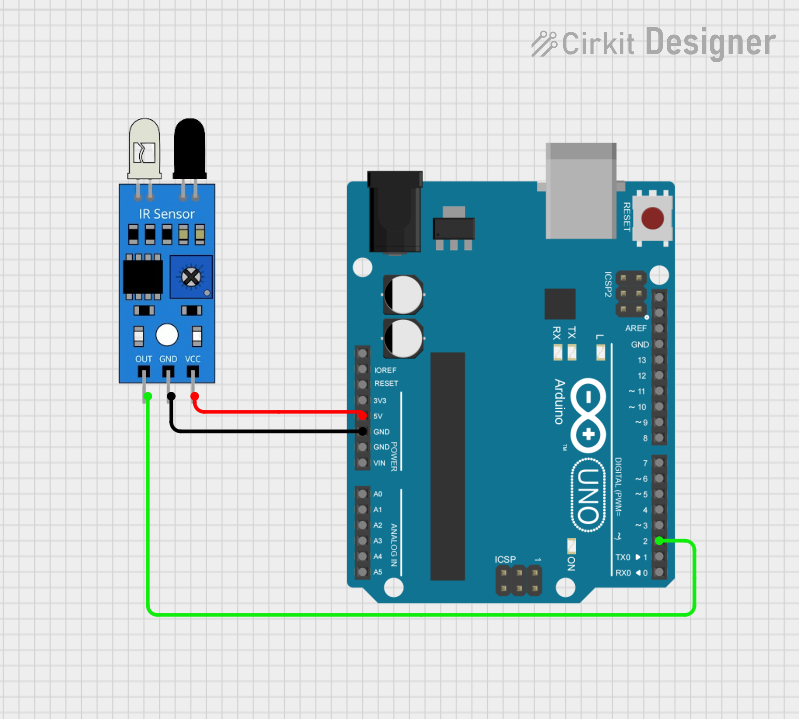
Example: Connecting an IR Sensor to an Arduino UNO
Below is an example of how to use an IR sensor with an Arduino UNO to detect an object and turn on an LED when the object is detected.
Circuit Connections
- Connect the IR sensor's VCC pin to the Arduino's 5V pin.
- Connect the IR sensor's GND pin to the Arduino's GND pin.
- Connect the IR sensor's OUT pin to Arduino digital pin 2.
- Connect an LED to Arduino digital pin 13 with a 220-ohm resistor in series.
Arduino Code
// Define the pin numbers for the IR sensor and LED
const int irSensorPin = 2;  // IR sensor output pin connected to digital pin 2
const int ledPin = 13;      // LED connected to digital pin 13

void setup() {
  pinMode(irSensorPin, INPUT);  // Set the IR sensor pin as input
  pinMode(ledPin, OUTPUT);      // Set the LED pin as output
  Serial.begin(9600);           // Initialize serial communication for debugging
}

void loop() {
  int sensorValue = digitalRead(irSensorPin);  // Read the IR sensor output

  if (sensorValue == HIGH) {
    // Object detected, turn on the LED
    digitalWrite(ledPin, HIGH);
    Serial.println("Object detected!");
  } else {
    // No object detected, turn off the LED
    digitalWrite(ledPin, LOW);
    Serial.println("No object detected.");
  }

  delay(100);  // Small delay for stability
}
Troubleshooting and FAQs
Common Issues and Solutions
The sensor is not detecting objects.
- Ensure the sensor is powered correctly (check VCC and GND connections).
- Verify that the object is within the detection range.
- Adjust the sensitivity using the potentiometer (if available).
False detections or erratic behavior.
- Check for interference from ambient light or other IR sources.
- Use a stable power supply to avoid fluctuations.
- Ensure proper grounding in the circuit.
The output signal is not changing.
- Confirm that the OUT pin is connected to the correct input pin on the microcontroller.
- Test the sensor with a multimeter to verify the output voltage.
FAQs
Q: Can the IR sensor detect objects through glass?
A: It depends on the type of glass. Some glass materials may block or reflect infrared radiation, reducing the sensor's effectiveness.
Q: What is the maximum detection range of an IR sensor?
A: The detection range varies by model but is typically between 2cm and 30cm. Check the datasheet for your specific sensor.
Q: Can I use an IR sensor outdoors?
A: While IR sensors can be used outdoors, they may be affected by sunlight and other environmental factors. Consider using an IR sensor with ambient light filtering for better performance.
Q: How do I differentiate between multiple IR sensors in a circuit?
A: Assign each sensor to a unique input pin on your microcontroller and handle them separately in your code.