
How to Use MCB C16: Examples, Pinouts, and Specs
 Design with MCB C16 in Cirkit Designer
Introduction
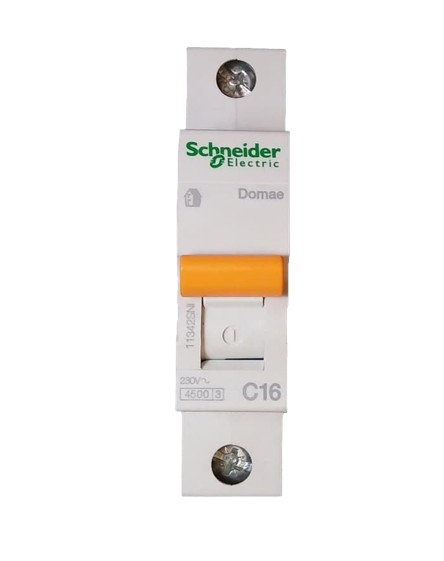
The MCB C16, manufactured by Schneider, is a Miniature Circuit Breaker rated at 16 Amperes. It is designed to protect electrical circuits from overloads and short circuits by automatically disconnecting the circuit when excessive current flows. This ensures the safety of electrical systems and prevents damage to connected devices.
Explore Projects Built with MCB C16
 Open Project in Cirkit Designer
 Open Project in Cirkit Designer
 Open Project in Cirkit Designer
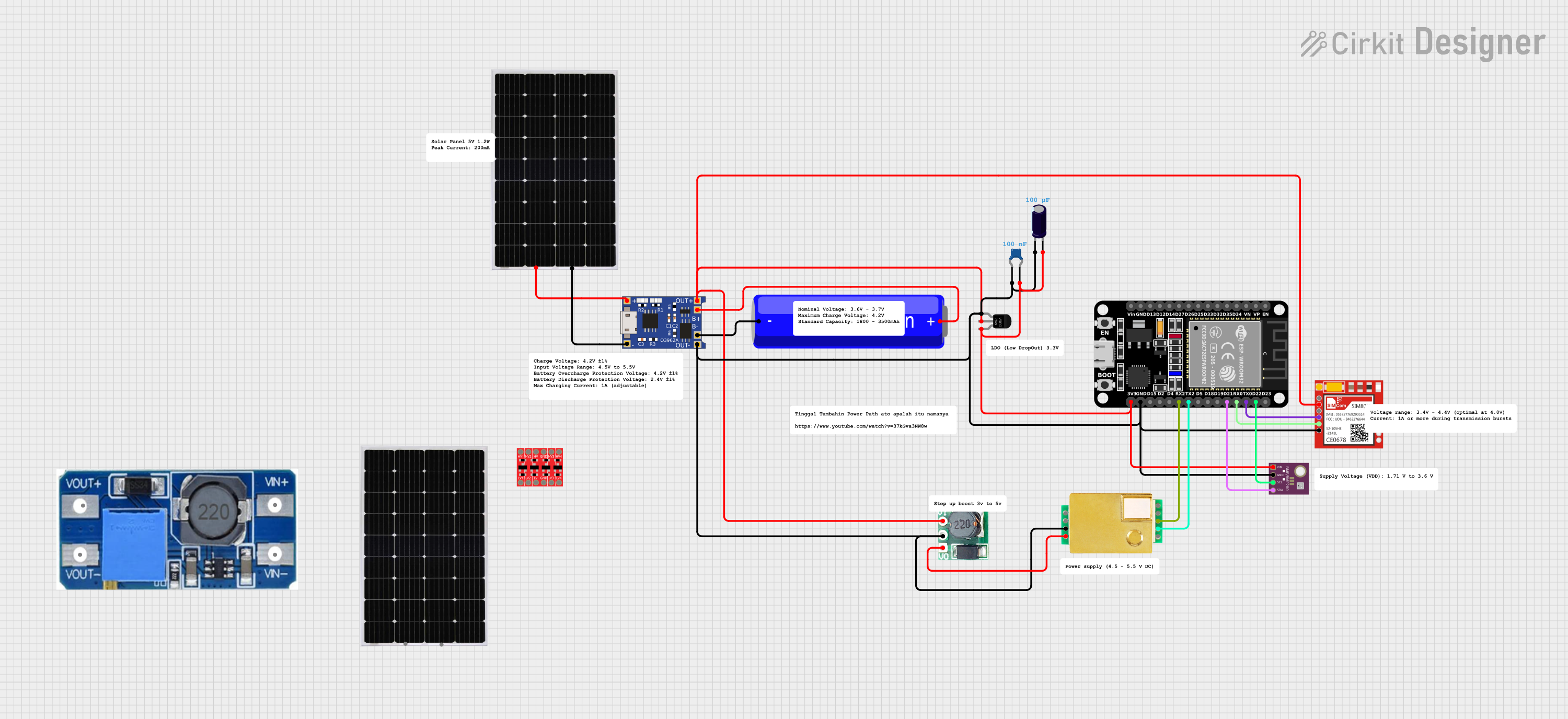 Open Project in Cirkit Designer
Explore Projects Built with MCB C16
Open Project in Cirkit DesignerOpen Project in Cirkit DesignerOpen Project in Cirkit DesignerOpen Project in Cirkit DesignerCommon Applications and Use Cases
- Residential and commercial electrical installations
- Protection of lighting circuits and small appliances
- Industrial control panels and distribution boards
- Circuit protection for air conditioning units, heaters, and pumps
Technical Specifications
Key Technical Details
| Parameter | Value |
|---|---|
| Manufacturer | Schneider |
| Model | C16 |
| Rated Current | 16 A |
| Rated Voltage | 230/400 V AC |
| Breaking Capacity | 6 kA |
| Tripping Curve | Type C |
| Frequency | 50/60 Hz |
| Number of Poles | 1P, 2P, 3P, or 4P (varies by model) |
| Mounting Type | DIN Rail |
| Operating Temperature | -5°C to +55°C |
| Standards Compliance | IEC/EN 60898-1 |
Pin Configuration and Descriptions
The MCB C16 does not have traditional pins but instead features screw terminals for electrical connections. Below is a description of the terminal configuration:
| Terminal Name | Description |
|---|---|
| Line (Input) | Connects to the incoming power supply |
| Load (Output) | Connects to the circuit being protected |
Usage Instructions
How to Use the MCB C16 in a Circuit
Mounting the MCB:
- Install the MCB C16 on a standard DIN rail in the distribution board.
- Ensure the MCB is securely locked into place.
Wiring the MCB:
- Connect the incoming power supply to the Line (Input) terminal.
- Connect the circuit to be protected to the Load (Output) terminal.
- Tighten the screws securely to ensure proper electrical contact.
Operation:
- Switch the MCB to the "ON" position to allow current to flow through the circuit.
- In case of an overload or short circuit, the MCB will automatically trip to the "OFF" position, disconnecting the circuit.
Important Considerations and Best Practices
- Ensure the MCB's rated current (16 A) matches the requirements of the circuit to avoid nuisance tripping or insufficient protection.
- Use appropriately rated wires for the connected circuit to prevent overheating.
- Regularly inspect the MCB for signs of wear, damage, or loose connections.
- Do not manually hold the MCB in the "ON" position if it trips, as this may bypass its protective function.
- For three-phase systems, ensure proper phase balancing to avoid overloading any single phase.
Example: Connecting the MCB C16 to an Arduino UNO
While the MCB C16 is not directly used with microcontrollers like the Arduino UNO, it can be employed to protect the power supply circuit feeding the Arduino. Below is an example of how to integrate the MCB C16 into such a setup:
Power Supply (230V AC) --> MCB C16 --> Step-Down Transformer --> Arduino UNO
Troubleshooting and FAQs
Common Issues and Solutions
| Issue | Possible Cause | Solution |
|---|---|---|
| MCB trips frequently | Overloaded circuit | Reduce the load on the circuit. |
| Short circuit in the wiring | Inspect and repair the wiring. | |
| MCB does not trip during a fault | Faulty MCB or incorrect installation | Replace the MCB or check connections. |
| MCB cannot be switched to "ON" | Persistent fault in the circuit | Identify and resolve the fault. |
| Loose connections at terminals | Improper tightening of screws | Tighten the terminal screws securely. |
FAQs
Can the MCB C16 be used for DC circuits?
No, the MCB C16 is designed for AC circuits only. For DC applications, use a DC-rated circuit breaker.What does the "C" in C16 mean?
The "C" refers to the tripping curve of the MCB, which determines its response to overcurrent. Type C MCBs are suitable for circuits with moderate inrush currents, such as those with motors or fluorescent lighting.How do I reset the MCB after it trips?
First, identify and resolve the cause of the trip (e.g., overload or short circuit). Then, switch the MCB to the "OFF" position and back to the "ON" position.Can I use the MCB C16 for three-phase systems?
Yes, but you will need a 3P or 4P version of the MCB C16, depending on the system configuration.
By following this documentation, users can effectively install, operate, and maintain the Schneider MCB C16 for reliable circuit protection.