
How to Use BetaFPV ELRS Nano Receiver 2.4Ghz: Examples, Pinouts, and Specs
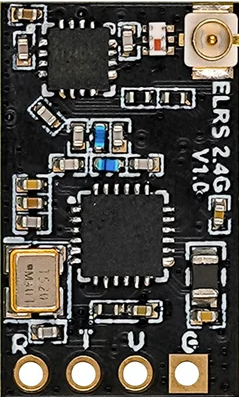
 Design with BetaFPV ELRS Nano Receiver 2.4Ghz in Cirkit Designer
Introduction
The BetaFPV ELRS Nano Receiver 2.4Ghz is a compact and lightweight receiver designed for long-range control in RC (Radio Control) applications. It utilizes the ExpressLRS (ELRS) protocol, which is known for its low latency, high reliability, and excellent range performance. This receiver is ideal for FPV (First-Person View) drones, RC planes, and other remote-controlled devices where precision and responsiveness are critical.
Explore Projects Built with BetaFPV ELRS Nano Receiver 2.4Ghz
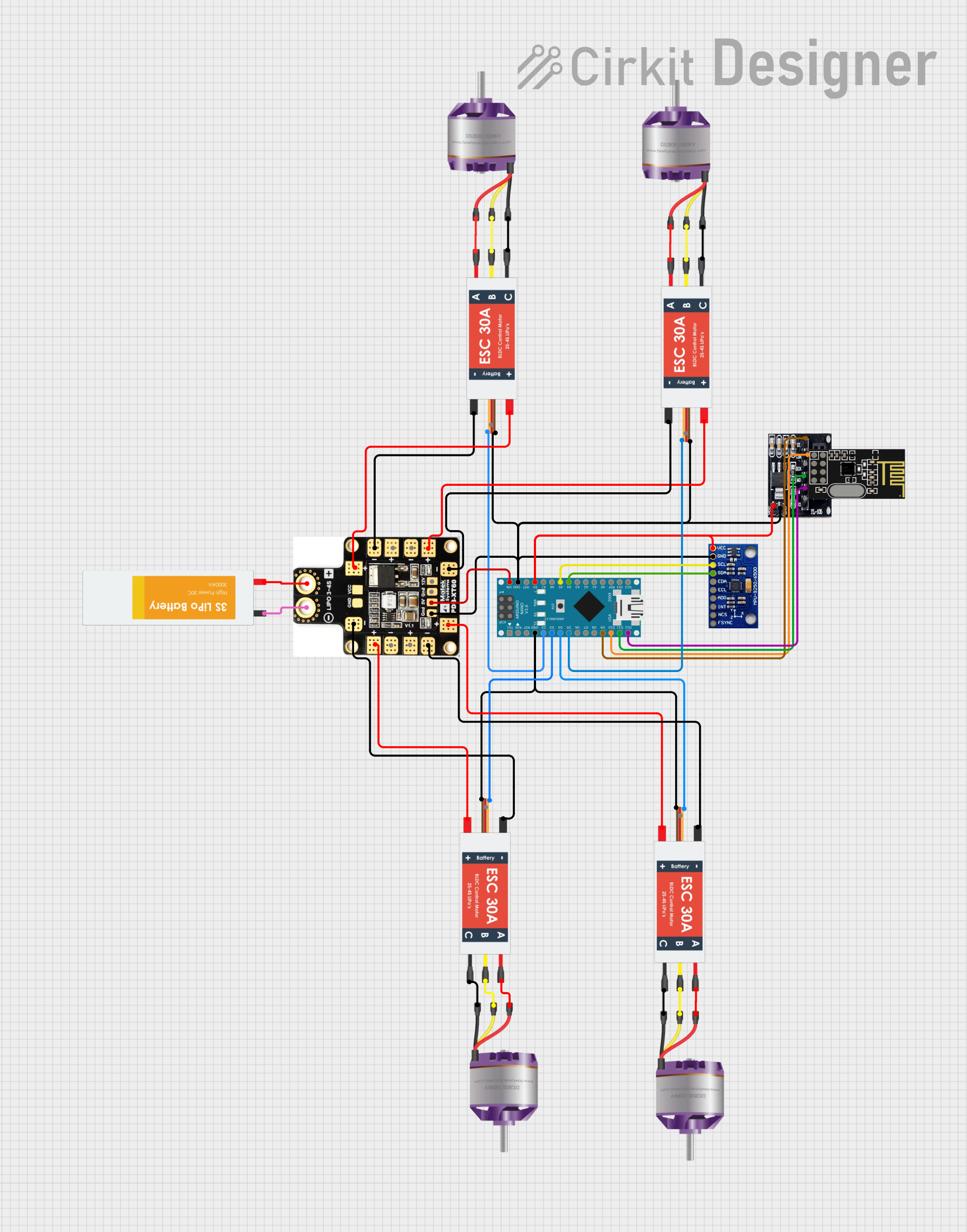 Open Project in Cirkit Designer
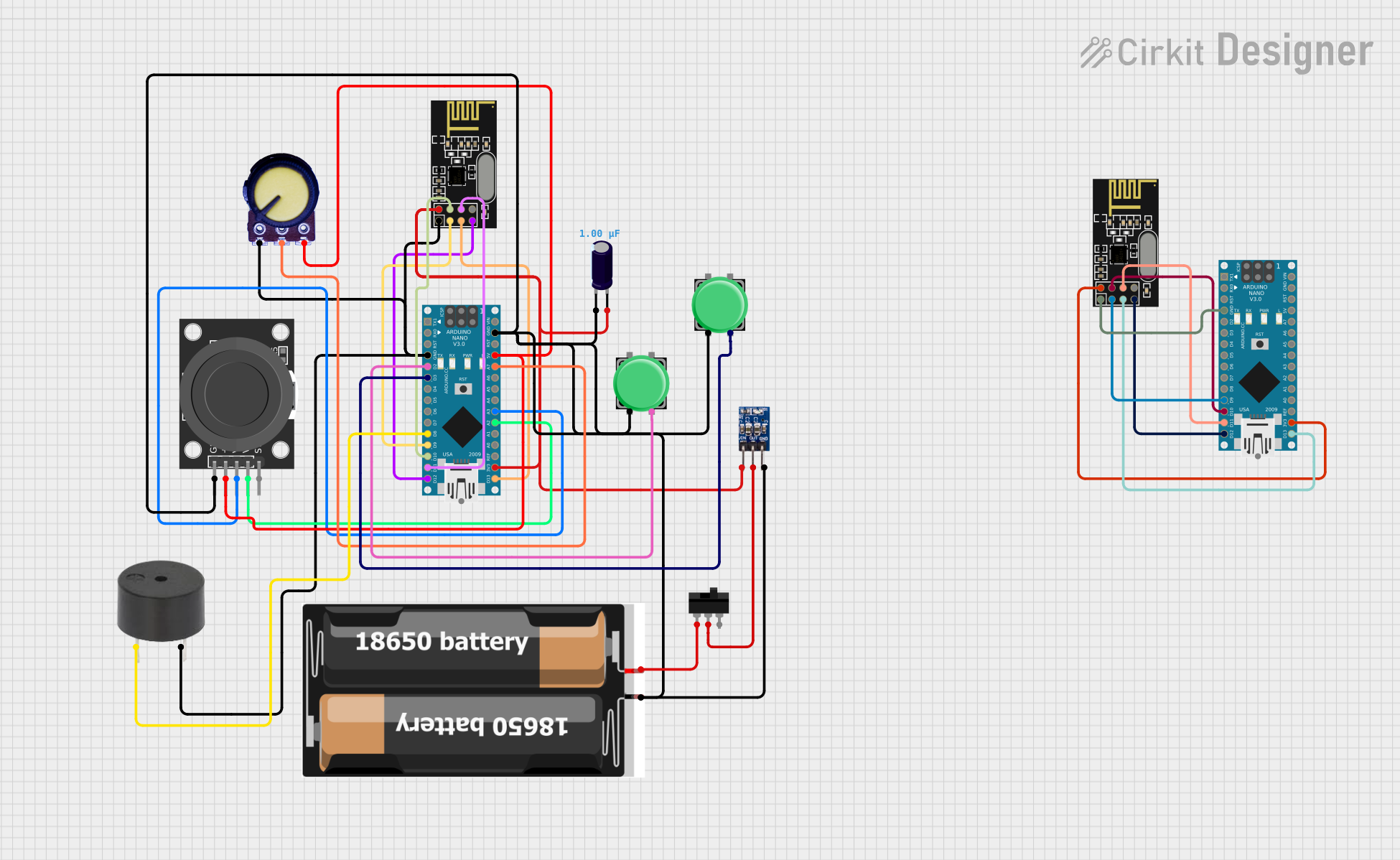 Open Project in Cirkit Designer
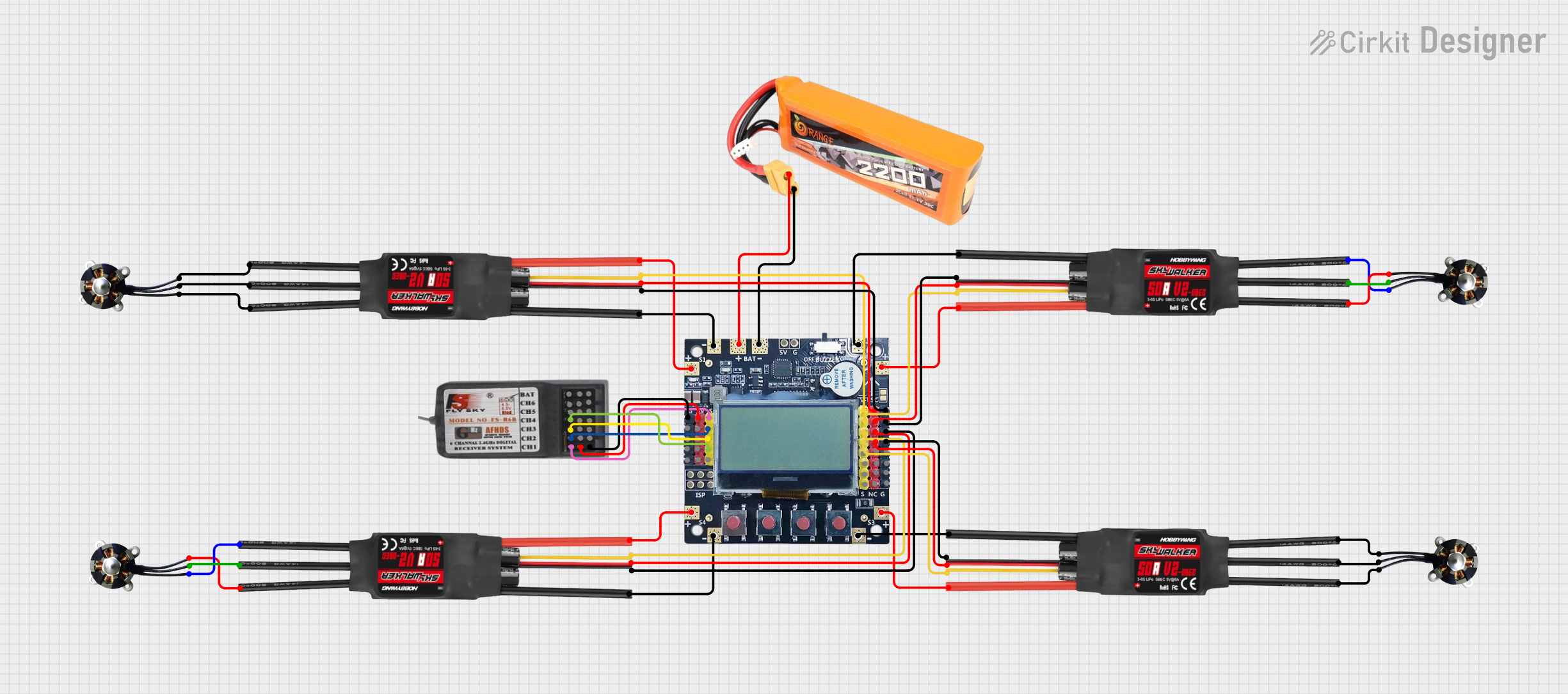 Open Project in Cirkit Designer
 Open Project in Cirkit Designer
Explore Projects Built with BetaFPV ELRS Nano Receiver 2.4Ghz
Open Project in Cirkit DesignerOpen Project in Cirkit DesignerOpen Project in Cirkit DesignerOpen Project in Cirkit DesignerCommon Applications and Use Cases
- FPV drones for racing or freestyle flying
- RC planes and helicopters
- Long-range RC vehicles
- Robotics and custom remote-controlled projects
- Applications requiring low-latency, high-reliability communication
Technical Specifications
Below are the key technical details of the BetaFPV ELRS Nano Receiver 2.4Ghz:
| Specification | Details |
|---|---|
| Protocol | ExpressLRS (ELRS) |
| Frequency Range | 2.4GHz ISM band |
| Input Voltage Range | 5V (via external power source) |
| Antenna Connector | IPEX (U.FL) |
| Dimensions | 10mm x 10mm |
| Weight | 0.5g |
| Latency | As low as 4ms (depending on configuration) |
| Range | Up to 15km (depending on environment and transmitter power) |
| Firmware Compatibility | ExpressLRS firmware (configurable via ELRS Configurator) |
Pin Configuration and Descriptions
The BetaFPV ELRS Nano Receiver has a simple pinout for easy integration into your projects. Below is the pin configuration:
| Pin | Name | Description |
|---|---|---|
| 1 | GND | Ground connection |
| 2 | 5V | Power input (5V) |
| 3 | TX | UART Transmit pin (connects to RX pin of flight controller or microcontroller) |
| 4 | RX | UART Receive pin (connects to TX pin of flight controller or microcontroller) |
Usage Instructions
How to Use the Component in a Circuit
- Power Connection: Connect the 5V pin to a 5V power source and the GND pin to ground.
- UART Connection: Connect the TX pin of the receiver to the RX pin of your flight controller or microcontroller. Similarly, connect the RX pin of the receiver to the TX pin of your flight controller or microcontroller.
- Antenna Installation: Attach the included IPEX antenna to the receiver's antenna connector. Ensure the antenna is securely connected to avoid signal loss.
- Binding:
- Power on the receiver and transmitter.
- Put the transmitter into binding mode (refer to your transmitter's manual).
- The receiver will automatically bind to the transmitter. The LED on the receiver will indicate the binding status (solid light indicates successful binding).
- Configuration: Use the ExpressLRS Configurator to flash or update the firmware on the receiver. This allows you to customize settings such as packet rate, telemetry, and frequency.
Important Considerations and Best Practices
- Antenna Placement: Ensure the antenna is positioned away from metal components or other electronics to minimize interference.
- Power Supply: Use a stable 5V power source to avoid brownouts or signal loss.
- Firmware Updates: Regularly update the receiver's firmware using the ExpressLRS Configurator to access the latest features and improvements.
- UART Configuration: Ensure the UART port on your flight controller or microcontroller is configured correctly (e.g., baud rate) to communicate with the receiver.
Example Code for Arduino UNO
The BetaFPV ELRS Nano Receiver can be connected to an Arduino UNO for custom RC projects. Below is an example code snippet to read data from the receiver:
#include <SoftwareSerial.h>

// Define RX and TX pins for the receiver
#define RX_PIN 2  // Connect to the TX pin of the receiver
#define TX_PIN 3  // Connect to the RX pin of the receiver

// Create a SoftwareSerial object
SoftwareSerial elrsSerial(RX_PIN, TX_PIN);

void setup() {
  // Initialize serial communication
  Serial.begin(9600); // For debugging via Serial Monitor
  elrsSerial.begin(115200); // Communication with the ELRS receiver

  Serial.println("BetaFPV ELRS Nano Receiver Test");
}

void loop() {
  // Check if data is available from the receiver
  if (elrsSerial.available()) {
    // Read and print the received data
    char receivedData = elrsSerial.read();
    Serial.print("Received: ");
    Serial.println(receivedData);
  }

  delay(10); // Small delay to avoid overwhelming the serial buffer
}
Notes:
- Ensure the baud rate in the code matches the receiver's configuration.
- Use a level shifter if your Arduino operates at 5V logic levels, as the receiver may use 3.3V logic.
Troubleshooting and FAQs
Common Issues and Solutions
Receiver Not Binding to Transmitter:
- Ensure both the receiver and transmitter are using the same firmware version and binding phrase.
- Check that the transmitter is in binding mode and within range of the receiver.
No Signal or Poor Range:
- Verify that the antenna is securely connected and properly positioned.
- Avoid placing the receiver near sources of interference, such as motors or ESCs.
Receiver Not Powering On:
- Confirm that the 5V power supply is stable and connected to the correct pin.
- Check for loose or damaged wires.
Data Not Received by Microcontroller:
- Ensure the UART connections (TX/RX) are correct.
- Verify that the UART port on the microcontroller is configured with the correct baud rate.
FAQs
Q: Can I use this receiver with any transmitter?
A: The receiver is compatible with transmitters that support the ExpressLRS protocol. Ensure the transmitter operates on the 2.4GHz frequency band.
Q: How do I update the firmware?
A: Use the ExpressLRS Configurator software to flash or update the firmware. Connect the receiver to your computer via a compatible UART adapter.
Q: What is the maximum range of this receiver?
A: The range can reach up to 15km in ideal conditions, but actual performance depends on the environment and transmitter power.
Q: Can I use this receiver with a 3.3V power source?
A: No, the receiver requires a 5V power input for proper operation.
By following this documentation, you can effectively integrate and troubleshoot the BetaFPV ELRS Nano Receiver 2.4Ghz in your projects.