
How to Use PDB-XT60: Examples, Pinouts, and Specs
 Design with PDB-XT60 in Cirkit Designer
Introduction
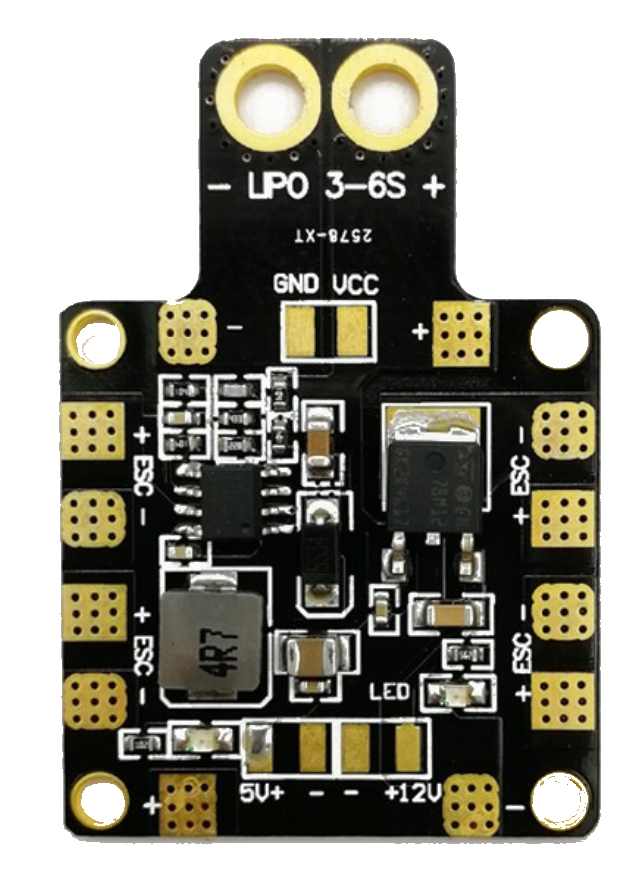
The PDB-XT60 by Matek Systems is a Power Distribution Board designed to efficiently distribute power from a single battery source to multiple electronic components in drones, RC vehicles, and other multi-rotor systems. Equipped with an XT60 connector, this PDB simplifies power management by providing a centralized hub for power distribution, reducing wiring complexity and ensuring reliable connections.
Explore Projects Built with PDB-XT60
 Open Project in Cirkit Designer
 Open Project in Cirkit Designer
 Open Project in Cirkit Designer
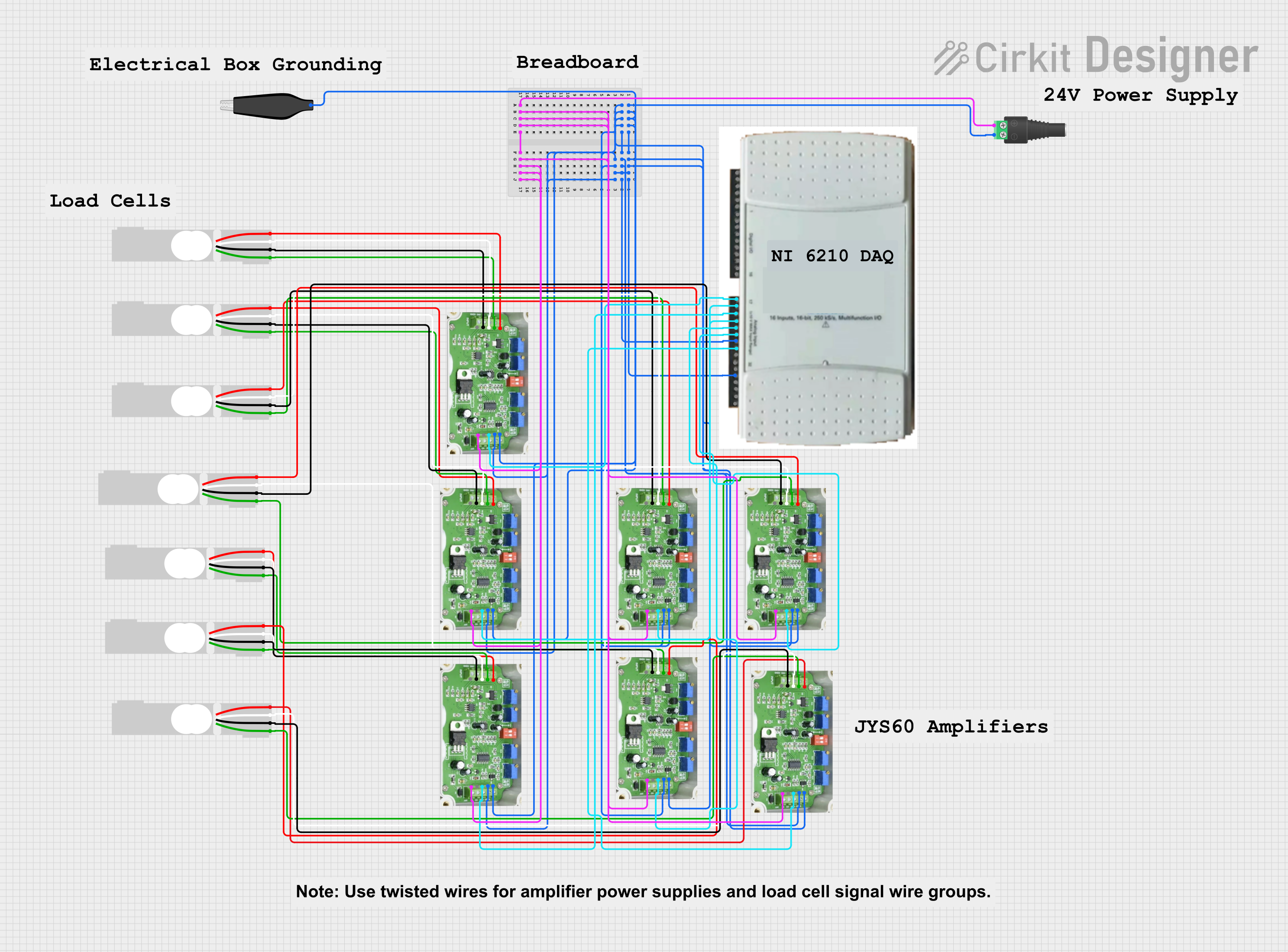 Open Project in Cirkit Designer
Explore Projects Built with PDB-XT60
Open Project in Cirkit DesignerOpen Project in Cirkit DesignerOpen Project in Cirkit DesignerOpen Project in Cirkit DesignerCommon Applications and Use Cases
- Power distribution for drones and quadcopters
- RC vehicles and robotics
- Multi-rotor systems requiring multiple power outputs
- Projects requiring clean and efficient power management
Technical Specifications
Key Technical Details
| Parameter | Value |
|---|---|
| Manufacturer | Matek Systems |
| Part ID | PDB-XT60 |
| Input Voltage Range | 3S to 6S LiPo (11.1V to 25.2V) |
| Maximum Current | 120A (continuous) |
| XT60 Connector Rating | 60A (continuous), 100A (burst) |
| BEC Output Voltage | 5V and 12V |
| BEC Output Current | 2A (5V) and 500mA (12V) |
| Dimensions | 36mm x 50mm |
| Weight | 10g |
| PCB Thickness | 1.6mm |
| Mounting Hole Spacing | 30.5mm x 30.5mm (standard M3 spacing) |
Pin Configuration and Descriptions
The PDB-XT60 features multiple solder pads and connectors for power input and output. Below is a description of the key connections:
| Pin/Pad Name | Description |
|---|---|
| XT60 Connector | Main power input for the PDB. Connects to the LiPo battery. |
| + (Positive) | Positive solder pads for distributing power to ESCs or other components. |
| - (Negative) | Negative solder pads for completing the circuit to ESCs or other devices. |
| 5V Output | Regulated 5V output for powering flight controllers or other electronics. |
| 12V Output | Regulated 12V output for powering cameras, VTX, or other peripherals. |
Usage Instructions
How to Use the PDB-XT60 in a Circuit
Connect the Battery:
- Solder the XT60 connector to the battery leads (ensure correct polarity: red for positive, black for negative).
- Plug the battery into the XT60 connector on the PDB.
Distribute Power:
- Solder the ESC power leads to the corresponding positive (+) and negative (-) pads on the PDB.
- Use the regulated 5V and 12V outputs to power additional components like flight controllers, cameras, or video transmitters.
Mount the PDB:
- Secure the PDB to your drone or RC vehicle using M3 screws and spacers, aligning with the 30.5mm x 30.5mm mounting holes.
Check Connections:
- Double-check all solder joints for proper connections and ensure there are no short circuits.
- Use a multimeter to verify voltage levels before powering up the system.
Important Considerations and Best Practices
- Polarity: Always ensure correct polarity when connecting the battery and components to avoid damage.
- Heat Management: Use a soldering iron with sufficient heat (around 350°C) for clean and secure solder joints.
- Current Limits: Do not exceed the maximum current rating of 120A to prevent overheating or damage.
- Insulation: Use heat shrink tubing or electrical tape to insulate exposed solder joints and prevent short circuits.
- Testing: Before connecting sensitive electronics, test the PDB with a multimeter to confirm proper voltage outputs.
Example: Connecting to an Arduino UNO
The PDB-XT60 can be used to power an Arduino UNO via its 5V regulated output. Below is an example of how to connect it:
- Solder wires to the 5V and GND output pads on the PDB.
- Connect the 5V wire to the Arduino's 5V pin and the GND wire to the Arduino's GND pin.
- Ensure the PDB is powered by a LiPo battery.
// Example Arduino code to blink an LED using power from the PDB-XT60
const int ledPin = 13; // Pin connected to the onboard LED

void setup() {
  pinMode(ledPin, OUTPUT); // Set the LED pin as an output
}

void loop() {
  digitalWrite(ledPin, HIGH); // Turn the LED on
  delay(1000);               // Wait for 1 second
  digitalWrite(ledPin, LOW);  // Turn the LED off
  delay(1000);               // Wait for 1 second
}
Troubleshooting and FAQs
Common Issues and Solutions
| Issue | Possible Cause | Solution |
|---|---|---|
| No power output from the PDB | Incorrect battery connection | Verify battery polarity and connection. |
| Components not receiving power | Poor solder joints | Re-solder connections with proper heat. |
| Overheating of the PDB | Exceeding current limits | Ensure total current draw is below 120A. |
| Voltage mismatch on 5V/12V outputs | Overloaded BEC outputs | Reduce load on the BEC outputs. |
| Short circuit detected | Exposed solder joints or wiring issues | Inspect and insulate all connections. |
FAQs
Can I use the PDB-XT60 with a 2S LiPo battery?
- No, the PDB-XT60 is designed for 3S to 6S LiPo batteries (11.1V to 25.2V).
What is the maximum power output of the PDB?
- The PDB can handle up to 120A continuous current, depending on the connected components.
Can I power multiple devices from the 5V and 12V outputs?
- Yes, but ensure the total current draw does not exceed 2A for the 5V output and 500mA for the 12V output.
Is the PDB-XT60 compatible with all ESCs?
- The PDB is compatible with most ESCs as long as they operate within the input voltage range of 3S to 6S.
By following this documentation, users can effectively integrate the PDB-XT60 into their projects for efficient and reliable power distribution.