
How to Use ESP 32U: Examples, Pinouts, and Specs
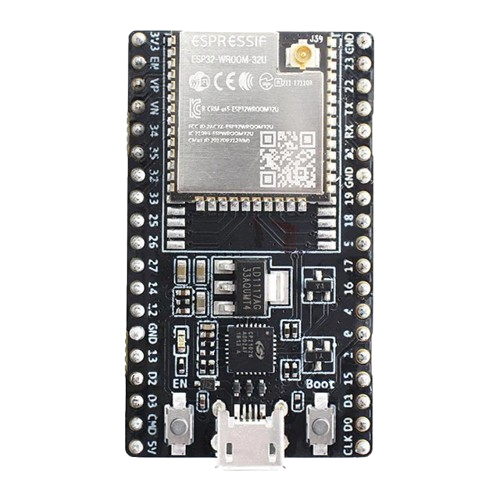
 Design with ESP 32U in Cirkit Designer
Introduction
The ESP 32U is a low-power system on a chip (SoC) with integrated Wi-Fi and Bluetooth capabilities, designed specifically for Internet of Things (IoT) applications. It features a dual-core processor, a wide range of GPIO pins, and support for multiple communication protocols, making it a versatile choice for smart devices, wireless communication, and automation projects.
Explore Projects Built with ESP 32U
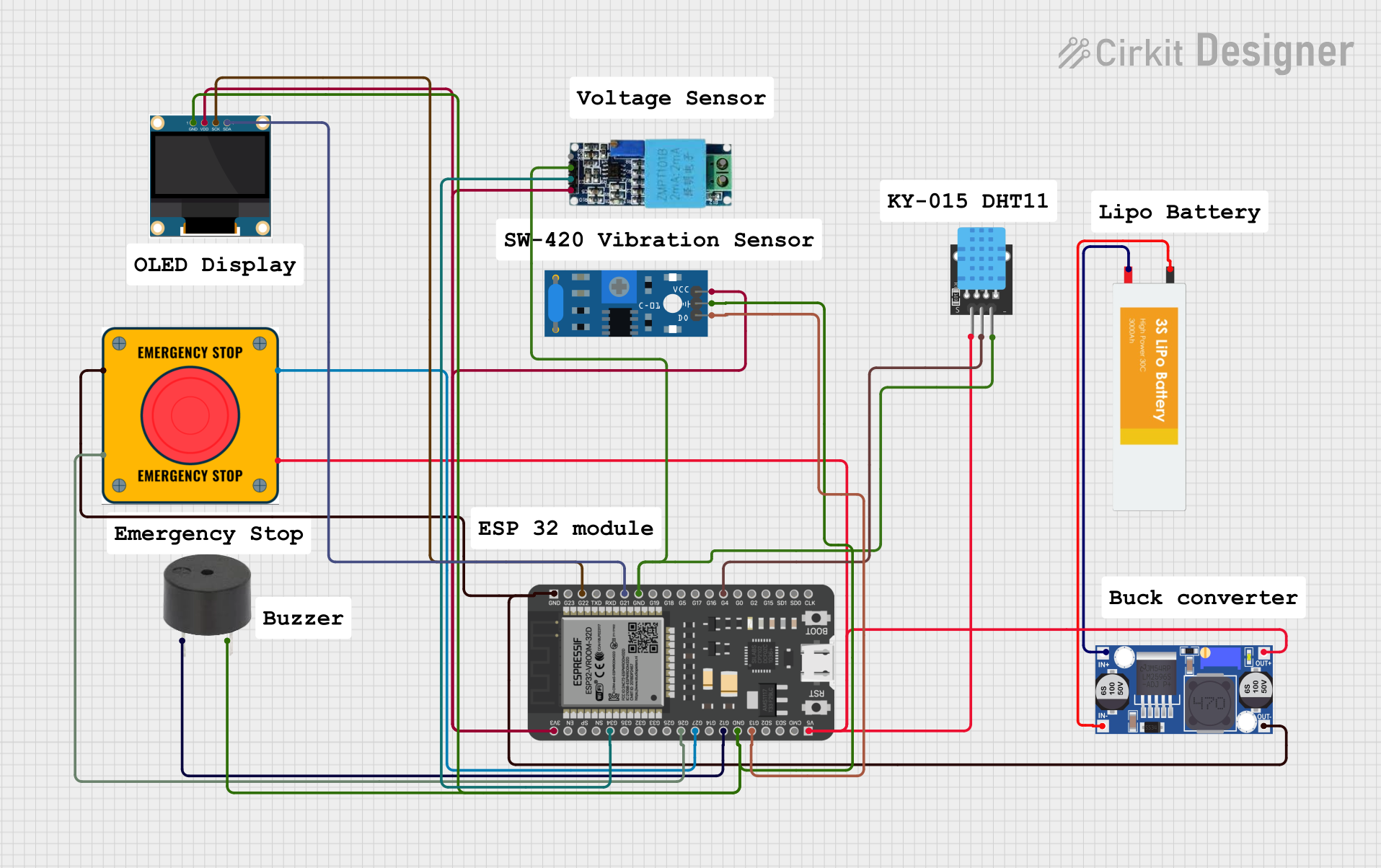 Open Project in Cirkit Designer
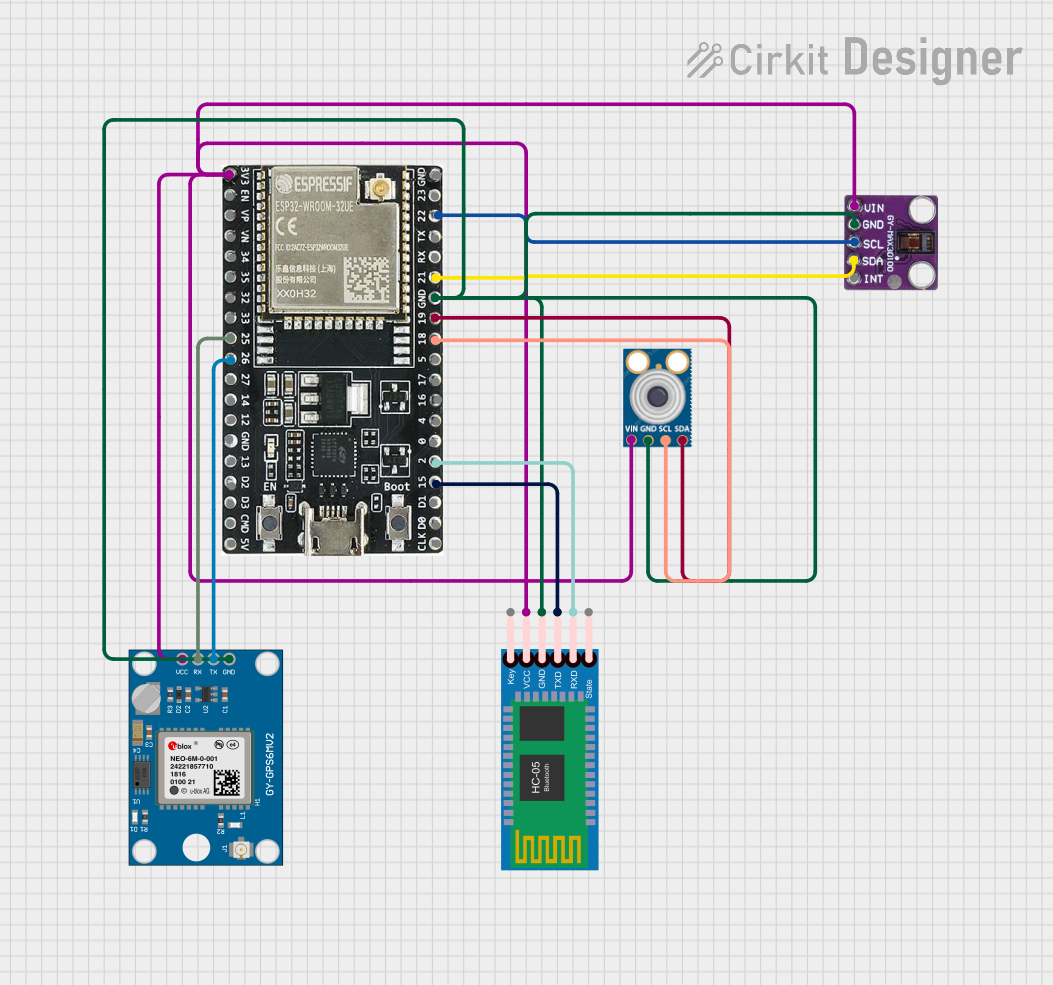 Open Project in Cirkit Designer
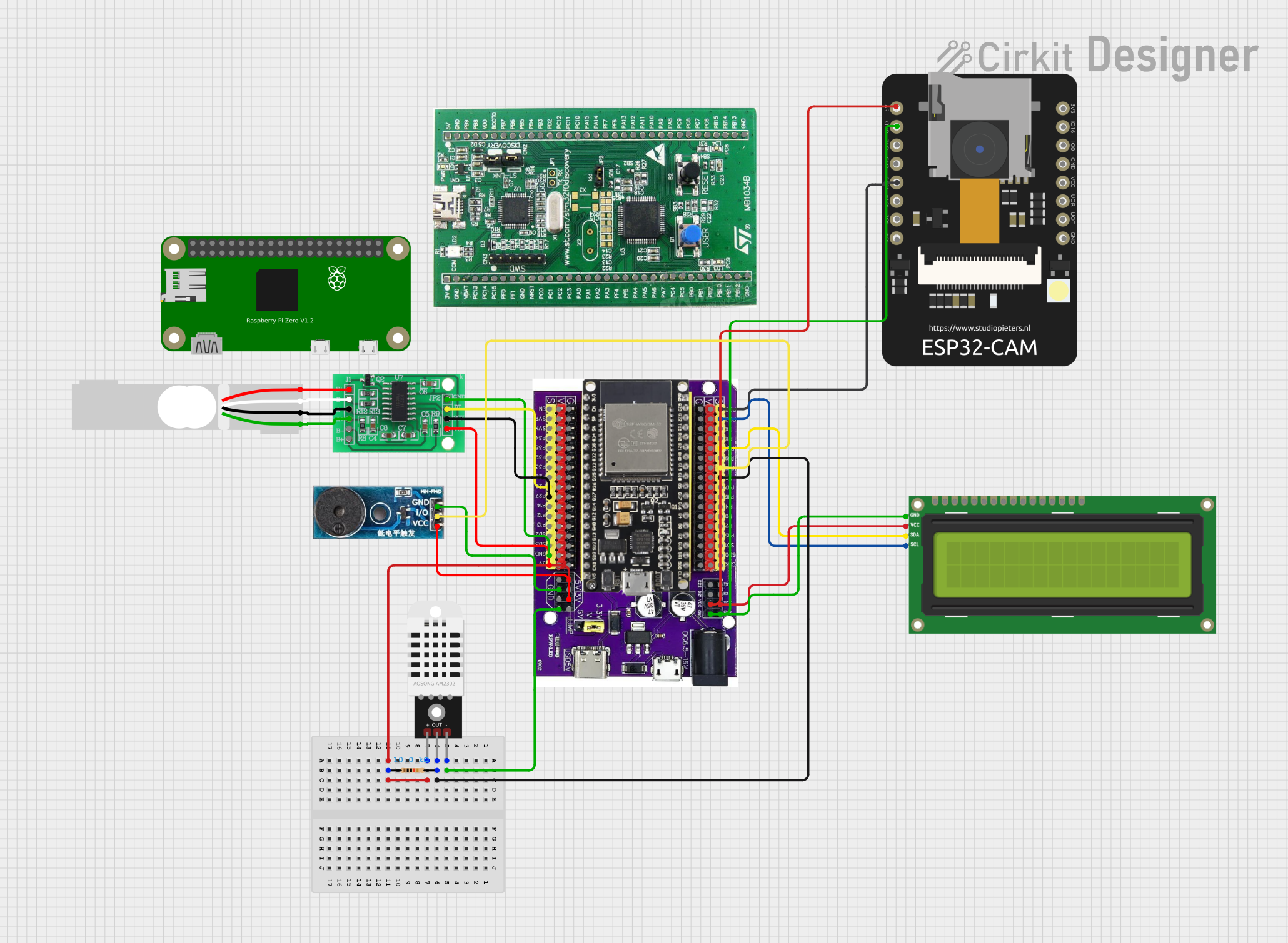 Open Project in Cirkit Designer
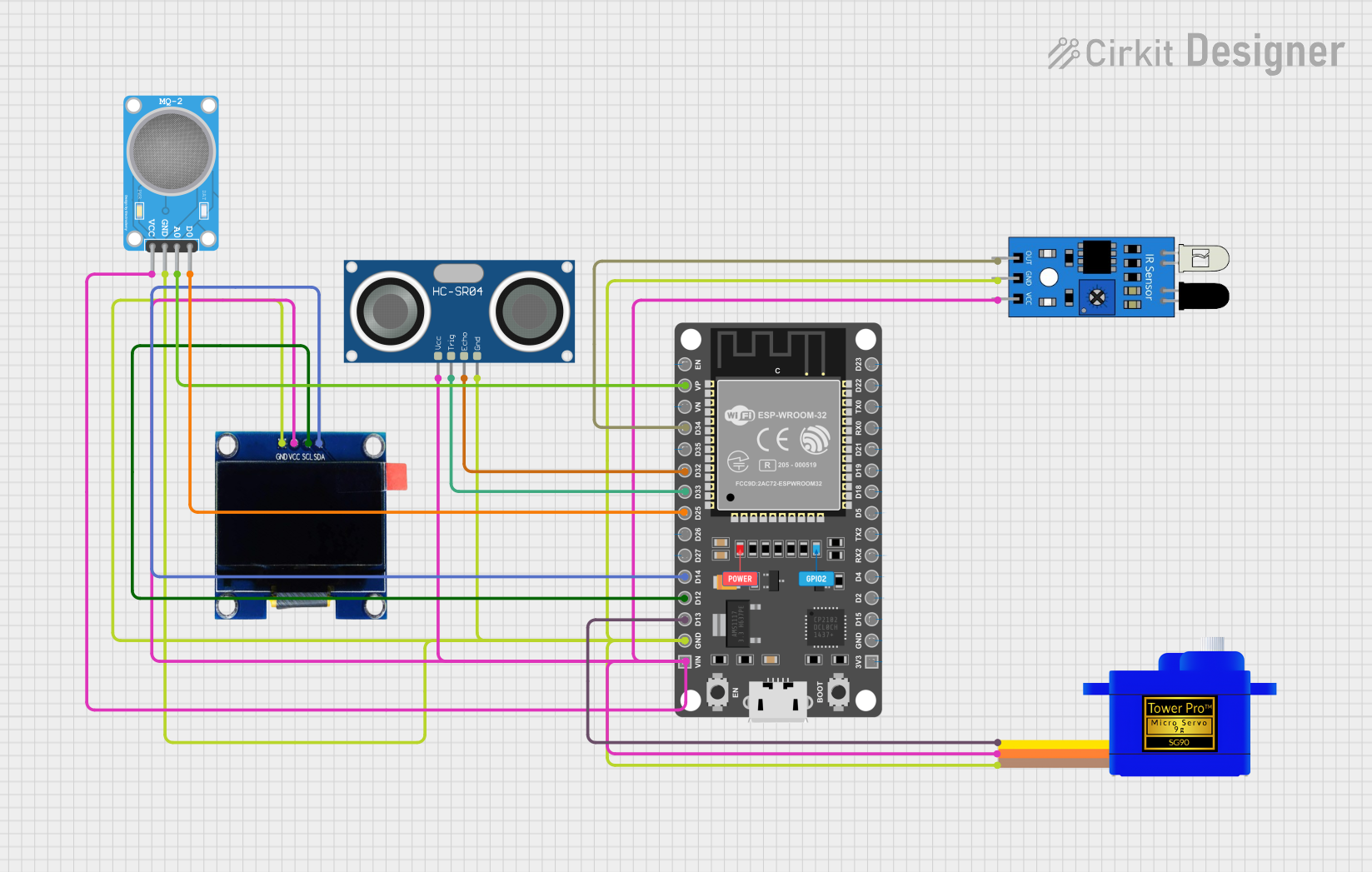 Open Project in Cirkit Designer
Explore Projects Built with ESP 32U
Open Project in Cirkit DesignerOpen Project in Cirkit DesignerOpen Project in Cirkit DesignerOpen Project in Cirkit DesignerCommon Applications
- Smart home devices (e.g., smart lights, thermostats)
- Wireless sensor networks
- Wearable technology
- Industrial IoT systems
- Robotics and automation
- Real-time data monitoring and logging
Technical Specifications
Key Technical Details
| Specification | Value |
|---|---|
| Processor | Dual-core Xtensa® 32-bit LX6 CPU |
| Clock Speed | Up to 240 MHz |
| Flash Memory | 4 MB (external SPI flash) |
| SRAM | 520 KB |
| Wi-Fi Standard | 802.11 b/g/n |
| Bluetooth Version | Bluetooth 4.2 (Classic and BLE) |
| Operating Voltage | 3.0V - 3.6V |
| GPIO Pins | 34 (multipurpose, configurable) |
| Communication Protocols | UART, SPI, I2C, I2S, CAN, PWM |
| ADC Channels | 18 (12-bit resolution) |
| DAC Channels | 2 |
| Power Consumption | Ultra-low power (deep sleep: ~10 µA) |
| Operating Temperature | -40°C to 85°C |
Pin Configuration and Descriptions
The ESP 32U has 38 pins in total, with 34 GPIO pins that can be configured for various functions. Below is a summary of the key pins:
| Pin Number | Pin Name | Functionality |
|---|---|---|
| 1 | EN | Chip enable (active high) |
| 2 | IO0 | GPIO0, boot mode selection |
| 3 | IO1 | GPIO1, UART TX |
| 4 | IO2 | GPIO2, ADC, PWM |
| 5 | IO3 | GPIO3, UART RX |
| 6-11 | IO4-IO9 | GPIO, ADC, PWM, I2C, SPI |
| 12 | IO10 | GPIO10, ADC, PWM |
| 13 | IO11 | GPIO11, UART, SPI |
| 14-37 | IO12-IO35 | GPIO, ADC, DAC, I2C, SPI, PWM |
| 38 | GND | Ground |
Note: Some GPIO pins have specific restrictions or are used during boot. Refer to the ESP32 datasheet for detailed pin behavior.
Usage Instructions
How to Use the ESP 32U in a Circuit
- Power Supply: Provide a stable 3.3V power supply to the
VCCpin. Ensure the current rating of the power source is sufficient for the ESP 32U's operation (minimum 500 mA recommended). - Boot Mode: Connect GPIO0 to GND during boot to enter programming mode. For normal operation, leave GPIO0 unconnected or pull it high.
- Communication: Use UART pins (TX and RX) for serial communication with a microcontroller or computer. Alternatively, use SPI or I2C for interfacing with peripherals.
- Antenna: Ensure the onboard antenna has sufficient clearance from metallic objects to avoid signal interference.
Important Considerations
- Voltage Levels: The ESP 32U operates at 3.3V logic levels. Avoid connecting 5V signals directly to its pins without a level shifter.
- Deep Sleep Mode: Use deep sleep mode to minimize power consumption in battery-powered applications.
- GPIO Restrictions: Some GPIO pins are used during boot and should not be pulled high or low during startup. Refer to the datasheet for details.
Example: Connecting ESP 32U to Arduino UNO
Below is an example of using the ESP 32U with an Arduino UNO to send data over Wi-Fi:
Circuit Connections
| ESP 32U Pin | Arduino UNO Pin |
|---|---|
| RX | TX |
| TX | RX |
| GND | GND |
| VCC | 3.3V |
Arduino Code
#include <WiFi.h> // Include the Wi-Fi library for ESP32

const char* ssid = "Your_SSID";       // Replace with your Wi-Fi SSID
const char* password = "Your_Password"; // Replace with your Wi-Fi password

void setup() {
  Serial.begin(115200); // Initialize serial communication
  WiFi.begin(ssid, password); // Connect to Wi-Fi

  // Wait for connection
  while (WiFi.status() != WL_CONNECTED) {
    delay(1000);
    Serial.println("Connecting to Wi-Fi...");
  }

  Serial.println("Connected to Wi-Fi!");
  Serial.print("IP Address: ");
  Serial.println(WiFi.localIP()); // Print the device's IP address
}

void loop() {
  // Add your main code here
}
Note: Ensure the ESP 32U is in programming mode when uploading code. Disconnect GPIO0 from GND after uploading.
Troubleshooting and FAQs
Common Issues
- ESP 32U Not Connecting to Wi-Fi
- Solution: Double-check the SSID and password. Ensure the router is within range and supports 2.4 GHz Wi-Fi (ESP32 does not support 5 GHz).
- Serial Communication Fails
- Solution: Verify the RX and TX connections. Ensure the baud rate in the code matches the serial monitor.
- Device Not Detected During Programming
- Solution: Ensure GPIO0 is connected to GND during boot. Check the USB-to-serial adapter and drivers.
- Random Resets or Instability
- Solution: Use a stable power supply with sufficient current. Avoid using GPIO pins reserved for boot functions.
FAQs
Q: Can the ESP 32U operate on 5V?
A: No, the ESP 32U operates at 3.3V. Use a voltage regulator or level shifter for 5V systems.Q: How do I update the firmware?
A: Use the ESP-IDF or Arduino IDE to upload new firmware via the UART interface.Q: Can I use the ESP 32U for Bluetooth communication?
A: Yes, the ESP 32U supports both Bluetooth Classic and BLE for wireless communication.Q: What is the maximum range of the Wi-Fi module?
A: The range depends on environmental factors but typically extends up to 100 meters in open spaces.
By following this documentation, you can effectively integrate the ESP 32U into your IoT projects and troubleshoot common issues.