
How to Use BMS 3S: Examples, Pinouts, and Specs
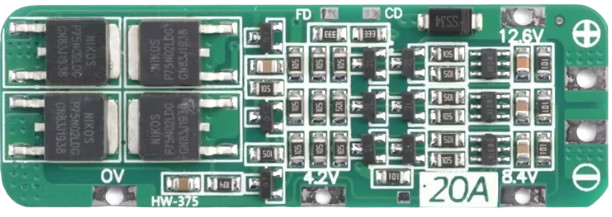
 Design with BMS 3S in Cirkit Designer
Introduction
The BMS 3S is a Battery Management System designed specifically for managing and protecting 3-cell series lithium-ion battery packs. It ensures the safe operation of the battery pack by monitoring critical parameters such as voltage, current, and temperature. Additionally, it provides cell balancing to maintain uniform voltage levels across all cells, thereby extending the battery pack's lifespan and improving performance.
Explore Projects Built with BMS 3S
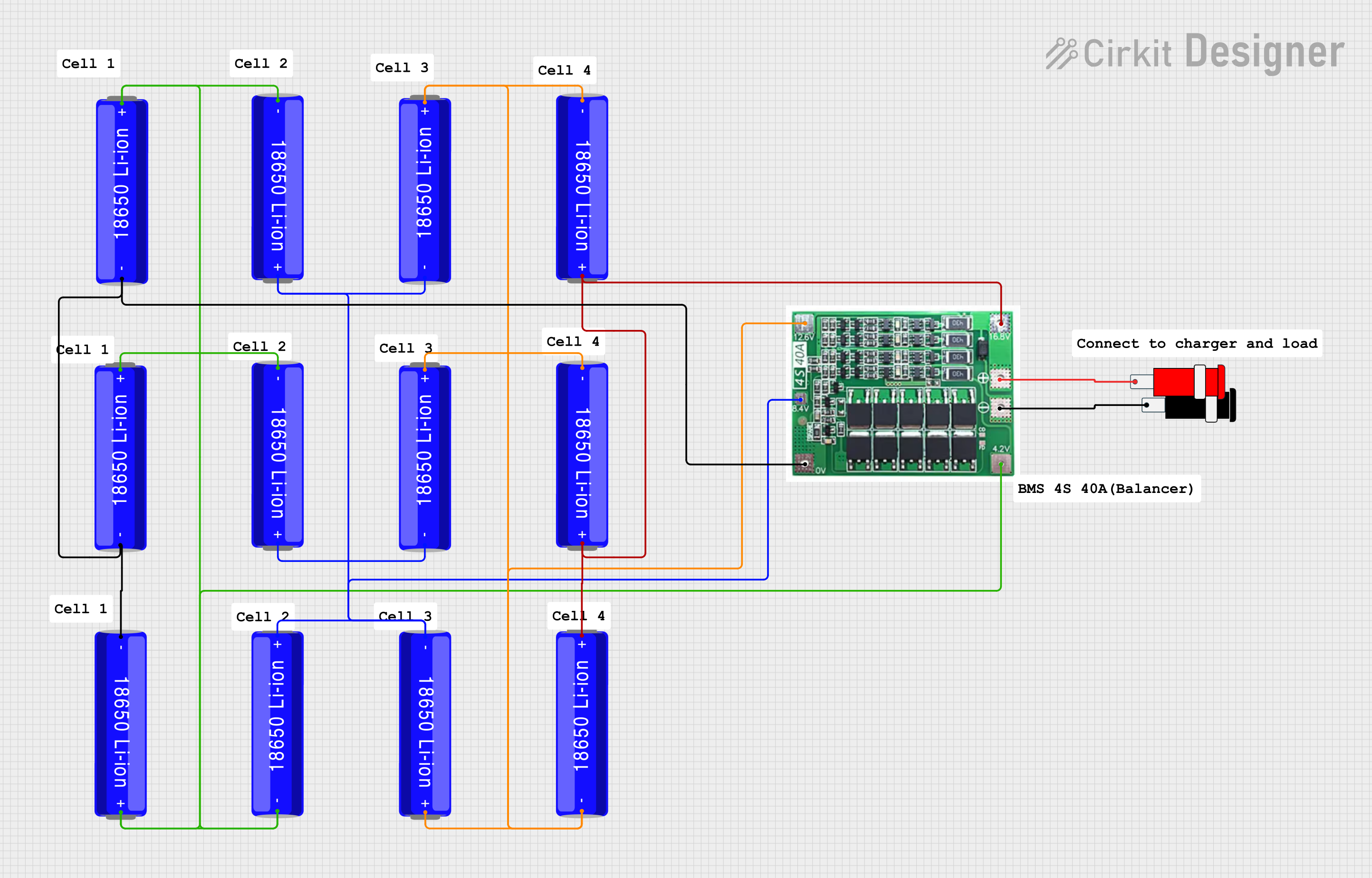 Open Project in Cirkit Designer
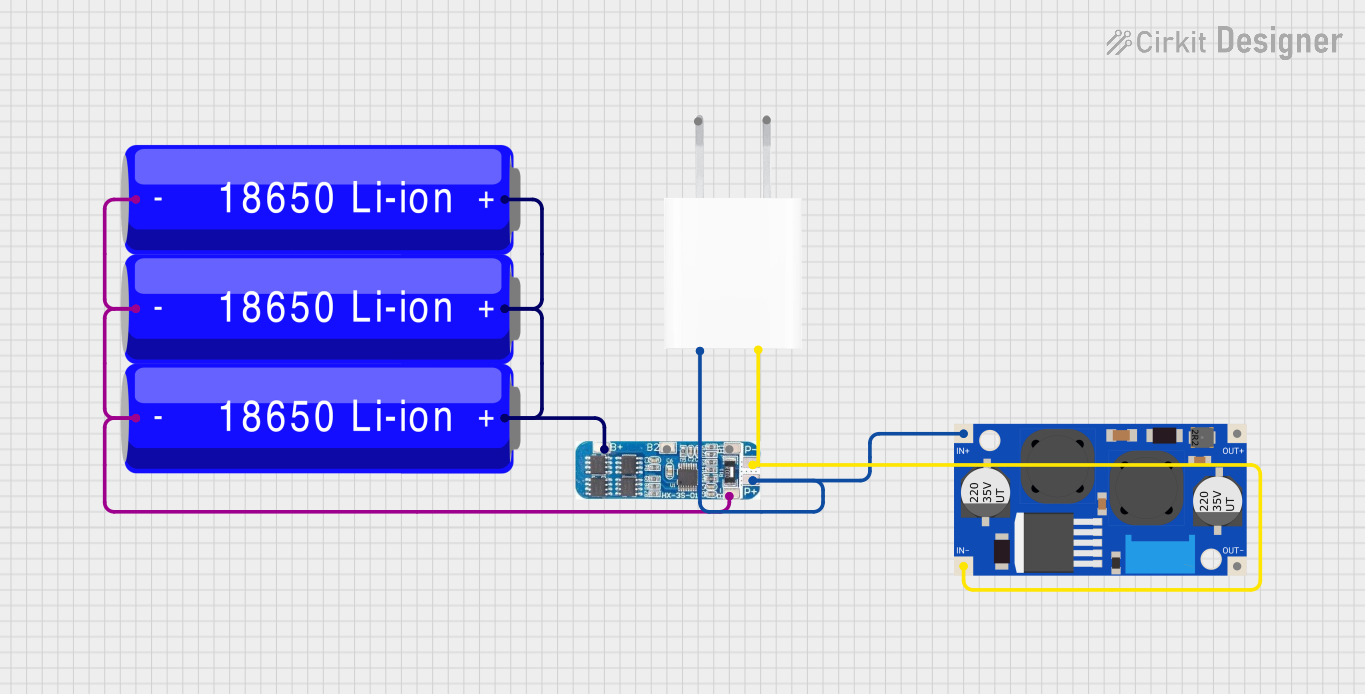 Open Project in Cirkit Designer
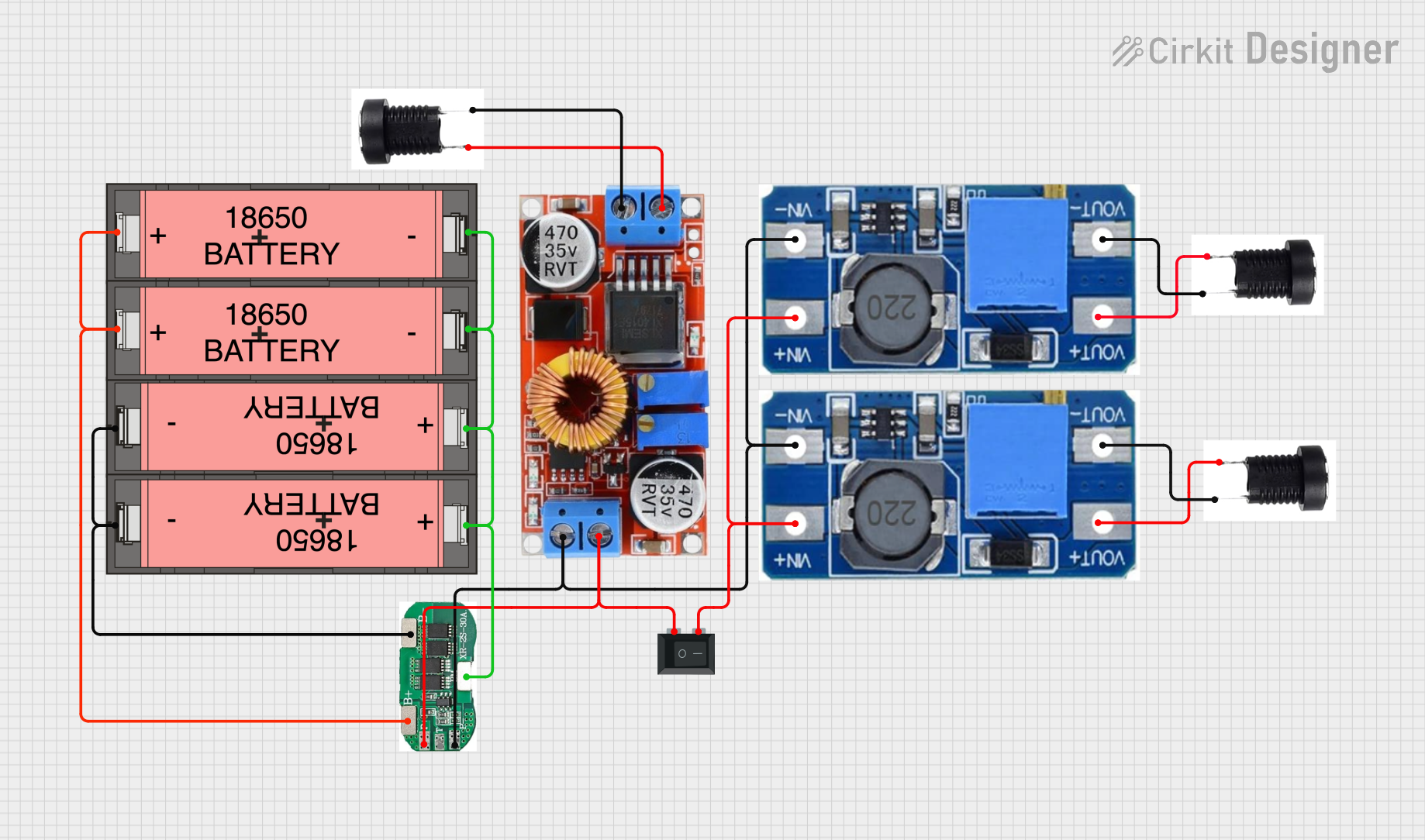 Open Project in Cirkit Designer
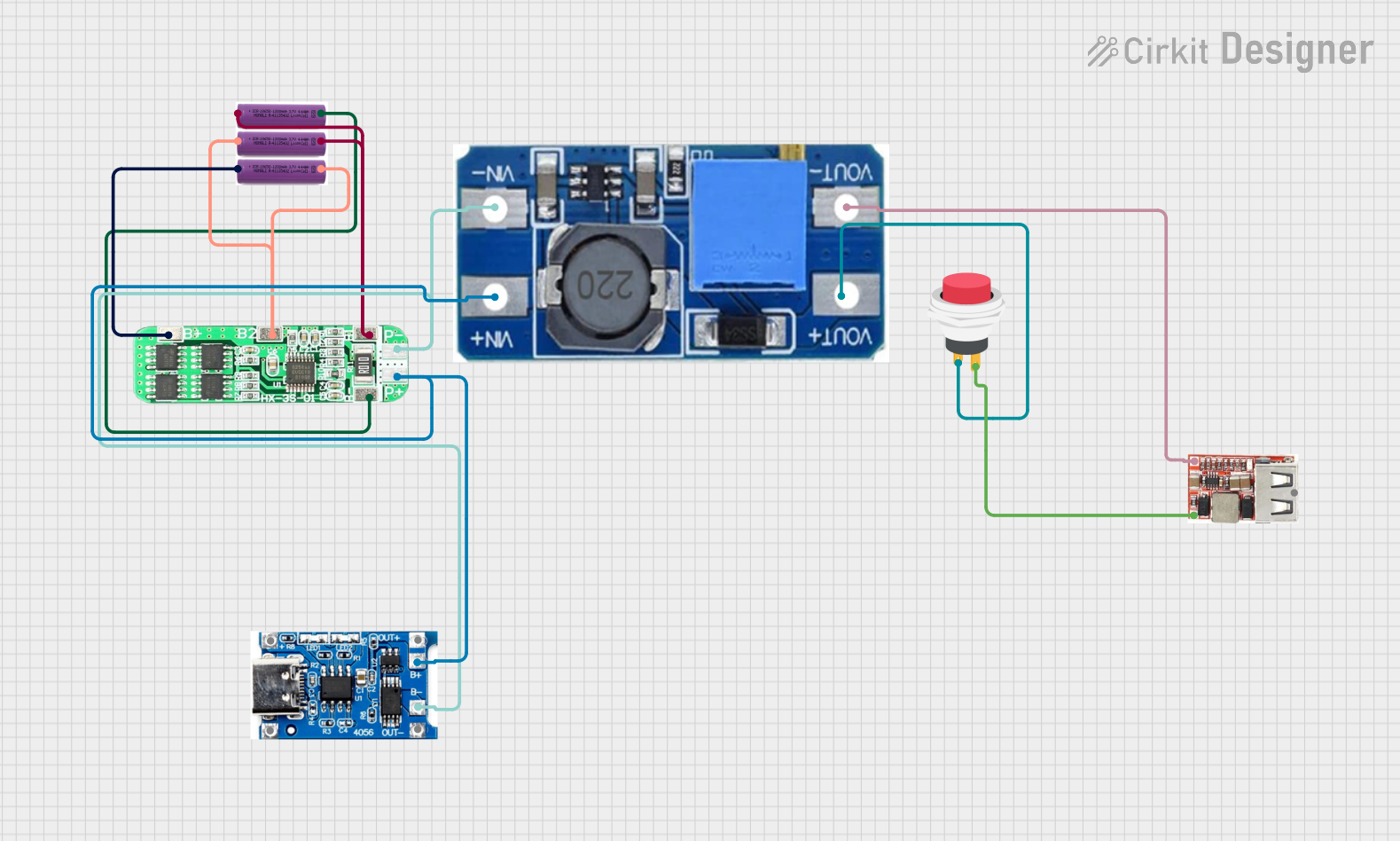 Open Project in Cirkit Designer
Explore Projects Built with BMS 3S
Open Project in Cirkit DesignerOpen Project in Cirkit DesignerOpen Project in Cirkit DesignerOpen Project in Cirkit DesignerCommon Applications and Use Cases
- Lithium-ion battery packs for electric vehicles (EVs)
- Portable power banks and energy storage systems
- Solar energy storage solutions
- Uninterruptible Power Supplies (UPS)
- Robotics and drones
Technical Specifications
The BMS 3S is engineered to provide robust protection and monitoring for 3-cell lithium-ion battery packs. Below are its key technical specifications:
| Parameter | Value |
|---|---|
| Supported Battery Type | Lithium-ion (Li-ion) |
| Number of Cells | 3 (in series) |
| Operating Voltage Range | 9V - 12.6V |
| Overcharge Protection | 4.25V ± 0.05V per cell |
| Over-discharge Protection | 2.5V ± 0.05V per cell |
| Maximum Continuous Current | 20A |
| Balancing Current | 50mA |
| Operating Temperature | -40°C to 85°C |
| Dimensions | 50mm x 20mm x 3mm |
Pin Configuration and Descriptions
The BMS 3S typically has the following pin configuration:
| Pin Name | Description |
|---|---|
| B- | Battery pack negative terminal |
| B1 | Connection to the positive terminal of the first cell |
| B2 | Connection to the positive terminal of the second cell |
| B+ | Battery pack positive terminal |
| P- | Load/device negative terminal |
| P+ | Load/device positive terminal (usually connected to B+) |
Usage Instructions
How to Use the BMS 3S in a Circuit
Connect the Battery Pack:
- Connect the negative terminal of the battery pack to the
B-pin. - Connect the positive terminal of the first cell to the
B1pin. - Connect the positive terminal of the second cell to the
B2pin. - Connect the positive terminal of the third cell (and the entire pack) to the
B+pin.
- Connect the negative terminal of the battery pack to the
Connect the Load:
- Connect the negative terminal of the load (or device) to the
P-pin. - Connect the positive terminal of the load to the
P+pin (or directly toB+).
- Connect the negative terminal of the load (or device) to the
Verify Connections:
- Double-check all connections to ensure proper polarity and avoid short circuits.
- Ensure that the battery pack voltage is within the operating range of the BMS.
Power On:
- Once all connections are secure, the BMS will automatically monitor and protect the battery pack.
Important Considerations and Best Practices
- Cell Matching: Ensure that all cells in the battery pack have similar capacities and internal resistances to avoid imbalances.
- Heat Dissipation: Avoid placing the BMS in an enclosed space without proper ventilation, as it may generate heat during operation.
- Avoid Overloading: Do not exceed the maximum continuous current rating (20A) to prevent damage to the BMS.
- Balancing: The BMS automatically balances the cells during charging. Allow sufficient time for balancing if the cells are significantly imbalanced.
Example: Connecting the BMS 3S to an Arduino UNO
The BMS 3S can be used with an Arduino UNO to monitor battery voltage. Below is an example code snippet for reading the voltage of each cell using the Arduino's analog pins:
// Define analog pins for voltage measurement
const int cell1Pin = A0; // Pin connected to B1
const int cell2Pin = A1; // Pin connected to B2
const int cell3Pin = A2; // Pin connected to B+

// Voltage divider resistors (adjust based on your circuit)
const float resistor1 = 10000.0; // 10k ohms
const float resistor2 = 10000.0; // 10k ohms

void setup() {
  Serial.begin(9600); // Initialize serial communication
}

void loop() {
  // Read analog values
  int cell1Raw = analogRead(cell1Pin);
  int cell2Raw = analogRead(cell2Pin);
  int cell3Raw = analogRead(cell3Pin);

  // Convert raw values to voltage
  float cell1Voltage = (cell1Raw / 1023.0) * 5.0 * ((resistor1 + resistor2) / resistor2);
  float cell2Voltage = (cell2Raw / 1023.0) * 5.0 * ((resistor1 + resistor2) / resistor2);
  float cell3Voltage = (cell3Raw / 1023.0) * 5.0 * ((resistor1 + resistor2) / resistor2);

  // Print voltages to Serial Monitor
  Serial.print("Cell 1 Voltage: ");
  Serial.print(cell1Voltage);
  Serial.println(" V");

  Serial.print("Cell 2 Voltage: ");
  Serial.print(cell2Voltage);
  Serial.println(" V");

  Serial.print("Cell 3 Voltage: ");
  Serial.print(cell3Voltage);
  Serial.println(" V");

  delay(1000); // Wait for 1 second before next reading
}
Note: Use appropriate voltage dividers to ensure the Arduino's analog pins do not exceed their maximum input voltage (5V).
Troubleshooting and FAQs
Common Issues and Solutions
BMS Not Powering On:
- Cause: Incorrect wiring or insufficient battery voltage.
- Solution: Verify all connections and ensure the battery pack voltage is within the operating range.
Overcharge/Over-discharge Protection Triggered:
- Cause: Battery voltage exceeds the protection thresholds.
- Solution: Disconnect the load or charger and allow the BMS to reset. Check the battery pack for faulty cells.
Uneven Cell Voltages:
- Cause: Cells in the pack are not matched or balancing is incomplete.
- Solution: Allow the BMS to balance the cells during charging. Replace mismatched cells if necessary.
Excessive Heat:
- Cause: Overloading or poor ventilation.
- Solution: Reduce the load current and ensure proper airflow around the BMS.
FAQs
Q: Can the BMS 3S be used with other battery chemistries?
A: No, the BMS 3S is specifically designed for lithium-ion batteries and may not work correctly with other chemistries.Q: How do I know if the BMS is balancing the cells?
A: During charging, the BMS will automatically balance the cells. You can measure the cell voltages to confirm they are equalizing.Q: What happens if I exceed the maximum current rating?
A: The BMS will trigger overcurrent protection and disconnect the load to prevent damage.Q: Can I use the BMS 3S for a 2-cell battery pack?
A: No, the BMS 3S is designed for 3-cell series configurations only. Use a 2S BMS for 2-cell packs.