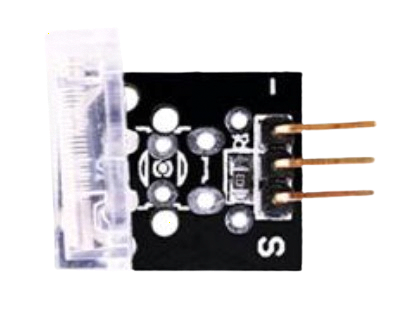
The Tap Switch by ELEGOO is a versatile component designed to allow the selection of different voltage levels in a transformer by tapping into various points of the winding. This functionality is crucial in applications where precise voltage control is necessary. Common use cases include power supplies, voltage regulators, and various types of electrical equipment that require adjustable voltage levels.
Explore Projects Built with Tap Switch
Use Cirkit Designer to design, explore, and prototype these projects online. Some projects support real-time simulation. Click "Open Project" to start designing instantly!
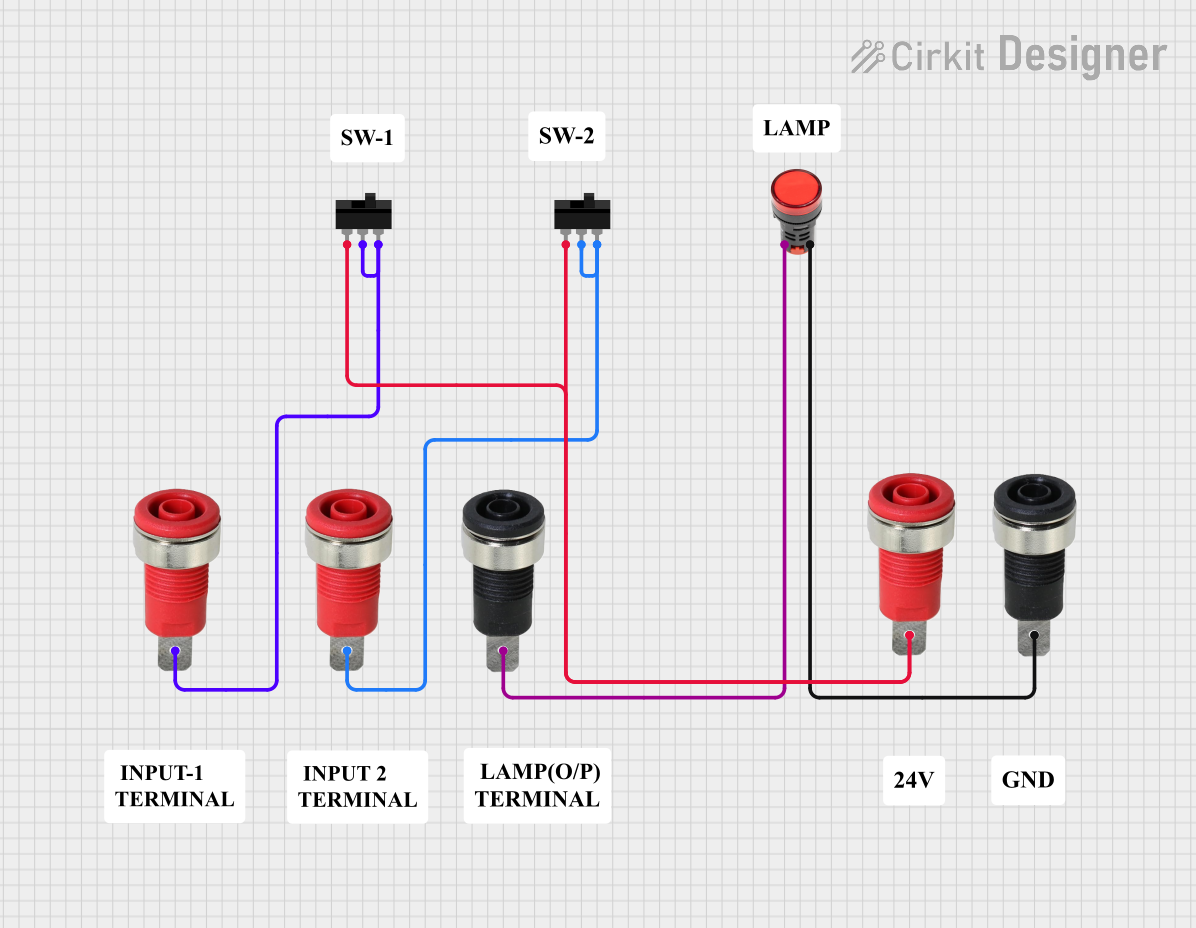
This circuit consists of two toggle switches and a red lamp connected to panel mount banana sockets. The switches control the connection between the red and black banana sockets, allowing the lamp to be turned on or off depending on the switch positions.
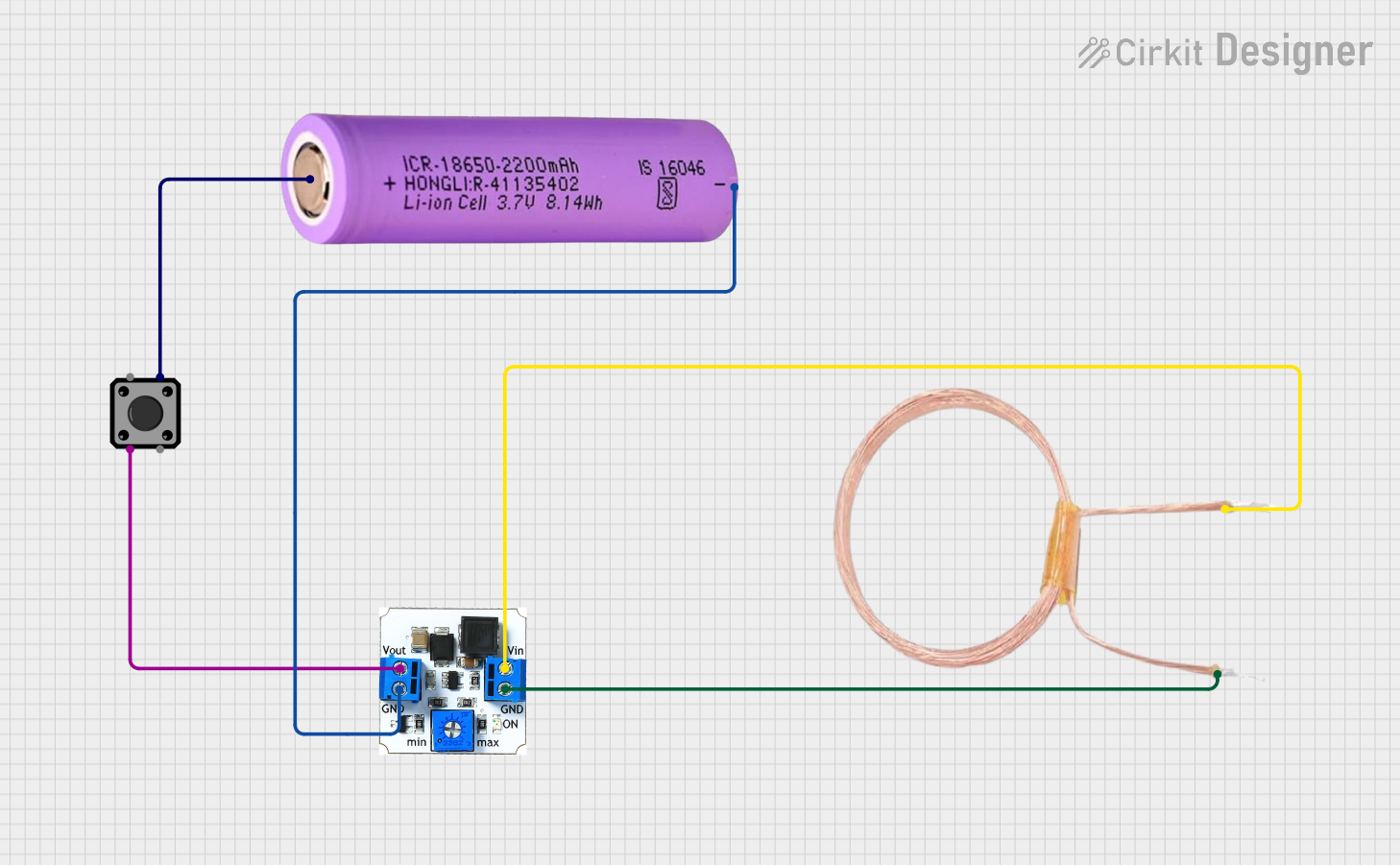
This circuit consists of a battery-powered DC/DC booster that steps up the voltage, which is then controlled by a tactile switch. The booster is connected to a copper coil, and the switch allows the user to control the output voltage from the booster.
This is a manually controlled indicator and alert system. It uses switches and pushbuttons to activate red and green LEDs, buzzers, and bulbs, indicating different states or alerts. The circuit is powered by a 6V battery and includes resistors to protect the LEDs from excessive current.
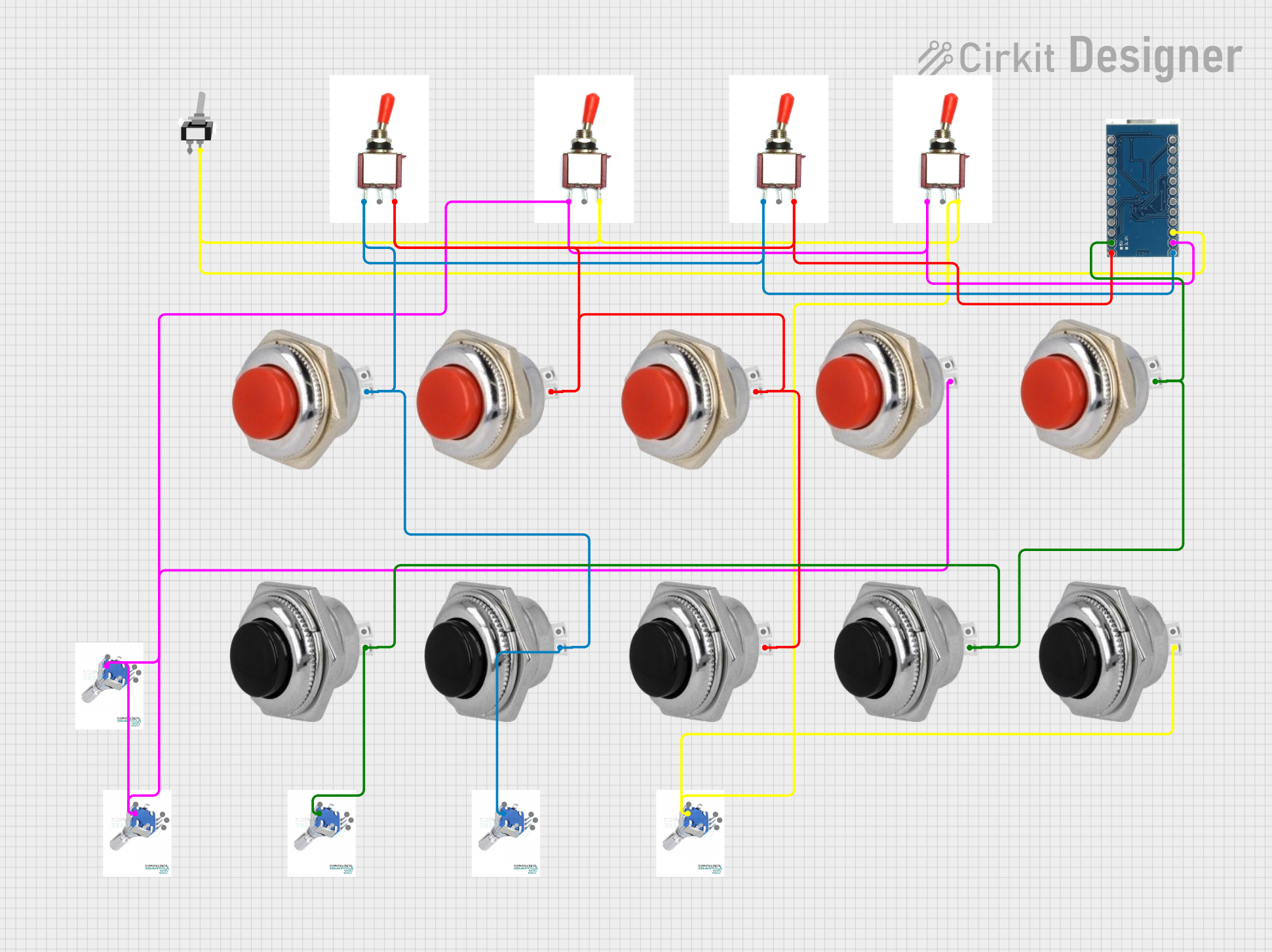
This circuit features an Arduino Micro Pro microcontroller connected to multiple input devices including momentary switches and rotary encoders, with toggle switches likely used for controlling power or signal paths. The microcontroller is set up to monitor and respond to the state changes of these input devices, enabling interactive control for an application.
Identify the Pins: Refer to the pin configuration table to identify the common pin (COM) and the tap pins (T1, T2, T3, T4, T5).
Connect the Common Pin: Connect the common pin (COM) to the input voltage source.
Select the Desired Tap: Connect the desired tap pin (T1, T2, T3, T4, T5) to the load or the next stage in your circuit.
Ensure Proper Ratings: Make sure that the voltage and current ratings of the tap switch are not exceeded in your application.
Important Considerations and Best Practices
Voltage and Current Ratings: Always ensure that the voltage and current ratings of the tap switch are not exceeded to avoid damage.
Mechanical Life: The tap switch has a mechanical life of 10,000 cycles. Plan for maintenance or replacement if used frequently.
Insulation Resistance: Ensure proper insulation to avoid short circuits and maintain safety.
Temperature Range: Operate the tap switch within the specified temperature range to ensure optimal performance.
Example: Connecting to an Arduino UNO
While the tap switch is not typically used directly with an Arduino UNO, it can be part of a larger circuit controlled by the Arduino. Below is an example of how you might use the Arduino to control a relay that switches between different taps.
/*
  Example code to control a relay with Arduino UNO
  to switch between different taps of the tap switch.
*/

const int relayPin = 7; // Pin connected to the relay module

void setup() {
  pinMode(relayPin, OUTPUT); // Set relay pin as output
  digitalWrite(relayPin, LOW); // Initialize relay as off
}

void loop() {
  // Turn on the relay to switch to a different tap
  digitalWrite(relayPin, HIGH);
  delay(1000); // Wait for 1 second

  // Turn off the relay
  digitalWrite(relayPin, LOW);
  delay(1000); // Wait for 1 second
}
Troubleshooting and FAQs
Common Issues Users Might Face
No Voltage Change: If switching between taps does not change the voltage, check the connections and ensure the tap switch is functioning correctly.
Overheating: If the tap switch overheats, verify that the current and voltage ratings are not being exceeded.
Intermittent Operation: If the tap switch operates intermittently, check for loose connections or worn-out contacts.
Solutions and Tips for Troubleshooting
Check Connections: Ensure all connections are secure and correctly made according to the pin configuration.
Verify Ratings: Double-check that the voltage and current ratings are within the specified limits.
Inspect for Damage: Look for any physical damage or wear on the tap switch that might affect its operation.
Use Proper Insulation: Ensure that all connections are properly insulated to prevent short circuits.
By following this documentation, users can effectively utilize the ELEGOO Tap Switch in their projects, ensuring reliable and efficient voltage control.

 Open Project in Cirkit Designer