
How to Use Lithium Ion Polymer Battery 3.7v 2000mAh: Examples, Pinouts, and Specs
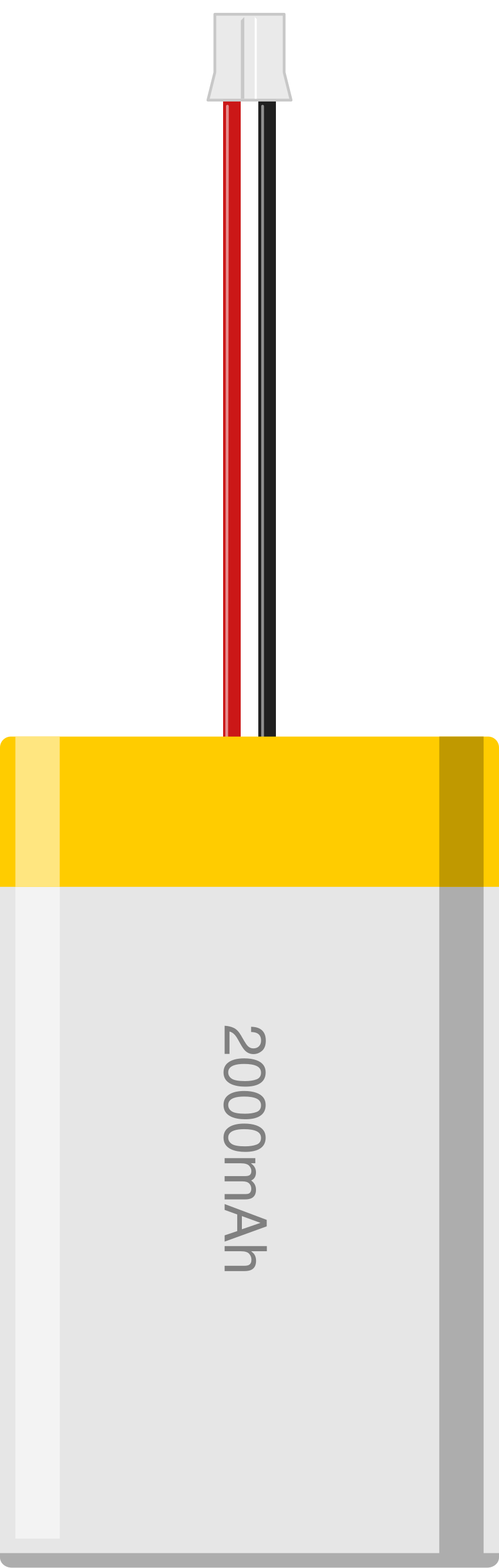
 Design with Lithium Ion Polymer Battery 3.7v 2000mAh in Cirkit Designer
Introduction
The Lithium Ion Polymer Battery 3.7V 2000mAh (Manufacturer Part ID: 2011) by Adafruit is a rechargeable battery designed for use in portable electronic devices. It provides a nominal voltage of 3.7V and a capacity of 2000mAh, making it ideal for applications requiring lightweight, high-energy-density power sources. This battery is commonly used in projects involving wearables, IoT devices, robotics, and other portable electronics.
Explore Projects Built with Lithium Ion Polymer Battery 3.7v 2000mAh
 Open Project in Cirkit Designer
 Open Project in Cirkit Designer
 Open Project in Cirkit Designer
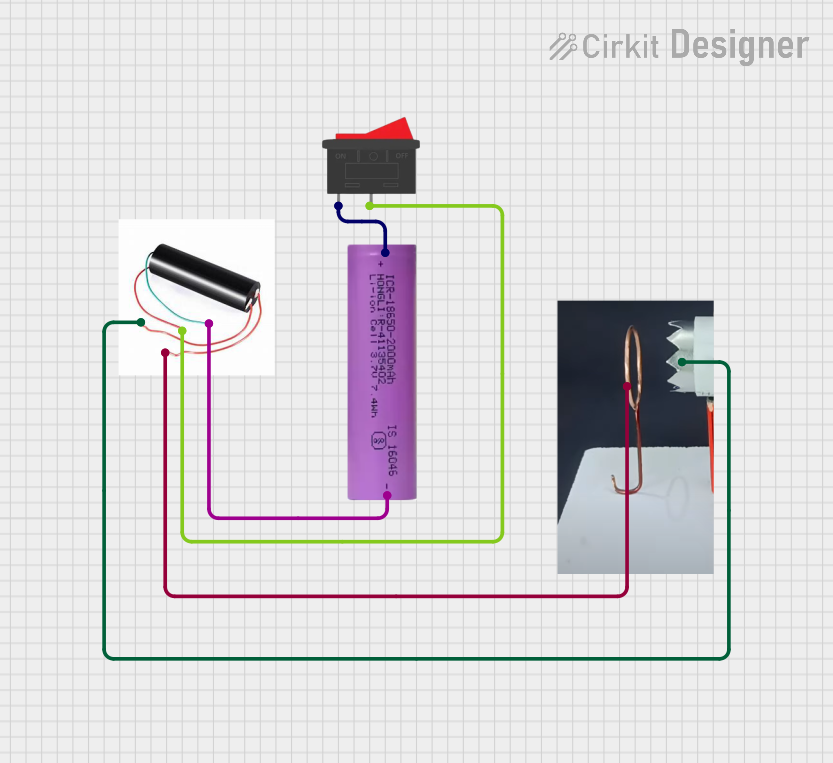 Open Project in Cirkit Designer
Explore Projects Built with Lithium Ion Polymer Battery 3.7v 2000mAh
Open Project in Cirkit DesignerOpen Project in Cirkit DesignerOpen Project in Cirkit DesignerOpen Project in Cirkit DesignerCommon Applications
- Wearable devices (e.g., fitness trackers, smartwatches)
- Internet of Things (IoT) devices
- Portable audio systems
- Robotics and small drones
- DIY electronics projects
Technical Specifications
Key Specifications
| Parameter | Value |
|---|---|
| Nominal Voltage | 3.7V |
| Capacity | 2000mAh |
| Chemistry | Lithium-Ion Polymer |
| Charging Voltage | 4.2V (maximum) |
| Discharge Cutoff Voltage | 3.0V (minimum) |
| Maximum Discharge Rate | 2C (4A) |
| Standard Charge Current | 0.5C (1A) |
| Connector Type | JST-PH 2-pin |
| Dimensions | 50mm x 34mm x 7mm |
| Weight | ~36g |
Pin Configuration
The battery is equipped with a JST-PH 2-pin connector. Below is the pin configuration:
| Pin Number | Pin Name | Description |
|---|---|---|
| 1 | Positive | Positive terminal (+3.7V) |
| 2 | Negative | Negative terminal (GND) |
Usage Instructions
How to Use the Battery in a Circuit
Connecting the Battery:
- Use the JST-PH 2-pin connector to connect the battery to your circuit or charging module.
- Ensure the polarity matches the circuit's requirements (red wire for positive, black wire for ground).
Charging the Battery:
- Use a dedicated Lithium-Ion Polymer battery charger (e.g., Adafruit Micro Lipo Charger).
- Set the charging voltage to 4.2V and the charging current to 0.5C (1A) for optimal performance.
- Avoid overcharging or discharging below 3.0V to prevent damage.
Powering a Circuit:
- Ensure the circuit's current draw does not exceed the battery's maximum discharge rate (4A).
- Use a voltage regulator if your circuit requires a voltage lower than 3.7V.
Important Considerations
- Safety: Lithium-Ion Polymer batteries are sensitive to overcharging, over-discharging, and short circuits. Always use a protection circuit or battery management system (BMS).
- Storage: Store the battery in a cool, dry place at ~50% charge to prolong its lifespan.
- Handling: Avoid puncturing or exposing the battery to high temperatures.
Example: Using with Arduino UNO
To power an Arduino UNO with this battery, you can connect it to a voltage regulator module (e.g., a 5V boost converter) to step up the voltage to 5V. Below is an example of Arduino code to monitor the battery voltage using an analog pin:
// Example code to monitor battery voltage using Arduino UNO
const int batteryPin = A0; // Analog pin connected to battery voltage divider
const float voltageDividerRatio = 2.0; // Adjust based on your resistor values
const float referenceVoltage = 5.0; // Arduino UNO's reference voltage

void setup() {
  Serial.begin(9600); // Initialize serial communication
}

void loop() {
  int rawValue = analogRead(batteryPin); // Read analog value
  float batteryVoltage = (rawValue / 1023.0) * referenceVoltage * voltageDividerRatio;

  // Print the battery voltage to the Serial Monitor
  Serial.print("Battery Voltage: ");
  Serial.print(batteryVoltage);
  Serial.println(" V");

  delay(1000); // Wait for 1 second before the next reading
}
Note: Use a voltage divider circuit to scale down the battery voltage to a safe range for the Arduino's analog input (0-5V).
Troubleshooting and FAQs
Common Issues and Solutions
Battery Not Charging:
- Cause: Charger not set to the correct voltage or current.
- Solution: Verify the charger is configured for 4.2V and 0.5C (1A).
Battery Drains Quickly:
- Cause: Excessive current draw or aging battery.
- Solution: Ensure the circuit's current draw is within the battery's discharge limits. Replace the battery if it has degraded.
Battery Overheats:
- Cause: Overcharging, short circuit, or excessive discharge rate.
- Solution: Use a protection circuit and ensure proper handling.
Arduino Reads Incorrect Voltage:
- Cause: Incorrect voltage divider ratio or reference voltage.
- Solution: Double-check the resistor values in the voltage divider and the Arduino's reference voltage.
FAQs
Q: Can I use this battery without a protection circuit?
A: It is not recommended. Always use a protection circuit to prevent overcharging, over-discharging, and short circuits.Q: How long will the battery last on a single charge?
A: Battery life depends on the load current. For example, at a 500mA load, the battery will last approximately 4 hours (2000mAh ÷ 500mA).Q: Can I connect multiple batteries in series or parallel?
A: Yes, but ensure proper balancing and use a battery management system (BMS) to avoid damage.Q: What is the shelf life of this battery?
A: When stored properly (cool, dry place, ~50% charge), the battery can last several years.