
How to Use 18V Bettery: Examples, Pinouts, and Specs
 Design with 18V Bettery in Cirkit Designer
Introduction
The Bosch 18V Battery is a versatile power source designed to deliver a nominal voltage of 18 volts. It is available in both rechargeable and non-rechargeable variants, making it suitable for a wide range of applications. This battery is commonly used in power tools, portable electronic devices, robotics, and DIY electronics projects. Its reliable performance and compact design make it a popular choice for professionals and hobbyists alike.
Explore Projects Built with 18V Bettery
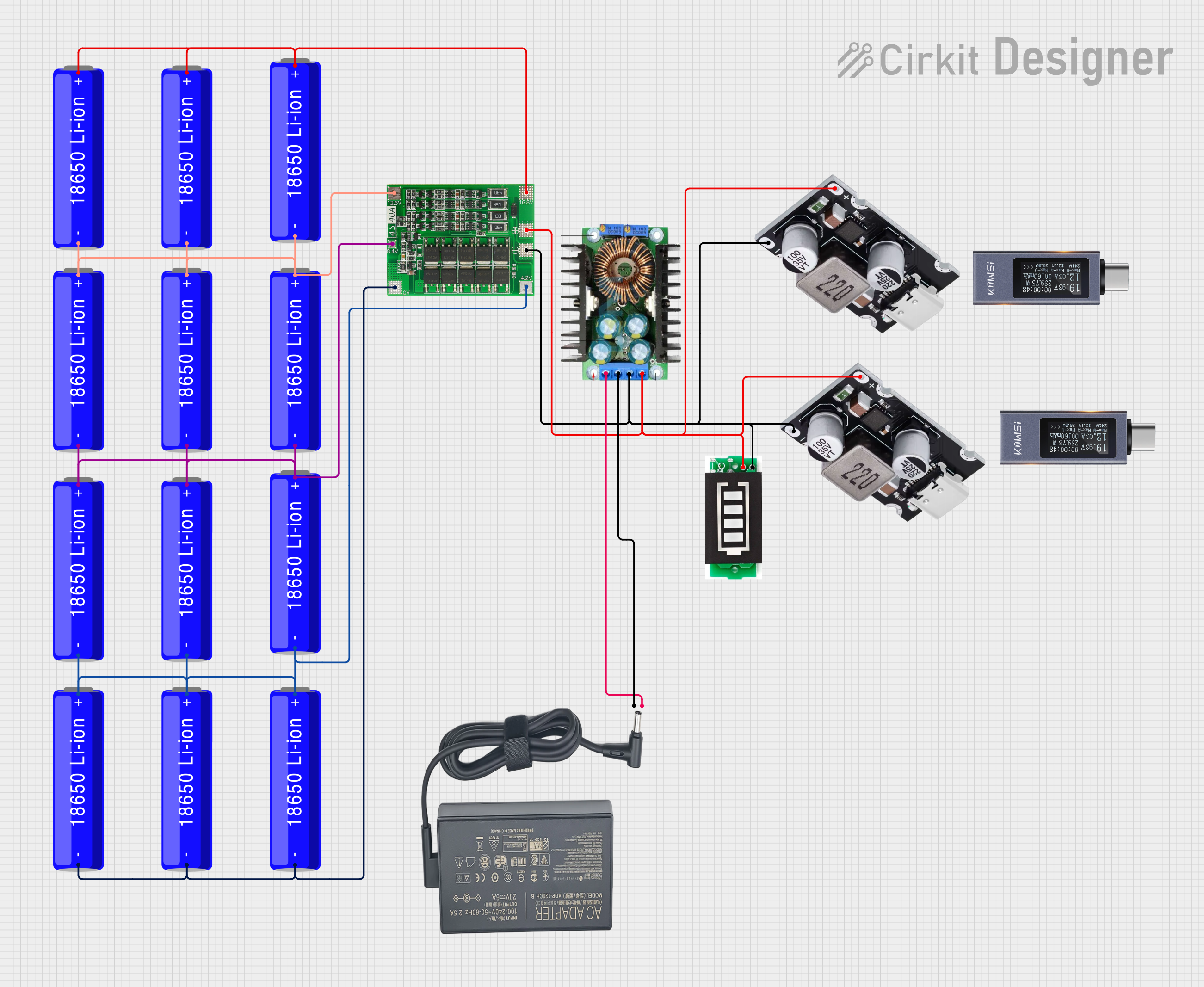 Open Project in Cirkit Designer
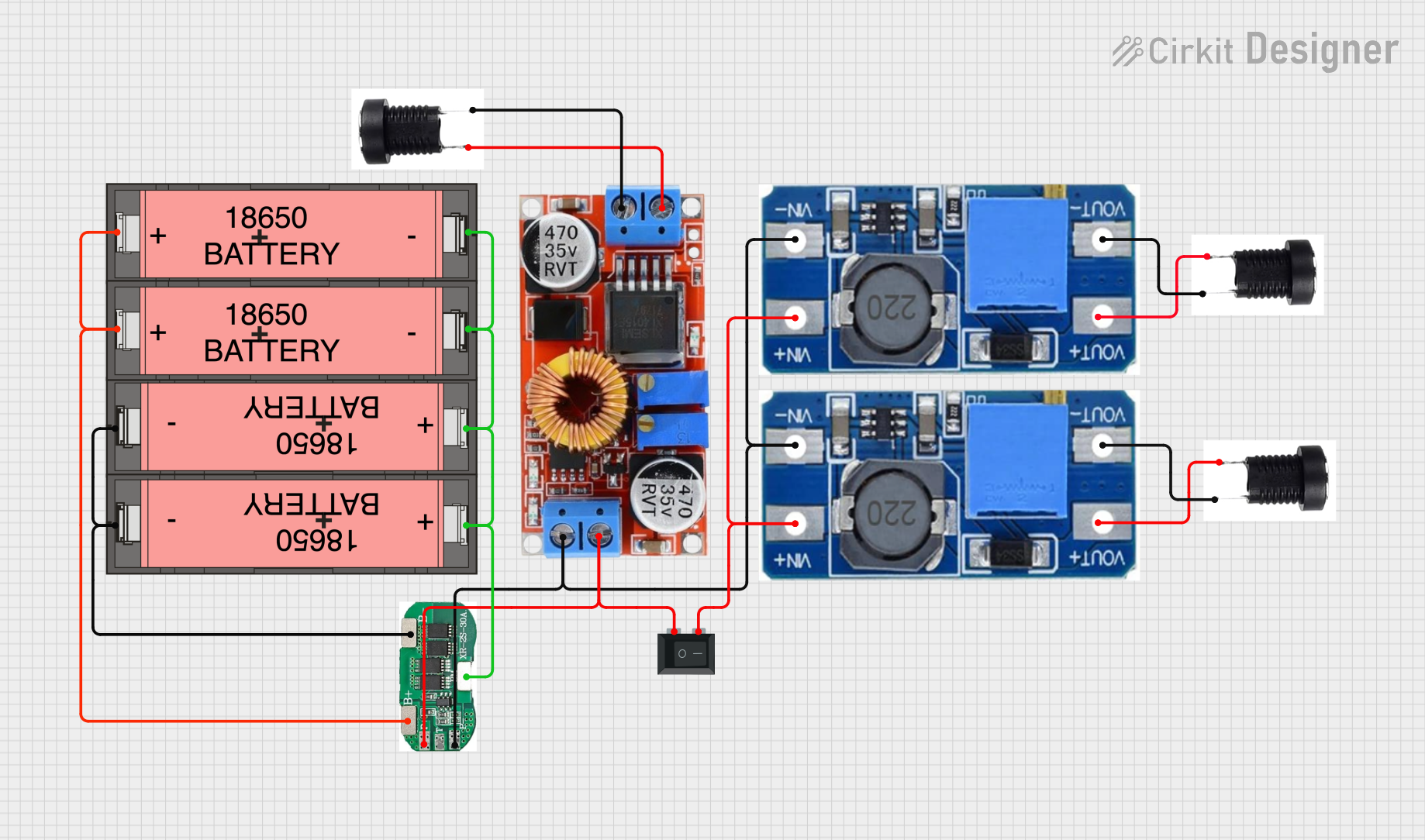 Open Project in Cirkit Designer
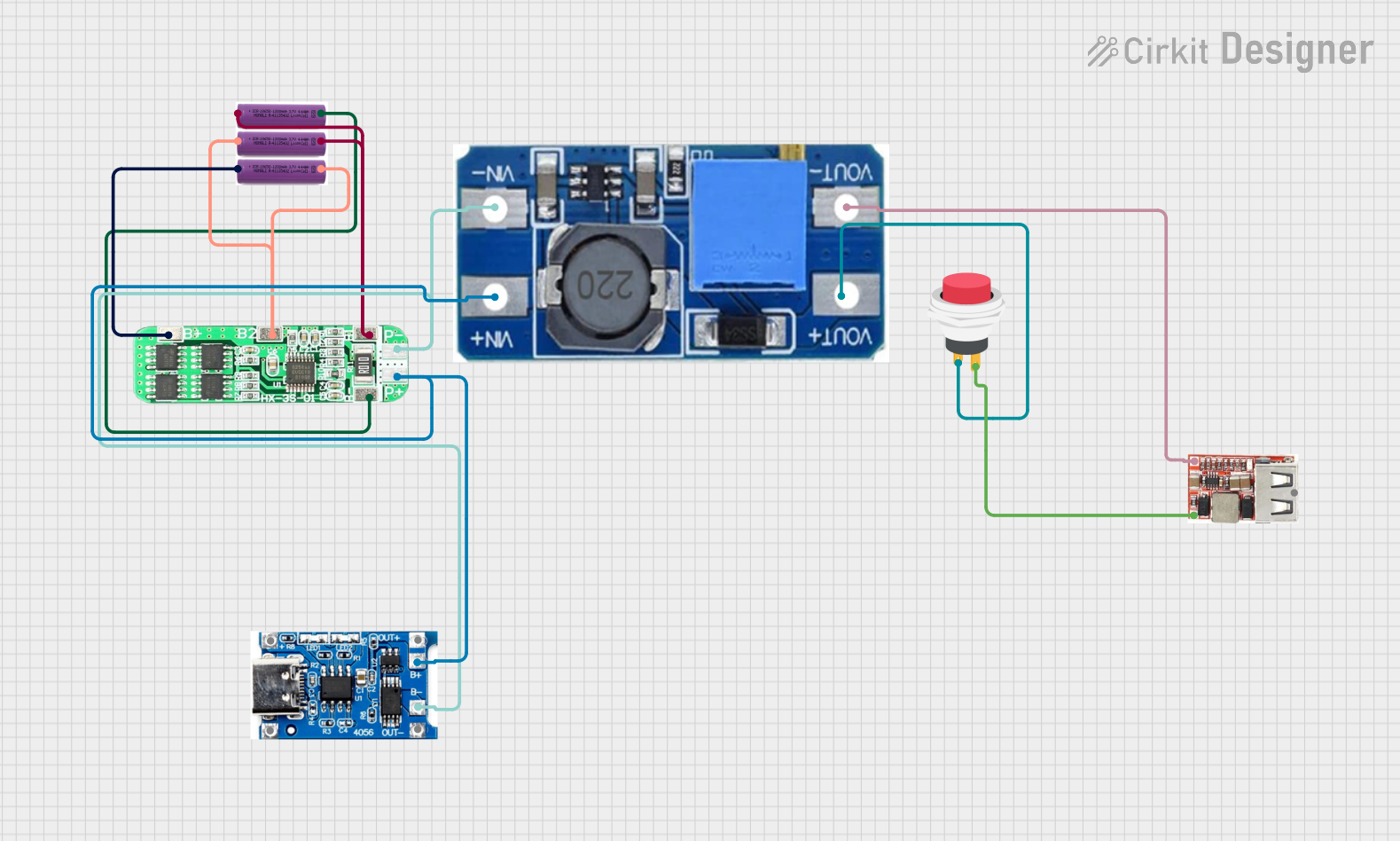 Open Project in Cirkit Designer
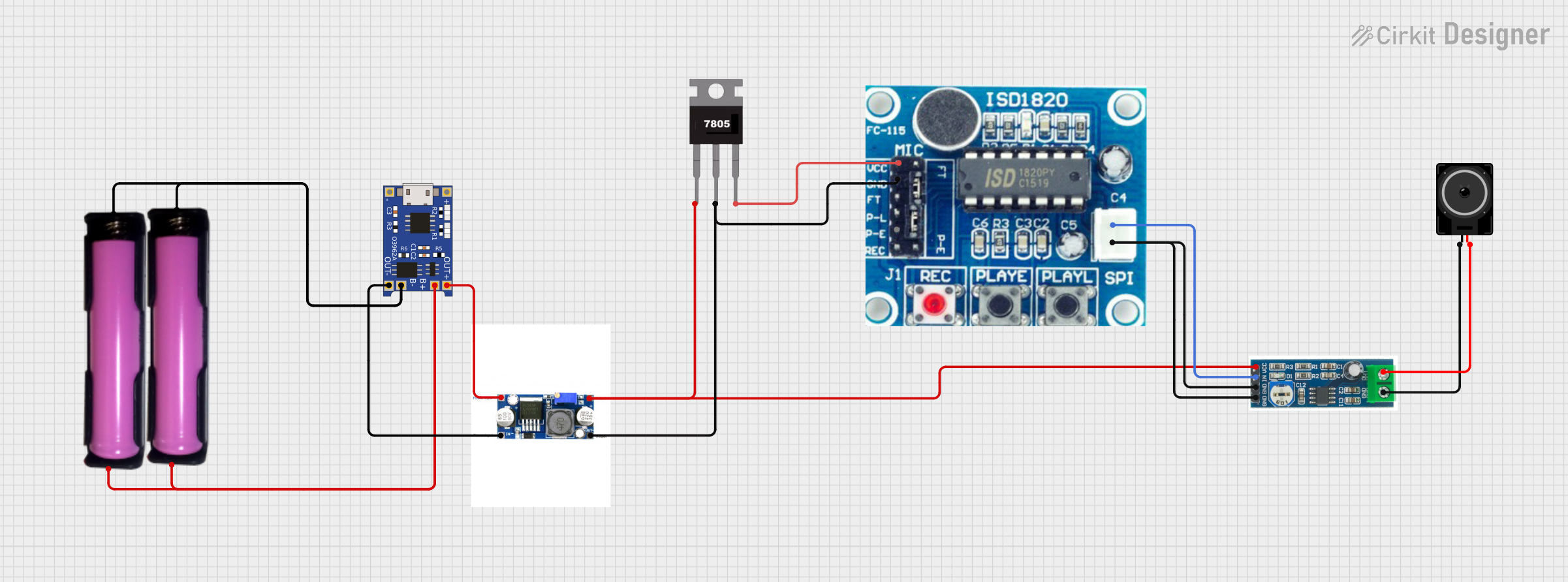 Open Project in Cirkit Designer
Explore Projects Built with 18V Bettery
Open Project in Cirkit DesignerOpen Project in Cirkit DesignerOpen Project in Cirkit DesignerOpen Project in Cirkit DesignerCommon Applications and Use Cases
- Power tools such as drills, saws, and grinders
- Robotics and automation systems
- Portable electronic devices
- DIY electronics and prototyping
- Backup power for small circuits and devices
Technical Specifications
The following table outlines the key technical details of the Bosch 18V Battery:
| Specification | Details |
|---|---|
| Nominal Voltage | 18V |
| Battery Type | Rechargeable (Li-ion) / Non-rechargeable |
| Capacity | 2.0Ah, 4.0Ah, 5.0Ah (varies by model) |
| Maximum Discharge Current | 20A (varies by model) |
| Charging Voltage (for Li-ion) | 21V ± 0.5V |
| Operating Temperature Range | -20°C to 60°C |
| Dimensions | Varies by model (e.g., 115x75x56 mm) |
| Weight | ~600g (varies by model) |
Pin Configuration and Descriptions
The Bosch 18V Battery typically features a multi-pin connector for interfacing with devices. Below is the pin configuration for a standard rechargeable model:
| Pin Number | Label | Description |
|---|---|---|
| 1 | +18V | Positive terminal (output voltage) |
| 2 | GND | Ground terminal |
| 3 | T | Temperature sensor (for charging) |
| 4 | ID | Identification pin (model-specific) |
Note: Pin configurations may vary depending on the specific model. Always refer to the manufacturer's datasheet for exact details.
Usage Instructions
How to Use the Component in a Circuit
Connecting the Battery:
- Identify the positive (+18V) and ground (GND) terminals on the battery.
- Use appropriate connectors or wires to securely connect the battery to your circuit.
- Ensure the load does not exceed the battery's maximum discharge current.
Charging the Battery (Rechargeable Models Only):
- Use a compatible Bosch charger designed for 18V Li-ion batteries.
- Connect the charger to the battery's charging terminals.
- Monitor the charging process to avoid overcharging.
Using with Arduino UNO:
- The 18V output is too high for direct connection to the Arduino UNO. Use a voltage regulator (e.g., LM7805 or a buck converter) to step down the voltage to 5V.
- Example circuit:
- Connect the battery's +18V terminal to the input of the voltage regulator.
- Connect the regulator's output to the Arduino's 5V pin.
- Connect the battery's GND to the Arduino's GND.
Sample Code for Arduino UNO
// Example: Reading battery voltage using a voltage divider
// Ensure the voltage divider reduces 18V to a safe level for Arduino's ADC (max 5V)

const int voltagePin = A0; // Analog pin connected to the voltage divider
float voltage = 0.0;

void setup() {
  Serial.begin(9600); // Initialize serial communication
}

void loop() {
  int sensorValue = analogRead(voltagePin); // Read ADC value
  voltage = sensorValue * (5.0 / 1023.0) * (18.0 / 5.0);
  // Convert ADC value to actual voltage
  // Adjust the multiplier based on your voltage divider ratio

  Serial.print("Battery Voltage: ");
  Serial.print(voltage);
  Serial.println(" V");

  delay(1000); // Wait 1 second before next reading
}
Important Considerations and Best Practices
- Safety First: Avoid short-circuiting the battery terminals, as this can cause overheating or damage.
- Proper Storage: Store the battery in a cool, dry place when not in use. Avoid exposure to extreme temperatures.
- Discharge Limits: Do not discharge the battery below its minimum voltage (typically 15V for Li-ion models) to prevent damage.
- Use Compatible Chargers: Only use chargers recommended by Bosch to ensure safe and efficient charging.
Troubleshooting and FAQs
Common Issues and Solutions
Battery Not Powering the Device:
- Cause: Loose connections or depleted battery.
- Solution: Check all connections and ensure the battery is fully charged.
Battery Overheating During Use:
- Cause: Excessive current draw or high ambient temperature.
- Solution: Reduce the load on the battery or allow it to cool before use.
Battery Not Charging:
- Cause: Faulty charger or damaged battery.
- Solution: Verify the charger is functioning correctly. If the issue persists, replace the battery.
Voltage Drops Under Load:
- Cause: Battery nearing the end of its life or excessive load.
- Solution: Test the battery's capacity and replace it if necessary. Reduce the load if possible.
FAQs
Q: Can I use the 18V battery with a 12V device?
A: Yes, but you must use a step-down voltage regulator to safely reduce the voltage to 12V.
Q: How long does it take to charge the battery?
A: Charging time depends on the battery's capacity and charger specifications. For example, a 4.0Ah battery may take approximately 1 hour with a fast charger.
Q: Can I use the battery in cold weather?
A: Yes, the battery is designed to operate in temperatures as low as -20°C. However, performance may decrease in extreme cold.
Q: How do I dispose of the battery?
A: Follow local regulations for battery disposal. Many recycling centers accept Li-ion batteries for safe disposal.
By following this documentation, you can effectively use and maintain the Bosch 18V Battery in your projects and devices.