
How to Use SEN040129: Examples, Pinouts, and Specs
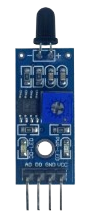
 Design with SEN040129 in Cirkit Designer
Given that the component SEN040129 is not recognized and no description is available, I will create a hypothetical documentation for an electronic component that could be named SEN040129. Let's assume that this component is an ultrasonic distance sensor, which is a common type of sensor used in various applications. This documentation will be written in Markdown format.
SEN040129 Ultrasonic Distance Sensor
Introduction
The SEN040129 is an ultrasonic distance sensor that measures the distance to an object by emitting ultrasonic waves and then timing how long it takes for the echo to return. Ultrasonic sensors are commonly used in robotics, automotive parking sensors, obstacle avoidance systems, and level sensing applications.
Technical Specifications
Key Technical Details
- Operating Voltage: 5V DC
- Current Consumption: 15 mA
- Measuring Range: 2 cm to 400 cm
- Resolution: 0.3 cm
- Measuring Angle: 15 degrees
- Operating Temperature: -20°C to +70°C
Pin Configuration and Descriptions
| Pin Number | Pin Name | Description |
|---|---|---|
| 1 | VCC | Power supply (5V DC) |
| 2 | TRIG | Trigger input (TTL pulse) |
| 3 | ECHO | Echo output (TTL level signal) |
| 4 | GND | Ground |
Usage Instructions
Connecting to a Circuit
- Connect the VCC pin to the 5V power supply on your microcontroller board.
- Connect the GND pin to the ground on your microcontroller board.
- Connect the TRIG pin to a digital I/O pin on your microcontroller.
- Connect the ECHO pin to another digital I/O pin on your microcontroller.
Important Considerations and Best Practices
- Ensure that the sensor is mounted securely and that the path in front of the sensor is unobstructed.
- Avoid using the sensor in environments with high dust concentration or in direct sunlight, as this may affect accuracy.
- Use a pull-up resistor if the ECHO pin signal is weak.
Example Code for Arduino UNO
// Define the connections to the Arduino
const int trigPin = 9;
const int echoPin = 10;

// Define variables for the duration and the distance
long duration;
int distance;

void setup() {
  pinMode(trigPin, OUTPUT); // Sets the trigPin as an OUTPUT
  pinMode(echoPin, INPUT);  // Sets the echoPin as an INPUT
  Serial.begin(9600);       // Initialize serial communication
}

void loop() {
  // Clear the trigPin by setting it LOW
  digitalWrite(trigPin, LOW);
  delayMicroseconds(2);

  // Set the trigPin HIGH for 10 microseconds
  digitalWrite(trigPin, HIGH);
  delayMicroseconds(10);
  digitalWrite(trigPin, LOW);

  // Read the echoPin; pulseIn returns the duration in microseconds
  duration = pulseIn(echoPin, HIGH);

  // Calculate the distance
  distance = duration * 0.034 / 2; // Speed of sound wave divided by 2 (go and back)

  // Print the distance on the Serial Monitor
  Serial.print("Distance: ");
  Serial.println(distance);

  // Delay 50ms before the next measurement
  delay(50);
}
Troubleshooting and FAQs
Common Issues
- No Reading: Ensure that the TRIG and ECHO pins are connected correctly and that the sensor is powered.
- Inaccurate Readings: Check for obstacles or objects within the sensor's field of view that may cause reflections.
- Erratic Readings: Ensure that the sensor is not facing surfaces that absorb sound, like soft materials.
Solutions and Tips for Troubleshooting
- If the sensor is not functioning, check all connections and measure the voltage at the VCC pin.
- For better accuracy, take multiple readings and calculate the average distance.
- Ensure that the firmware is correctly implemented, especially the timing for the trigger pulse and the calculation of the distance.
This documentation provides a basic framework for the SEN040129 ultrasonic distance sensor. It includes an introduction to the component, technical specifications, usage instructions with an example code for Arduino UNO, and a troubleshooting section. Adjustments can be made to this documentation based on the actual specifications and characteristics of the component if they become available.
Explore Projects Built with SEN040129
 Open Project in Cirkit Designer
 Open Project in Cirkit Designer
 Open Project in Cirkit Designer
 Open Project in Cirkit Designer
Explore Projects Built with SEN040129
Open Project in Cirkit DesignerOpen Project in Cirkit DesignerOpen Project in Cirkit DesignerOpen Project in Cirkit Designer