
How to Use MAX30102: Examples, Pinouts, and Specs
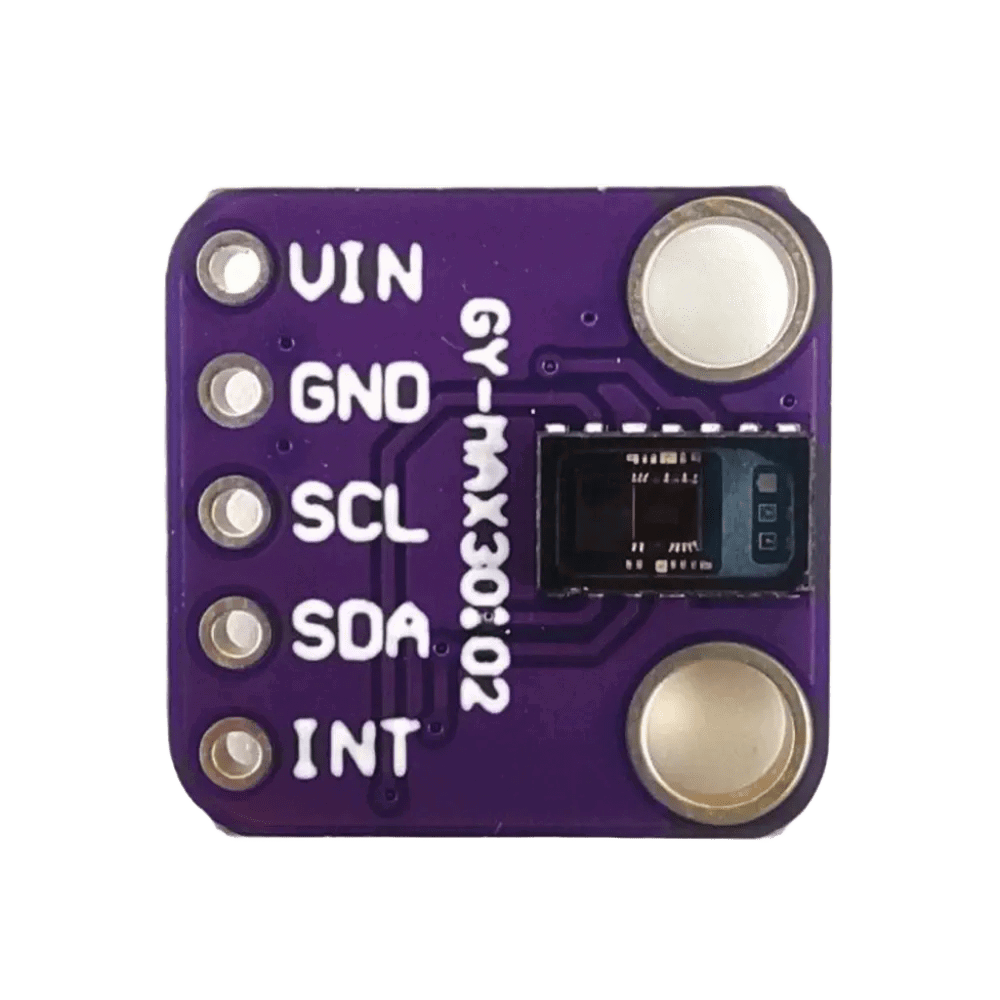
 Design with MAX30102 in Cirkit Designer
Introduction
The MAX30102 Heart Rate and Pulse Oximetry Sensor Module, manufactured by Analog Devices, is a highly integrated optical sensor designed for non-invasive health monitoring. It uses photoplethysmography (PPG) to measure blood oxygen saturation (SpO2) and heart rate. The module combines an LED driver, photodetector, and analog signal processing in a compact form factor, making it ideal for wearable devices, fitness trackers, and medical monitoring systems.
Explore Projects Built with MAX30102
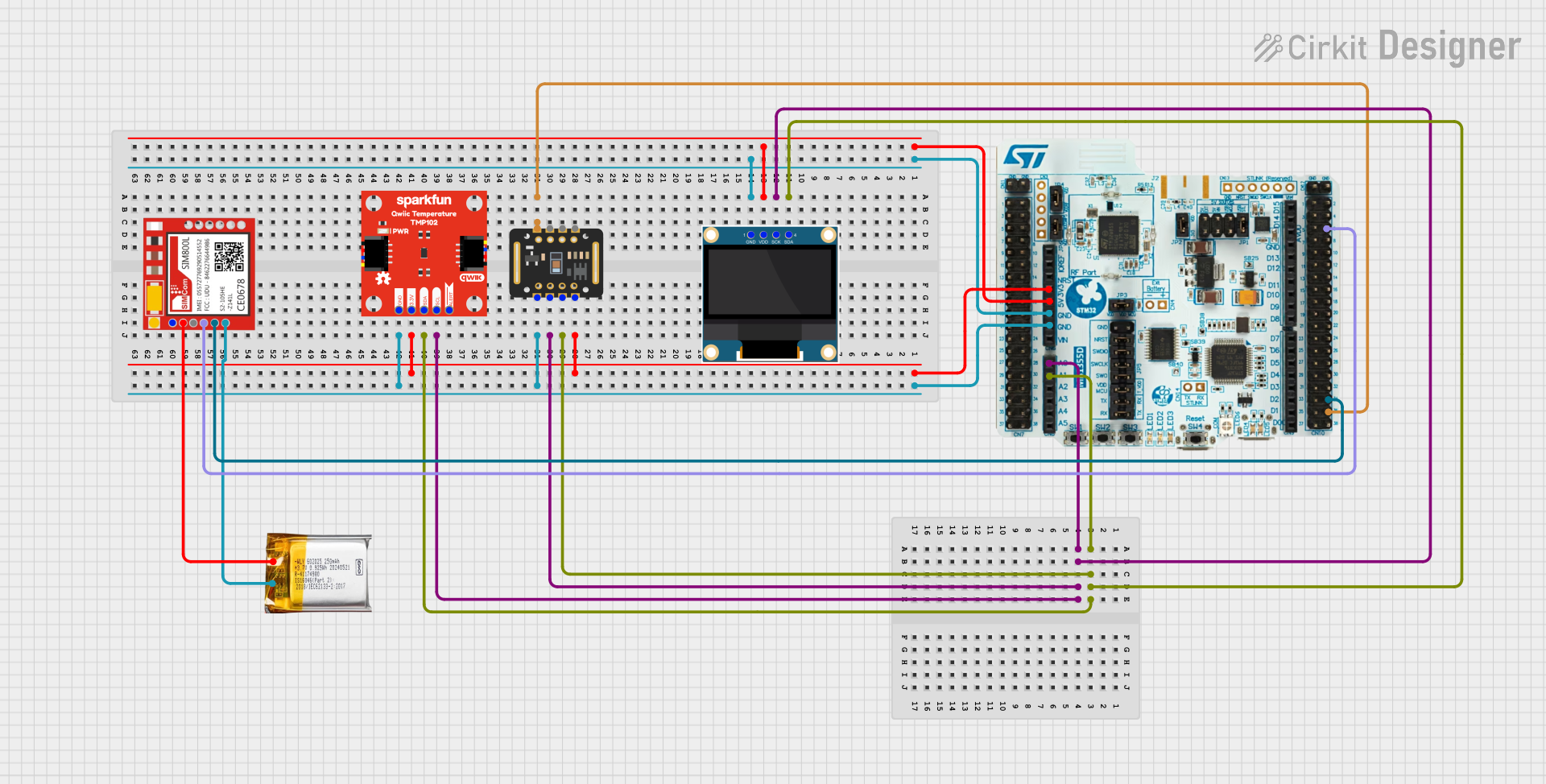 Open Project in Cirkit Designer
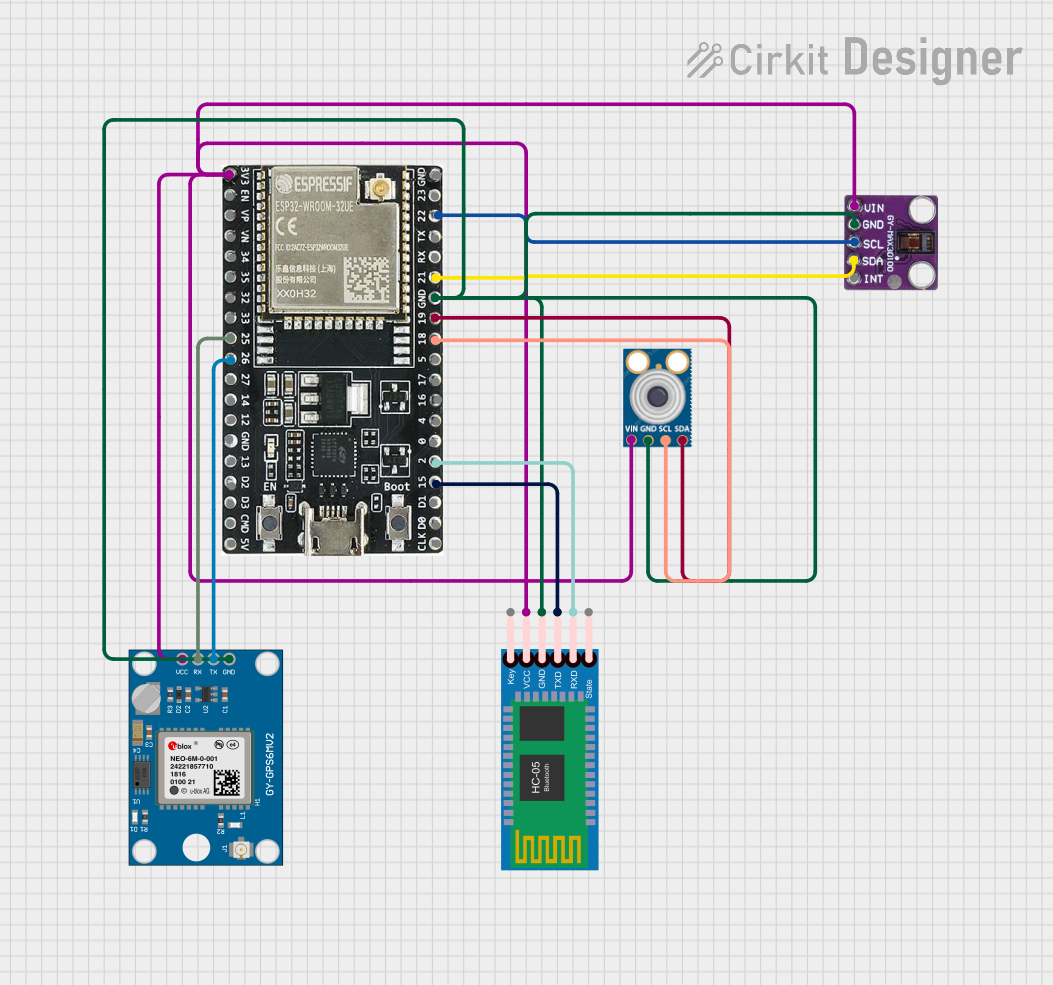 Open Project in Cirkit Designer
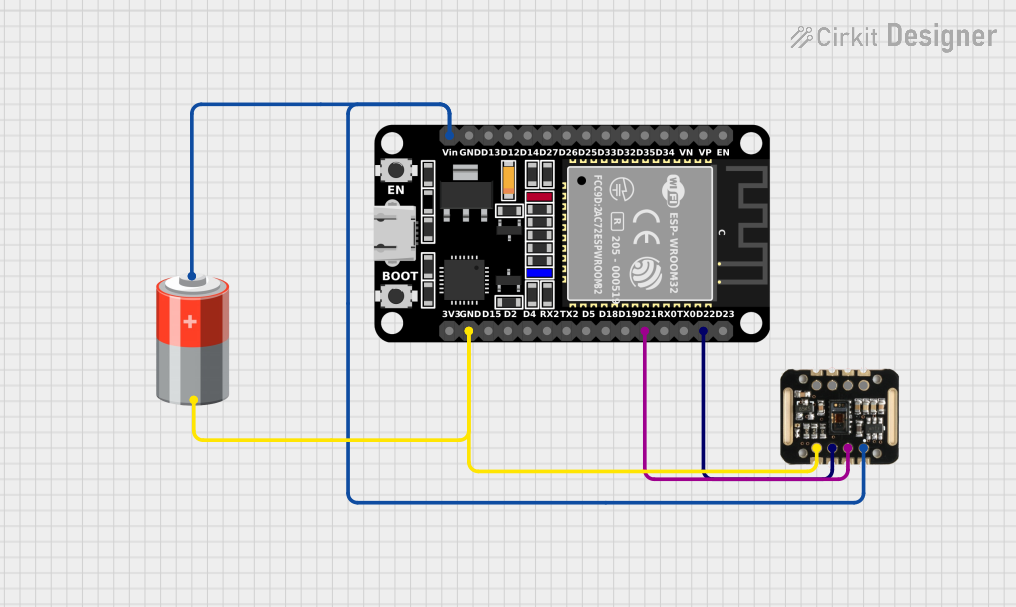 Open Project in Cirkit Designer
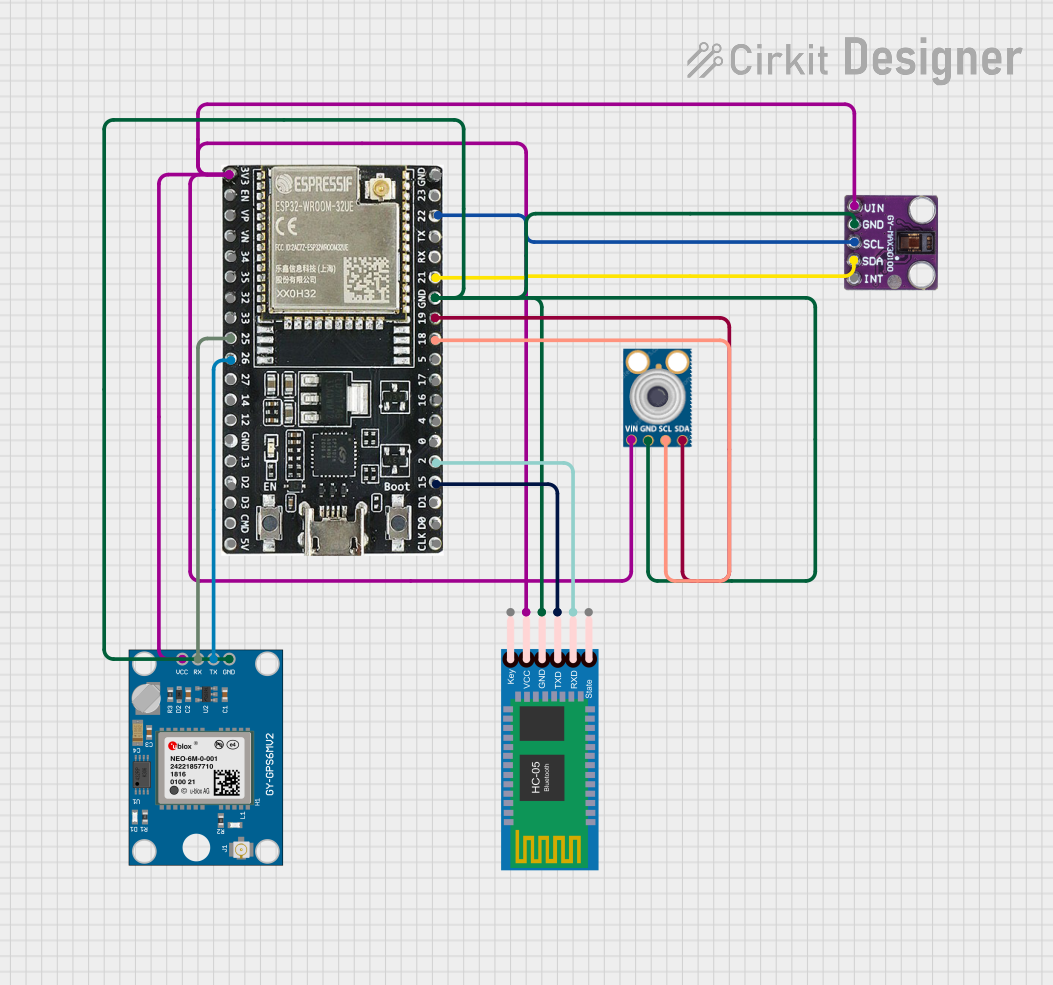 Open Project in Cirkit Designer
Explore Projects Built with MAX30102
Open Project in Cirkit DesignerOpen Project in Cirkit DesignerOpen Project in Cirkit DesignerOpen Project in Cirkit DesignerCommon Applications
- Wearable health monitoring devices
- Fitness trackers
- Medical-grade pulse oximeters
- Remote patient monitoring systems
- IoT-based health solutions
Technical Specifications
The MAX30102 is designed for low-power operation and high accuracy. Below are its key technical details:
Key Specifications
| Parameter | Value |
|---|---|
| Supply Voltage | 1.8V (core) and 3.3V (LED driver) |
| Operating Current | 600 µA (typical) |
| Standby Current | 0.7 µA |
| LED Wavelengths | Red: 660 nm, IR: 880 nm |
| Communication Interface | I²C (up to 400 kHz) |
| Operating Temperature Range | -40°C to +85°C |
| Dimensions | 5.6 mm x 3.3 mm x 1.55 mm |
Pin Configuration and Descriptions
The MAX30102 module typically comes with the following pinout:
| Pin Name | Pin Number | Description |
|---|---|---|
| VIN | 1 | Power supply input (3.3V) |
| GND | 2 | Ground |
| SDA | 3 | I²C data line |
| SCL | 4 | I²C clock line |
| INT | 5 | Interrupt output (active low) |
Usage Instructions
The MAX30102 is straightforward to use in a circuit, especially with microcontrollers like the Arduino UNO. Below are the steps to integrate and use the sensor:
Circuit Connection
- Power Supply: Connect the
VINpin to a 3.3V power source and theGNDpin to ground. - I²C Communication: Connect the
SDAandSCLpins to the corresponding I²C pins on your microcontroller (e.g., A4 and A5 on Arduino UNO). - Interrupt Pin: Optionally, connect the
INTpin to a digital input pin on the microcontroller to handle interrupts.
Important Considerations
- Use pull-up resistors (typically 4.7 kΩ) on the
SDAandSCLlines if not already included on the module. - Ensure the sensor is placed in contact with the skin for accurate readings.
- Avoid direct exposure to ambient light, as it may interfere with measurements.
Sample Arduino Code
Below is an example of how to use the MAX30102 with an Arduino UNO to read heart rate and SpO2 data. This code uses the SparkFun MAX3010x library.
#include <Wire.h>
#include "MAX30105.h" // Include the MAX3010x library

MAX30105 particleSensor; // Create an instance of the sensor

void setup() {
  Serial.begin(9600); // Initialize serial communication
  Serial.println("Initializing MAX30102...");

  // Initialize the sensor
  if (!particleSensor.begin()) {
    Serial.println("MAX30102 not detected. Check connections.");
    while (1); // Halt execution if the sensor is not found
  }

  // Configure the sensor
  particleSensor.setup(); // Use default settings
  particleSensor.setPulseAmplitudeRed(0x0A); // Set red LED brightness
  particleSensor.setPulseAmplitudeIR(0x0A);  // Set IR LED brightness
}

void loop() {
  // Read data from the sensor
  long redValue = particleSensor.getRed(); // Get red light reading
  long irValue = particleSensor.getIR();   // Get IR light reading

  // Print the readings to the serial monitor
  Serial.print("Red: ");
  Serial.print(redValue);
  Serial.print(" IR: ");
  Serial.println(irValue);

  delay(100); // Wait 100 ms before the next reading
}
Best Practices
- Calibrate the sensor for your specific application to improve accuracy.
- Use a low-noise power supply to minimize interference.
- Place the sensor on a stable surface or secure it to the skin to reduce motion artifacts.
Troubleshooting and FAQs
Common Issues and Solutions
| Issue | Possible Cause | Solution |
|---|---|---|
| No data from the sensor | Incorrect wiring or loose connections | Verify all connections and pin mappings. |
| Inaccurate readings | Ambient light interference | Shield the sensor from external light. |
| Sensor not detected on I²C bus | Incorrect I²C address or wiring issue | Ensure the I²C address is correct (0x57). |
| High noise in readings | Motion artifacts or unstable placement | Secure the sensor and minimize movement. |
FAQs
What is the default I²C address of the MAX30102?
The default I²C address is 0x57.Can the MAX30102 measure SpO2 and heart rate simultaneously?
Yes, the sensor can measure both parameters simultaneously using its dual LED system.What is the maximum sampling rate of the MAX30102?
The sensor supports sampling rates up to 3200 samples per second.Is the MAX30102 suitable for medical-grade applications?
While the MAX30102 is highly accurate, it is not certified for medical-grade applications without additional validation.
By following this documentation, users can effectively integrate and utilize the MAX30102 for health monitoring applications.