
How to Use 8CH BI-DIRECTIONAL TTL LEVEL SHIFTER: Examples, Pinouts, and Specs
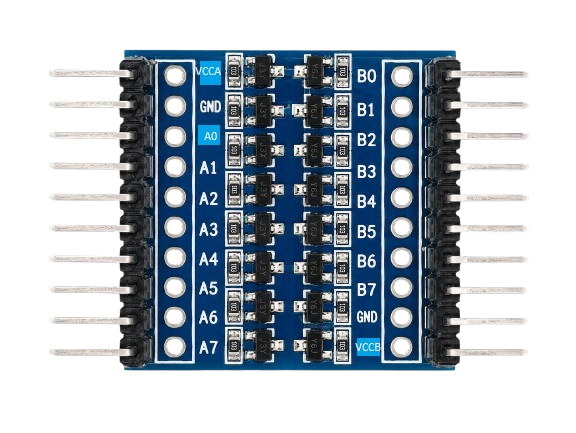
 Design with 8CH BI-DIRECTIONAL TTL LEVEL SHIFTER in Cirkit Designer
Introduction
The 8CH BI-DIRECTIONAL TTL LEVEL SHIFTER (Manufacturer Part ID: LEVEL SHIFTER) is a versatile electronic component designed to facilitate the conversion of signal levels between different voltage standards. Manufactured by OEM, this device supports bi-directional data transfer across 8 independent channels, making it an essential tool for interfacing devices operating at different logic levels, such as 3.3V and 5V systems.
Explore Projects Built with 8CH BI-DIRECTIONAL TTL LEVEL SHIFTER
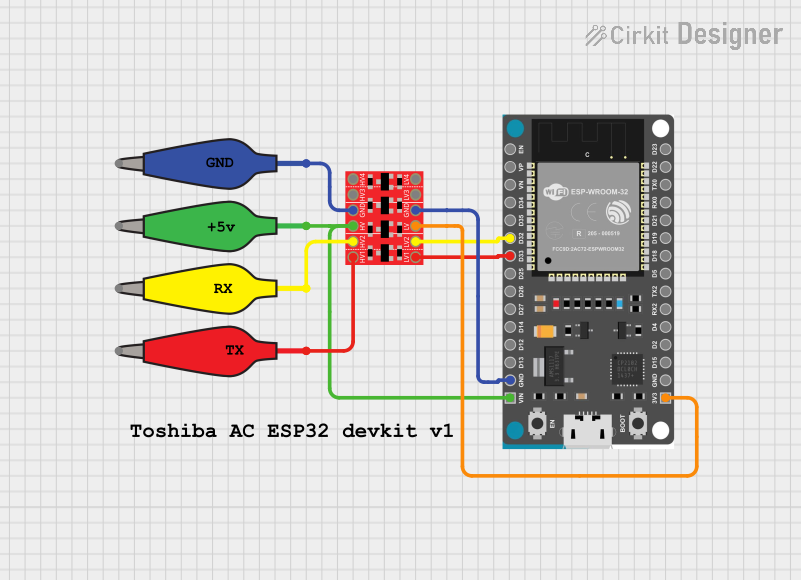 Open Project in Cirkit Designer
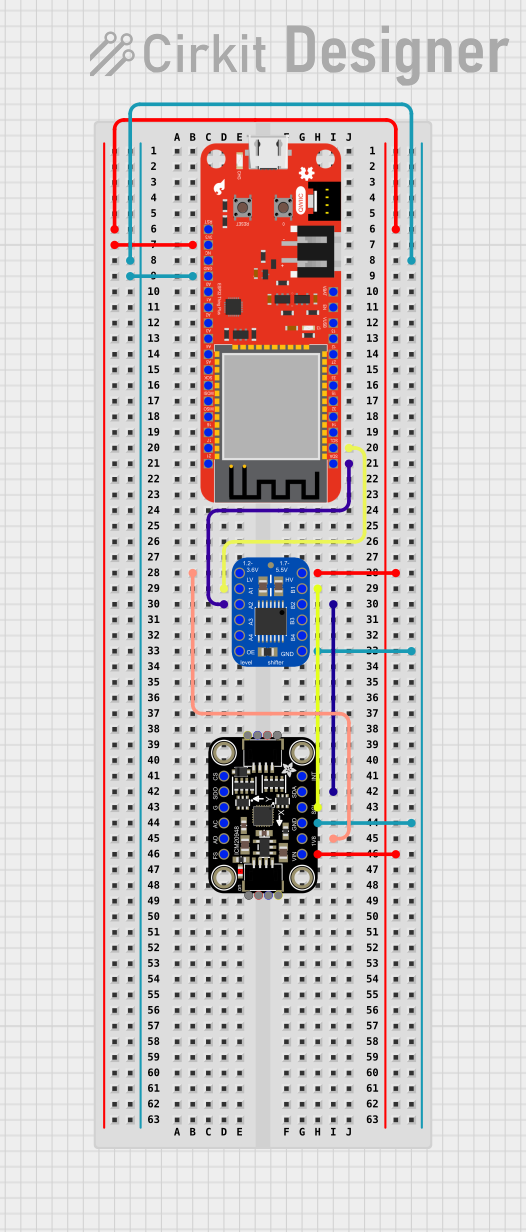 Open Project in Cirkit Designer
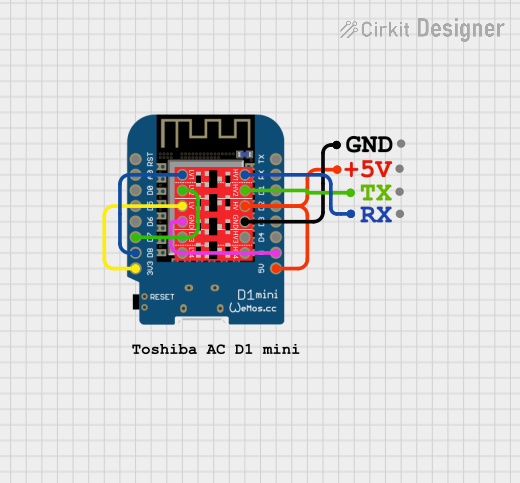 Open Project in Cirkit Designer
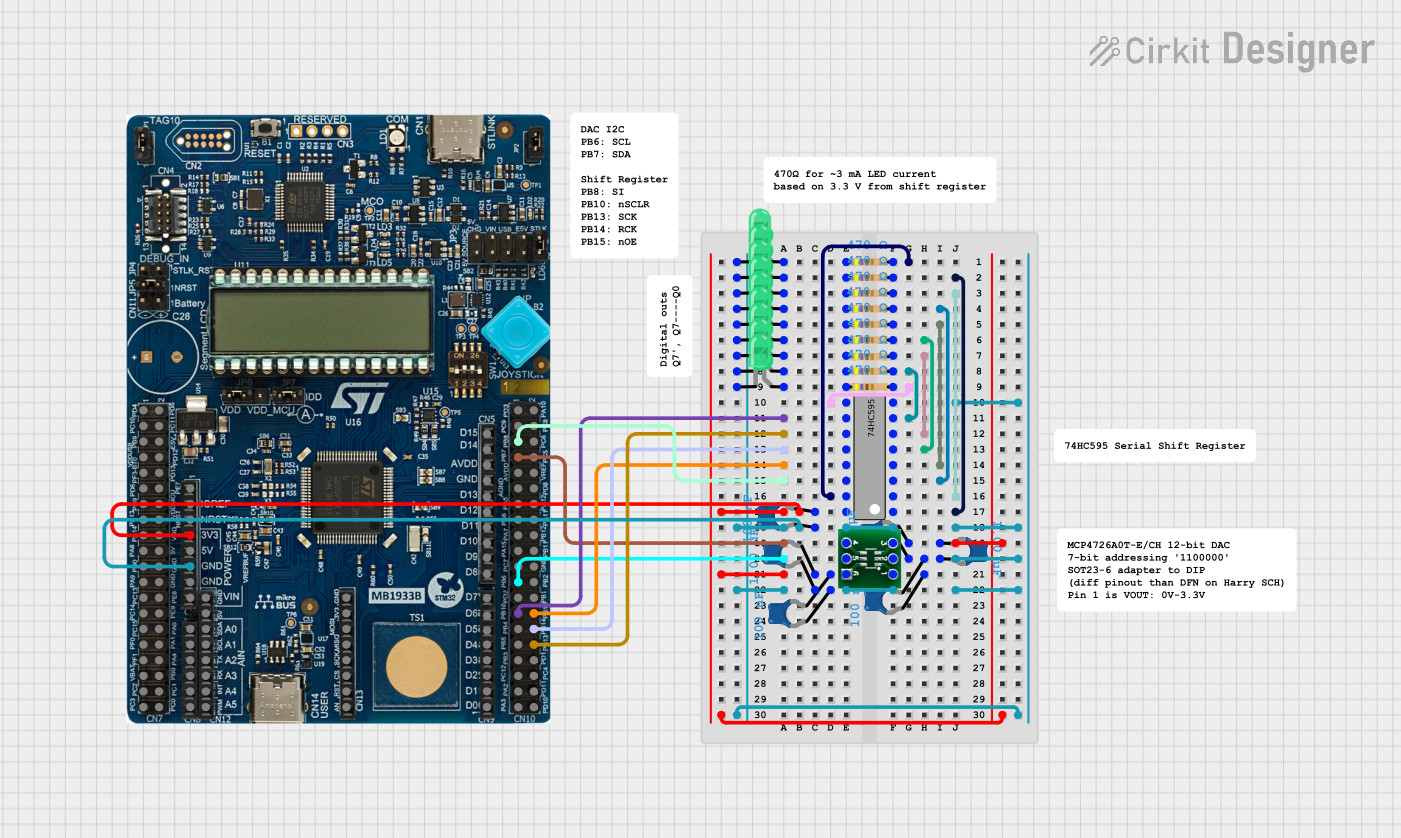 Open Project in Cirkit Designer
Explore Projects Built with 8CH BI-DIRECTIONAL TTL LEVEL SHIFTER
Open Project in Cirkit DesignerOpen Project in Cirkit DesignerOpen Project in Cirkit DesignerOpen Project in Cirkit DesignerCommon Applications and Use Cases
- Interfacing 3.3V microcontrollers (e.g., ESP32, STM32) with 5V peripherals (e.g., sensors, displays).
- Communication between devices using different logic families (e.g., TTL, CMOS).
- Level shifting for I2C, SPI, UART, and GPIO signals.
- Prototyping and development of mixed-voltage systems.
- Enabling compatibility between modern low-voltage ICs and legacy 5V systems.
Technical Specifications
The following table outlines the key technical specifications of the 8CH BI-DIRECTIONAL TTL LEVEL SHIFTER:
| Parameter | Value |
|---|---|
| Manufacturer | OEM |
| Part ID | LEVEL SHIFTER |
| Number of Channels | 8 |
| Voltage Range (High Side) | 1.8V to 6V |
| Voltage Range (Low Side) | 1.2V to 3.6V |
| Maximum Data Rate | 10 Mbps (for standard logic signals) |
| Operating Temperature | -40°C to +85°C |
| Dimensions | 25mm x 10mm x 3mm |
Pin Configuration and Descriptions
The 8CH BI-DIRECTIONAL TTL LEVEL SHIFTER has the following pinout:
| Pin | Name | Description |
|---|---|---|
| 1 | HV | High-side voltage input (1.8V to 6V). Connect to the higher voltage logic level. |
| 2 | LV | Low-side voltage input (1.2V to 3.6V). Connect to the lower voltage logic level. |
| 3-10 | CH1-CH8 | Bi-directional data channels for level shifting. |
| 11 | GND | Ground. Connect to the common ground of the system. |
Usage Instructions
How to Use the Component in a Circuit
Power Connections:
- Connect the HV pin to the higher voltage logic level (e.g., 5V).
- Connect the LV pin to the lower voltage logic level (e.g., 3.3V).
- Ensure the GND pin is connected to the common ground of both voltage domains.
Signal Connections:
- Use the CH1-CH8 pins to connect the signals that require level shifting.
- Each channel is bi-directional, so you can connect signals in either direction.
Pull-Up Resistors:
- For I2C applications, ensure appropriate pull-up resistors are connected to the HV and LV sides.
Verify Voltage Levels:
- Confirm that the voltage levels on the HV and LV pins are within the specified ranges.
Important Considerations and Best Practices
- Avoid Overvoltage: Do not exceed the maximum voltage ratings for HV and LV pins.
- Grounding: Ensure a solid ground connection to prevent signal integrity issues.
- Data Rate: For high-speed signals, ensure the data rate does not exceed 10 Mbps.
- Decoupling Capacitors: Place decoupling capacitors (e.g., 0.1µF) near the HV and LV pins to stabilize the power supply.
Example: Using with Arduino UNO
The following example demonstrates how to use the level shifter to interface a 5V Arduino UNO with a 3.3V sensor over I2C.
Circuit Connections
- Connect the HV pin to the Arduino's 5V pin.
- Connect the LV pin to the sensor's 3.3V pin.
- Connect the GND pin to the common ground.
- Connect the Arduino's SDA and SCL pins to CH1 and CH2 on the high side.
- Connect the sensor's SDA and SCL pins to CH1 and CH2 on the low side.
Arduino Code
#include <Wire.h> // Include the Wire library for I2C communication

void setup() {
  Wire.begin(); // Initialize I2C communication
  Serial.begin(9600); // Start serial communication for debugging

  // Example: Sending a request to a 3.3V I2C sensor
  Wire.beginTransmission(0x40); // Start communication with sensor at address 0x40
  Wire.write(0x01); // Send a command to the sensor
  Wire.endTransmission(); // End the transmission
}

void loop() {
  Wire.requestFrom(0x40, 2); // Request 2 bytes of data from the sensor
  if (Wire.available() == 2) { // Check if 2 bytes are available
    int data = Wire.read() << 8 | Wire.read(); // Read and combine the two bytes
    Serial.println(data); // Print the sensor data to the serial monitor
  }
  delay(1000); // Wait for 1 second before the next request
}
Troubleshooting and FAQs
Common Issues and Solutions
No Signal Conversion:
- Cause: Incorrect voltage connections.
- Solution: Verify that the HV and LV pins are connected to the correct voltage levels.
Signal Distortion:
- Cause: Missing or incorrect pull-up resistors.
- Solution: Add appropriate pull-up resistors for I2C or other open-drain signals.
Intermittent Communication:
- Cause: Poor grounding or noisy power supply.
- Solution: Ensure a solid ground connection and use decoupling capacitors.
Exceeding Data Rate:
- Cause: Using the level shifter for high-speed signals beyond 10 Mbps.
- Solution: Reduce the data rate or use a level shifter designed for higher speeds.
FAQs
Q1: Can I use this level shifter for SPI communication?
A1: Yes, the level shifter supports SPI communication. Ensure the data rate does not exceed 10 Mbps.
Q2: Do I need external components for this level shifter?
A2: For I2C applications, you need pull-up resistors. For other applications, no additional components are typically required.
Q3: Can I use fewer than 8 channels?
A3: Yes, you can use as many or as few channels as needed. Unused channels can be left unconnected.
Q4: Is this level shifter compatible with 1.8V logic?
A4: Yes, the HV pin supports voltages as low as 1.8V, making it compatible with 1.8V logic systems.