
How to Use 1.8 TFT SPI display : Examples, Pinouts, and Specs
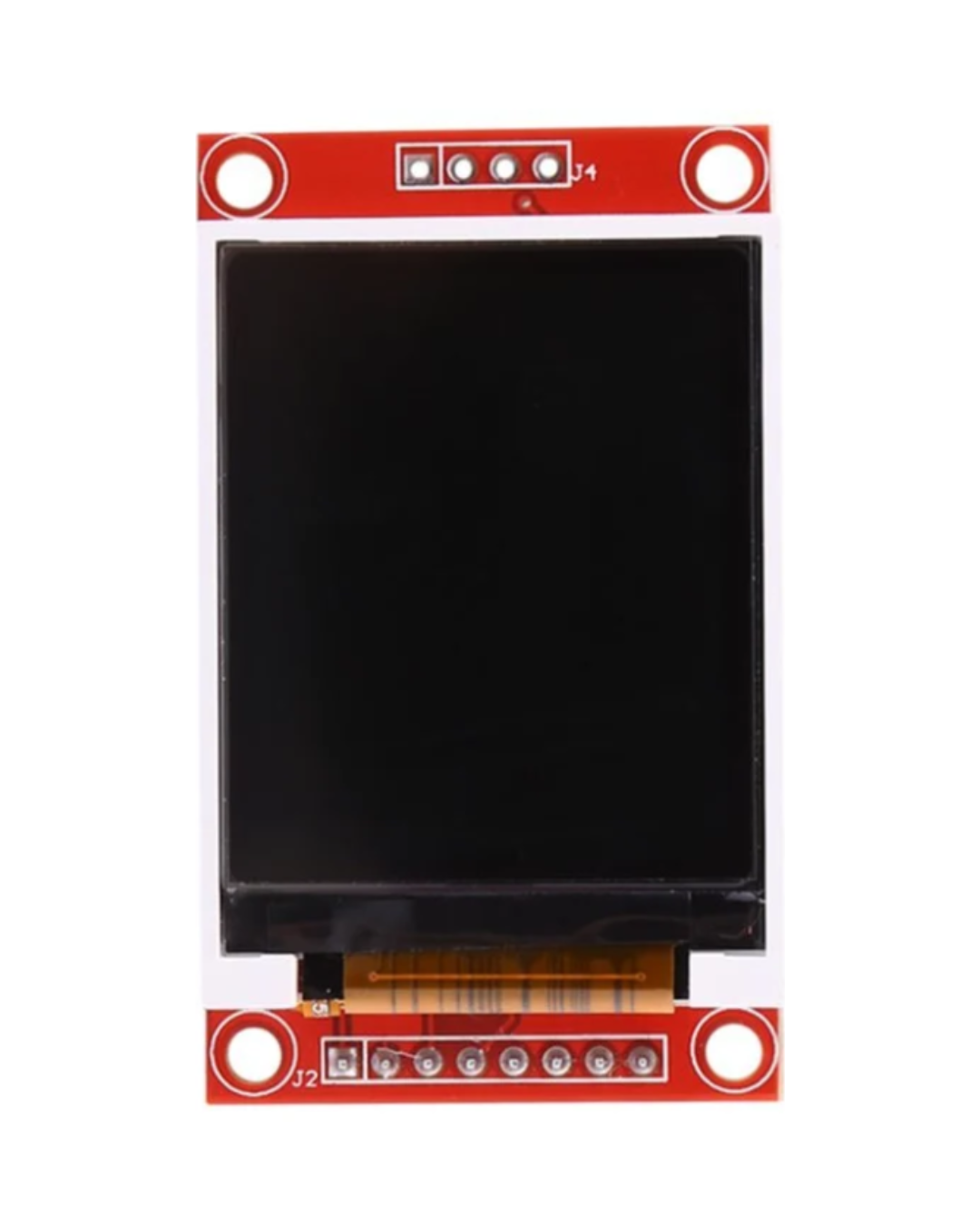
 Design with 1.8 TFT SPI display in Cirkit Designer
Introduction
The 1.8-inch TFT SPI Display (Manufacturer: SIP, Part ID: 128*160 V1.1) is a compact, high-resolution thin-film transistor (TFT) display module designed for use in embedded systems. It features a 128x160 pixel resolution and supports 65K colors, making it ideal for displaying vibrant graphics, images, and text. The display communicates via the Serial Peripheral Interface (SPI), which ensures fast and efficient data transfer while minimizing the number of required pins.
Explore Projects Built with 1.8 TFT SPI display
 Open Project in Cirkit Designer
 Open Project in Cirkit Designer
 Open Project in Cirkit Designer
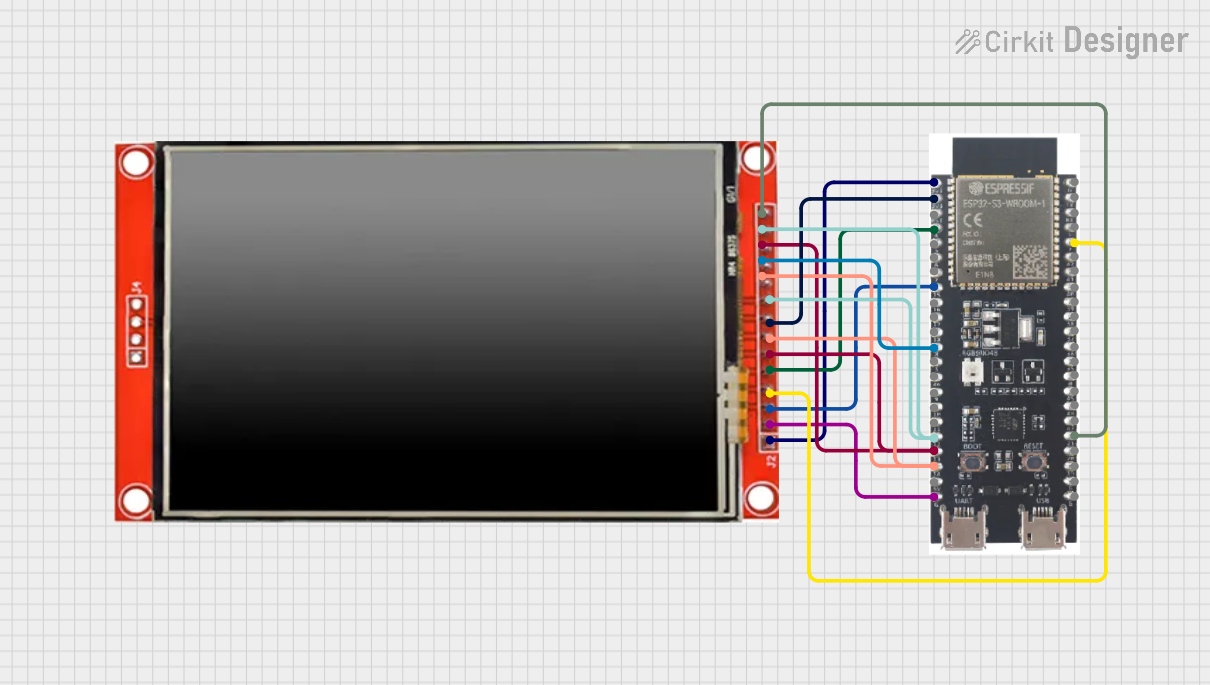 Open Project in Cirkit Designer
Explore Projects Built with 1.8 TFT SPI display
Open Project in Cirkit DesignerOpen Project in Cirkit DesignerOpen Project in Cirkit DesignerOpen Project in Cirkit DesignerCommon Applications and Use Cases
- Portable devices such as smartwatches and handheld consoles
- Embedded systems requiring graphical user interfaces (GUIs)
- IoT devices with visual feedback
- Educational and hobbyist projects using microcontrollers like Arduino or Raspberry Pi
- Industrial control panels and instrumentation displays
Technical Specifications
Below are the key technical details for the 1.8-inch TFT SPI Display:
| Parameter | Value |
|---|---|
| Display Type | TFT (Thin-Film Transistor) |
| Resolution | 128 x 160 pixels |
| Color Depth | 65K colors (16-bit RGB) |
| Communication Protocol | SPI (Serial Peripheral Interface) |
| Operating Voltage | 3.3V (logic) |
| Backlight Voltage | 3.3V to 5V |
| Current Consumption | ~50mA (with backlight on) |
| Dimensions | 1.8 inches (diagonal) |
| Controller IC | ST7735 |
Pin Configuration and Descriptions
The display module has the following pinout:
| Pin Name | Pin Number | Description |
|---|---|---|
| GND | 1 | Ground connection |
| VCC | 2 | Power supply (3.3V or 5V for backlight) |
| SCL | 3 | Serial Clock (SPI clock input) |
| SDA | 4 | Serial Data (SPI data input) |
| RES | 5 | Reset pin (active low, used to reset the display) |
| DC | 6 | Data/Command pin (used to distinguish between data and command instructions) |
| CS | 7 | Chip Select (active low, enables communication with the display) |
| BLK | 8 | Backlight control (connect to GND to turn off or VCC to turn on the backlight) |
Usage Instructions
How to Use the Component in a Circuit
- Power Supply: Connect the
VCCpin to a 3.3V or 5V power source and theGNDpin to ground. - SPI Communication: Connect the
SCL(clock) andSDA(data) pins to the corresponding SPI pins on your microcontroller. - Control Pins:
- Connect the
RESpin to a GPIO pin on your microcontroller for resetting the display. - Use the
DCpin to toggle between data and command modes. - Connect the
CSpin to a GPIO pin to enable or disable communication with the display.
- Connect the
- Backlight: Connect the
BLKpin toVCCto enable the backlight or toGNDto disable it.
Important Considerations and Best Practices
- Voltage Levels: Ensure that the logic voltage levels of your microcontroller match the display's requirements (3.3V). If your microcontroller operates at 5V, use a level shifter to avoid damaging the display.
- SPI Speed: Configure the SPI clock speed appropriately. A typical value is 4 MHz, but this may vary depending on your microcontroller and application.
- Initialization: The display requires specific initialization commands to configure the ST7735 controller. Use a compatible library (e.g., Adafruit GFX and Adafruit ST7735 libraries) to simplify this process.
- Backlight Control: For power-saving applications, consider controlling the backlight using a PWM signal from your microcontroller.
Example Code for Arduino UNO
Below is an example of how to use the 1.8-inch TFT SPI Display with an Arduino UNO:
#include <Adafruit_GFX.h>      // Core graphics library
#include <Adafruit_ST7735.h>   // Library for ST7735 display

// Define pin connections
#define TFT_CS     10  // Chip Select pin
#define TFT_RST    9   // Reset pin
#define TFT_DC     8   // Data/Command pin

// Create an instance of the display
Adafruit_ST7735 tft = Adafruit_ST7735(TFT_CS, TFT_DC, TFT_RST);

void setup() {
  // Initialize the display
  tft.initR(INITR_BLACKTAB);  // Initialize with ST7735 Black Tab configuration
  tft.fillScreen(ST77XX_BLACK);  // Clear the screen with black color

  // Display a message
  tft.setTextColor(ST77XX_WHITE);  // Set text color to white
  tft.setTextSize(2);              // Set text size
  tft.setCursor(10, 10);           // Set cursor position
  tft.println("Hello, World!");    // Print text to the display
}

void loop() {
  // Add your code here
}
Troubleshooting and FAQs
Common Issues and Solutions
No Display Output:
- Verify all connections, especially the SPI pins (
SCL,SDA,CS,DC, andRES). - Ensure the display is powered correctly (check
VCCandGNDconnections). - Confirm that the initialization code matches the display's configuration.
- Verify all connections, especially the SPI pins (
Flickering or Distorted Graphics:
- Check the SPI clock speed. Reduce the speed if necessary.
- Ensure proper grounding to avoid noise interference.
Backlight Not Working:
- Verify the
BLKpin connection. It should be connected toVCCfor the backlight to turn on. - Check the power supply voltage to ensure it meets the display's requirements.
- Verify the
Partial or Incorrect Display:
- Ensure the correct initialization sequence is used for the ST7735 controller.
- Verify that the
DCpin is toggled correctly between data and command modes.
FAQs
Q: Can I use this display with a 5V microcontroller?
A: Yes, but you must use level shifters to convert the 5V logic signals to 3.3V to avoid damaging the display.
Q: What is the maximum SPI clock speed supported by the display?
A: The display typically supports SPI clock speeds up to 15 MHz, but 4 MHz is a safe starting point for most applications.
Q: Can I control the backlight brightness?
A: Yes, you can use a PWM signal from your microcontroller to control the brightness of the backlight.
Q: Is this display compatible with Raspberry Pi?
A: Yes, the display is compatible with Raspberry Pi. You can use libraries like luma.lcd or ST7735 for Python-based development.