
How to Use GPS Modul with NEO-6M: Examples, Pinouts, and Specs
 Design with GPS Modul with NEO-6M in Cirkit Designer
Introduction
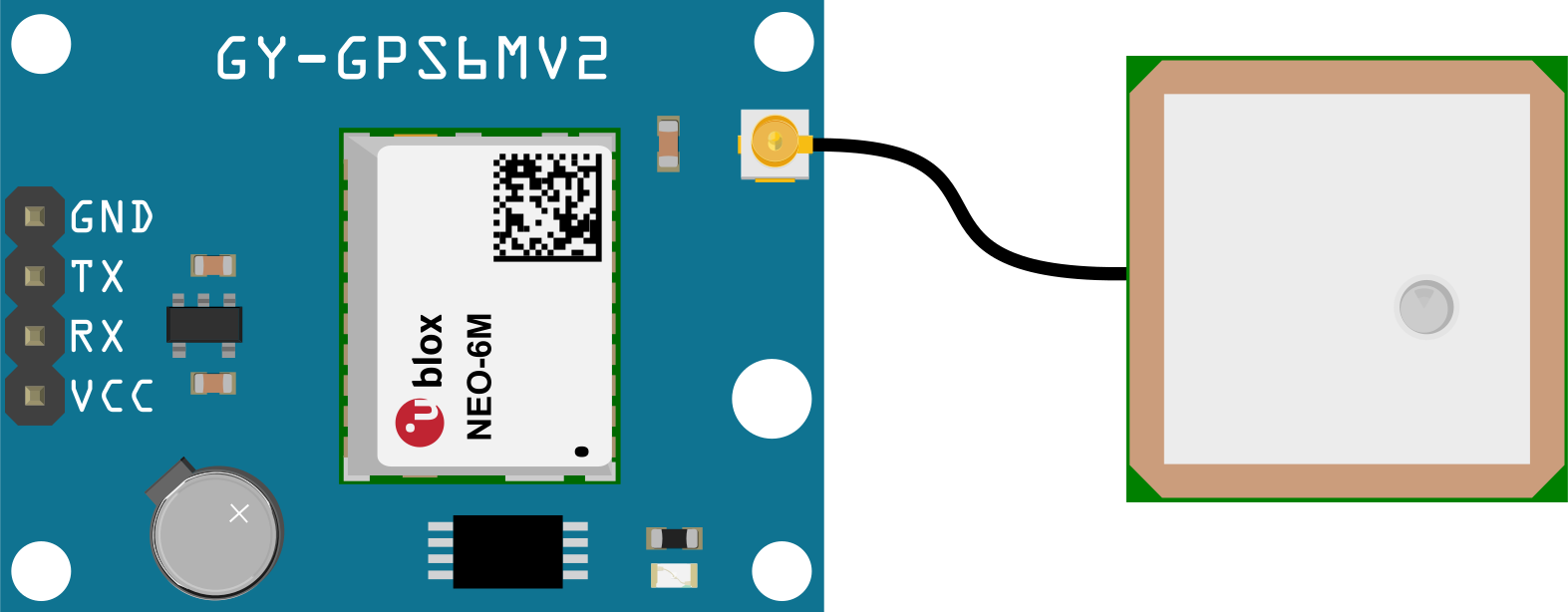
The GPS Module with NEO-6M is a compact and reliable GPS receiver that utilizes the NEO-6M chipset to provide accurate positioning and navigation data. It communicates via UART (Universal Asynchronous Receiver-Transmitter) and is widely used in applications such as robotics, drones, vehicle tracking systems, and other projects requiring real-time location tracking. The module is equipped with an onboard ceramic antenna for improved signal reception and supports both active and passive antennas for enhanced performance.
Explore Projects Built with GPS Modul with NEO-6M
 Open Project in Cirkit Designer
 Open Project in Cirkit Designer
 Open Project in Cirkit Designer
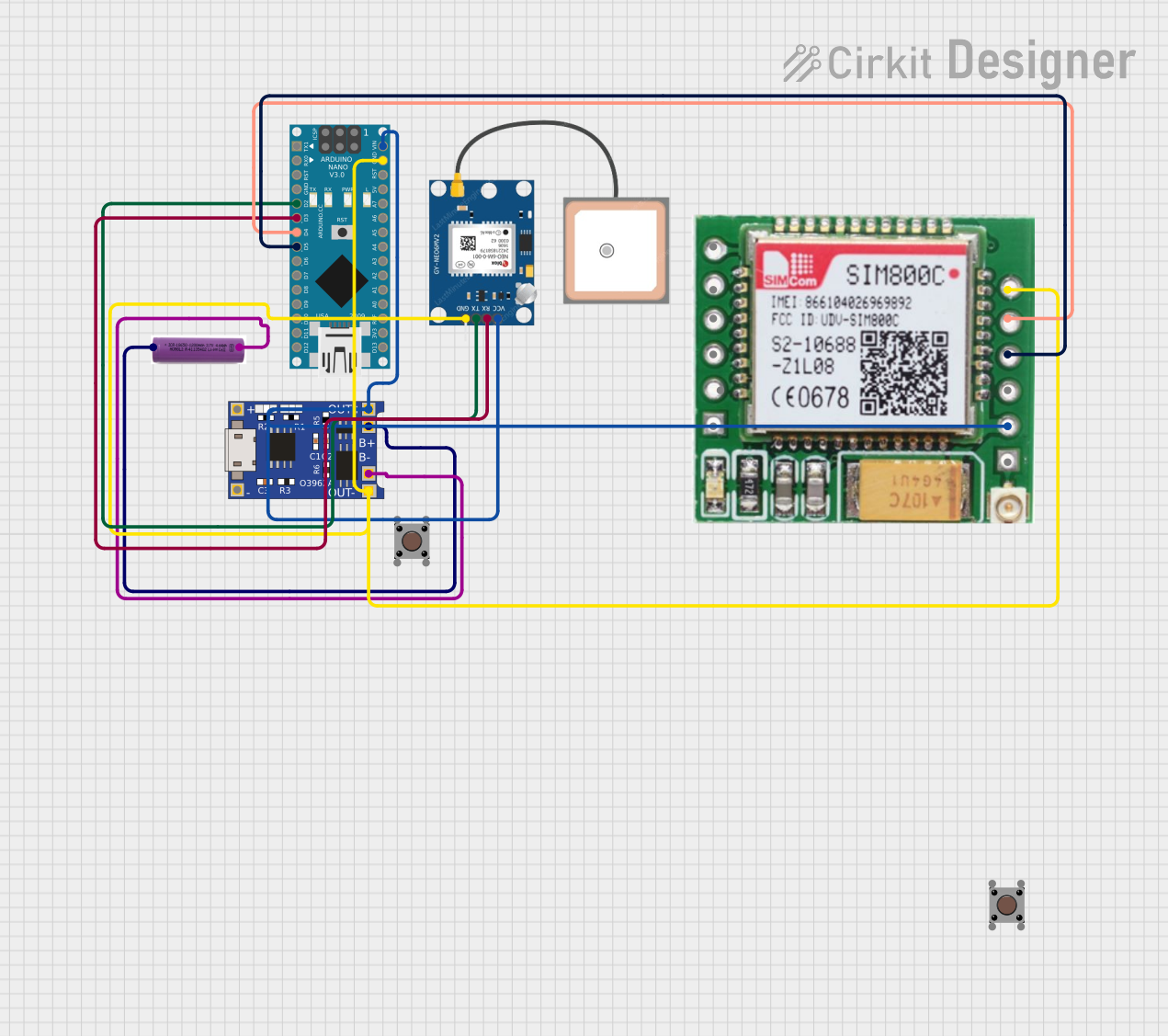 Open Project in Cirkit Designer
Explore Projects Built with GPS Modul with NEO-6M
Open Project in Cirkit DesignerOpen Project in Cirkit DesignerOpen Project in Cirkit DesignerOpen Project in Cirkit DesignerTechnical Specifications
- Chipset: u-blox NEO-6M
- Communication Interface: UART (default baud rate: 9600 bps)
- Input Voltage: 3.3V to 5V
- Power Consumption: ~45mA
- Positioning Accuracy: 2.5 meters (CEP)
- Update Rate: 1 Hz (default), configurable up to 5 Hz
- Antenna: Onboard ceramic antenna with support for external active/passive antennas
- Backup Battery: CR1220 for maintaining configuration and time data
- Operating Temperature: -40°C to +85°C
- Dimensions: ~25mm x 35mm
Pin Configuration and Descriptions
| Pin Name | Description |
|---|---|
| VCC | Power input (3.3V to 5V). Supplies power to the module. |
| GND | Ground. Connect to the ground of the power supply or circuit. |
| TX | Transmit pin. Sends GPS data to the connected microcontroller or device. |
| RX | Receive pin. Receives configuration commands from the microcontroller. |
| PPS | Pulse Per Second output. Provides a precise timing pulse for synchronization. |
Usage Instructions
How to Use the GPS Module in a Circuit
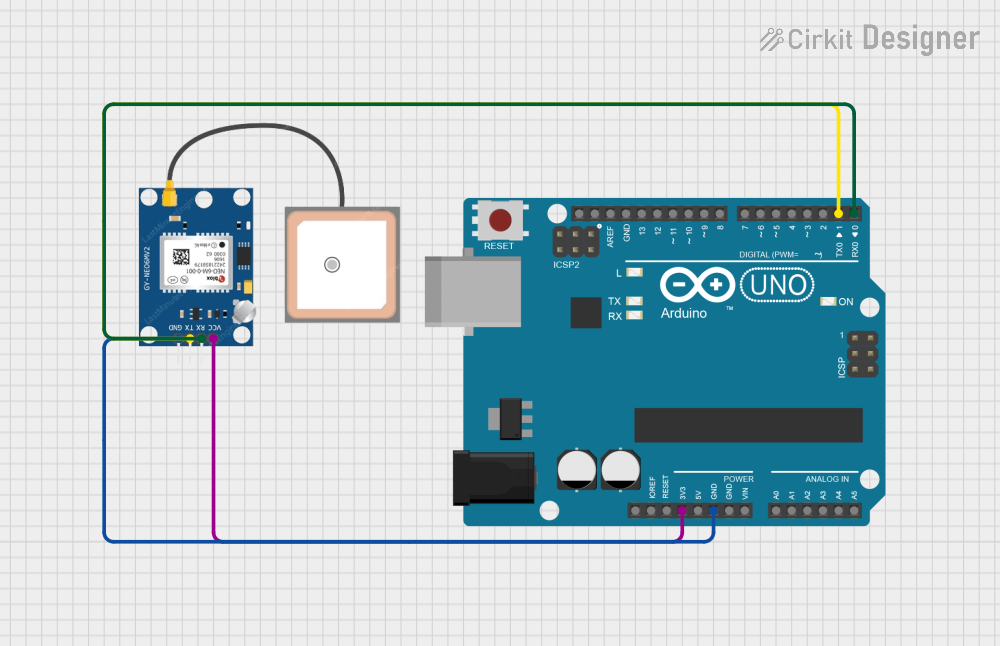
- Power the Module: Connect the VCC pin to a 3.3V or 5V power source and the GND pin to the ground.
- Connect UART Pins:
- Connect the TX pin of the GPS module to the RX pin of your microcontroller (e.g., Arduino UNO).
- Connect the RX pin of the GPS module to the TX pin of your microcontroller.
- Antenna Placement: Ensure the onboard antenna has a clear view of the sky for optimal satellite reception. If needed, connect an external active antenna to the module's antenna port.
- Read GPS Data: Use a UART interface to read NMEA sentences (e.g., GPGGA, GPRMC) from the module. These sentences contain information such as latitude, longitude, altitude, and time.
Important Considerations and Best Practices
- Power Supply: Ensure a stable power supply to avoid data corruption or module resets.
- Antenna Orientation: Place the module in an open area with minimal obstructions for better satellite visibility.
- Baud Rate Configuration: The default baud rate is 9600 bps. If needed, configure the baud rate using u-blox's u-center software or by sending specific commands.
- Backup Battery: Use the onboard CR1220 battery to retain configuration settings and time data when the module is powered off.
Example Code for Arduino UNO
Below is an example of how to interface the GPS module with an Arduino UNO to read and display GPS data.
#include <SoftwareSerial.h>

// Define RX and TX pins for SoftwareSerial
SoftwareSerial gpsSerial(4, 3); // RX = Pin 4, TX = Pin 3

void setup() {
  Serial.begin(9600);          // Initialize Serial Monitor at 9600 bps
  gpsSerial.begin(9600);       // Initialize GPS module at 9600 bps
  Serial.println("GPS Module Initialized");
}

void loop() {
  // Check if data is available from the GPS module
  while (gpsSerial.available()) {
    char gpsData = gpsSerial.read(); // Read one character from GPS module
    Serial.print(gpsData);           // Print the character to Serial Monitor
  }
}
Notes:
- Connect the GPS module's TX pin to Arduino's pin 4 and RX pin to Arduino's pin 3.
- Open the Serial Monitor (set to 9600 baud) to view the raw NMEA sentences from the GPS module.
Troubleshooting and FAQs
Common Issues and Solutions
No GPS Data Received:
- Ensure the module is powered correctly (check VCC and GND connections).
- Verify the TX and RX connections between the GPS module and the microcontroller.
- Confirm the baud rate matches the module's default (9600 bps).
Poor Signal Reception:
- Place the module in an open area with a clear view of the sky.
- Use an external active antenna if the onboard antenna is insufficient.
Module Not Responding:
- Check the power supply voltage (must be between 3.3V and 5V).
- Ensure the RX and TX pins are not swapped.
Incorrect or No Location Data:
- Wait for the module to acquire a GPS fix (can take up to a few minutes).
- Ensure the module is not indoors or in a location with poor satellite visibility.
FAQs
Q1: How long does it take for the module to get a GPS fix?
A1: The time to first fix (TTFF) depends on the environment. A cold start may take 30-60 seconds, while a warm start (with backup battery) can take 1-5 seconds.
Q2: Can I change the default baud rate?
A2: Yes, you can change the baud rate using u-blox's u-center software or by sending specific configuration commands via UART.
Q3: What is the purpose of the PPS pin?
A3: The PPS (Pulse Per Second) pin provides a precise timing pulse that can be used for synchronization in time-sensitive applications.
Q4: Can the module work indoors?
A4: The module may work indoors near windows, but signal reception will be weaker. For reliable operation, use the module outdoors or with an external active antenna.