
How to Use Thermistor NTC 100K: Examples, Pinouts, and Specs
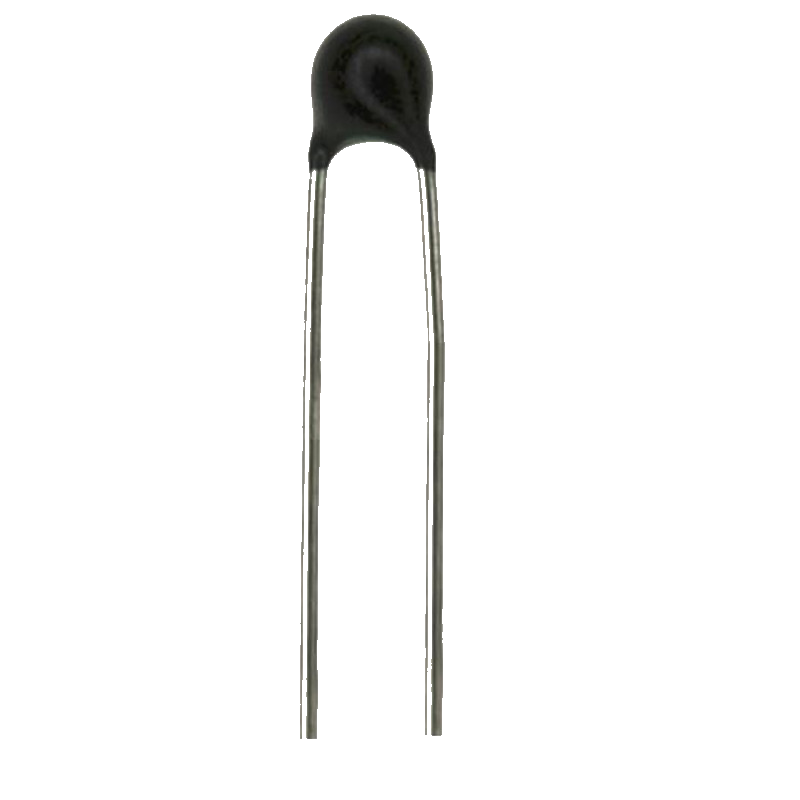
 Design with Thermistor NTC 100K in Cirkit Designer
Introduction
The Thermistor NTC 100K is a negative temperature coefficient (NTC) thermistor, meaning its resistance decreases as the temperature increases. This component is widely used for temperature sensing and compensation in various electronic circuits. Its high sensitivity to temperature changes makes it ideal for applications requiring precise thermal measurements.
Explore Projects Built with Thermistor NTC 100K
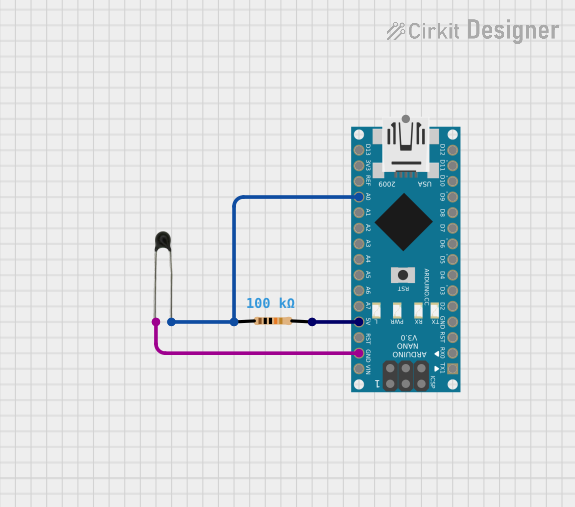 Open Project in Cirkit Designer
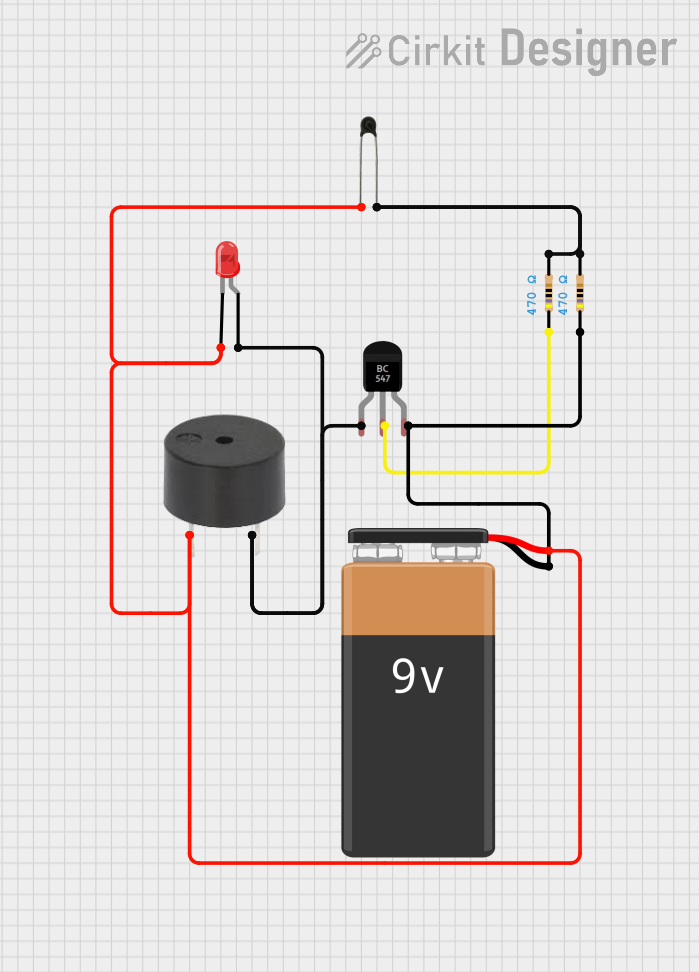 Open Project in Cirkit Designer
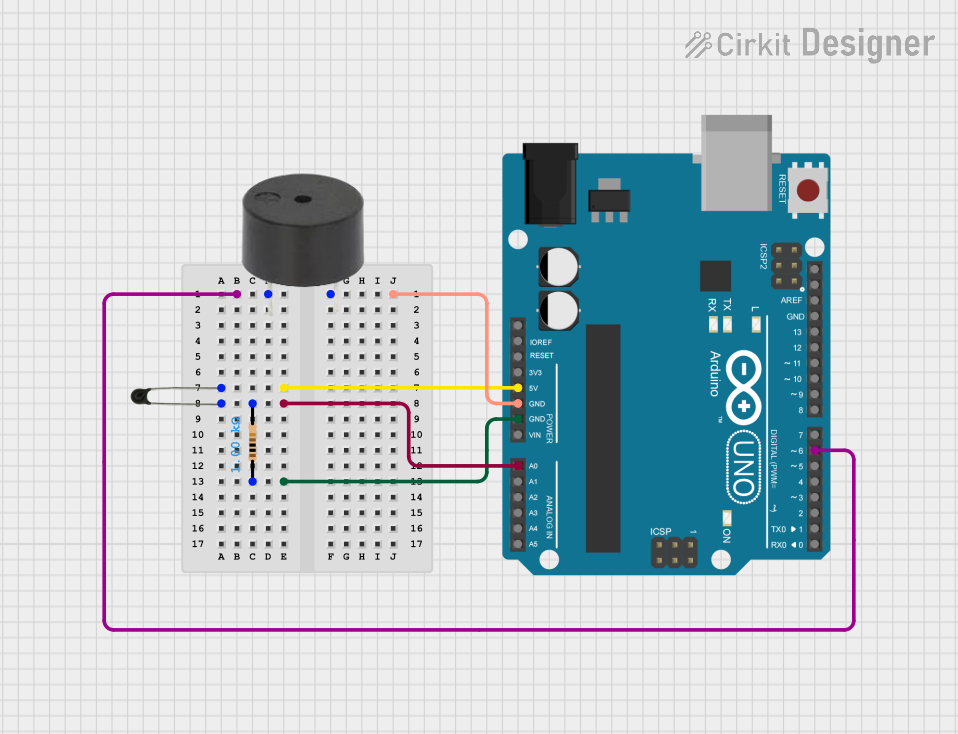 Open Project in Cirkit Designer
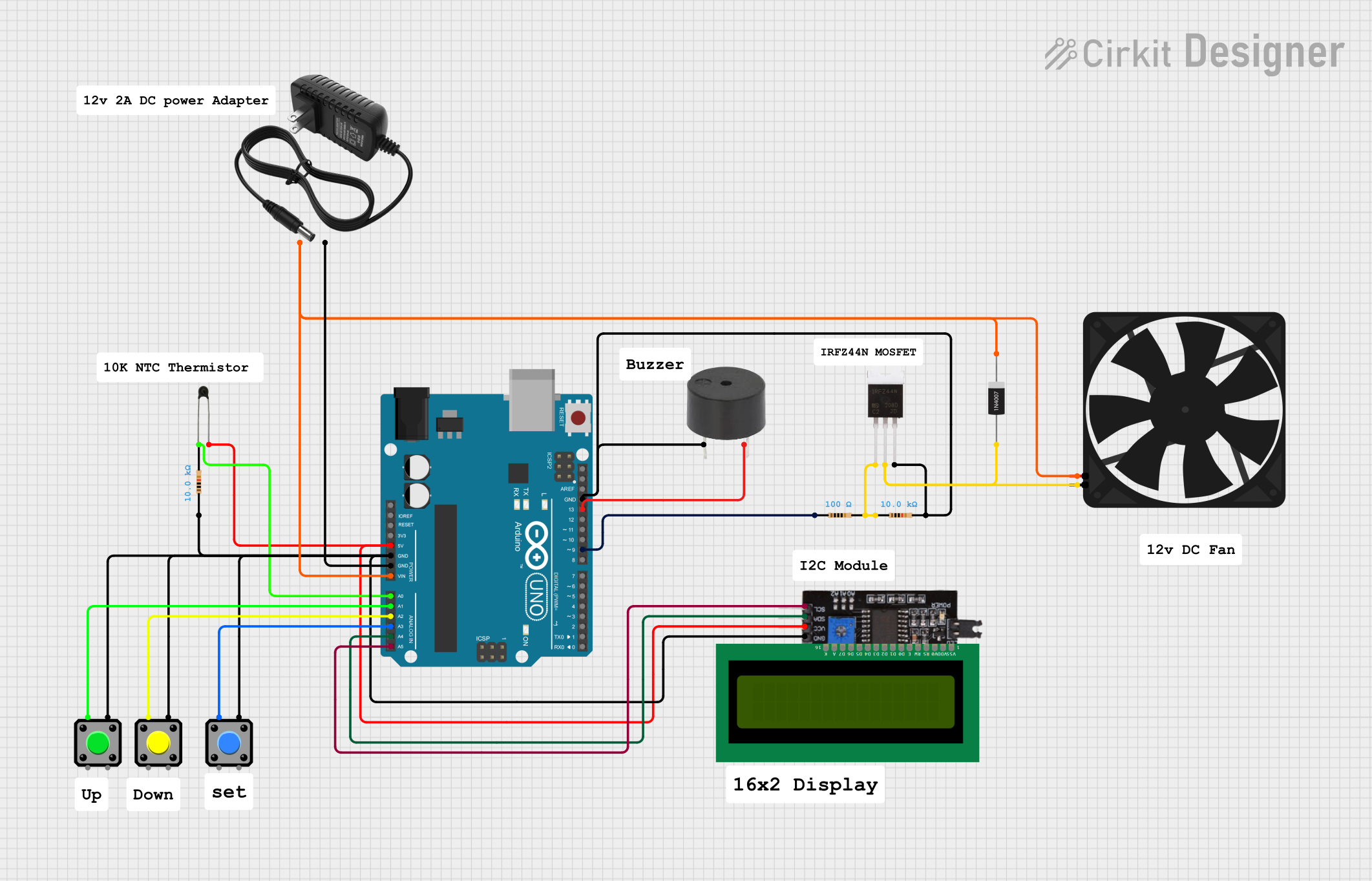 Open Project in Cirkit Designer
Explore Projects Built with Thermistor NTC 100K
Open Project in Cirkit DesignerOpen Project in Cirkit DesignerOpen Project in Cirkit DesignerOpen Project in Cirkit DesignerCommon Applications and Use Cases
- Temperature sensing in 3D printers, HVAC systems, and home appliances
- Overcurrent protection in power supplies
- Temperature compensation in electronic circuits
- Battery pack temperature monitoring
- Medical devices for patient temperature measurement
Technical Specifications
Below are the key technical details of the Thermistor NTC 100K:
| Parameter | Value |
|---|---|
| Resistance at 25°C | 100 kΩ |
| Temperature Coefficient | Negative |
| Operating Temperature Range | -55°C to +125°C |
| Tolerance | ±1% to ±5% (varies by model) |
| Beta Value (B25/50) | ~3950 K |
| Power Dissipation | ≤ 0.5 W |
| Thermal Time Constant | ~10 seconds (in still air) |
| Maximum Voltage | 5 V (typical for sensing circuits) |
Pin Configuration and Descriptions
The Thermistor NTC 100K is a two-terminal device. Below is the pin configuration:
| Pin | Description |
|---|---|
| Pin 1 | Connects to the positive terminal of the circuit (e.g., voltage divider) |
| Pin 2 | Connects to the negative terminal or ground |
Usage Instructions
How to Use the Thermistor in a Circuit
Voltage Divider Configuration:
The Thermistor NTC 100K is commonly used in a voltage divider circuit to measure temperature. Connect the thermistor in series with a fixed resistor, and apply a known voltage across the series combination. The output voltage at the junction of the thermistor and the resistor will vary with temperature.- Choose a fixed resistor with a value close to the thermistor's resistance at the target temperature for optimal sensitivity.
- Use an analog-to-digital converter (ADC) to read the output voltage and calculate the temperature.
Interfacing with Arduino UNO:
The Thermistor NTC 100K can be easily interfaced with an Arduino UNO for temperature measurement. Below is an example circuit and code:Circuit Setup:
- Connect one terminal of the thermistor to 5V.
- Connect the other terminal to an analog input pin (e.g., A0) and a 10 kΩ resistor in series to ground.
Arduino Code:
// Thermistor NTC 100K Example Code
// Reads temperature using a voltage divider and calculates the temperature in Celsius.

const int thermistorPin = A0; // Analog pin connected to the thermistor
const int seriesResistor = 10000; // Value of the fixed resistor in ohms (10 kΩ)
const float betaValue = 3950; // Beta value of the thermistor
const float nominalResistance = 100000; // Resistance at 25°C (100 kΩ)
const float nominalTemperature = 25; // Nominal temperature in Celsius
const float supplyVoltage = 5.0; // Supply voltage in volts

void setup() {
  Serial.begin(9600); // Initialize serial communication
}

void loop() {
  int adcValue = analogRead(thermistorPin); // Read ADC value
  float voltage = adcValue * (supplyVoltage / 1023.0); // Convert ADC to voltage
  float resistance = (supplyVoltage * seriesResistor / voltage) - seriesResistor;

  // Calculate temperature using the Steinhart-Hart equation approximation
  float temperature = 1.0 / (log(resistance / nominalResistance) / betaValue +
                             1.0 / (nominalTemperature + 273.15)) - 273.15;

  Serial.print("Temperature: ");
  Serial.print(temperature);
  Serial.println(" °C");

  delay(1000); // Wait 1 second before the next reading
}
Important Considerations and Best Practices
- Power Dissipation: Avoid exceeding the thermistor's power dissipation rating to prevent self-heating, which can affect accuracy.
- Beta Value: Ensure the beta value matches the thermistor's datasheet for accurate temperature calculations.
- Calibration: For precise applications, calibrate the thermistor with known temperature points.
- Environmental Factors: Protect the thermistor from moisture and contaminants that may alter its resistance.
Troubleshooting and FAQs
Common Issues and Solutions
Inaccurate Temperature Readings:
- Cause: Incorrect beta value or nominal resistance used in calculations.
- Solution: Verify the thermistor's datasheet and update the code with the correct parameters.
Fluctuating Readings:
- Cause: Electrical noise or unstable power supply.
- Solution: Add a capacitor (e.g., 0.1 µF) across the thermistor to filter noise.
No Output or Constant Value:
- Cause: Incorrect wiring or damaged thermistor.
- Solution: Check the circuit connections and replace the thermistor if necessary.
Self-Heating:
- Cause: Excessive current through the thermistor.
- Solution: Use a higher resistance series resistor to limit current.
FAQs
Q1: Can the Thermistor NTC 100K measure negative temperatures?
A1: Yes, the thermistor can measure negative temperatures, but ensure the circuit and calculations account for the full operating range.
Q2: How do I choose the series resistor value?
A2: Select a resistor value close to the thermistor's resistance at the target temperature for maximum sensitivity.
Q3: Can I use the thermistor with a 3.3V system?
A3: Yes, the thermistor works with 3.3V systems. Update the supply voltage in the calculations accordingly.
Q4: What is the lifespan of the Thermistor NTC 100K?
A4: The thermistor has a long lifespan if operated within its specified temperature and power limits.