
How to Use uPesy ESP32 Wroom Low Power DevKit: Examples, Pinouts, and Specs
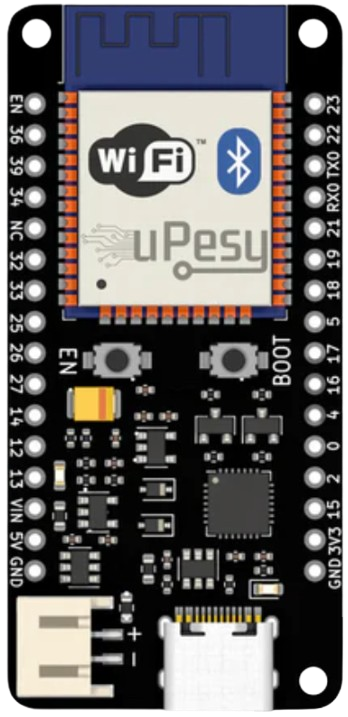
 Design with uPesy ESP32 Wroom Low Power DevKit in Cirkit Designer
Introduction
The uPesy ESP32 Wroom Low Power DevKit (v1.2) is a compact and efficient development board designed for Internet of Things (IoT) applications. It features the powerful ESP32 Wroom module, which integrates Wi-Fi and Bluetooth capabilities, making it ideal for creating connected devices. This development kit is optimized for low-power consumption, making it suitable for battery-powered projects and energy-efficient designs.
Explore Projects Built with uPesy ESP32 Wroom Low Power DevKit
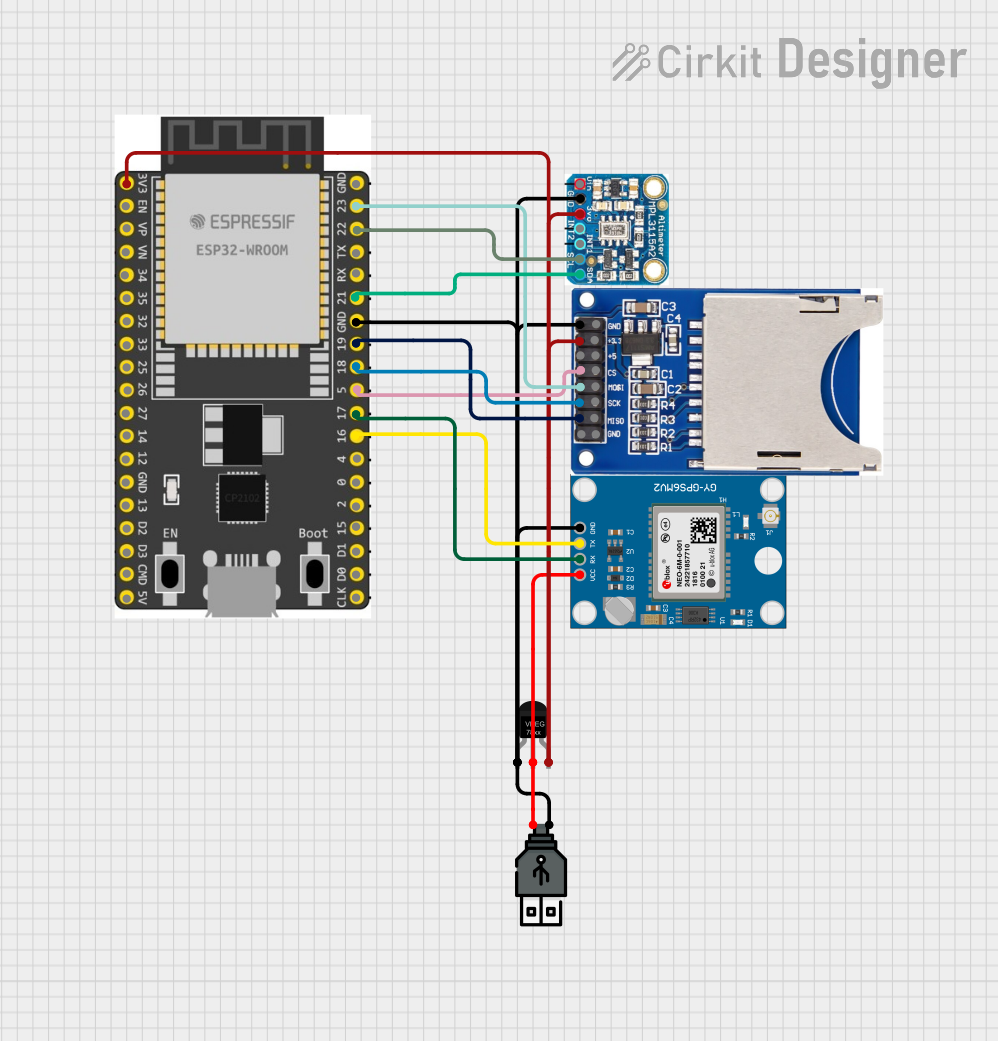 Open Project in Cirkit Designer
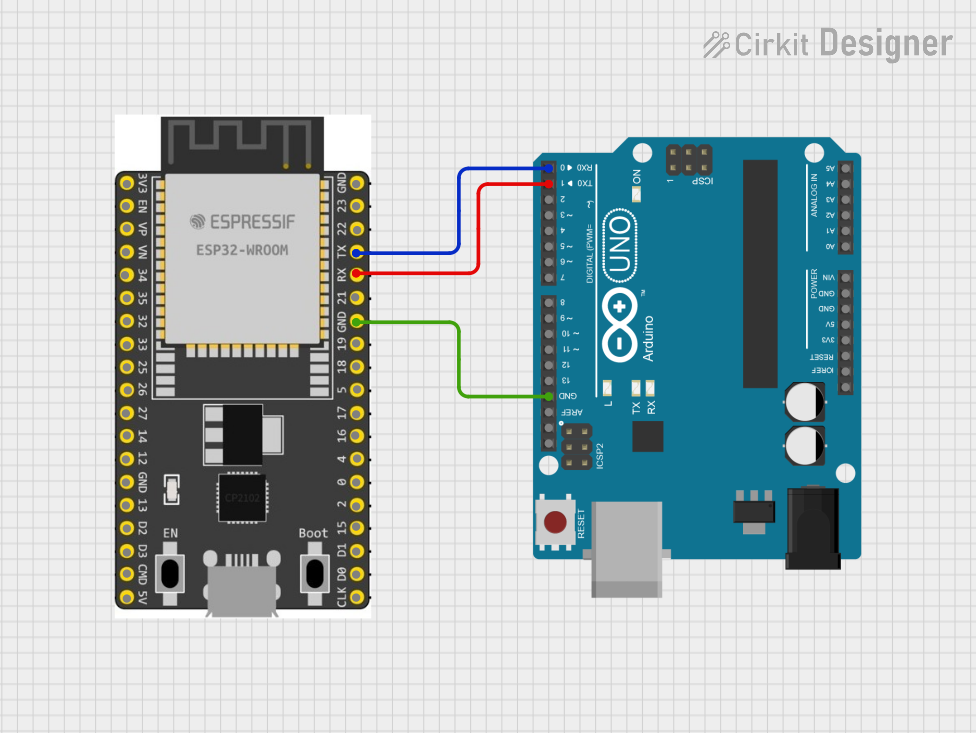 Open Project in Cirkit Designer
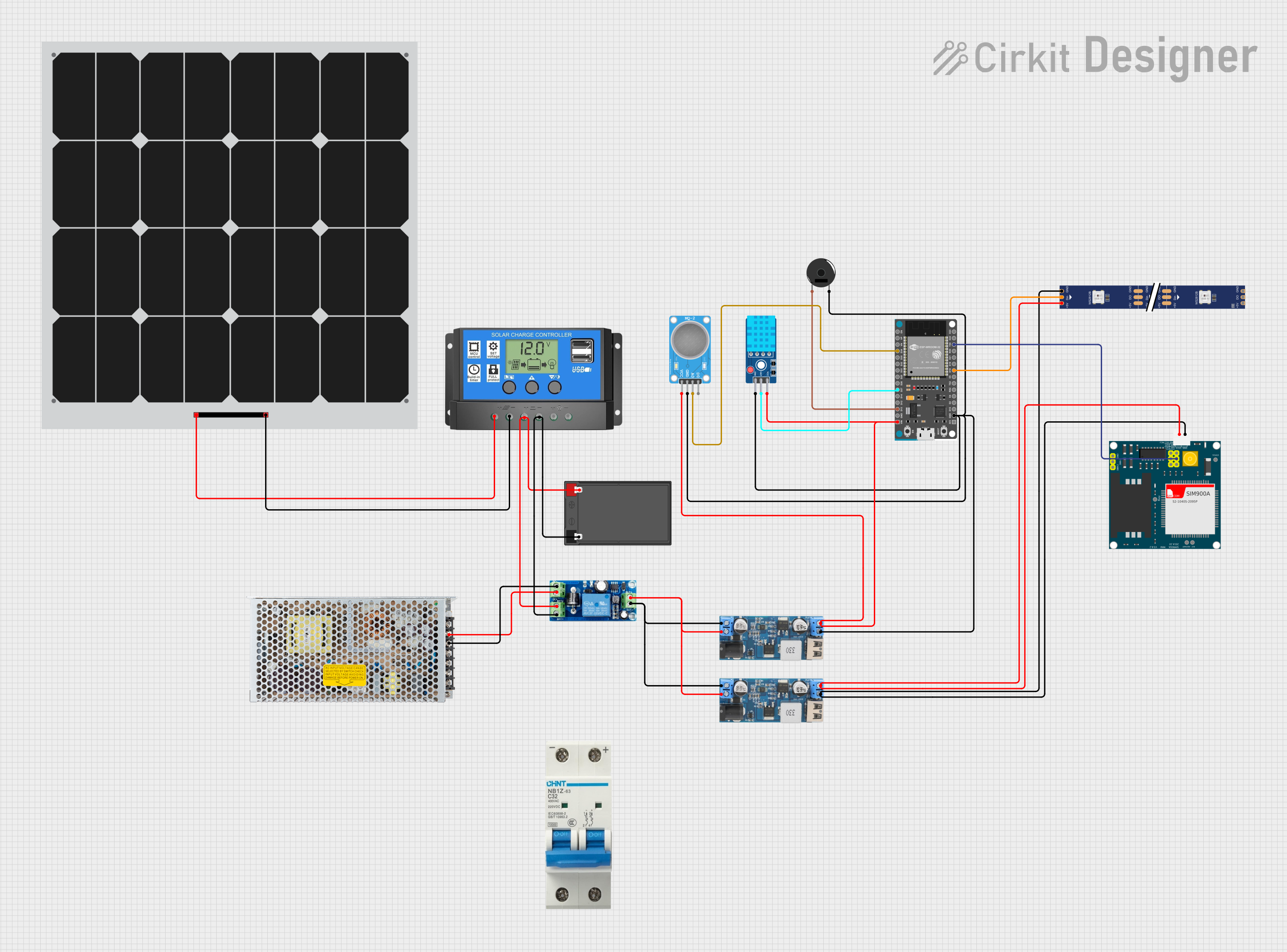 Open Project in Cirkit Designer
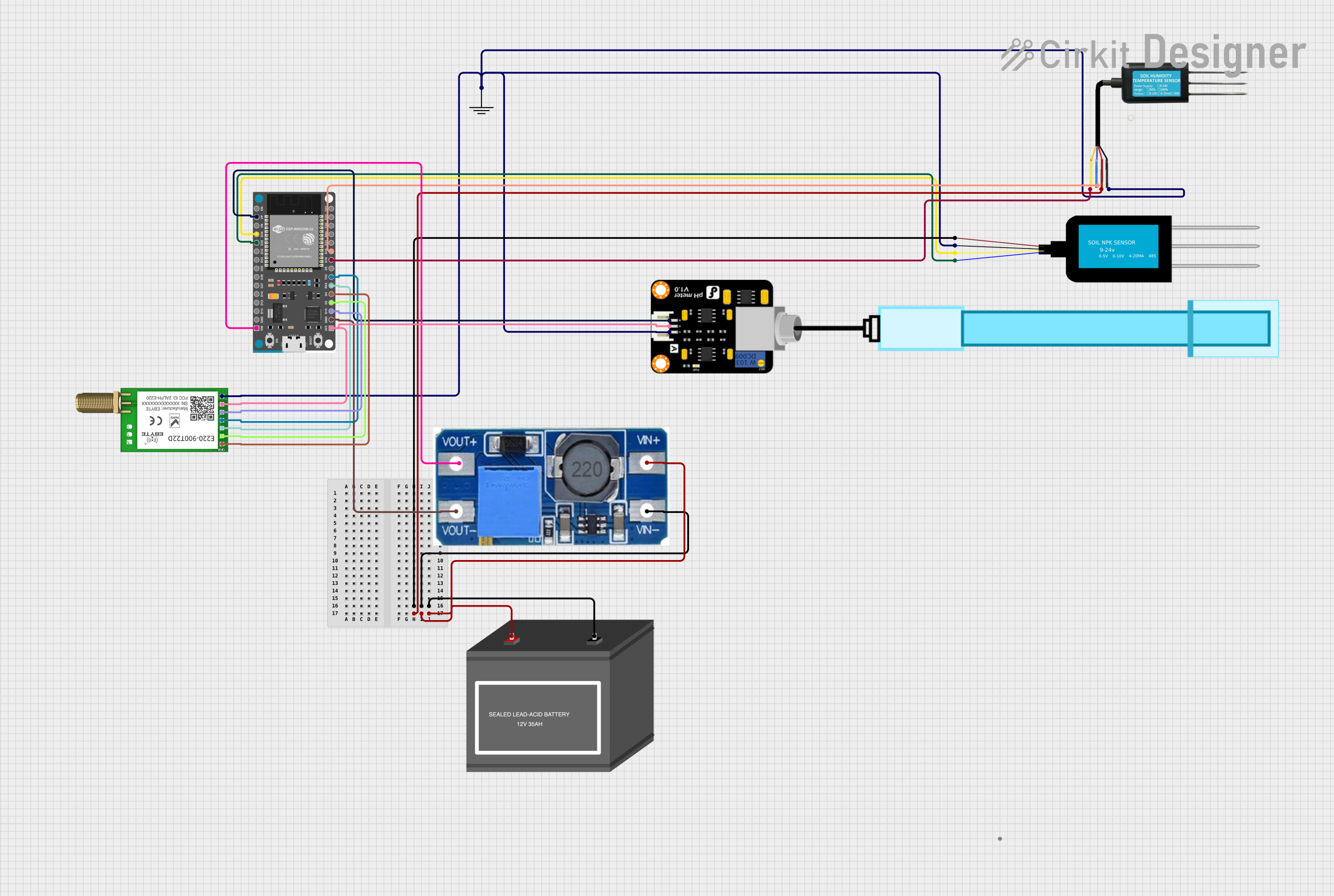 Open Project in Cirkit Designer
Explore Projects Built with uPesy ESP32 Wroom Low Power DevKit
Open Project in Cirkit DesignerOpen Project in Cirkit DesignerOpen Project in Cirkit DesignerOpen Project in Cirkit DesignerCommon Applications and Use Cases
- Smart home devices (e.g., connected lights, thermostats)
- Wearable technology
- Remote monitoring and control systems
- IoT prototyping and development
- Wireless sensor networks
- Educational projects and learning platforms
Technical Specifications
The following table outlines the key technical details of the uPesy ESP32 Wroom Low Power DevKit:
| Parameter | Specification |
|---|---|
| Microcontroller | ESP32 Wroom module |
| Operating Voltage | 3.3V |
| Input Voltage (via USB) | 5V |
| Flash Memory | 4MB |
| SRAM | 520KB |
| Wi-Fi Standard | 802.11 b/g/n |
| Bluetooth Version | Bluetooth 4.2 + BLE |
| GPIO Pins | 30 (including ADC, DAC, PWM, I2C, SPI, UART) |
| Power Consumption | Ultra-low power (deep sleep: ~10 µA) |
| Dimensions | 54mm x 25mm |
| USB Interface | Micro-USB |
| Manufacturer Part ID | v1.2 |
Pin Configuration and Descriptions
The uPesy ESP32 Wroom Low Power DevKit features a 30-pin layout. Below is a summary of the pin configuration:
| Pin | Name | Description |
|---|---|---|
| 1 | 3V3 | 3.3V power output |
| 2 | GND | Ground |
| 3 | EN | Enable pin (active high) |
| 4 | IO0 | GPIO0, used for boot mode selection |
| 5 | IO2 | GPIO2, general-purpose I/O |
| 6 | IO4 | GPIO4, general-purpose I/O |
| 7 | IO5 | GPIO5, general-purpose I/O |
| 8 | IO12 | GPIO12, general-purpose I/O |
| 9 | IO13 | GPIO13, general-purpose I/O |
| 10 | IO14 | GPIO14, general-purpose I/O |
| 11 | IO15 | GPIO15, general-purpose I/O |
| 12 | IO16 | GPIO16, general-purpose I/O |
| 13 | IO17 | GPIO17, general-purpose I/O |
| 14 | IO18 | GPIO18, general-purpose I/O |
| 15 | IO19 | GPIO19, general-purpose I/O |
| 16 | IO21 | GPIO21, general-purpose I/O |
| 17 | IO22 | GPIO22, general-purpose I/O |
| 18 | IO23 | GPIO23, general-purpose I/O |
| 19 | IO25 | GPIO25, general-purpose I/O |
| 20 | IO26 | GPIO26, general-purpose I/O |
| 21 | IO27 | GPIO27, general-purpose I/O |
| 22 | IO32 | GPIO32, ADC input |
| 23 | IO33 | GPIO33, ADC input |
| 24 | IO34 | GPIO34, ADC input (input-only) |
| 25 | IO35 | GPIO35, ADC input (input-only) |
| 26 | VIN | Input voltage (5V via USB or external power) |
| 27 | TXD0 | UART0 TX |
| 28 | RXD0 | UART0 RX |
| 29 | DAC1 | Digital-to-Analog Converter 1 |
| 30 | DAC2 | Digital-to-Analog Converter 2 |
Usage Instructions
How to Use the Component in a Circuit
Powering the Board:
- Connect the board to a computer or USB power source using a Micro-USB cable.
- Alternatively, supply 5V to the VIN pin for external power.
Programming the Board:
- Install the Arduino IDE or PlatformIO for development.
- Add the ESP32 board support package to your IDE.
- Select the correct board (
ESP32 Dev Module) and port in the IDE settings.
Connecting Peripherals:
- Use the GPIO pins to connect sensors, actuators, or other peripherals.
- Ensure that the voltage levels of connected devices are compatible with the 3.3V logic of the ESP32.
Uploading Code:
- Write your code in the IDE and upload it to the board via the USB connection.
- Press the "EN" button to reset the board if needed.
Important Considerations and Best Practices
- Voltage Levels: Avoid applying voltages higher than 3.3V to the GPIO pins to prevent damage.
- Deep Sleep Mode: Use the deep sleep mode to minimize power consumption in battery-powered applications.
- Boot Mode: To enter bootloader mode, hold the IO0 pin low while resetting the board.
- External Antenna: For better Wi-Fi performance, consider using an external antenna if supported.
Example Code for Arduino UNO Integration
Below is an example of how to blink an LED connected to GPIO2 of the uPesy ESP32 Wroom Low Power DevKit:
// Example: Blink an LED connected to GPIO2 of the uPesy ESP32 Wroom Low Power DevKit

// Define the GPIO pin for the LED
const int ledPin = 2;

void setup() {
  // Initialize the LED pin as an output
  pinMode(ledPin, OUTPUT);
}

void loop() {
  // Turn the LED on
  digitalWrite(ledPin, HIGH);
  delay(1000); // Wait for 1 second

  // Turn the LED off
  digitalWrite(ledPin, LOW);
  delay(1000); // Wait for 1 second
}
Troubleshooting and FAQs
Common Issues and Solutions
The board is not detected by the computer:
- Ensure the USB cable is functional and supports data transfer.
- Install the correct USB-to-serial driver for the ESP32.
Code upload fails:
- Check that the correct board and port are selected in the IDE.
- Hold the IO0 pin low while pressing the "EN" button to enter bootloader mode.
Wi-Fi connection issues:
- Verify the SSID and password in your code.
- Ensure the board is within range of the Wi-Fi router.
High power consumption:
- Use deep sleep mode to reduce power usage.
- Disconnect unused peripherals to minimize current draw.
FAQs
Q: Can I power the board with a battery?
A: Yes, you can use a 3.7V LiPo battery connected to the VIN pin or a 5V power source.Q: Does the board support OTA updates?
A: Yes, the ESP32 supports Over-The-Air (OTA) updates for wireless code uploads.Q: Can I use the board with MicroPython?
A: Yes, the ESP32 is compatible with MicroPython. Flash the MicroPython firmware to get started.Q: What is the maximum Wi-Fi range?
A: The range depends on environmental factors but typically extends up to 100 meters in open space.