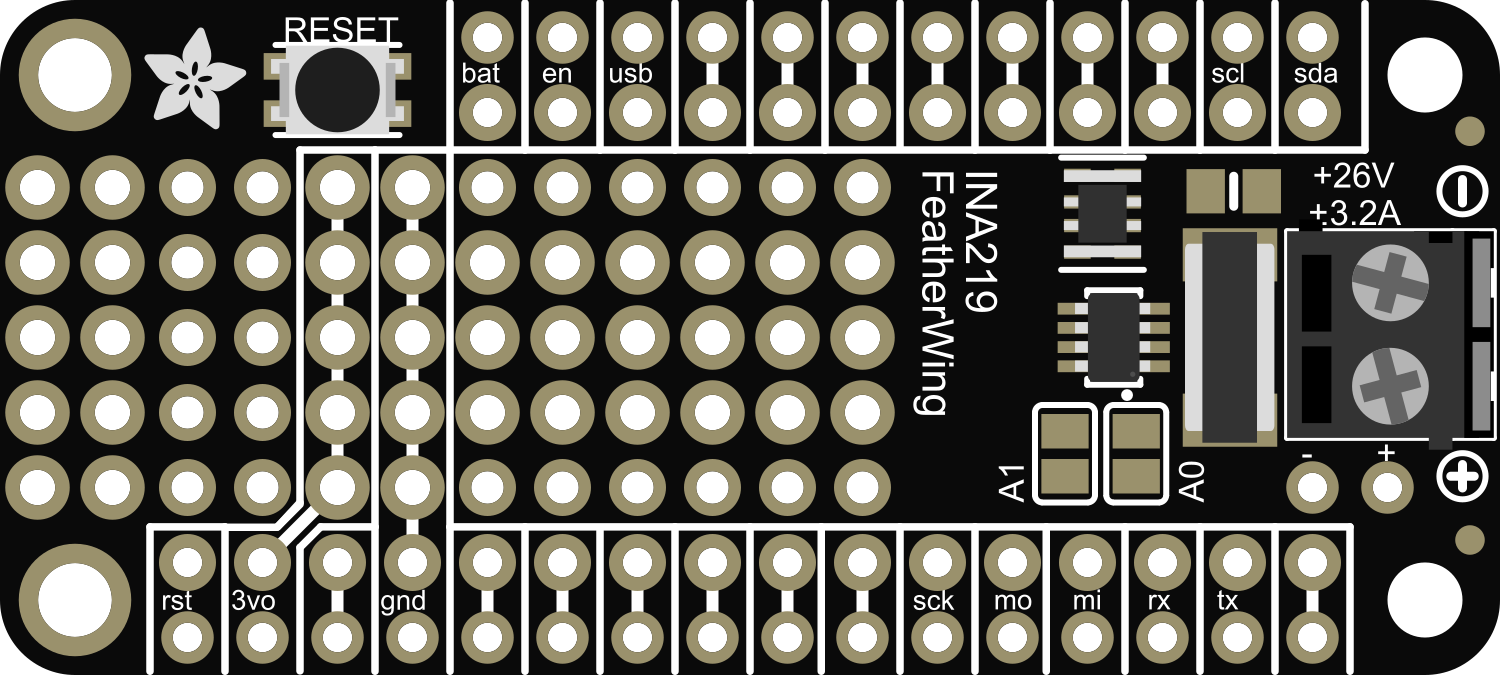
The Adafruit INA219 Current Sensor FeatherWing is a high-precision current and voltage measurement module designed to be compatible with the Feather series of development boards by Adafruit. This sensor is capable of measuring both the voltage across and the current passing through a load with high accuracy, which makes it an invaluable tool for monitoring power consumption in various electronic projects. Common applications include battery monitoring, energy monitoring, and power management systems.
Explore Projects Built with Adafruit INA219 Current Sensor FeatherWing
Use Cirkit Designer to design, explore, and prototype these projects online. Some projects support real-time simulation. Click "Open Project" to start designing instantly!
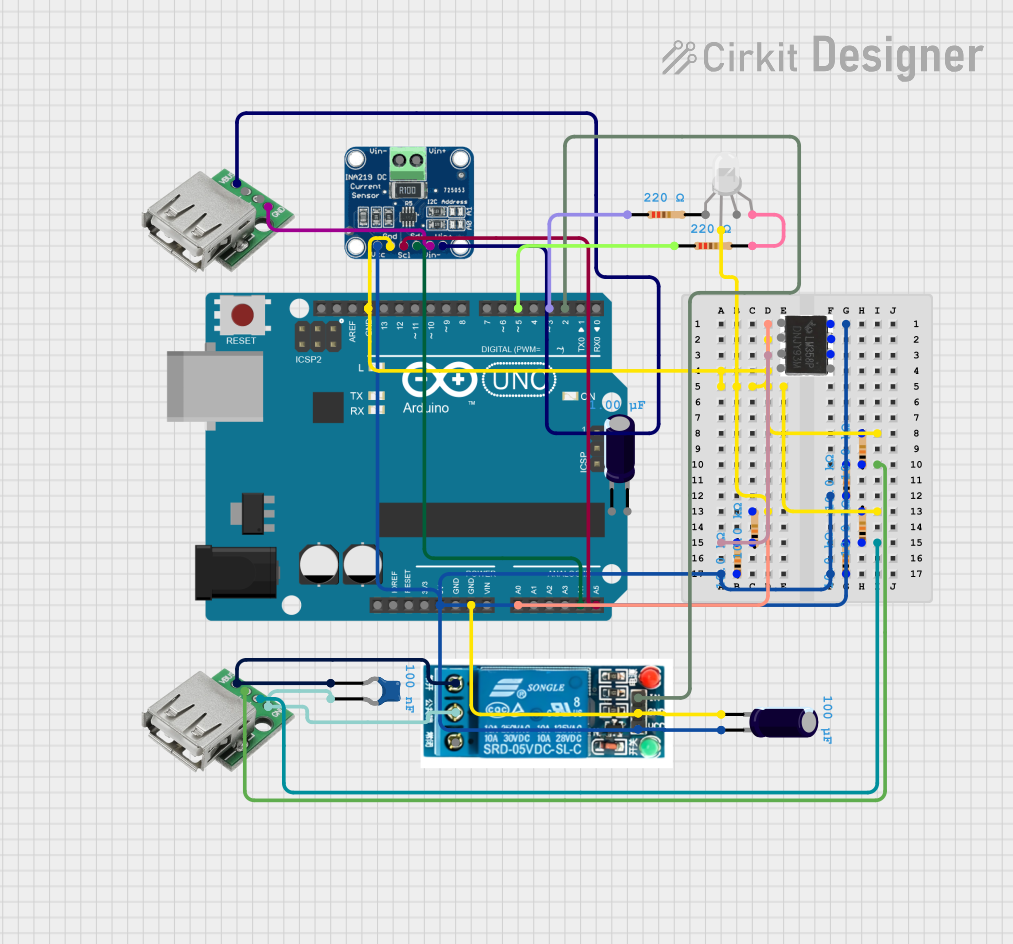
This circuit features an Arduino UNO microcontroller interfaced with an INA219 current sensor, a 5V relay, and an RGB LED. The Arduino reads current measurements from the INA219 via I2C and controls the relay and LED, potentially for monitoring and controlling power to a USB-connected device.
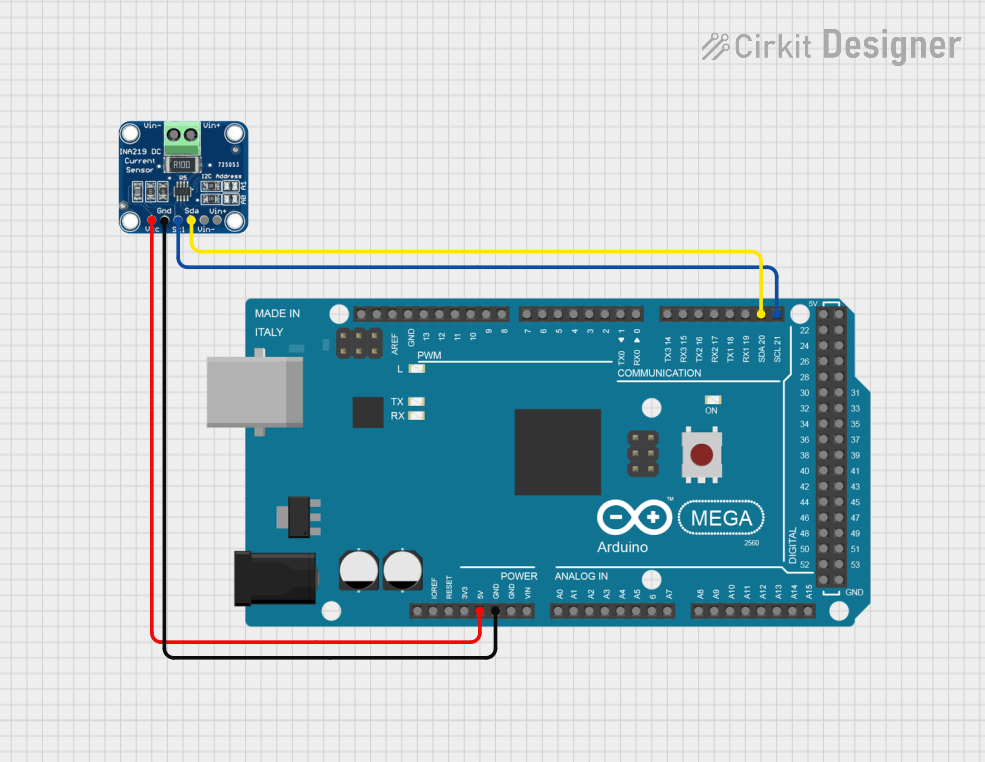
This circuit connects an Arduino Mega 2560 to an INA219 sensor for current and voltage measurement. The INA219 sensor communicates with the Arduino via the I2C protocol, and the Arduino reads and prints the current, bus voltage, shunt voltage, and power values to the Serial Monitor.
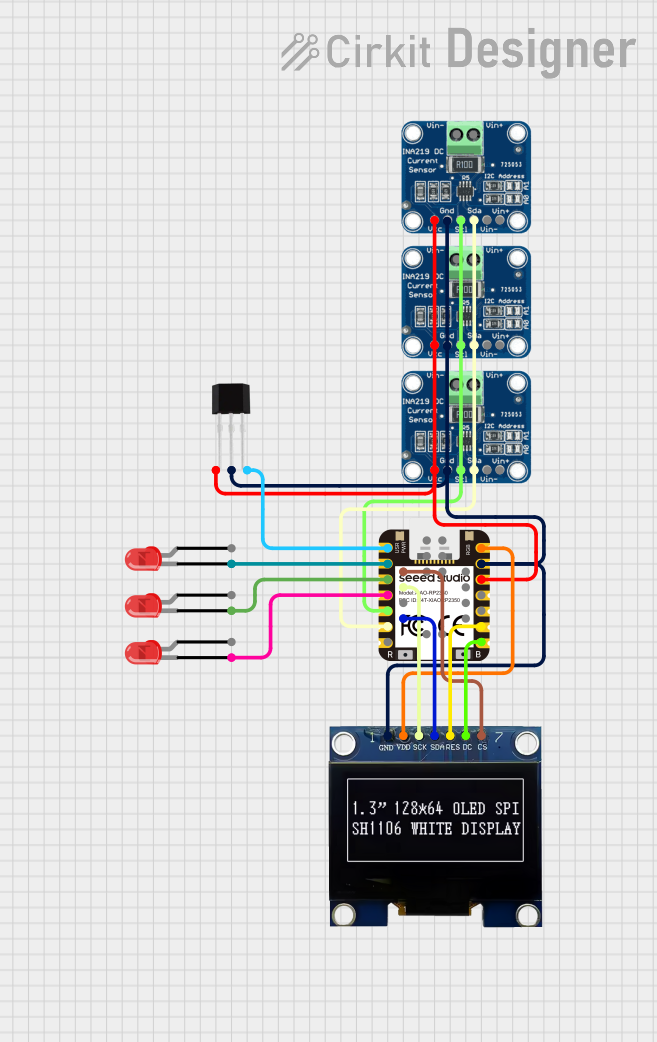
This circuit is designed for monitoring and displaying sensor data. It includes three INA219 current sensors, a GH1248 Hall sensor, and an SSD1306 OLED display, all interfaced with a Seeed Studio RP2350 microcontroller. The microcontroller reads data from the sensors and controls the display and three LEDs.
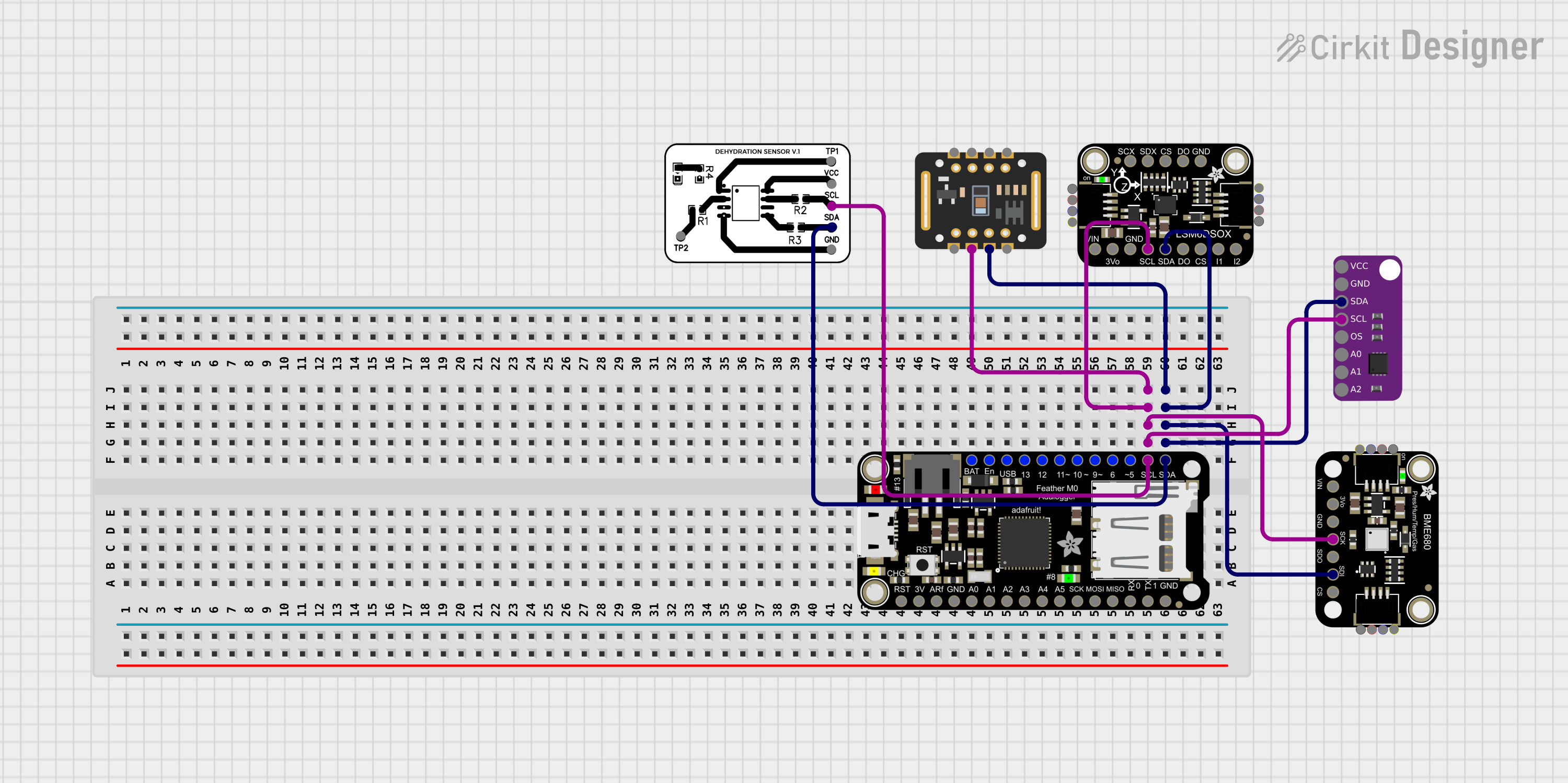
This circuit is designed to interface multiple sensors with an Adafruit Feather M0 Adalogger microcontroller for data logging purposes. The sensors include a MAX30205 temperature sensor, a body dehydration sensor, a MAX30102 pulse oximeter, an Adafruit LSM6DSOX 6-axis accelerometer and gyroscope, and an Adafruit BME680 environmental sensor. All sensors are connected to the microcontroller via an I2C bus, sharing the SDA and SCL lines for communication.
No Data on I2C: Ensure that the SDA and SCL lines are connected properly and that there are pull-up resistors on the I2C lines.
Inaccurate Readings: Check that the load is connected correctly to Vin+ and Vin-. Also, verify that the power supply is within the specified range.
Device Not Found: Make sure that the INA219 FeatherWing is properly seated on the Feather board and that the I2C address is correctly set.
Solutions and Tips for Troubleshooting
I2C Pull-up Resistors: If the data is not being transmitted over the I2C lines, add pull-up resistors to the SDA and SCL lines.
Check Connections: Double-check all connections, including power to the INA219 FeatherWing, and ensure that there are no shorts or open circuits.
Use the Correct Library: Ensure that you are using the latest Adafruit INA219 library for your development environment.
FAQs
Q: Can I measure currents higher than 3.2A?
A: Yes, but you will need to replace the default shunt resistor with one that has a lower resistance value and recalibrate the sensor accordingly.
Q: What is the accuracy of the sensor?
A: The INA219 provides high accuracy with a resolution of 0.8mA when using the default 0.1 ohm shunt resistor.
Q: How do I change the I2C address?
A: The I2C address can be changed by adjusting the jumpers on the INA219 FeatherWing. Refer to the datasheet for the address configuration.
Q: Can I use this sensor with other microcontrollers besides the Feather series?
A: Yes, the INA219 FeatherWing can be used with any microcontroller that supports I2C communication, provided the logic levels are compatible.

 Open Project in Cirkit Designer