
How to Use GKA Lithium-Ion 9800MAH: Examples, Pinouts, and Specs
 Design with GKA Lithium-Ion 9800MAH in Cirkit Designer
Introduction
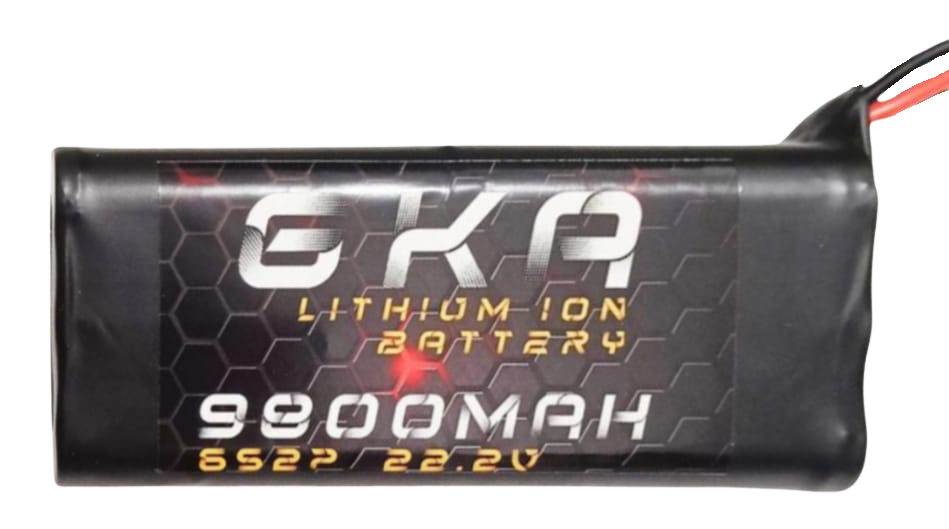
The GKA Lithium-Ion 9800mAh battery is a high-capacity rechargeable energy storage solution designed for a wide range of electronic applications. With its robust capacity and reliable performance, this battery is ideal for powering devices such as portable electronics, robotics, IoT devices, and backup power systems. Its lightweight and compact design make it a versatile choice for projects requiring long-lasting energy in a small form factor.
Explore Projects Built with GKA Lithium-Ion 9800MAH
 Open Project in Cirkit Designer
 Open Project in Cirkit Designer
 Open Project in Cirkit Designer
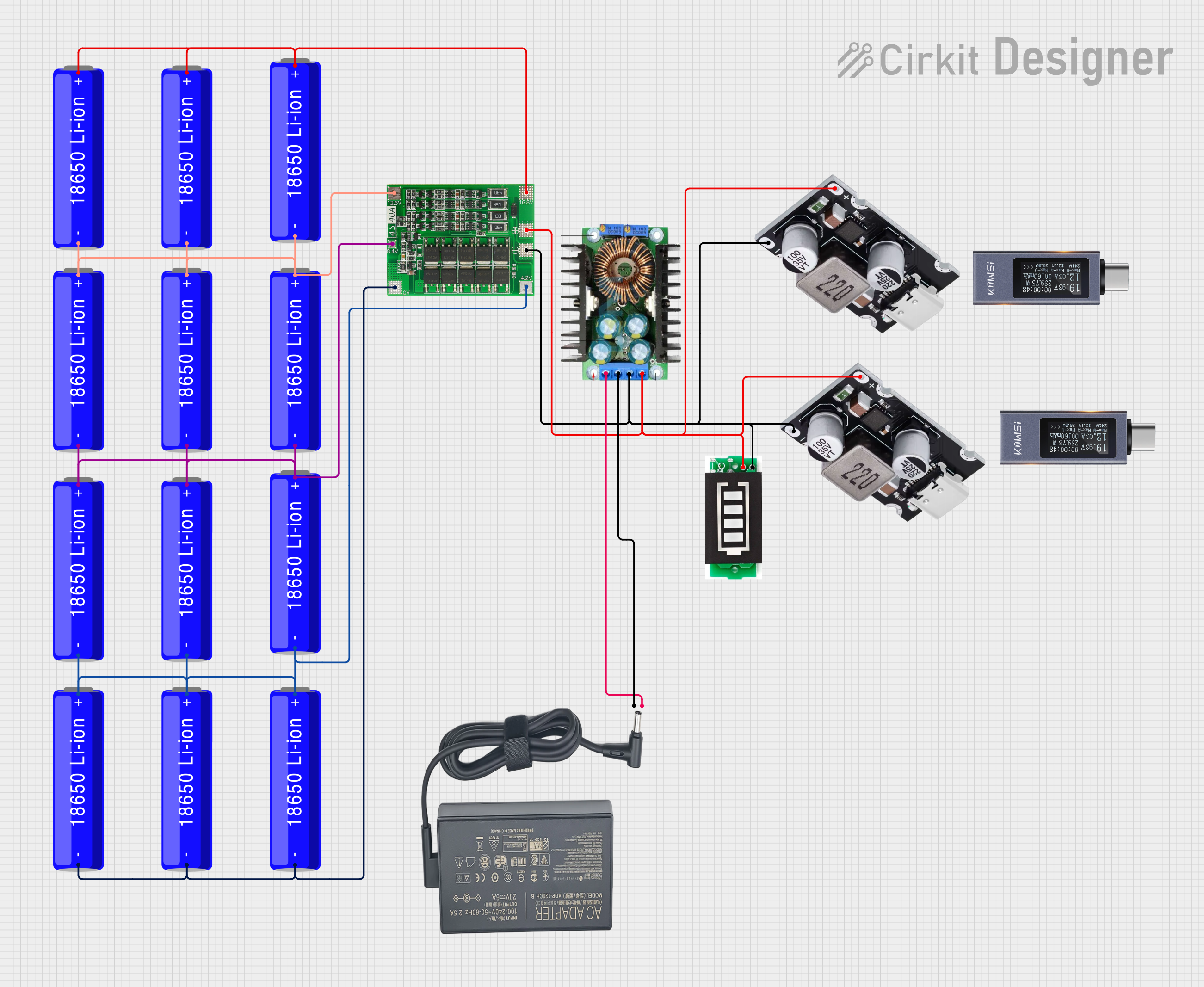 Open Project in Cirkit Designer
Explore Projects Built with GKA Lithium-Ion 9800MAH
Open Project in Cirkit DesignerOpen Project in Cirkit DesignerOpen Project in Cirkit DesignerOpen Project in Cirkit DesignerCommon Applications and Use Cases
- Portable electronic devices (e.g., handheld gadgets, cameras)
- Robotics and automation systems
- Internet of Things (IoT) devices
- Backup power supplies for microcontrollers and sensors
- DIY electronics projects and prototyping
Technical Specifications
The GKA Lithium-Ion 9800mAh battery is engineered to deliver consistent performance while maintaining safety and efficiency. Below are the key technical details:
| Specification | Value |
|---|---|
| Nominal Voltage | 3.7V |
| Capacity | 9800mAh |
| Maximum Discharge Current | 2A |
| Charging Voltage | 4.2V ± 0.05V |
| Charging Current | 1A (recommended), 2A (max) |
| Dimensions | 65mm x 18mm x 18mm |
| Weight | ~50g |
| Battery Chemistry | Lithium-Ion |
| Operating Temperature | -20°C to 60°C |
| Cycle Life | ≥500 charge/discharge cycles |
Pin Configuration and Descriptions
The GKA Lithium-Ion 9800mAh battery typically comes with two terminals for connection:
| Pin | Label | Description |
|---|---|---|
| 1 | Positive (+) | Connect to the positive terminal of the circuit. |
| 2 | Negative (-) | Connect to the ground or negative terminal. |
Note: Some variants may include a built-in protection circuit module (PCM) to prevent overcharging, over-discharging, and short circuits.
Usage Instructions
How to Use the Component in a Circuit
- Connection:
- Connect the positive terminal of the battery to the positive input of your circuit.
- Connect the negative terminal to the ground of your circuit.
- Charging:
- Use a compatible Lithium-Ion battery charger with a constant current/constant voltage (CC/CV) charging profile.
- Ensure the charging voltage does not exceed 4.2V to prevent damage.
- Discharging:
- Avoid discharging the battery below 3.0V to maintain its lifespan.
- Use a load that does not exceed the maximum discharge current of 2A.
Important Considerations and Best Practices
- Safety: Always handle the battery with care. Avoid puncturing, short-circuiting, or exposing it to high temperatures.
- Storage: Store the battery in a cool, dry place when not in use. For long-term storage, maintain a charge level of 40-60%.
- Protection Circuit: If the battery does not include a built-in PCM, consider adding an external protection circuit to safeguard against overcharging and over-discharging.
- Arduino Integration: When using the battery to power an Arduino UNO, ensure the voltage is regulated to 5V using a step-up converter or a voltage regulator.
Example: Powering an Arduino UNO with the GKA Lithium-Ion 9800mAh Battery
/* Example: Reading a sensor value with Arduino UNO powered by GKA Lithium-Ion 9800mAh
   Ensure the battery voltage is regulated to 5V before connecting to the Arduino. */

const int sensorPin = A0;  // Analog pin connected to the sensor
int sensorValue = 0;       // Variable to store the sensor reading

void setup() {
  Serial.begin(9600);      // Initialize serial communication
  pinMode(sensorPin, INPUT); // Set the sensor pin as input
}

void loop() {
  sensorValue = analogRead(sensorPin); // Read the sensor value
  Serial.print("Sensor Value: ");
  Serial.println(sensorValue);        // Print the sensor value to the Serial Monitor
  delay(1000);                        // Wait for 1 second before the next reading
}
Troubleshooting and FAQs
Common Issues Users Might Face
Battery Not Charging:
- Cause: Charger not compatible or damaged.
- Solution: Use a charger designed for Lithium-Ion batteries with a 4.2V output.
Battery Drains Quickly:
- Cause: Excessive load or battery nearing the end of its cycle life.
- Solution: Reduce the load or replace the battery if it has exceeded 500 cycles.
Overheating During Use:
- Cause: Current draw exceeds the maximum discharge current.
- Solution: Ensure the load does not exceed 2A. Use a current-limiting circuit if necessary.
Battery Voltage Drops Below 3.0V:
- Cause: Over-discharging.
- Solution: Recharge the battery immediately. Use a protection circuit to prevent over-discharging in the future.
FAQs
Q: Can I connect multiple GKA Lithium-Ion 9800mAh batteries in series or parallel?
- A: Yes, you can connect them in series to increase voltage or in parallel to increase capacity. Ensure all batteries are of the same type and charge level before connecting.
Q: How do I know when the battery is fully charged?
- A: A Lithium-Ion charger will typically indicate full charge when the current drops to a minimal level while maintaining 4.2V.
Q: Is the battery safe for outdoor use?
- A: Yes, but ensure it is protected from water and extreme temperatures. Use a weatherproof enclosure if necessary.
Q: Can I use this battery to power a motor?
- A: Yes, as long as the motor's current draw does not exceed 2A. Use a motor driver circuit for better control and safety.