
How to Use VF-RS-PN263 B: Examples, Pinouts, and Specs
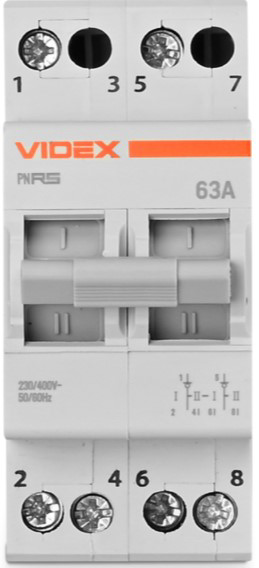
 Design with VF-RS-PN263 B in Cirkit Designer
Introduction
The VF-RS-PN263 B is a high-performance voltage feedback operational amplifier manufactured by VIDEX. It is specifically designed for high-speed applications, offering a combination of low noise, high gain bandwidth, and excellent linearity. This makes it an ideal choice for signal processing, analog circuit designs, and other precision applications.
Explore Projects Built with VF-RS-PN263 B
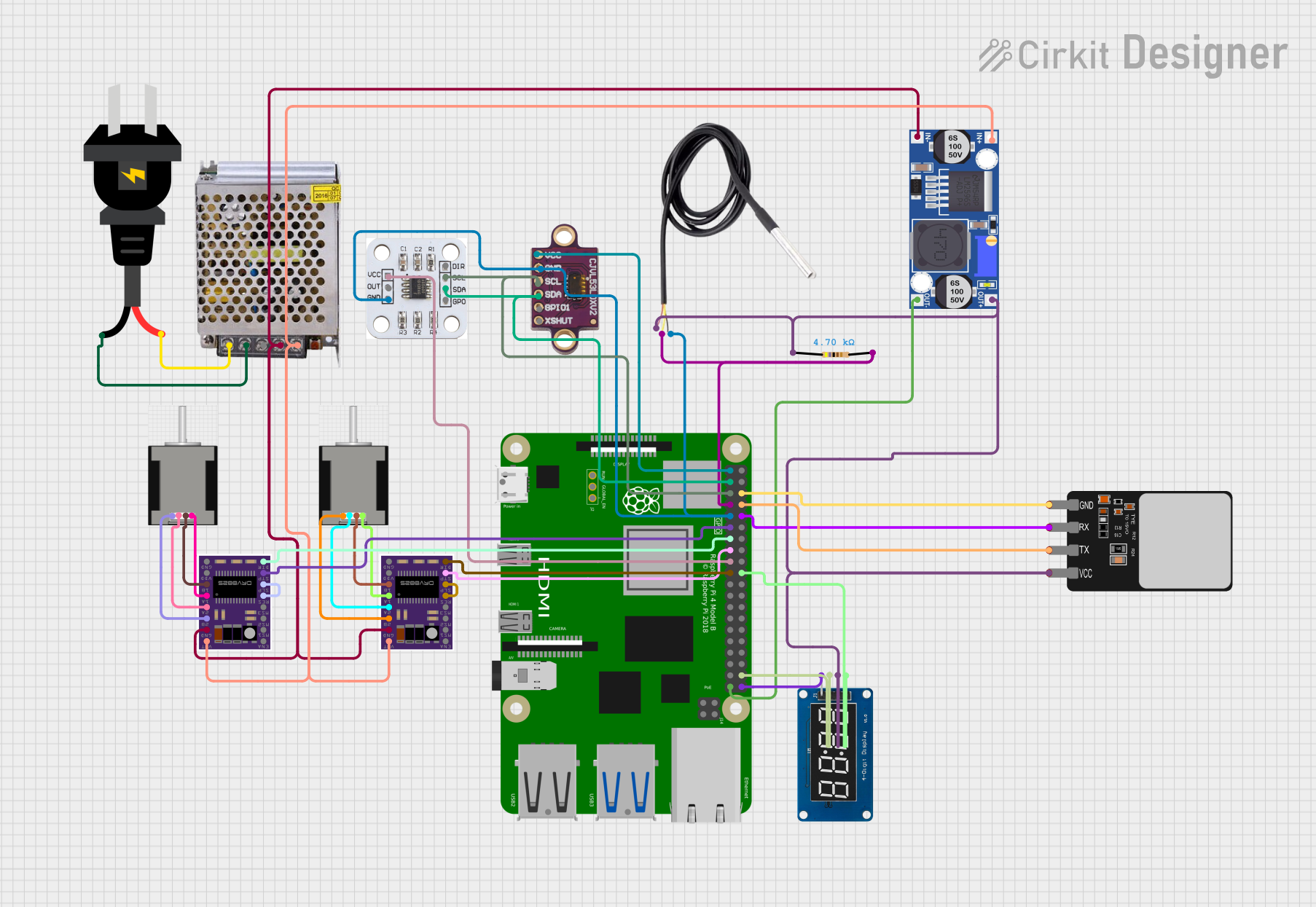 Open Project in Cirkit Designer
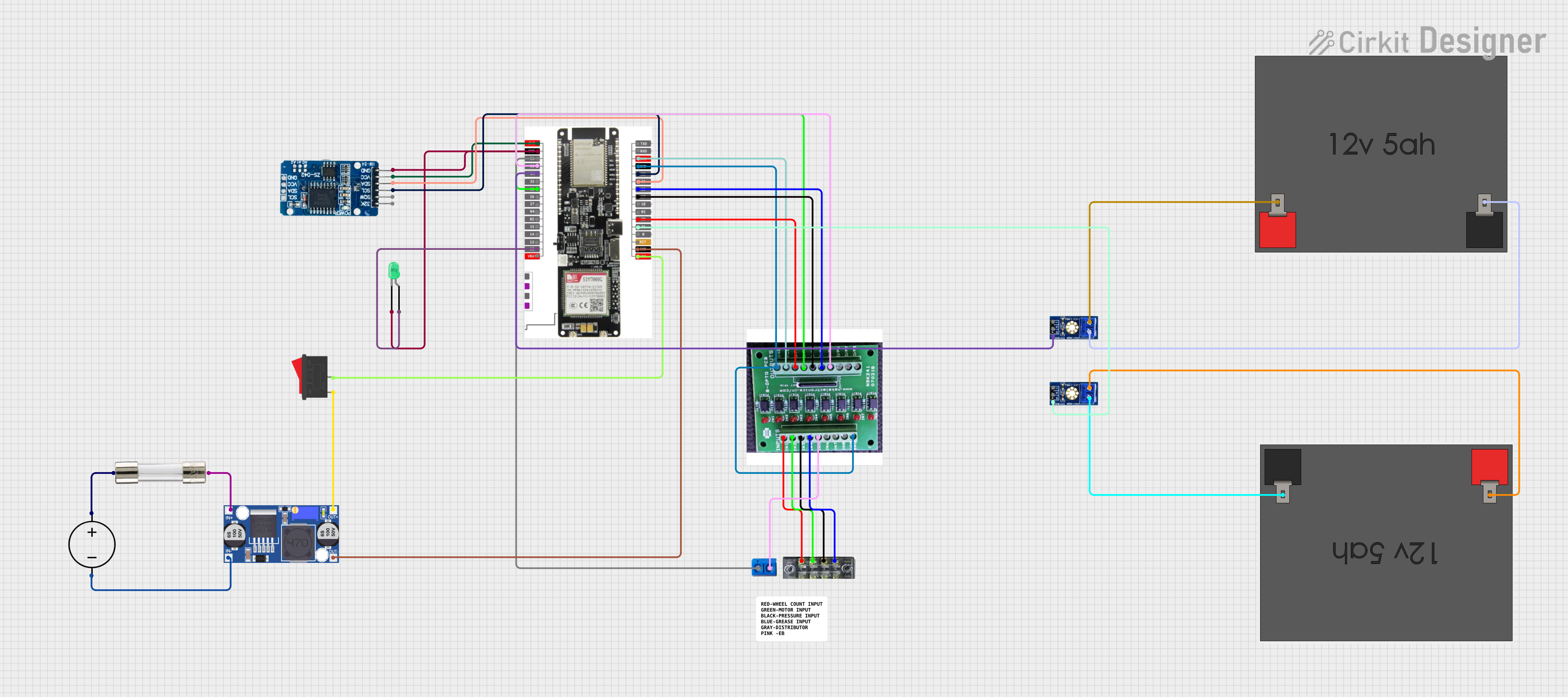 Open Project in Cirkit Designer
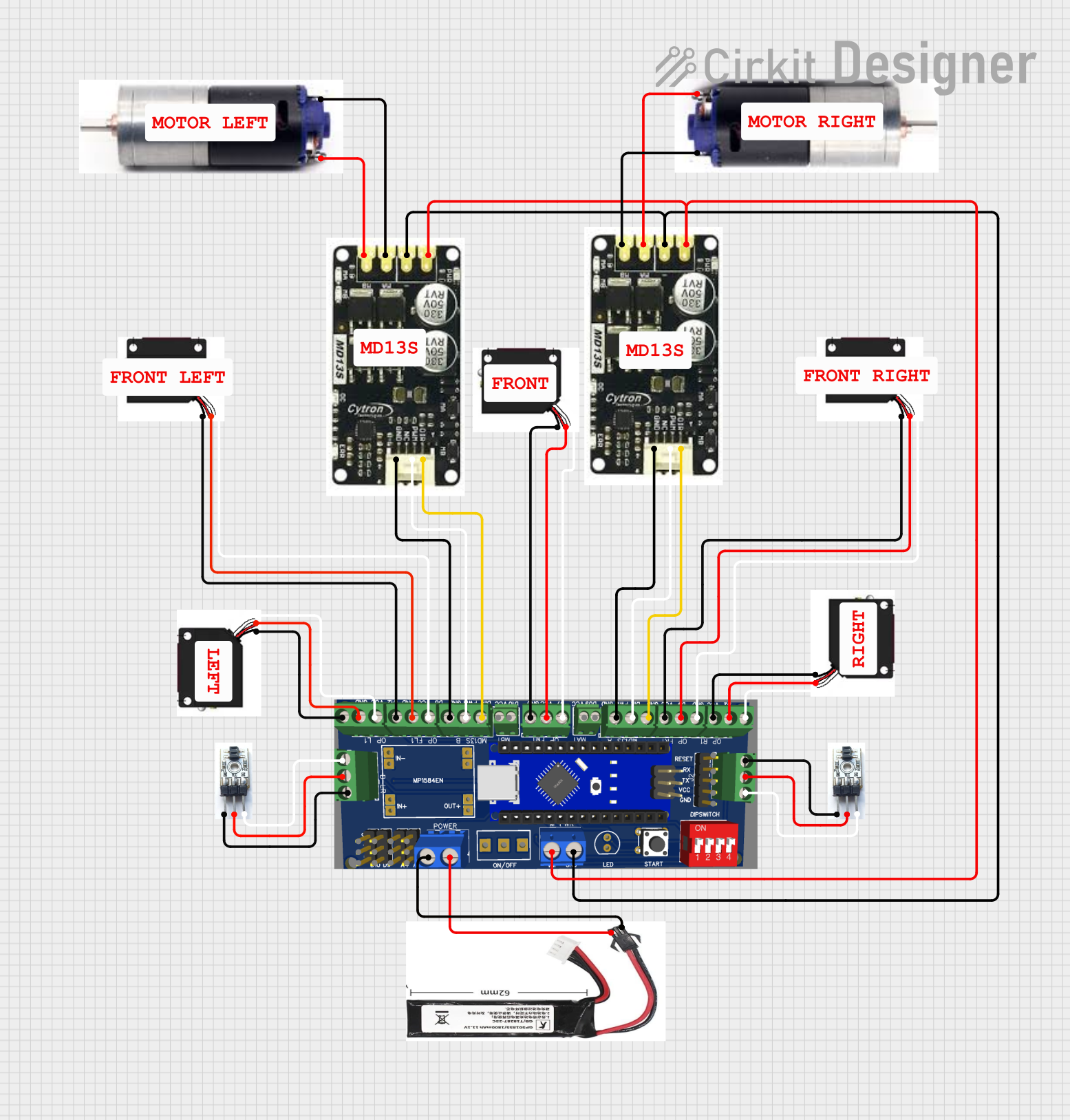 Open Project in Cirkit Designer
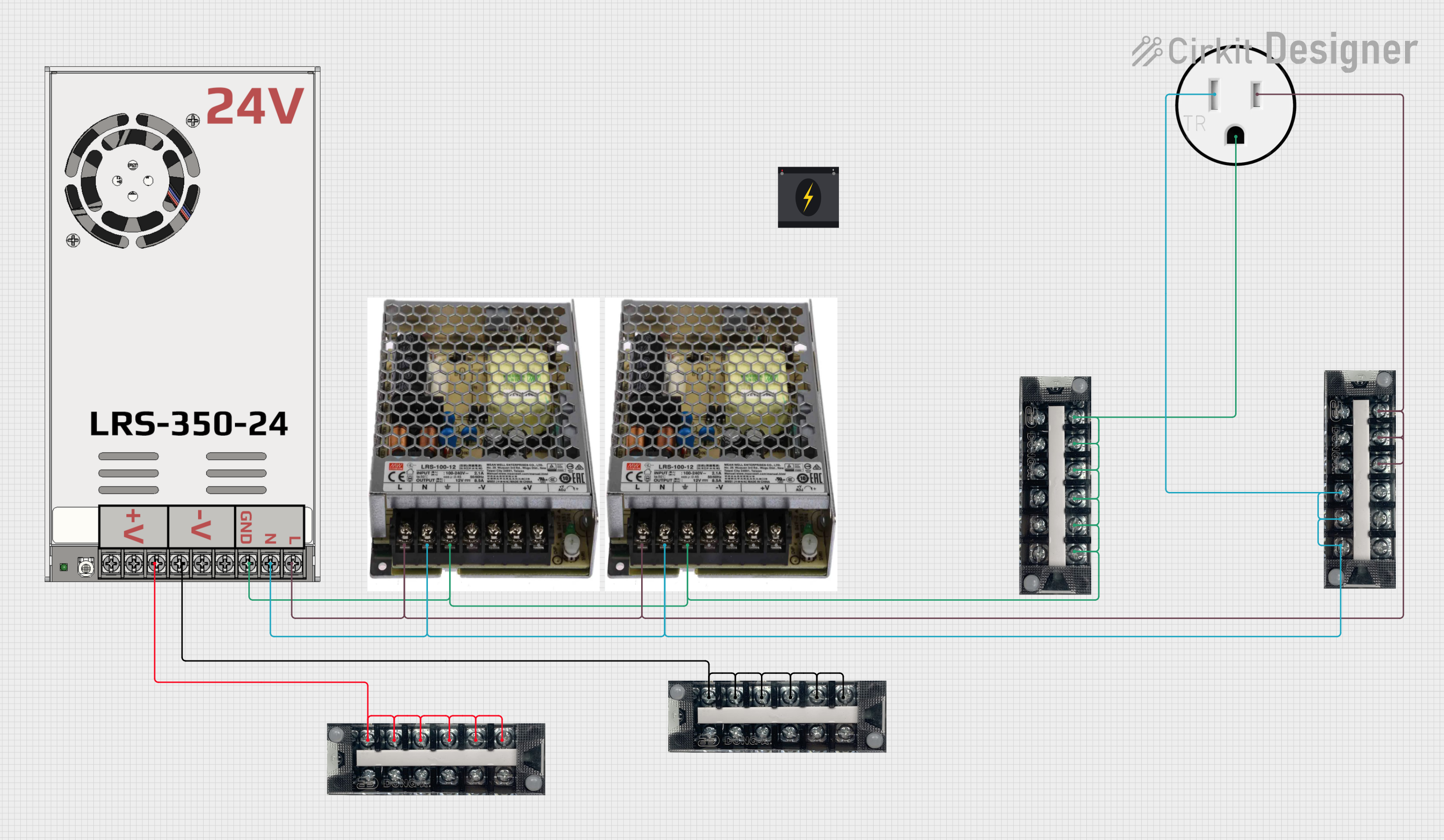 Open Project in Cirkit Designer
Explore Projects Built with VF-RS-PN263 B
Open Project in Cirkit DesignerOpen Project in Cirkit DesignerOpen Project in Cirkit DesignerOpen Project in Cirkit DesignerCommon Applications and Use Cases
- High-speed signal amplification
- Analog-to-digital converter (ADC) buffering
- Active filters and oscillators
- Video signal processing
- Medical instrumentation
- Communication systems
Technical Specifications
The following table outlines the key technical specifications of the VF-RS-PN263 B:
| Parameter | Value |
|---|---|
| Supply Voltage Range | ±2.5V to ±15V |
| Gain Bandwidth Product | 200 MHz |
| Slew Rate | 300 V/µs |
| Input Offset Voltage | 1 mV (typical) |
| Input Bias Current | 2 µA (typical) |
| Output Voltage Swing | ±13.5V (at ±15V supply) |
| Noise Density | 2.5 nV/√Hz |
| Operating Temperature Range | -40°C to +85°C |
| Package Type | 8-pin SOIC |
Pin Configuration and Descriptions
The VF-RS-PN263 B is available in an 8-pin SOIC package. The pinout and descriptions are as follows:
| Pin Number | Pin Name | Description |
|---|---|---|
| 1 | Offset Null | Offset voltage adjustment (connect to potentiometer) |
| 2 | Inverting Input (-) | Inverting input terminal for the amplifier |
| 3 | Non-Inverting Input (+) | Non-inverting input terminal for the amplifier |
| 4 | V- (Negative Supply) | Negative power supply terminal |
| 5 | Offset Null | Offset voltage adjustment (connect to potentiometer) |
| 6 | Output | Amplifier output terminal |
| 7 | V+ (Positive Supply) | Positive power supply terminal |
| 8 | NC (No Connect) | Not connected internally |
Usage Instructions
How to Use the VF-RS-PN263 B in a Circuit
- Power Supply: Connect the amplifier to a dual power supply (e.g., ±5V or ±15V) for optimal performance. Ensure proper decoupling capacitors (e.g., 0.1 µF ceramic and 10 µF electrolytic) are placed close to the power supply pins to minimize noise.
- Input Configuration: Use the inverting or non-inverting input depending on the desired circuit configuration:
- For an inverting amplifier, connect the input signal to the inverting input through a resistor.
- For a non-inverting amplifier, connect the input signal to the non-inverting input.
- Feedback Network: Design the feedback resistor and gain resistor values to set the desired gain. For example, gain = 1 + (Rf/Rin) in a non-inverting configuration.
- Offset Adjustment: If required, connect a 10 kΩ potentiometer between the offset null pins (1 and 5) to fine-tune the offset voltage.
- Output Load: Ensure the load connected to the output does not exceed the amplifier's drive capability. For best performance, use a load impedance of at least 2 kΩ.
Important Considerations and Best Practices
- Stability: To avoid oscillations, ensure the feedback network is properly designed and avoid excessive capacitive loading on the output.
- Thermal Management: Operate the amplifier within the specified temperature range (-40°C to +85°C) to prevent thermal damage.
- PCB Layout: Use a ground plane and minimize trace lengths for the input and output signals to reduce noise and parasitic effects.
- Bypass Capacitors: Always use bypass capacitors close to the power supply pins to ensure stable operation.
Example: Connecting VF-RS-PN263 B to an Arduino UNO
The VF-RS-PN263 B can be used to amplify an analog signal before feeding it into the Arduino UNO's ADC. Below is an example circuit and Arduino code:
Circuit Description
- Connect the VF-RS-PN263 B in a non-inverting amplifier configuration.
- The input signal is connected to the non-inverting input (Pin 3).
- The output (Pin 6) is connected to the Arduino's analog input pin (e.g., A0).
- Use a feedback resistor (Rf) of 10 kΩ and a gain resistor (Rin) of 1 kΩ to set a gain of 11.
Arduino Code
// Arduino code to read amplified signal from VF-RS-PN263 B
const int analogPin = A0; // Analog pin connected to amplifier output
int sensorValue = 0;      // Variable to store ADC reading

void setup() {
  Serial.begin(9600); // Initialize serial communication at 9600 baud
}

void loop() {
  sensorValue = analogRead(analogPin); // Read the analog input
  float voltage = sensorValue * (5.0 / 1023.0); // Convert ADC value to voltage
  Serial.print("Amplified Voltage: ");
  Serial.print(voltage);
  Serial.println(" V");
  delay(500); // Wait for 500 ms before the next reading
}
Troubleshooting and FAQs
Common Issues and Solutions
No Output Signal:
- Check the power supply connections and ensure the amplifier is powered correctly.
- Verify that the input signal is within the specified input voltage range.
Output Distortion:
- Ensure the load impedance is not too low, as this can cause the amplifier to enter current limiting.
- Check the feedback network for proper resistor values and connections.
Oscillations or Instability:
- Add a small capacitor (e.g., 10 pF) in parallel with the feedback resistor to improve stability.
- Ensure proper decoupling capacitors are used on the power supply pins.
High Offset Voltage:
- Use the offset null pins to adjust and minimize the offset voltage.
FAQs
Q: Can the VF-RS-PN263 B operate with a single power supply?
A: Yes, the amplifier can operate with a single supply (e.g., 5V), but the input and output signals must remain within the specified common-mode voltage range.
Q: What is the maximum output current of the VF-RS-PN263 B?
A: The amplifier can source or sink up to 20 mA of output current.
Q: How do I calculate the gain for a non-inverting amplifier configuration?
A: The gain is calculated as ( 1 + \frac{R_f}{R_{in}} ), where ( R_f ) is the feedback resistor and ( R_{in} ) is the resistor connected to the inverting input.
Q: Can I use the VF-RS-PN263 B for audio applications?
A: Yes, the low noise and high bandwidth of the VF-RS-PN263 B make it suitable for audio signal amplification.