
How to Use heater ptc: Examples, Pinouts, and Specs
 Design with heater ptc in Cirkit Designer
Introduction
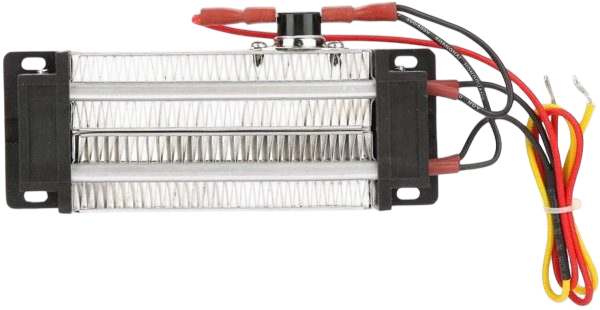
A Positive Temperature Coefficient (PTC) heater is a type of heating element that increases its resistance as its temperature rises. This unique property allows the PTC heater to self-regulate its temperature without requiring external control circuitry. As the temperature approaches a predefined threshold, the resistance increases significantly, reducing the current flow and preventing overheating.
PTC heaters are widely used in applications where precise temperature control and safety are critical. Common use cases include:
- Automotive heating systems (e.g., seat warmers, defoggers)
- Home appliances (e.g., space heaters, hair dryers)
- Industrial equipment requiring controlled heating
- Battery thermal management systems
Explore Projects Built with heater ptc
 Open Project in Cirkit Designer
 Open Project in Cirkit Designer
 Open Project in Cirkit Designer
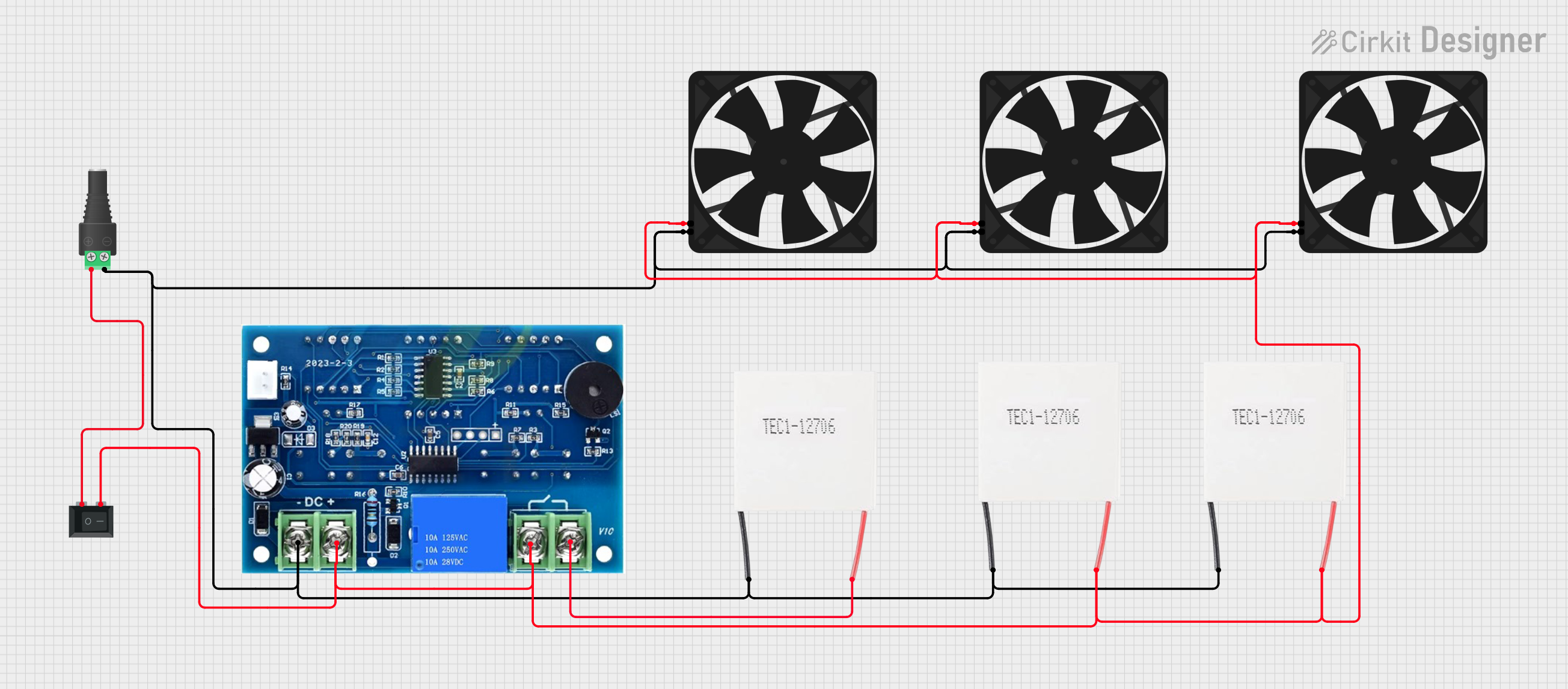 Open Project in Cirkit Designer
Explore Projects Built with heater ptc
Open Project in Cirkit DesignerOpen Project in Cirkit DesignerOpen Project in Cirkit DesignerOpen Project in Cirkit DesignerTechnical Specifications
Below are the general technical specifications for a typical PTC heater. Note that specific values may vary depending on the model and manufacturer.
Key Specifications
- Operating Voltage: 12V to 240V (depending on the model)
- Power Rating: 10W to 2000W
- Temperature Range: 60°C to 280°C (self-regulating threshold)
- Material: Ceramic-based heating element
- Resistance: Increases with temperature
- Safety Features: Overheat protection due to self-regulating properties
Pin Configuration and Descriptions
PTC heaters typically have two terminals for electrical connections. The table below describes the pin configuration:
| Pin Number | Label | Description |
|---|---|---|
| 1 | Positive (+) | Connect to the positive terminal of the power supply. |
| 2 | Negative (-) | Connect to the negative terminal (ground). |
Usage Instructions
How to Use the Component in a Circuit
- Power Supply: Select a power supply that matches the operating voltage of the PTC heater. Ensure the power supply can handle the current draw of the heater.
- Connection: Connect the positive terminal of the power supply to the positive pin of the PTC heater and the negative terminal to the negative pin.
- Mounting: Secure the PTC heater in a location where heat can be safely dissipated. Avoid placing it near flammable materials.
- Control (Optional): If precise temperature control is required, you can use a thermostat or microcontroller to monitor and regulate the heater's operation.
Important Considerations and Best Practices
- Ventilation: Ensure proper airflow around the PTC heater to prevent heat buildup.
- Current Limiting: Use a fuse or circuit breaker to protect the circuit from overcurrent conditions.
- Thermal Insulation: If used in an enclosure, ensure the enclosure is made of heat-resistant materials.
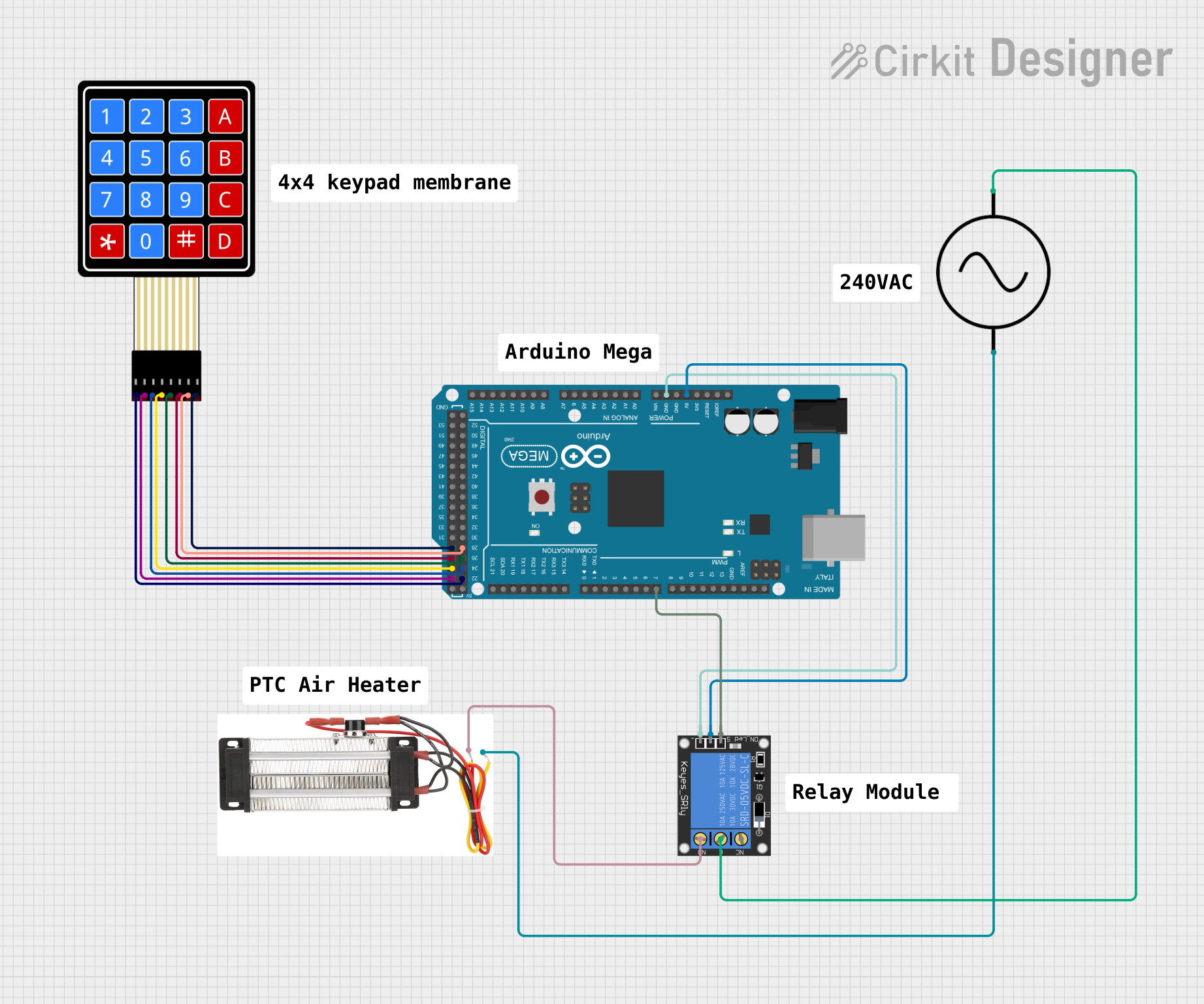
- Arduino Integration: PTC heaters can be controlled using an Arduino UNO and a relay module for switching. Below is an example code snippet for controlling a PTC heater with an Arduino:
// Example: Controlling a PTC heater with Arduino and a relay module
const int relayPin = 7; // Pin connected to the relay module

void setup() {
  pinMode(relayPin, OUTPUT); // Set relay pin as output
  digitalWrite(relayPin, LOW); // Ensure relay is off at startup
}

void loop() {
  // Turn on the PTC heater
  digitalWrite(relayPin, HIGH);
  delay(5000); // Keep heater on for 5 seconds

  // Turn off the PTC heater
  digitalWrite(relayPin, LOW);
  delay(5000); // Keep heater off for 5 seconds
}
Note: Always use a relay module rated for the voltage and current of the PTC heater. Never connect the heater directly to the Arduino, as it cannot handle high currents.
Troubleshooting and FAQs
Common Issues and Solutions
PTC Heater Not Heating:
- Cause: Incorrect power supply voltage or loose connections.
- Solution: Verify the power supply voltage matches the heater's specifications. Check all connections.
Overheating or Burning Smell:
- Cause: Insufficient ventilation or improper mounting.
- Solution: Ensure adequate airflow and mount the heater securely in a heat-resistant area.
Heater Turns Off Too Quickly:
- Cause: Ambient temperature is too high, or the heater's self-regulating threshold is too low.
- Solution: Use a heater with a higher temperature threshold or improve heat dissipation.
Relay Not Switching:
- Cause: Incorrect wiring or insufficient power to the relay module.
- Solution: Double-check the relay wiring and ensure the Arduino provides sufficient current to the relay.
FAQs
Q: Can I use a PTC heater with a battery?
- A: Yes, but ensure the battery can supply the required voltage and current. Use a fuse for safety.
Q: How do I choose the right PTC heater for my application?
- A: Consider the required operating voltage, power rating, and temperature range. Ensure the heater's specifications match your application's needs.
Q: Is it safe to leave a PTC heater running continuously?
- A: Yes, PTC heaters are designed for continuous operation due to their self-regulating properties. However, ensure proper ventilation and safety measures.
Q: Can I control a PTC heater with a PWM signal?
- A: PTC heaters are not ideal for direct PWM control. Use a relay or solid-state switch for on/off control instead.
By following this documentation, you can safely and effectively integrate a PTC heater into your projects.