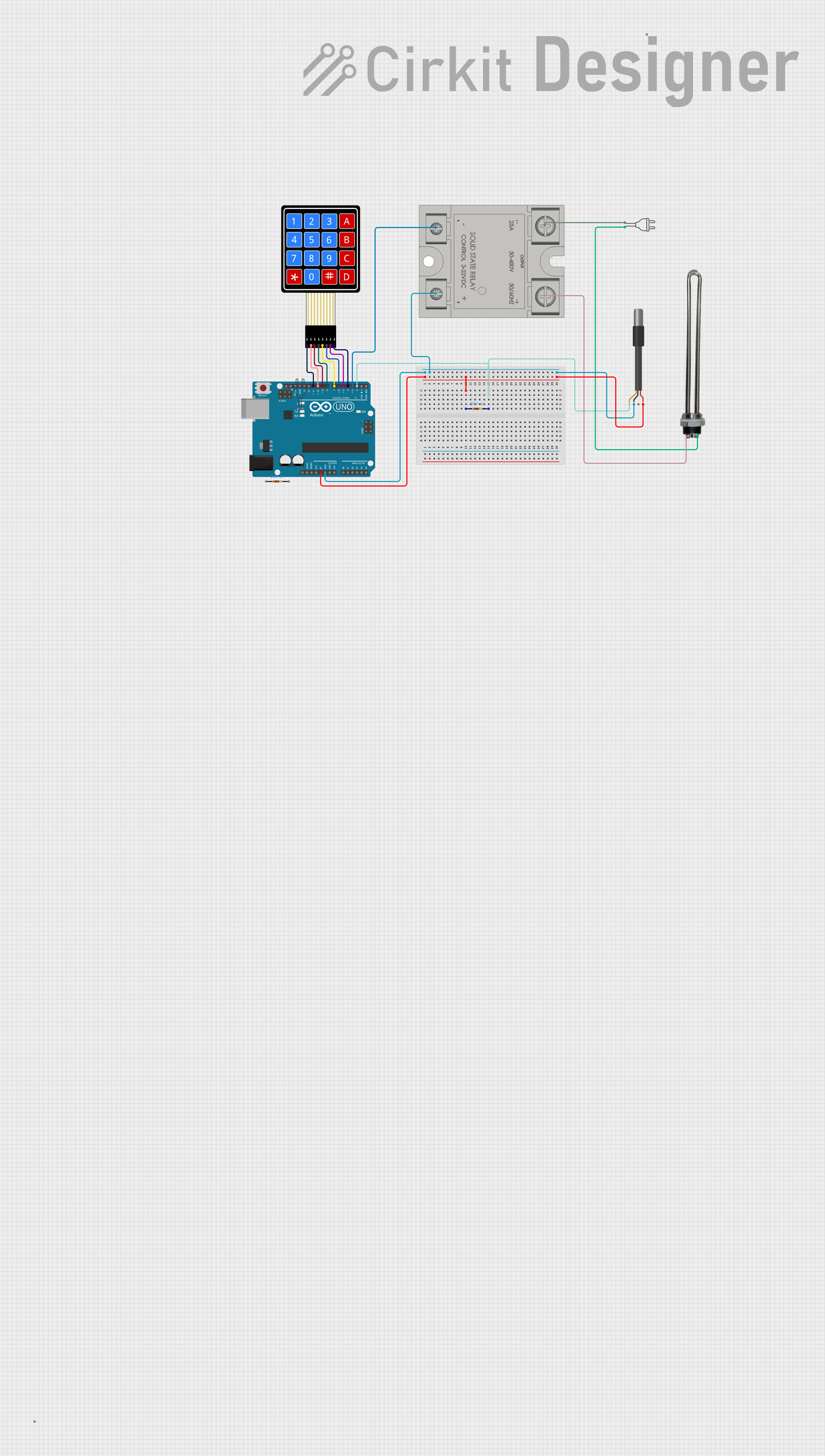
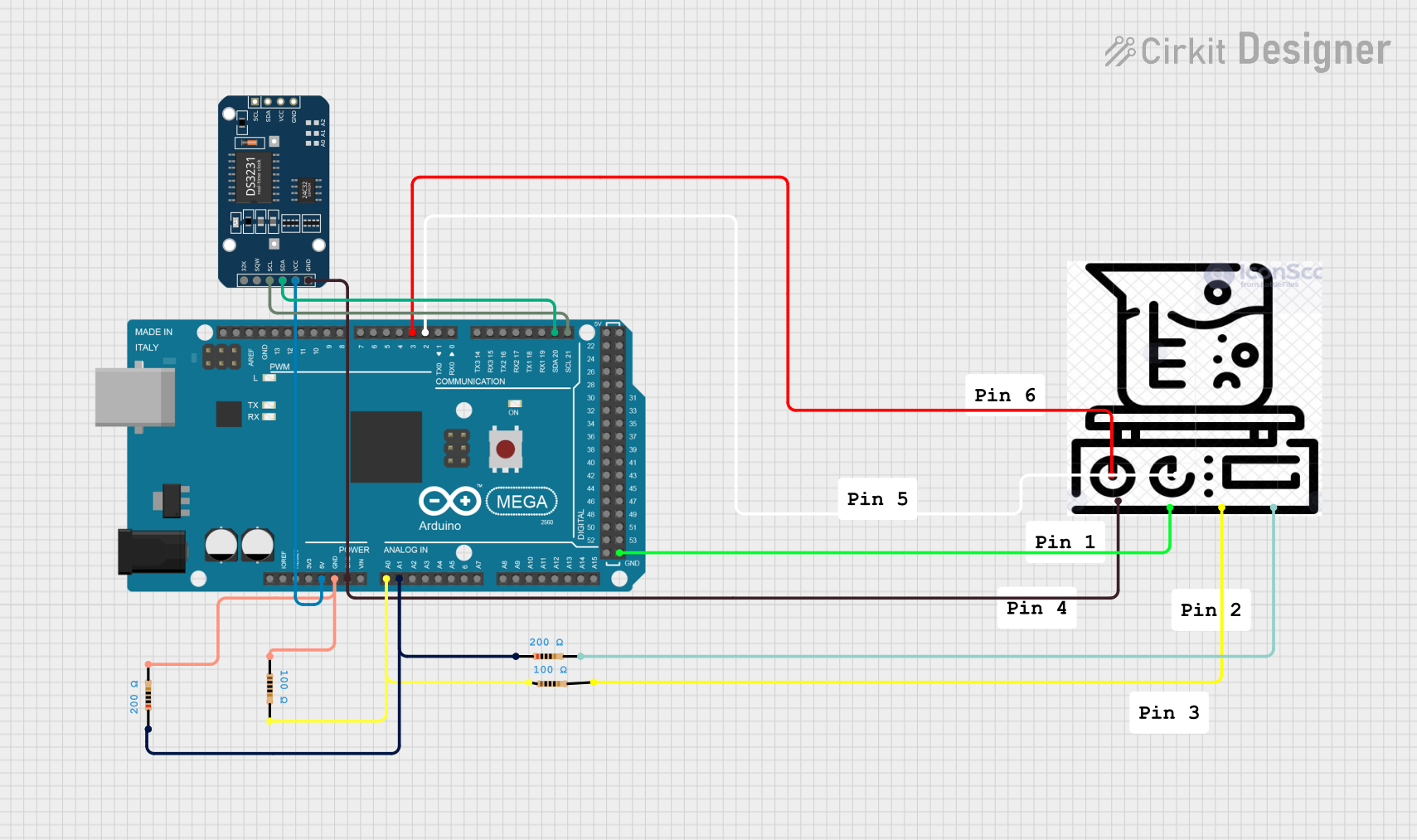
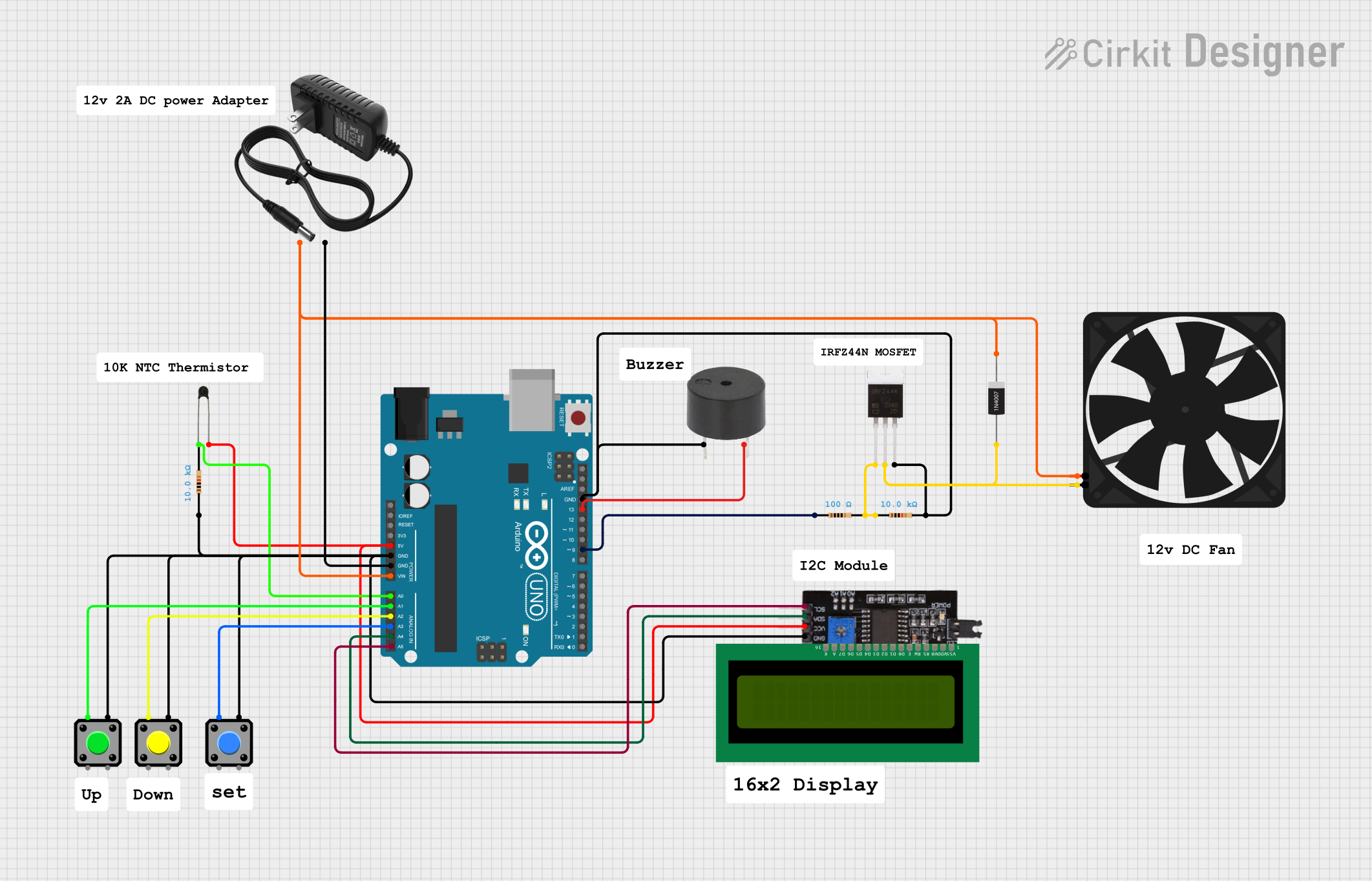
Introduction
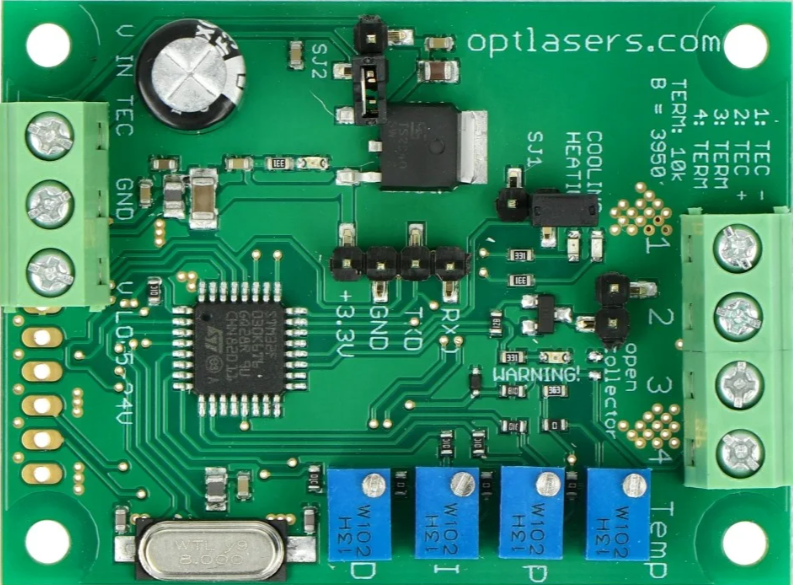
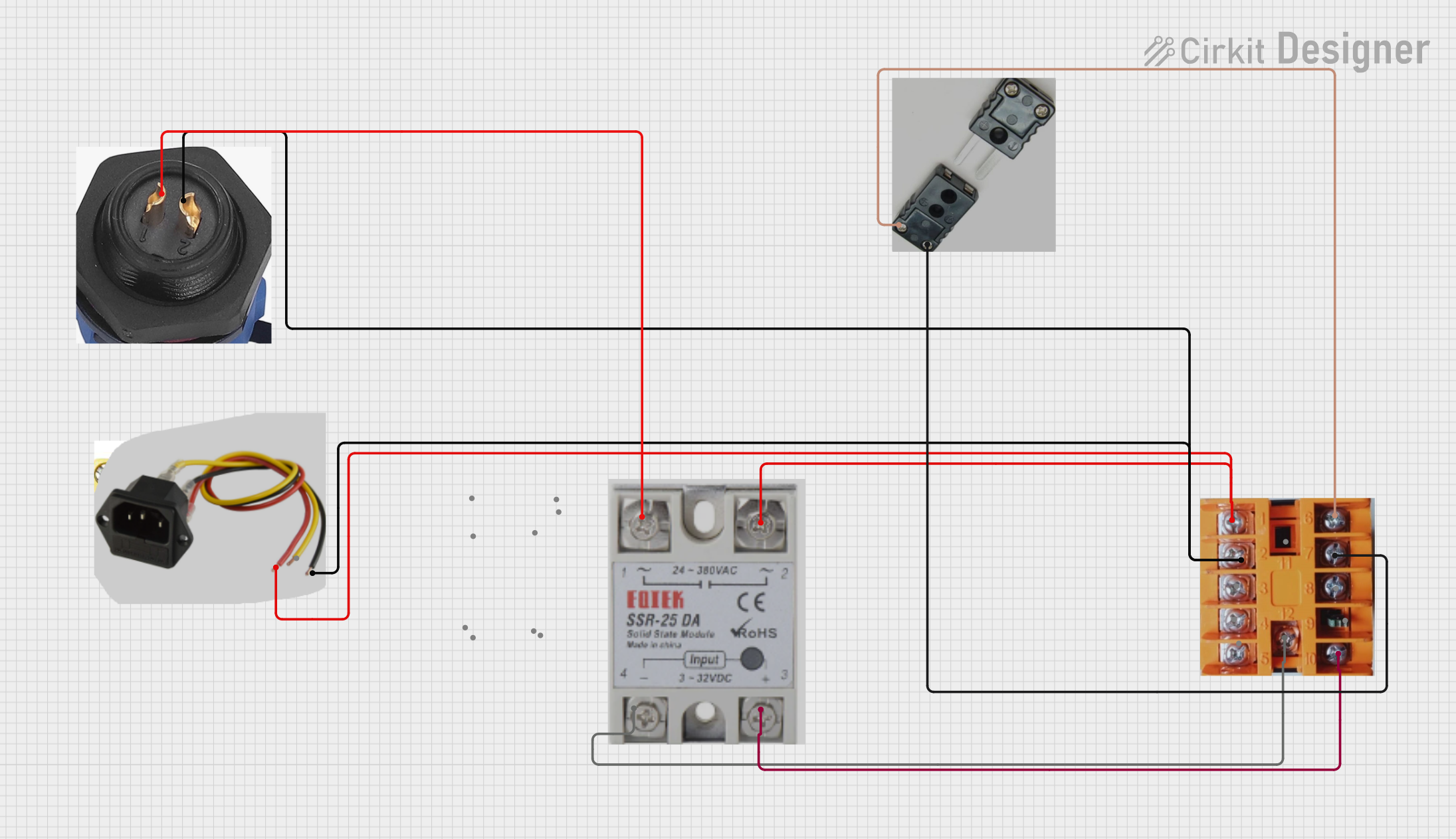
The Programmable Temperature Controller (Manufacturer: Opt Lasers, Part ID: 5904422303877) is a versatile device designed to automatically regulate temperature by controlling heating or cooling systems. It operates based on user-defined parameters and schedules, making it ideal for applications requiring precise thermal management.
This component is widely used in:
- Industrial automation for maintaining optimal operating temperatures.
- HVAC systems for efficient climate control.
- Laboratory equipment for precise thermal regulation.
- 3D printers and laser systems to prevent overheating.
- Food storage and processing to ensure safety and quality.
Technical Specifications
The following table outlines the key technical details of the Programmable Temperature Controller:
Pin Configuration and Descriptions
The pinout for the Programmable Temperature Controller is as follows:
Usage Instructions
How to Use the Component in a Circuit
- Power Supply: Connect the VCC pin to a 12V-24V DC power source and the GND pin to ground.
- Sensor Connection: Attach a compatible temperature sensor (e.g., NTC thermistor) to the TEMP_IN pin.
- Output Connection:
- For relay control, connect the heating or cooling device to the RELAY_NO or RELAY_NC pins.
- For proportional control, use the PWM_OUT pin to drive a fan or heater.
- Communication: If required, connect the UART_TX and UART_RX pins to a microcontroller or PC for monitoring and configuration.
Important Considerations and Best Practices
- Ensure the power supply voltage matches the specified range (12V-24V DC).
- Use a compatible temperature sensor for accurate readings.
- Avoid placing the controller in environments with excessive moisture or dust.
- For high-current loads, use an external relay or contactor to prevent damage to the internal relay.
- Calibrate the temperature sensor periodically for optimal performance.
Example: Connecting to an Arduino UNO
The Programmable Temperature Controller can be interfaced with an Arduino UNO for advanced control and monitoring. Below is an example code snippet:
// Example: Reading temperature data from the controller via UART
#include <SoftwareSerial.h>

// Define RX and TX pins for communication with the controller
SoftwareSerial tempController(10, 11); // RX = pin 10, TX = pin 11

void setup() {
  Serial.begin(9600); // Initialize serial monitor
  tempController.begin(9600); // Initialize communication with the controller

  Serial.println("Programmable Temperature Controller Initialized");
}

void loop() {
  // Check if data is available from the controller
  if (tempController.available()) {
    String tempData = tempController.readStringUntil('\n'); // Read temperature data
    Serial.print("Temperature: ");
    Serial.println(tempData); // Display temperature on the serial monitor
  }

  delay(1000); // Wait for 1 second before the next read
}
Note: Ensure the UART_TX and UART_RX pins of the controller are connected to the appropriate pins on the Arduino UNO.
Troubleshooting and FAQs
Common Issues and Solutions
No Power to the Controller
- Cause: Incorrect power supply voltage or loose connections.
- Solution: Verify the power supply voltage is within the 12V-24V range and check all connections.
Inaccurate Temperature Readings
- Cause: Faulty or incompatible temperature sensor.
- Solution: Use a compatible sensor (e.g., NTC thermistor, PT100) and ensure proper calibration.
Relay Not Activating
- Cause: Load exceeds the relay's current rating or incorrect wiring.
- Solution: Use an external relay for high-current loads and double-check the wiring.
Communication Failure
- Cause: Incorrect UART settings or wiring.
- Solution: Ensure the baud rate matches (default: 9600) and verify the TX/RX connections.
FAQs
Q1: Can I use this controller with a 5V power supply?
A1: No, the controller requires a 12V-24V DC power supply for proper operation.
Q2: What type of devices can I control with this component?
A2: You can control heating elements, cooling fans, air conditioners, and other temperature-sensitive devices.
Q3: How do I reset the controller to factory settings?
A3: Refer to the manufacturer's manual for the reset procedure, typically involving a specific button combination.
Q4: Can I use multiple sensors with this controller?
A4: No, this controller supports a single temperature sensor input. For multiple sensors, consider using a multiplexer or a more advanced controller.
By following this documentation, users can effectively integrate and operate the Programmable Temperature Controller in their projects.

 Open Project in Cirkit Designer