
How to Use neo pixel 8 bit: Examples, Pinouts, and Specs
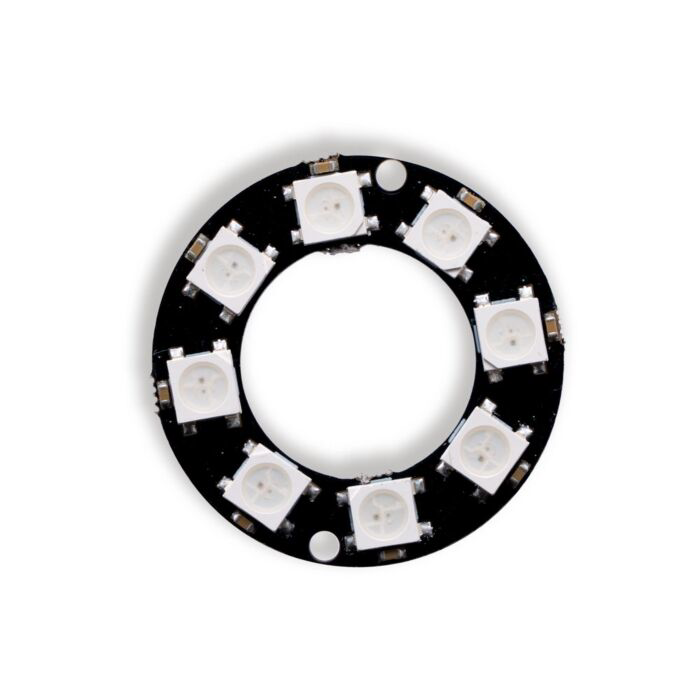
 Design with neo pixel 8 bit in Cirkit Designer
Introduction
The NeoPixel 8 Bit, manufactured by WS2812B (Part ID: WCMCU), is an individually addressable RGB LED component. It allows for precise control of color and brightness, with 256 levels of brightness per color channel (red, green, and blue). This results in over 16 million possible colors, making it ideal for creating vibrant and dynamic lighting effects.
Explore Projects Built with neo pixel 8 bit
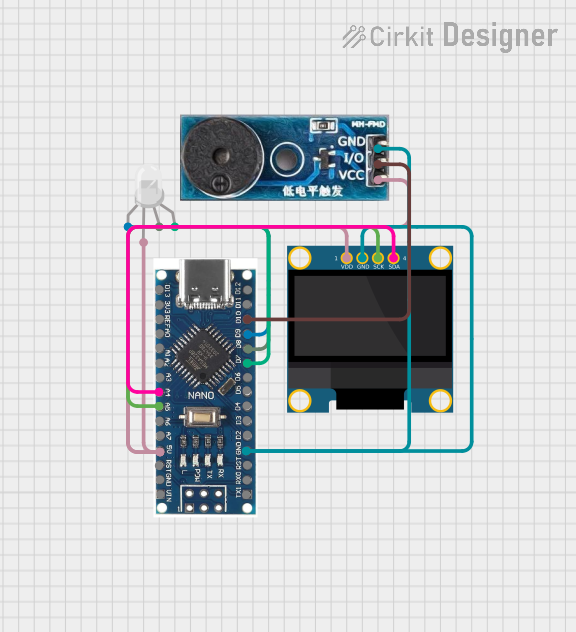 Open Project in Cirkit Designer
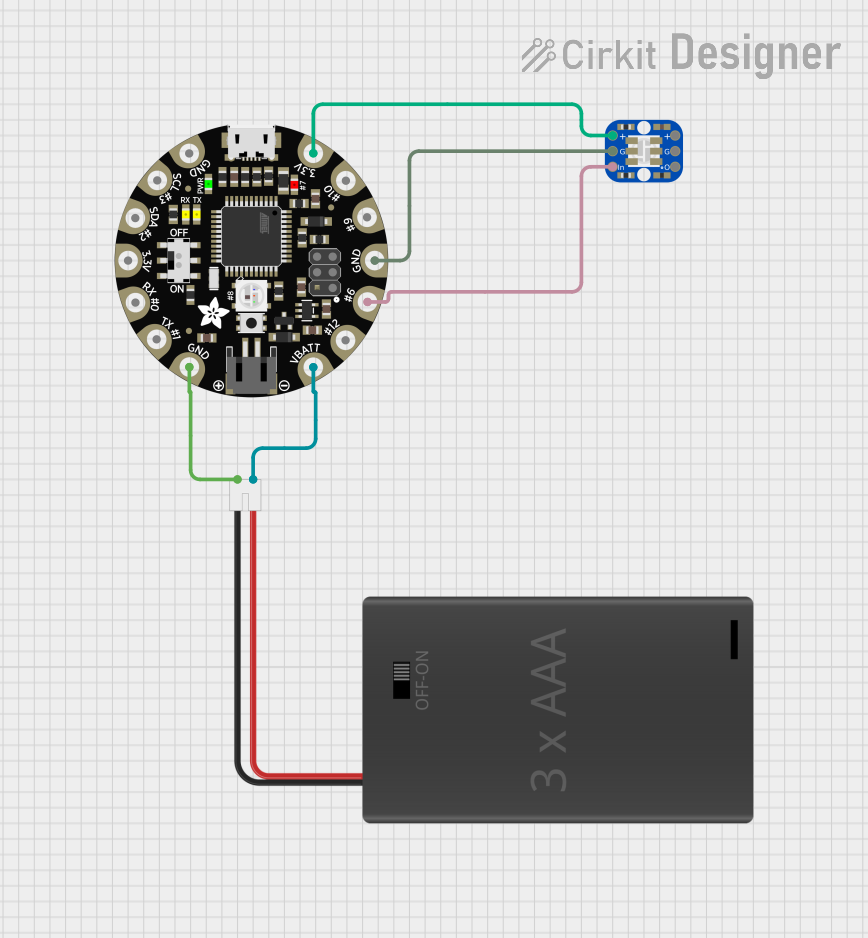 Open Project in Cirkit Designer
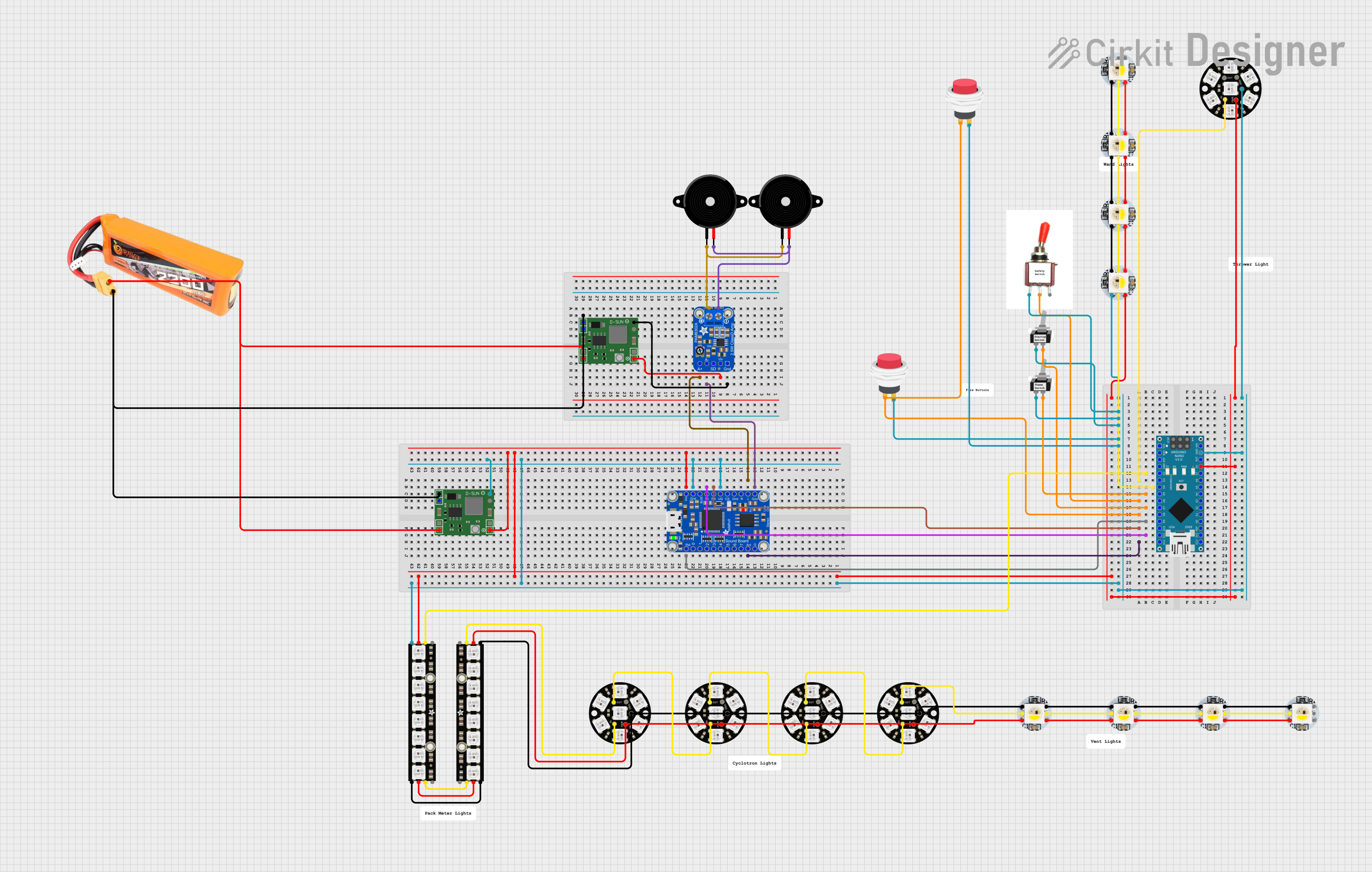 Open Project in Cirkit Designer
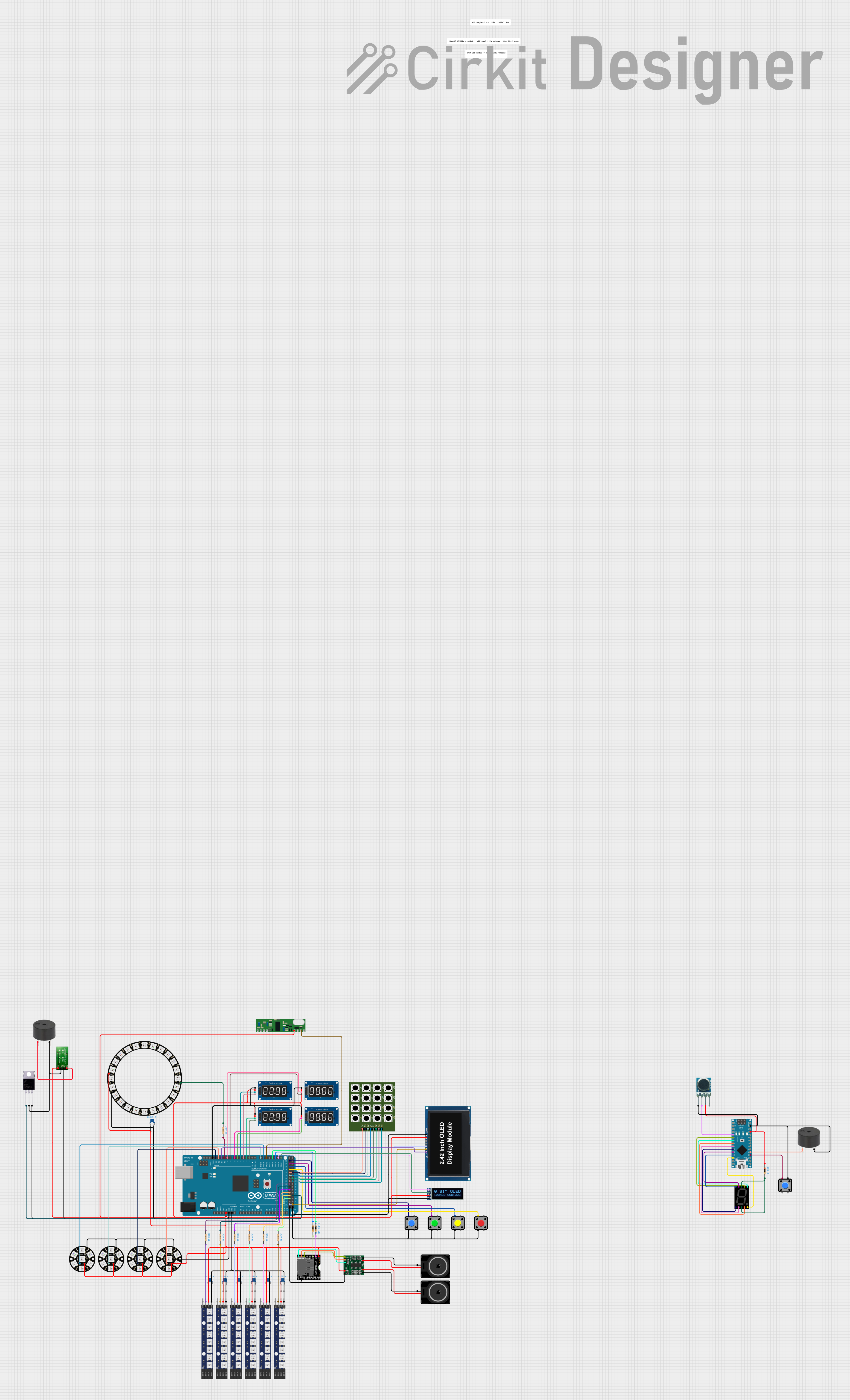 Open Project in Cirkit Designer
Explore Projects Built with neo pixel 8 bit
Open Project in Cirkit DesignerOpen Project in Cirkit DesignerOpen Project in Cirkit DesignerOpen Project in Cirkit DesignerCommon Applications and Use Cases
- Decorative lighting for homes, events, and installations
- LED displays and signage
- Wearable electronics
- Robotics and hobby projects
- Interactive art installations
- Gaming peripherals and custom PC lighting
Technical Specifications
The NeoPixel 8 Bit is a versatile component with the following key specifications:
| Parameter | Value |
|---|---|
| Manufacturer | WS2812B |
| Part ID | WCMCU |
| Operating Voltage | 3.5V to 5.3V |
| Operating Current | ~20mA per LED (at full brightness) |
| Communication Protocol | Single-wire serial |
| Color Depth | 8 bits per channel (24 bits total) |
| Brightness Levels | 256 levels per channel |
| LED Package | Integrated RGB LED with control circuitry |
| Refresh Rate | Up to 400 Hz |
| Operating Temperature | -25°C to +80°C |
Pin Configuration and Descriptions
The NeoPixel 8 Bit typically has three pins for operation:
| Pin Name | Description |
|---|---|
| VDD | Power supply input (3.5V to 5.3V) |
| GND | Ground connection |
| DIN | Data input for serial communication |
Usage Instructions
How to Use the Component in a Circuit
- Power Supply: Connect the VDD pin to a 5V power source and the GND pin to ground. Ensure the power supply can handle the total current draw of all LEDs in the strip or array.
- Data Input: Connect the DIN pin to the data output pin of a microcontroller (e.g., Arduino). Use a resistor (330-500 ohms) in series with the data line to protect the LEDs.
- Capacitor: Place a 1000 µF capacitor across the VDD and GND pins to stabilize the power supply.
- Data Signal: Ensure the data signal voltage matches the operating voltage of the NeoPixel (e.g., use a level shifter if the microcontroller operates at 3.3V).
Important Considerations and Best Practices
- Power Budgeting: Calculate the total current draw based on the number of LEDs and their brightness. Use an adequate power supply.
- Signal Integrity: Keep the data line as short as possible to avoid signal degradation. For longer distances, use a buffer or repeater.
- Heat Management: Avoid running the LEDs at full brightness for extended periods to prevent overheating.
- Data Timing: Ensure the microcontroller's timing matches the WS2812B protocol requirements.
Example Code for Arduino UNO
Below is an example of how to control a NeoPixel 8 Bit strip using an Arduino UNO and the Adafruit NeoPixel library:
#include <Adafruit_NeoPixel.h>

// Define the number of LEDs in the strip
#define NUM_LEDS 8

// Define the pin connected to the DIN pin of the NeoPixel
#define DATA_PIN 6

// Create a NeoPixel object
Adafruit_NeoPixel strip = Adafruit_NeoPixel(NUM_LEDS, DATA_PIN, NEO_GRB + NEO_KHZ800);

void setup() {
  strip.begin(); // Initialize the NeoPixel strip
  strip.show();  // Turn off all LEDs initially
}

void loop() {
  // Example: Cycle through colors
  for (int i = 0; i < strip.numPixels(); i++) {
    strip.setPixelColor(i, strip.Color(255, 0, 0)); // Set LED to red
    strip.show(); // Update the strip
    delay(100);   // Wait 100ms
  }
}
Notes:
- Install the Adafruit NeoPixel library via the Arduino Library Manager before uploading the code.
- Adjust
NUM_LEDSto match the number of LEDs in your setup.
Troubleshooting and FAQs
Common Issues and Solutions
LEDs Not Lighting Up
- Check the power supply voltage and current capacity.
- Verify the connections to the VDD, GND, and DIN pins.
- Ensure the data signal is being sent correctly from the microcontroller.
Incorrect Colors or Flickering
- Verify the data timing matches the WS2812B protocol.
- Use a resistor (330-500 ohms) in series with the data line to reduce noise.
- Check for loose or poor connections in the circuit.
Overheating
- Reduce the brightness of the LEDs.
- Ensure proper ventilation and avoid running the LEDs at full brightness for long periods.
Signal Degradation Over Long Distances
- Use a level shifter or buffer to maintain signal integrity.
- Keep the data line as short as possible.
FAQs
Q: Can I cut the NeoPixel strip to a specific length?
A: Yes, NeoPixel strips can be cut at designated points (usually marked with a scissor icon). Ensure proper reconnection of the VDD, GND, and DIN lines after cutting.
Q: Can I control multiple NeoPixel strips with one microcontroller?
A: Yes, you can control multiple strips by connecting their DIN pins to separate GPIO pins on the microcontroller and initializing them as separate objects in your code.
Q: What happens if I exceed the recommended voltage?
A: Exceeding the voltage range (5.3V) can damage the LEDs and control circuitry. Always use a regulated power supply.
Q: Can I power the NeoPixel directly from the Arduino?
A: It is not recommended to power more than a few LEDs directly from the Arduino's 5V pin, as it may not provide sufficient current. Use an external power supply for larger setups.