
How to Use Diode: Examples, Pinouts, and Specs
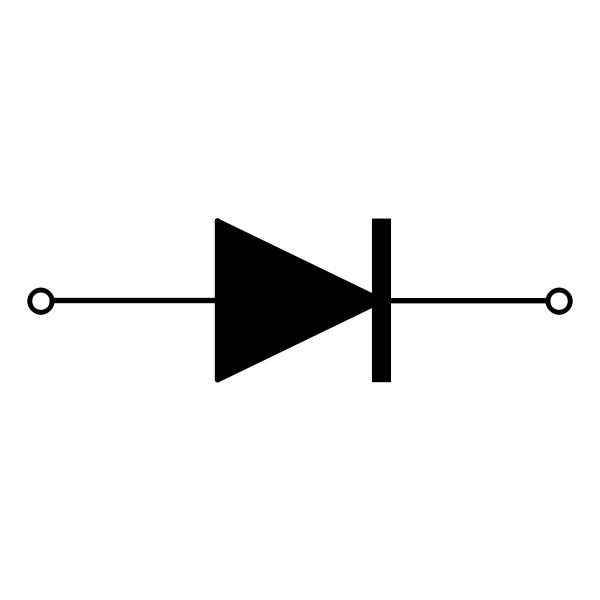
 Design with Diode in Cirkit Designer
Introduction
A diode is a semiconductor device that allows current to flow in one direction only, acting as a one-way valve for electrical current. It is one of the most fundamental components in electronics and is widely used in various applications. Diodes are essential for rectification, signal demodulation, voltage regulation, and circuit protection.
Explore Projects Built with Diode
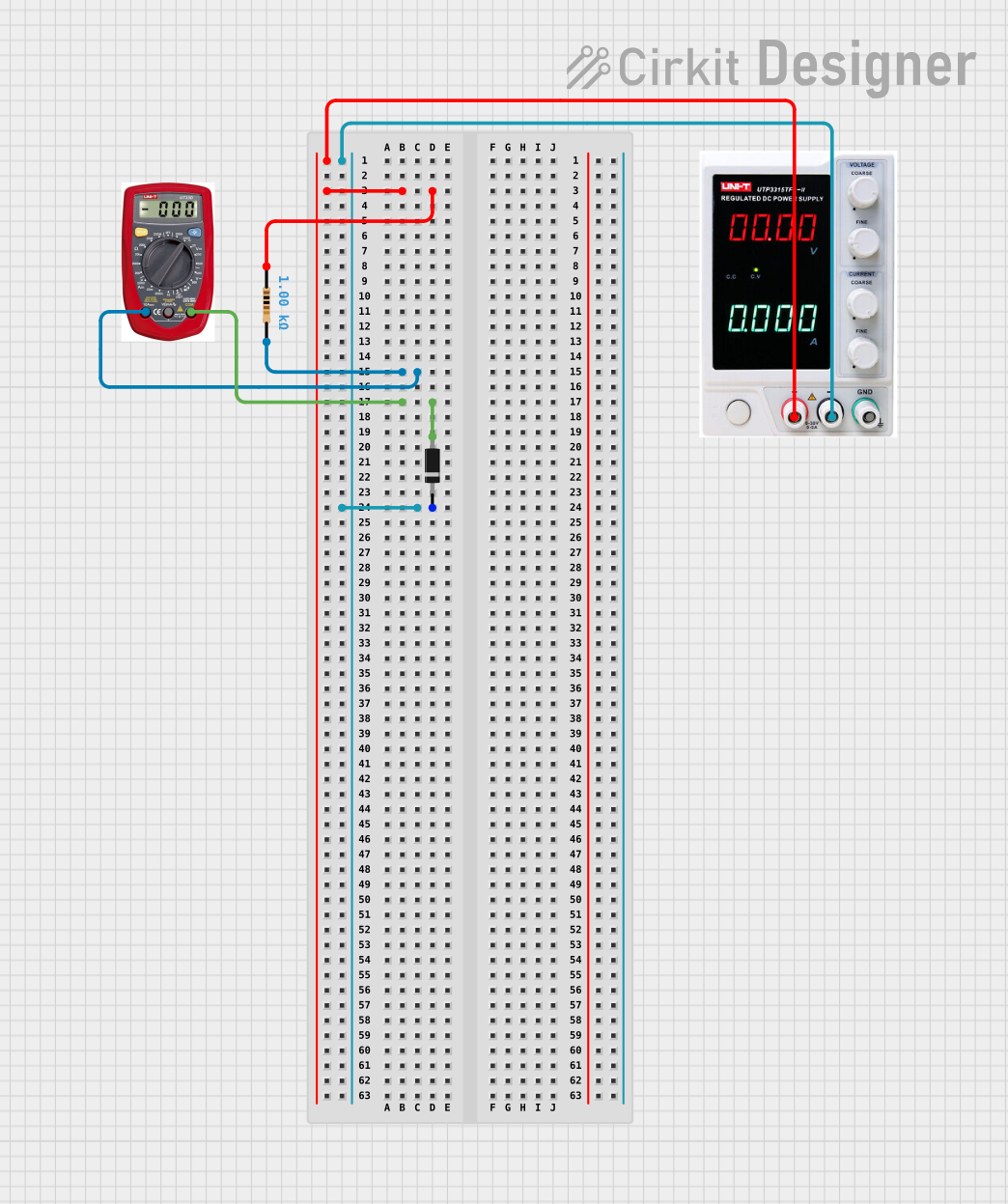 Open Project in Cirkit Designer
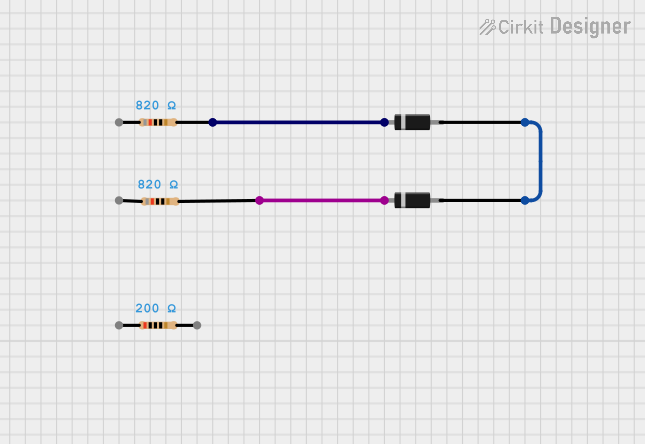 Open Project in Cirkit Designer
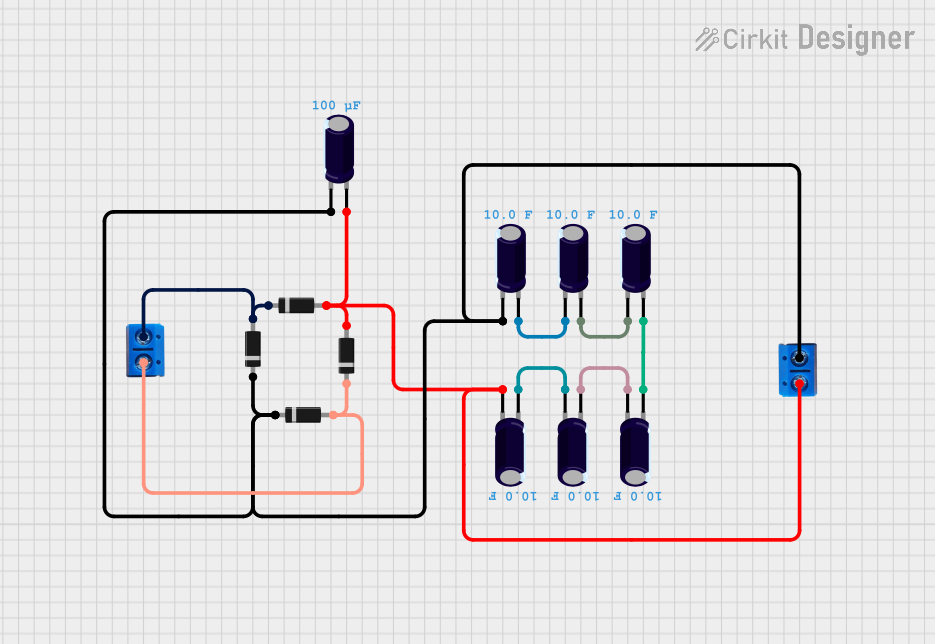 Open Project in Cirkit Designer
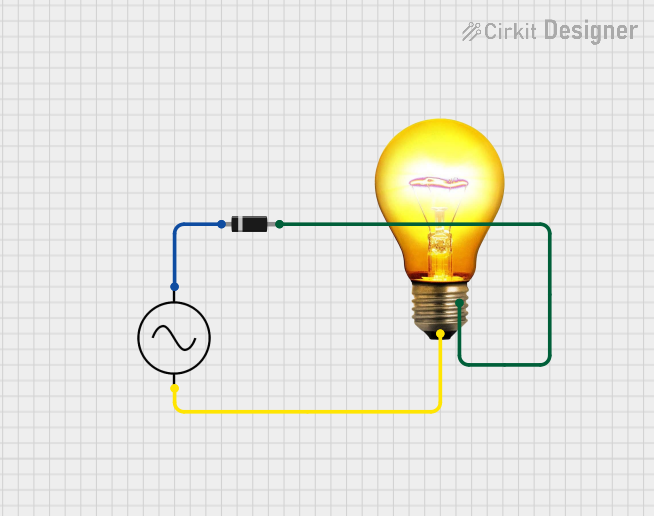 Open Project in Cirkit Designer
Explore Projects Built with Diode
Open Project in Cirkit DesignerOpen Project in Cirkit DesignerOpen Project in Cirkit DesignerOpen Project in Cirkit DesignerCommon Applications and Use Cases
- Rectification: Converting AC (alternating current) to DC (direct current) in power supplies.
- Signal Demodulation: Extracting information from modulated signals in communication systems.
- Voltage Regulation: Stabilizing voltage levels in circuits.
- Circuit Protection: Preventing reverse polarity damage in sensitive components.
- LEDs (Light Emitting Diodes): Used for illumination and indicators.
Technical Specifications
The specifications of a diode can vary depending on its type and intended application. Below are the general technical details for a standard silicon diode (e.g., 1N4007):
Key Technical Details
- Forward Voltage Drop (Vf): ~0.7V (for silicon diodes), ~0.3V (for germanium diodes)
- Maximum Reverse Voltage (Vr): 50V to 1000V (depending on the diode type)
- Maximum Forward Current (If): 1A to 3A (for general-purpose diodes)
- Reverse Leakage Current (Ir): Typically in the microampere range
- Power Dissipation: Varies, typically 1W or less for small diodes
- Package Type: DO-41 (for through-hole diodes), SMD packages for surface-mount diodes
Pin Configuration and Descriptions
Diodes have two terminals: Anode and Cathode. The cathode is typically marked with a band on the diode's body.
| Pin Name | Description | Symbol |
|---|---|---|
| Anode | Positive terminal; current enters here | A |
| Cathode | Negative terminal; current exits here | K |
Usage Instructions
How to Use a Diode in a Circuit
- Identify the Terminals: Locate the cathode (marked with a band) and the anode.
- Connect in the Correct Orientation:
- For forward bias (current flows), connect the anode to the positive voltage and the cathode to the negative voltage.
- For reverse bias (blocks current), reverse the connections.
- Choose the Right Diode: Ensure the diode's voltage and current ratings meet the circuit's requirements.
- Add a Resistor if Necessary: For LEDs or other diodes requiring current limiting, include a resistor in series to prevent damage.
Important Considerations and Best Practices
- Avoid Exceeding Ratings: Operating a diode beyond its maximum voltage or current ratings can cause permanent damage.
- Heat Dissipation: Use heat sinks or ensure proper ventilation if the diode dissipates significant power.
- Reverse Polarity Protection: Use a diode in series with the power supply to protect sensitive components from reverse polarity.
Example: Using a Diode with an Arduino UNO
Below is an example of using a diode to protect an Arduino UNO from reverse polarity:
/*
  This example demonstrates how to use a diode for reverse polarity protection.
  A 1N4007 diode is placed in series with the Arduino's power input.
*/

void setup() {
  // No specific code is required for the diode itself.
  // The diode is a passive component that works automatically.
  Serial.begin(9600);
  Serial.println("Diode protection example running.");
}

void loop() {
  // Your main code here
}
Troubleshooting and FAQs
Common Issues and Solutions
Diode Not Conducting in Forward Bias:
- Cause: Incorrect orientation of the diode.
- Solution: Verify the anode is connected to the positive voltage and the cathode to the negative voltage.
Diode Overheating:
- Cause: Exceeding the diode's current or power dissipation limits.
- Solution: Use a diode with higher current and power ratings or add a heat sink.
Reverse Leakage Current Observed:
- Cause: All diodes have a small reverse leakage current.
- Solution: Ensure the leakage current is within acceptable limits for your application.
Voltage Drop Too High:
- Cause: Using a silicon diode instead of a Schottky diode.
- Solution: Use a Schottky diode for lower forward voltage drop (~0.2V to 0.4V).
FAQs
Q: Can I use any diode for rectification?
A: Not all diodes are suitable for rectification. Use rectifier diodes like 1N4007 for power applications.Q: What is the difference between a Zener diode and a regular diode?
A: A Zener diode is designed to conduct in reverse bias at a specific breakdown voltage, while a regular diode blocks reverse current.Q: How do I test a diode?
A: Use a multimeter in diode mode. A good diode will show a low voltage drop (~0.7V for silicon) in forward bias and no conduction in reverse bias.
This concludes the documentation for the diode.