
How to Use AS7343: Examples, Pinouts, and Specs
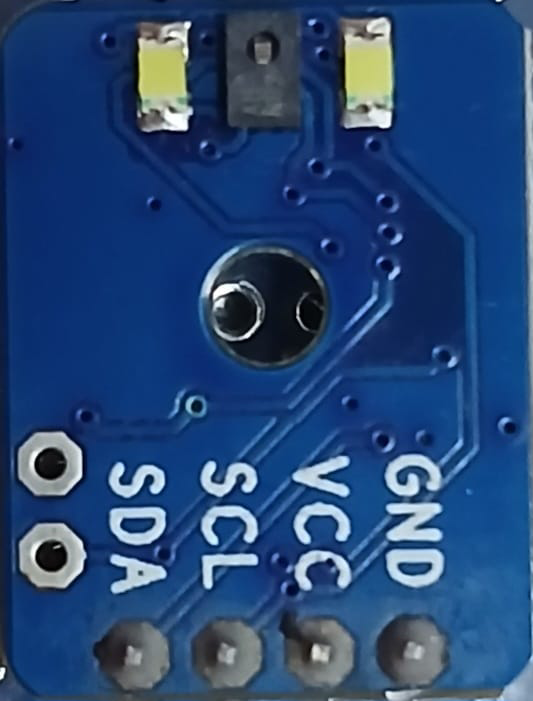
 Design with AS7343 in Cirkit Designer
Introduction
The AS7343 is a highly versatile spectral sensor manufactured by RTrobot. It is designed to measure light intensity across multiple wavelengths, featuring 11 distinct channels for precise color sensing. This makes it an ideal choice for applications requiring accurate optical measurements, such as color recognition, ambient light sensing, and spectral analysis.
Explore Projects Built with AS7343
 Open Project in Cirkit Designer
 Open Project in Cirkit Designer
 Open Project in Cirkit Designer
 Open Project in Cirkit Designer
Explore Projects Built with AS7343
Open Project in Cirkit DesignerOpen Project in Cirkit DesignerOpen Project in Cirkit DesignerOpen Project in Cirkit DesignerCommon Applications
- Color recognition in industrial and consumer devices
- Ambient light sensing for display brightness adjustment
- Spectral analysis in scientific and environmental monitoring
- Agricultural applications, such as plant health monitoring
- Optical quality control in manufacturing processes
Technical Specifications
Key Technical Details
| Parameter | Value |
|---|---|
| Manufacturer Part ID | AS7343 |
| Manufacturer | RTrobot |
| Spectral Channels | 11 (visible and near-infrared wavelengths) |
| Communication Interface | I²C |
| Supply Voltage | 1.8V to 3.6V |
| Operating Current | 200 µA (typical) |
| Measurement Range | 350 nm to 1000 nm |
| Integration Time | Programmable |
| Operating Temperature | -40°C to +85°C |
| Package Type | LGA (Land Grid Array) |
Pin Configuration and Descriptions
| Pin Number | Pin Name | Description |
|---|---|---|
| 1 | VDD | Power supply input (1.8V to 3.6V) |
| 2 | GND | Ground |
| 3 | SDA | I²C data line |
| 4 | SCL | I²C clock line |
| 5 | INT | Interrupt output (active low) |
| 6 | GPIO | General-purpose input/output |
| 7 | NC | Not connected (leave unconnected) |
Usage Instructions
How to Use the AS7343 in a Circuit
- Power Supply: Connect the VDD pin to a stable power source (1.8V to 3.6V) and the GND pin to ground.
- I²C Communication: Connect the SDA and SCL pins to the corresponding I²C data and clock lines of your microcontroller. Use pull-up resistors (typically 4.7 kΩ) on both lines.
- Interrupt Pin: Optionally, connect the INT pin to a GPIO pin on your microcontroller to handle interrupts.
- GPIO Pin: The GPIO pin can be configured for additional functionality if required.
- Bypass Capacitor: Place a 0.1 µF decoupling capacitor close to the VDD pin to ensure stable operation.
Important Considerations and Best Practices
- Ensure the sensor is not exposed to direct sunlight or high-intensity light sources during operation, as this may saturate the readings.
- Use proper shielding and grounding techniques to minimize noise in the I²C communication lines.
- Calibrate the sensor for your specific application to achieve accurate measurements.
- Avoid placing the sensor near heat sources, as temperature variations can affect its performance.
Example Code for Arduino UNO
The following example demonstrates how to interface the AS7343 with an Arduino UNO using the I²C protocol. This code reads data from the sensor and prints the spectral channel values to the Serial Monitor.
#include <Wire.h>

// AS7343 I²C address
#define AS7343_I2C_ADDR 0x39

// Register addresses (example for enabling the sensor)
#define ENABLE_REG 0x80
#define ENABLE_POWER_ON 0x01
#define ENABLE_SPECTRAL_MEASUREMENT 0x02

void setup() {
  Wire.begin(); // Initialize I²C communication
  Serial.begin(9600); // Start Serial communication for debugging

  // Initialize the AS7343
  Wire.beginTransmission(AS7343_I2C_ADDR);
  Wire.write(ENABLE_REG); // Point to the enable register
  Wire.write(ENABLE_POWER_ON | ENABLE_SPECTRAL_MEASUREMENT);
  // Enable power and spectral measurement
  Wire.endTransmission();

  Serial.println("AS7343 initialized.");
}

void loop() {
  // Example: Read spectral data (replace with actual register addresses)
  uint8_t spectralData[11]; // Array to store spectral channel data

  Wire.beginTransmission(AS7343_I2C_ADDR);
  Wire.write(0x90); // Example: Starting register for spectral data
  Wire.endTransmission();

  Wire.requestFrom(AS7343_I2C_ADDR, 11); // Request 11 bytes of data
  for (int i = 0; i < 11; i++) {
    if (Wire.available()) {
      spectralData[i] = Wire.read(); // Read each channel's data
    }
  }

  // Print spectral data to Serial Monitor
  Serial.println("Spectral Data:");
  for (int i = 0; i < 11; i++) {
    Serial.print("Channel ");
    Serial.print(i + 1);
    Serial.print(": ");
    Serial.println(spectralData[i]);
  }

  delay(1000); // Wait 1 second before the next reading
}
Troubleshooting and FAQs
Common Issues and Solutions
No Response from the Sensor
- Cause: Incorrect I²C address or wiring.
- Solution: Verify the I²C address (default is 0x39) and ensure proper connections for SDA, SCL, VDD, and GND.
Inaccurate Readings
- Cause: Improper calibration or environmental interference.
- Solution: Calibrate the sensor for your specific application and minimize external light interference.
I²C Communication Errors
- Cause: Missing pull-up resistors or excessive noise on the I²C lines.
- Solution: Add 4.7 kΩ pull-up resistors to the SDA and SCL lines and ensure proper grounding.
Interrupt Pin Not Working
- Cause: Interrupts not enabled in the sensor configuration.
- Solution: Check the sensor's configuration registers and enable interrupts if required.
FAQs
Q: Can the AS7343 measure UV or IR light?
A: The AS7343 is designed to measure light in the visible and near-infrared spectrum (350 nm to 1000 nm). It does not support UV light measurement.
Q: What is the maximum I²C clock speed supported?
A: The AS7343 supports I²C clock speeds up to 400 kHz (Fast Mode).
Q: How do I calibrate the sensor?
A: Calibration involves measuring known light sources and adjusting the sensor's output to match the expected values. Refer to the manufacturer's application notes for detailed calibration procedures.
Q: Can I use the AS7343 with a 5V microcontroller?
A: Yes, but you must use a level shifter to convert the 5V I²C signals to the sensor's operating voltage range (1.8V to 3.6V).