
How to Use INA219: Examples, Pinouts, and Specs
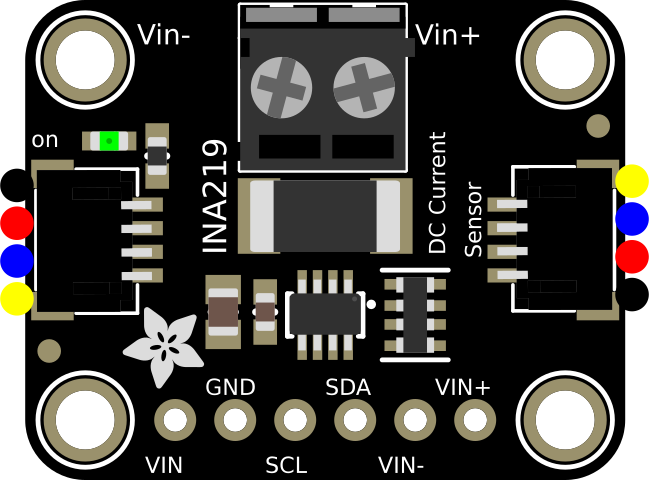
 Design with INA219 in Cirkit Designer
Introduction
The INA219 is a high-side current shunt monitor with an I2C interface, designed for precise measurement of current, voltage, and power. It integrates a 12-bit ADC for high-resolution measurements and eliminates the need for a separate power supply for the shunt resistor. This makes it ideal for applications requiring accurate power monitoring and energy management.
Explore Projects Built with INA219
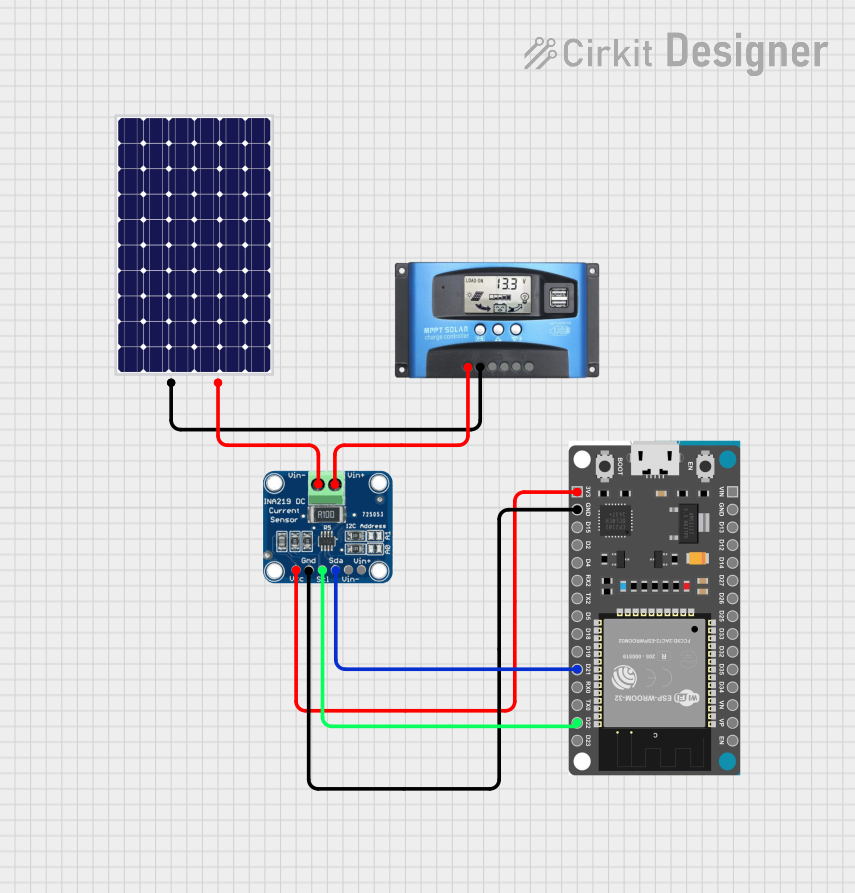 Open Project in Cirkit Designer
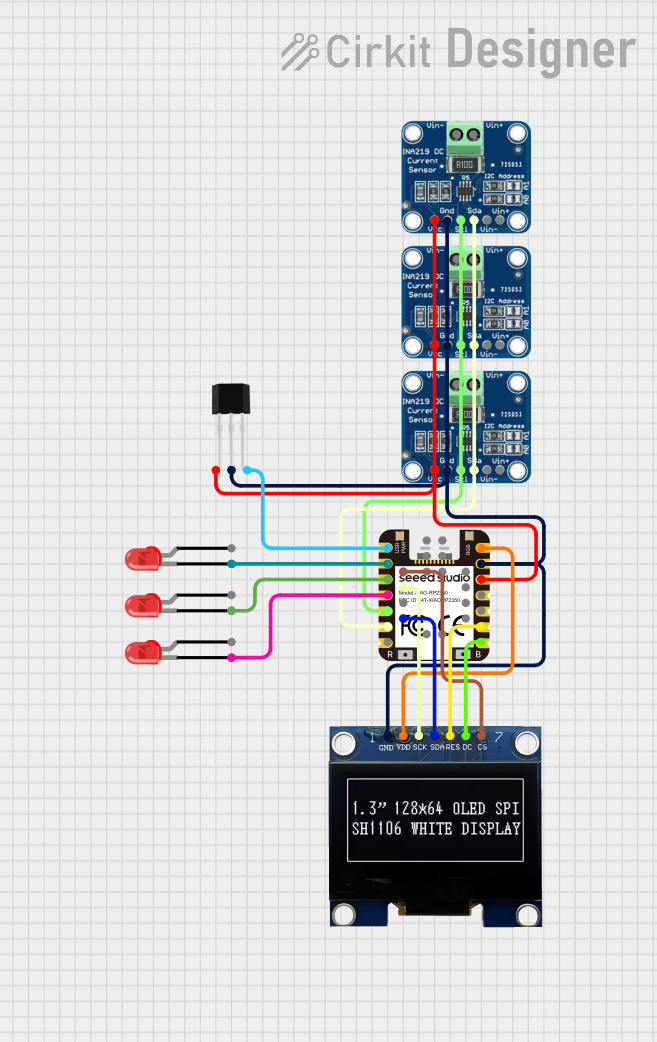 Open Project in Cirkit Designer
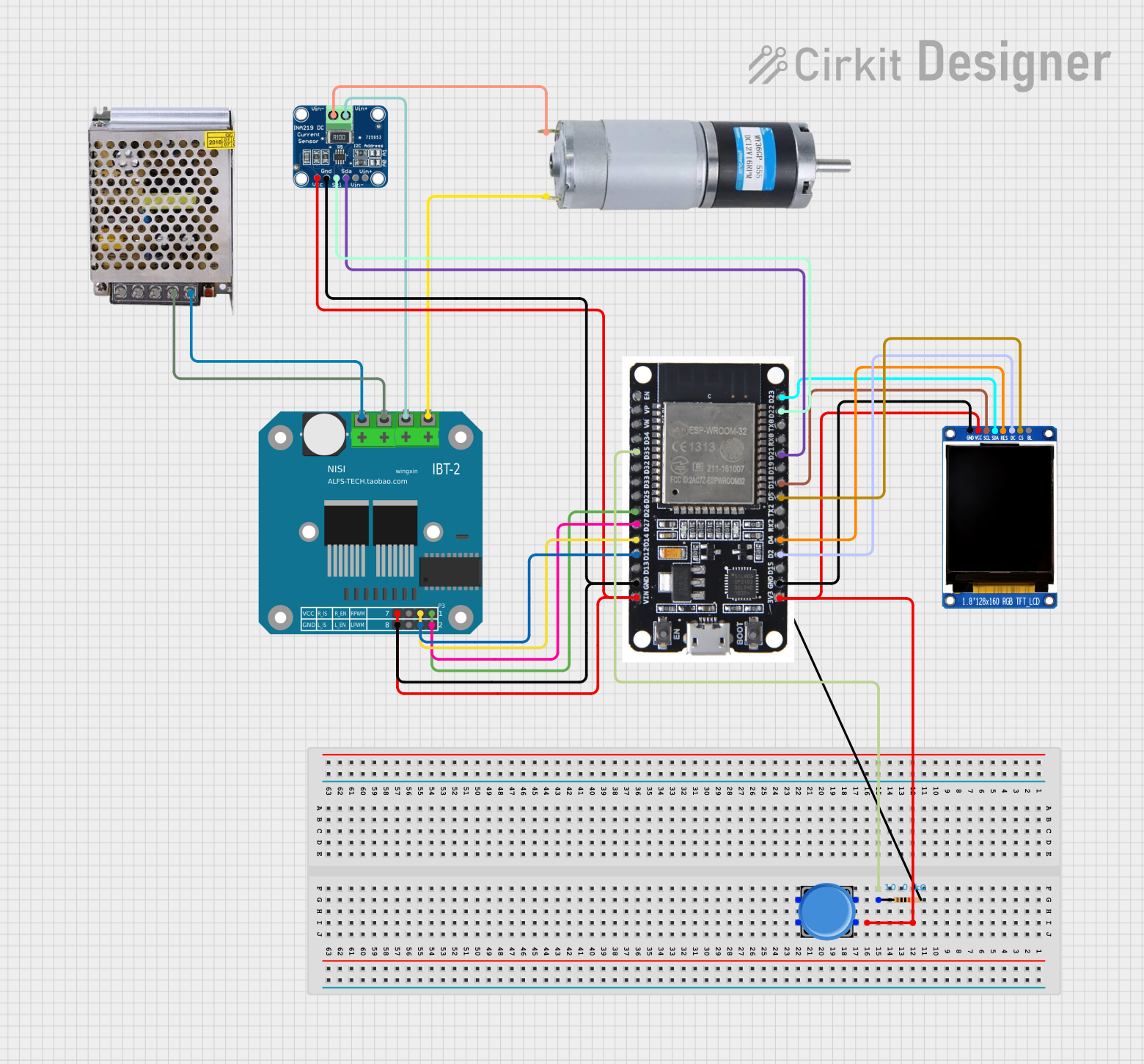 Open Project in Cirkit Designer
 Open Project in Cirkit Designer
Explore Projects Built with INA219
Open Project in Cirkit DesignerOpen Project in Cirkit DesignerOpen Project in Cirkit DesignerOpen Project in Cirkit DesignerCommon Applications
- Battery management systems
- Power consumption monitoring in IoT devices
- Solar power systems
- DC motor control
- Industrial automation and robotics
Technical Specifications
Key Technical Details
- Operating Voltage (Vcc): 3.0V to 5.5V
- Bus Voltage Range: 0V to 26V
- Current Measurement Range: ±3.2A (with a 0.1Ω shunt resistor)
- Resolution: 12-bit ADC
- Communication Protocol: I2C (up to 3.4 MHz)
- Default I2C Address: 0x40 (configurable)
- Power Consumption: 1 mA (typical)
- Operating Temperature Range: -40°C to +125°C
Pin Configuration and Descriptions
The INA219 is typically available in an 8-pin SOIC package. Below is the pinout:
| Pin | Name | Description |
|---|---|---|
| 1 | V+ | Positive input for the high-side shunt resistor |
| 2 | V- | Negative input for the high-side shunt resistor |
| 3 | GND | Ground connection |
| 4 | SDA | I2C data line |
| 5 | SCL | I2C clock line |
| 6 | ALERT/RDY | Alert or Ready pin (optional, used for interrupt signaling) |
| 7 | A0 | I2C address selection bit 0 |
| 8 | A1 | I2C address selection bit 1 |
I2C Address Configuration
The INA219's I2C address can be configured using the A0 and A1 pins. The table below shows the possible addresses:
| A1 | A0 | I2C Address |
|---|---|---|
| 0 | 0 | 0x40 |
| 0 | 1 | 0x41 |
| 1 | 0 | 0x42 |
| 1 | 1 | 0x43 |
Usage Instructions
How to Use the INA219 in a Circuit
Connect the Shunt Resistor:
- Place a shunt resistor between the V+ and V- pins to measure current. A typical value is 0.1Ω.
- Ensure the resistor's power rating is sufficient for the expected current.
Power the INA219:
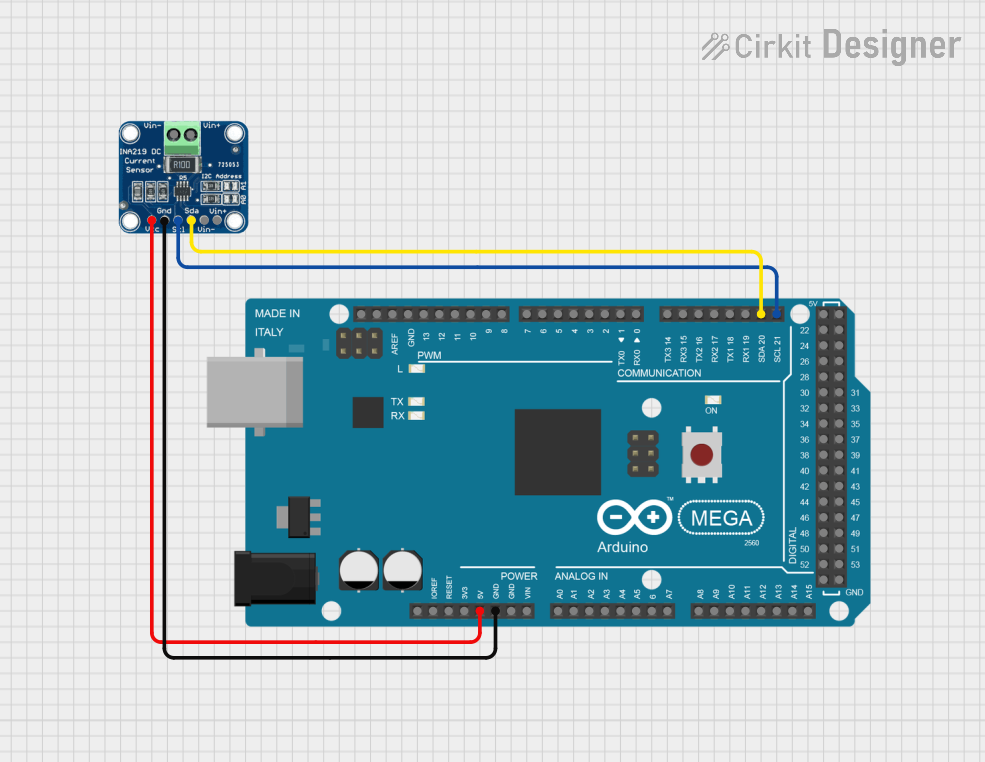
- Connect the Vcc pin to a 3.3V or 5V power supply.
- Connect the GND pin to the ground of the circuit.
Connect the I2C Lines:
- Connect the SDA and SCL pins to the corresponding I2C pins on your microcontroller.
- Use pull-up resistors (typically 4.7kΩ) on the SDA and SCL lines if not already present.
Configure the I2C Address:
- Set the A0 and A1 pins to configure the desired I2C address.
Optional Alert Pin:
- Use the ALERT/RDY pin for interrupt-driven alerts if needed.
Best Practices
- Use short, thick traces for the shunt resistor connections to minimize resistance and noise.
- Avoid exceeding the maximum bus voltage (26V) to prevent damage.
- Use decoupling capacitors (e.g., 0.1µF) near the Vcc pin for stable operation.
Example Code for Arduino UNO
Below is an example of how to use the INA219 with an Arduino UNO to measure current, voltage, and power:
#include <Wire.h>
#include <Adafruit_INA219.h>

// Create an instance of the INA219 class
Adafruit_INA219 ina219;

void setup() {
  Serial.begin(9600); // Initialize serial communication at 9600 baud
  while (!Serial) {
    delay(10); // Wait for the serial monitor to open
  }

  // Initialize the INA219 sensor
  if (!ina219.begin()) {
    Serial.println("Failed to find INA219 chip");
    while (1) {
      delay(10); // Halt execution if the sensor is not found
    }
  }
  Serial.println("INA219 initialized successfully");
}

void loop() {
  float shuntVoltage = ina219.getShuntVoltage_mV(); // Get shunt voltage in mV
  float busVoltage = ina219.getBusVoltage_V();      // Get bus voltage in V
  float current_mA = ina219.getCurrent_mA();        // Get current in mA
  float power_mW = ina219.getPower_mW();            // Get power in mW

  // Print the measurements to the serial monitor
  Serial.print("Bus Voltage: ");
  Serial.print(busVoltage);
  Serial.println(" V");

  Serial.print("Shunt Voltage: ");
  Serial.print(shuntVoltage);
  Serial.println(" mV");

  Serial.print("Current: ");
  Serial.print(current_mA);
  Serial.println(" mA");

  Serial.print("Power: ");
  Serial.print(power_mW);
  Serial.println(" mW");

  Serial.println("-----------------------------");
  delay(1000); // Wait 1 second before the next reading
}
Troubleshooting and FAQs
Common Issues
No Communication with the INA219:
- Cause: Incorrect I2C address or wiring.
- Solution: Verify the I2C address and ensure SDA/SCL lines are properly connected with pull-up resistors.
Incorrect Current or Voltage Readings:
- Cause: Improper shunt resistor value or loose connections.
- Solution: Double-check the shunt resistor value and ensure secure connections.
Sensor Not Detected:
- Cause: INA219 not powered or I2C bus conflict.
- Solution: Ensure the INA219 is powered and no other devices are using the same I2C address.
FAQs
Q: Can the INA219 measure negative currents?
A: Yes, the INA219 can measure bidirectional currents if configured appropriately.Q: What is the maximum current the INA219 can measure?
A: The maximum current depends on the shunt resistor value. For a 0.1Ω resistor, the range is ±3.2A.Q: Can I use the INA219 with a 3.3V microcontroller?
A: Yes, the INA219 is compatible with both 3.3V and 5V logic levels.Q: Do I need external pull-up resistors for the I2C lines?
A: Yes, if your microcontroller or breakout board does not already include them. Use 4.7kΩ resistors as a standard.
By following this documentation, you can effectively integrate the INA219 into your projects for accurate power monitoring and energy management.