
How to Use SparkFun Mini Spectral UV Sensor - AS7331 (Qwiic) : Examples, Pinouts, and Specs
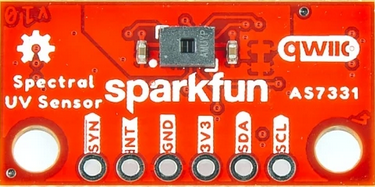
 Design with SparkFun Mini Spectral UV Sensor - AS7331 (Qwiic) in Cirkit Designer
Introduction
The SparkFun Mini Spectral UV Sensor - AS7331 (Qwiic) is a compact and highly versatile sensor designed to measure light intensity across multiple UV wavelengths. It is ideal for applications requiring precise UV detection and analysis, such as environmental monitoring, UV sterilization systems, and scientific research. The sensor leverages the AS7331 spectral sensor, which provides high-resolution measurements of UV light, and integrates seamlessly with the Qwiic connect system for easy and solder-free connections to microcontrollers.
Explore Projects Built with SparkFun Mini Spectral UV Sensor - AS7331 (Qwiic)
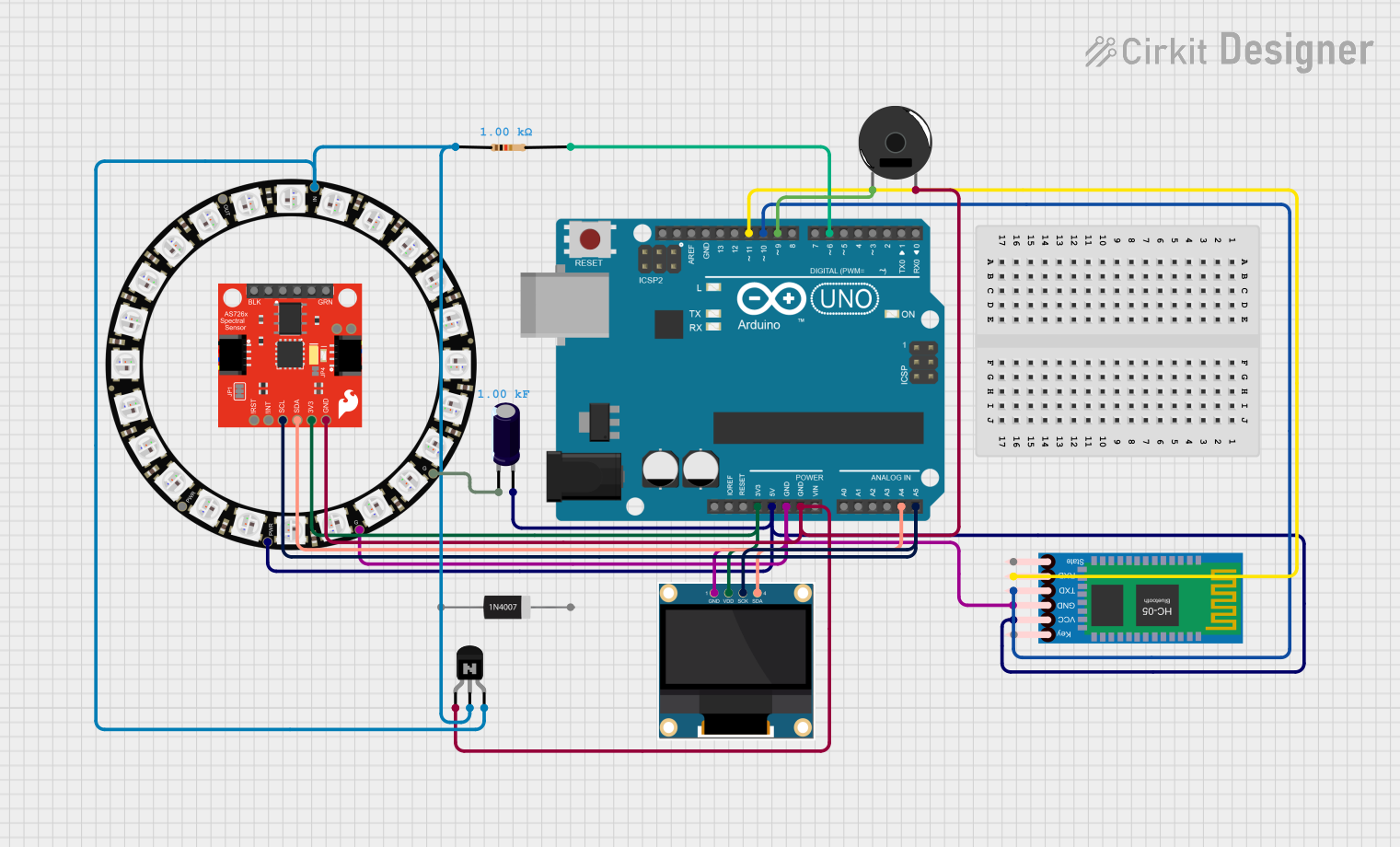 Open Project in Cirkit Designer
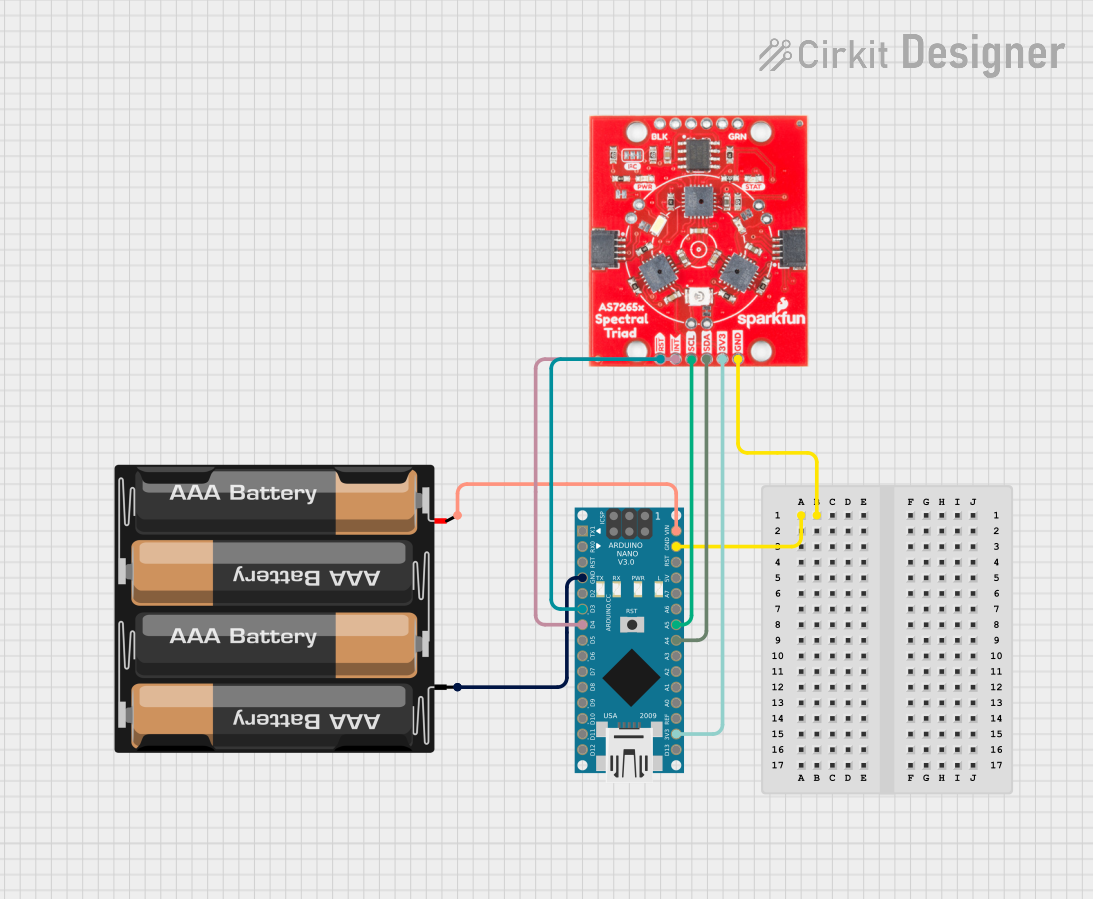 Open Project in Cirkit Designer
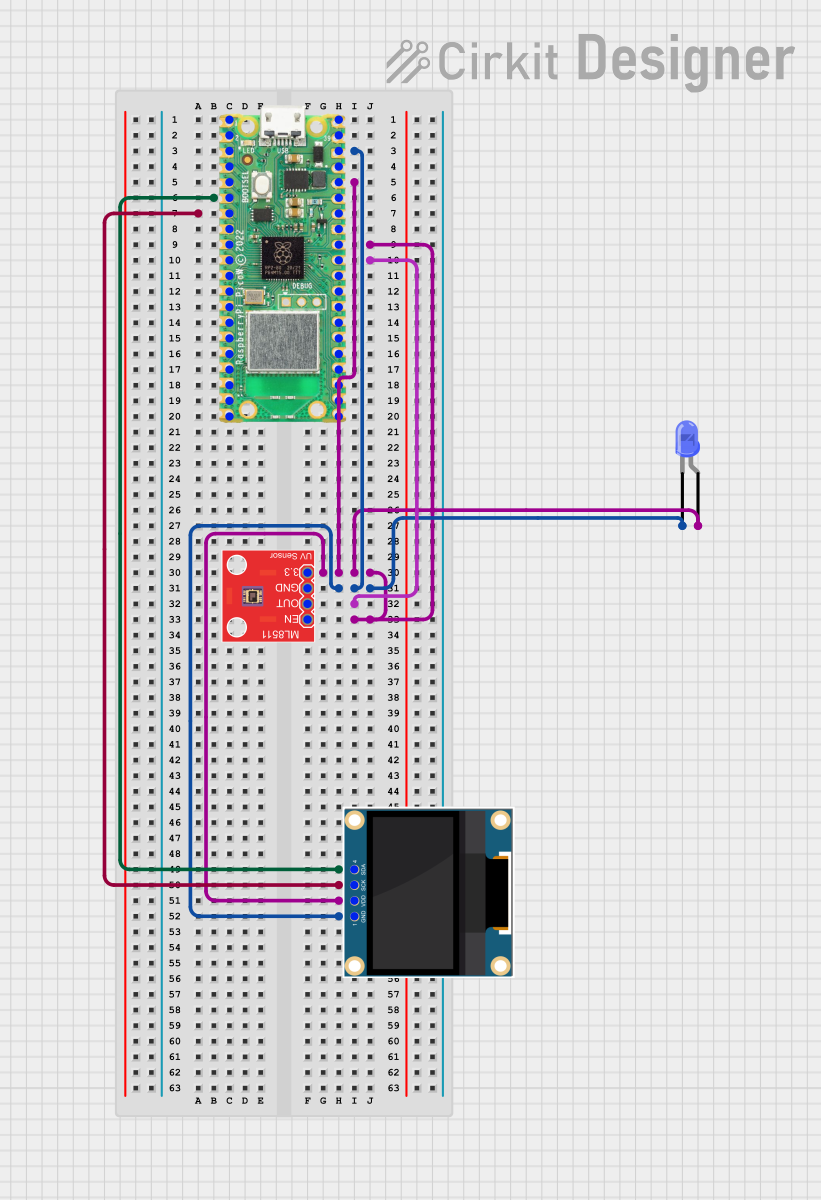 Open Project in Cirkit Designer
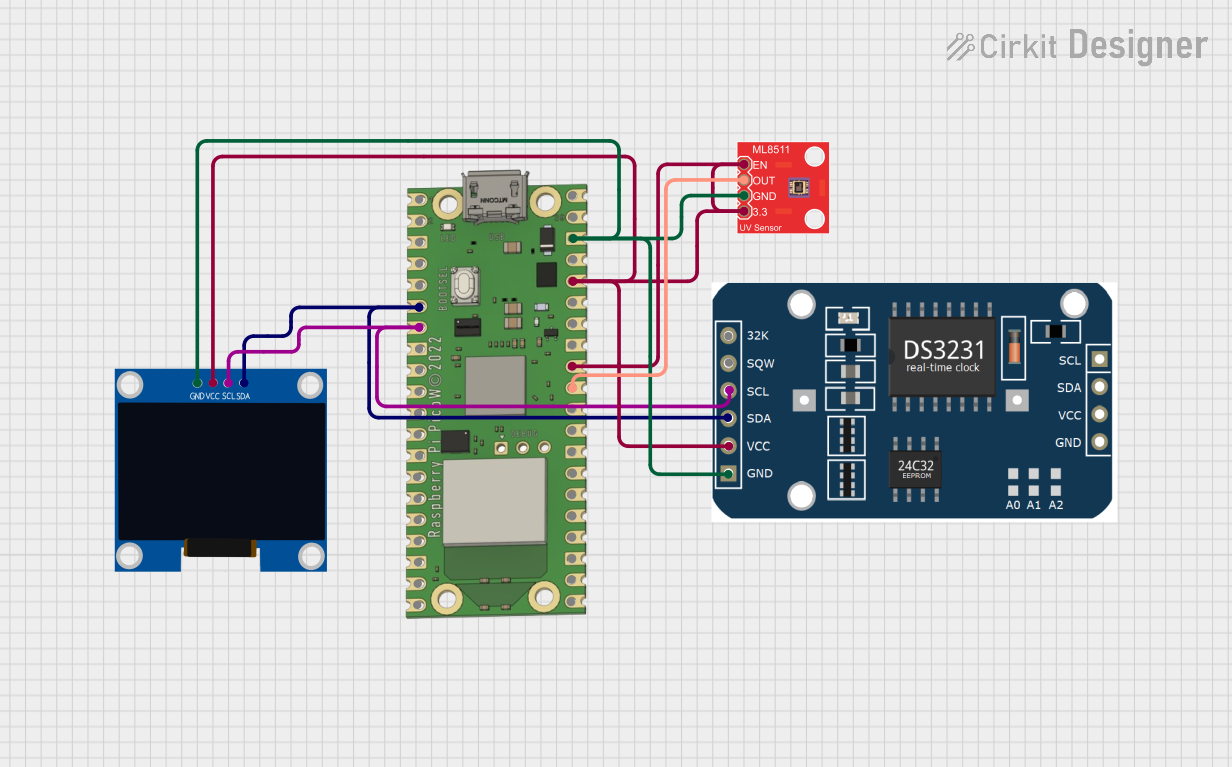 Open Project in Cirkit Designer
Explore Projects Built with SparkFun Mini Spectral UV Sensor - AS7331 (Qwiic)
Open Project in Cirkit DesignerOpen Project in Cirkit DesignerOpen Project in Cirkit DesignerOpen Project in Cirkit DesignerCommon Applications
- UV index measurement for environmental monitoring
- UV sterilization and disinfection systems
- Scientific research and laboratory experiments
- UV curing processes in industrial applications
- Wearable UV exposure monitoring devices
Technical Specifications
The SparkFun Mini Spectral UV Sensor - AS7331 (Qwiic) is built for precision and ease of use. Below are its key technical details:
Key Technical Details
- Sensor Model: AS7331
- Spectral Range: 240 nm to 370 nm (UV range)
- Communication Interface: I²C (via Qwiic connector)
- Operating Voltage: 3.3V
- Current Consumption: ~2.5 mA (typical)
- Resolution: 16-bit ADC for high-accuracy measurements
- Dimensions: 1.0" x 0.5" (25.4 mm x 12.7 mm)
- Operating Temperature: -40°C to +85°C
Pin Configuration and Descriptions
The sensor features a Qwiic connector for I²C communication and optional breakout pins for additional flexibility. Below is the pin configuration:
| Pin Name | Description |
|---|---|
| GND | Ground (0V reference) |
| 3.3V | Power supply input (3.3V) |
| SDA | I²C data line |
| SCL | I²C clock line |
| INT | Interrupt pin (optional, not required) |
| ADDR | I²C address selection (optional) |
Usage Instructions
The SparkFun Mini Spectral UV Sensor - AS7331 (Qwiic) is designed for straightforward integration into your projects. Follow the steps below to use the sensor effectively:
Connecting the Sensor
- Using the Qwiic System:
- Connect the sensor to your microcontroller using a Qwiic cable.
- Ensure your microcontroller supports 3.3V logic levels for I²C communication.
- Using Breakout Pins (optional):
- Solder wires to the breakout pins if you are not using the Qwiic system.
- Connect the pins to your microcontroller as per the pin configuration table above.
Interfacing with an Arduino UNO
To use the sensor with an Arduino UNO, you will need a logic level shifter since the Arduino operates at 5V logic, while the sensor requires 3.3V. Below is an example code snippet to read data from the sensor:
#include <Wire.h>

// I²C address of the AS7331 sensor
#define AS7331_ADDRESS 0x39

void setup() {
  Wire.begin(); // Initialize I²C communication
  Serial.begin(9600); // Start serial communication for debugging

  // Check if the sensor is connected
  Wire.beginTransmission(AS7331_ADDRESS);
  if (Wire.endTransmission() == 0) {
    Serial.println("AS7331 sensor detected!");
  } else {
    Serial.println("AS7331 sensor not detected. Check connections.");
    while (1); // Halt execution if sensor is not found
  }
}

void loop() {
  // Request 2 bytes of data from the sensor
  Wire.beginTransmission(AS7331_ADDRESS);
  Wire.write(0x00); // Replace with the appropriate register address
  Wire.endTransmission();
  Wire.requestFrom(AS7331_ADDRESS, 2);

  if (Wire.available() == 2) {
    uint16_t uvData = Wire.read() << 8 | Wire.read(); // Combine MSB and LSB
    Serial.print("UV Intensity: ");
    Serial.println(uvData);
  } else {
    Serial.println("Failed to read data from AS7331.");
  }

  delay(1000); // Wait 1 second before the next reading
}
Important Considerations
- Power Supply: Ensure the sensor is powered with 3.3V. Supplying higher voltages may damage the sensor.
- I²C Address: The default I²C address of the AS7331 is
0x39. If you have multiple devices on the same I²C bus, use theADDRpin to change the address. - Interrupt Pin: The
INTpin is optional and can be used for event-driven applications, such as triggering an action when UV intensity exceeds a threshold.
Troubleshooting and FAQs
Common Issues
Sensor Not Detected
- Cause: Incorrect wiring or I²C address mismatch.
- Solution: Double-check the connections and ensure the correct I²C address is used in your code.
No Data or Incorrect Readings
- Cause: Faulty power supply or incorrect register access.
- Solution: Verify the sensor is receiving 3.3V and consult the AS7331 datasheet for register details.
Arduino UNO Compatibility Issues
- Cause: Logic level mismatch (5V vs. 3.3V).
- Solution: Use a logic level shifter to safely interface the sensor with the Arduino UNO.
FAQs
Q: Can I use this sensor with a Raspberry Pi?
A: Yes, the sensor is compatible with Raspberry Pi via the I²C interface. Use the Qwiic connector or GPIO pins for communication.
Q: What is the maximum I²C bus speed supported?
A: The AS7331 supports I²C speeds up to 400 kHz (Fast Mode).
Q: How do I calibrate the sensor?
A: Calibration is typically not required for most applications. However, for precise measurements, you can use a known UV light source to verify and adjust the readings in your software.
Q: Can this sensor measure visible or infrared light?
A: No, the AS7331 is specifically designed for UV light detection in the 240 nm to 370 nm range.
By following this documentation, you can effectively integrate the SparkFun Mini Spectral UV Sensor - AS7331 (Qwiic) into your projects and achieve accurate UV light measurements.