
How to Use AMS1117: Examples, Pinouts, and Specs
 Design with AMS1117 in Cirkit Designer
Introduction
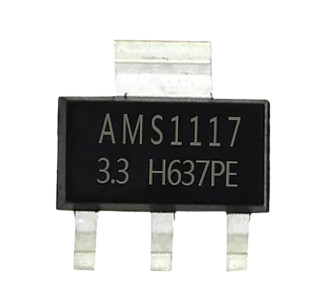
The AMS1117 is a low dropout (LDO) voltage regulator designed to provide a stable and regulated output voltage with a maximum output current of 1A. Manufactured by ESP8266 under the part ID NODMCU, this component is widely used in power supply circuits to step down and regulate voltage levels for microcontrollers, sensors, and other electronic devices. Its compact design and reliable performance make it a popular choice for both hobbyist and professional applications.
Explore Projects Built with AMS1117
 Open Project in Cirkit Designer
 Open Project in Cirkit Designer
 Open Project in Cirkit Designer
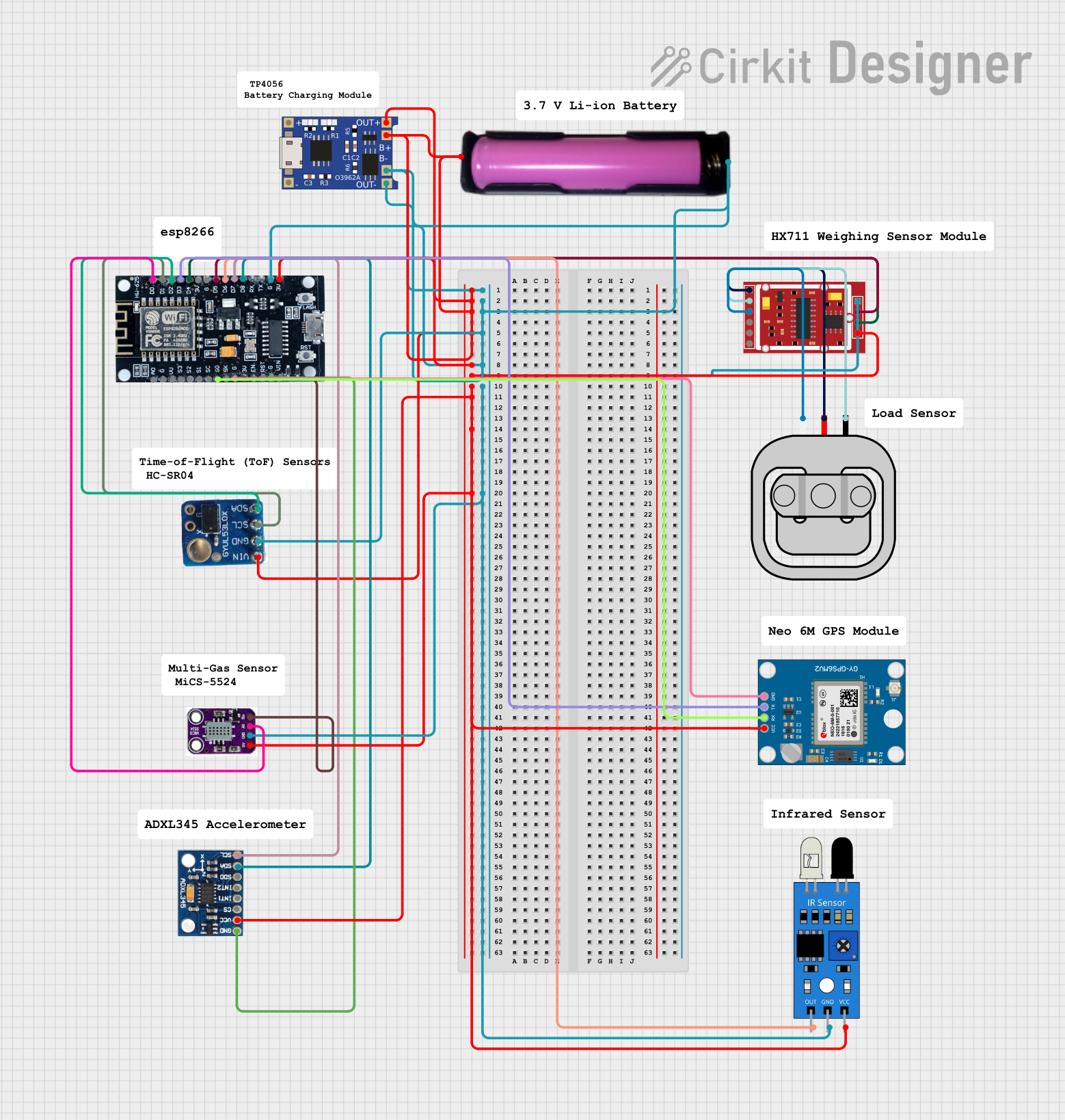 Open Project in Cirkit Designer
Explore Projects Built with AMS1117
Open Project in Cirkit DesignerOpen Project in Cirkit DesignerOpen Project in Cirkit DesignerOpen Project in Cirkit DesignerCommon Applications and Use Cases
- Voltage regulation for microcontrollers (e.g., ESP8266, Arduino, Raspberry Pi)
- Powering sensors and modules in embedded systems
- Battery-powered devices requiring stable voltage
- General-purpose voltage regulation in DIY electronics projects
Technical Specifications
The AMS1117 is available in various fixed output voltage versions (e.g., 1.2V, 1.5V, 1.8V, 2.5V, 3.3V, 5.0V) as well as an adjustable version. Below are the key technical details:
| Parameter | Value |
|---|---|
| Input Voltage Range | 4.6V to 15V |
| Output Voltage Options | 1.2V, 1.5V, 1.8V, 2.5V, 3.3V, 5.0V |
| Maximum Output Current | 1A |
| Dropout Voltage | 1.1V (at 1A load) |
| Operating Temperature | 0°C to 125°C |
| Package Type | SOT-223, TO-252 |
Pin Configuration and Descriptions
The AMS1117 has three pins, as shown in the table below:
| Pin Number | Pin Name | Description |
|---|---|---|
| 1 | GND | Ground pin (connect to circuit ground) |
| 2 | VOUT | Regulated output voltage |
| 3 | VIN | Input voltage (connect to unregulated power) |
Usage Instructions
How to Use the AMS1117 in a Circuit
- Input Voltage: Connect the unregulated input voltage (4.6V to 15V) to the
VINpin. Ensure the input voltage is at least 1.1V higher than the desired output voltage to maintain proper regulation. - Output Voltage: Connect the load to the
VOUTpin. The output voltage will be regulated to the specified value (e.g., 3.3V for the AMS1117-3.3). - Ground Connection: Connect the
GNDpin to the circuit ground. - Capacitors: Add decoupling capacitors for stability:
- A 10µF capacitor on the input side (VIN to GND).
- A 10µF capacitor on the output side (VOUT to GND).
Important Considerations and Best Practices
- Heat Dissipation: The AMS1117 can dissipate heat during operation, especially at higher currents. Use a heatsink or ensure proper ventilation if the regulator gets too hot.
- Input Voltage Range: Do not exceed the maximum input voltage of 15V to avoid damaging the component.
- Load Current: Ensure the load current does not exceed 1A to prevent overheating or failure.
- Bypass Capacitors: Always use the recommended capacitors to ensure stable operation and minimize noise.
Example: Using AMS1117-3.3 with Arduino UNO
The AMS1117-3.3 can be used to power an Arduino UNO or other 3.3V devices. Below is an example circuit and Arduino code to demonstrate its usage:
Circuit Diagram
- Connect a 9V battery or DC power supply to the
VINpin. - Connect the
VOUTpin to the 3.3V input of the Arduino UNO. - Connect the
GNDpin to the ground of the Arduino UNO.
Arduino Code Example
// Example code to read an analog sensor powered by AMS1117-3.3
// The sensor is connected to pin A0 of the Arduino UNO.

const int sensorPin = A0;  // Analog pin connected to the sensor
int sensorValue = 0;       // Variable to store the sensor reading

void setup() {
  Serial.begin(9600);  // Initialize serial communication at 9600 baud
}

void loop() {
  sensorValue = analogRead(sensorPin);  // Read the sensor value
  Serial.print("Sensor Value: ");
  Serial.println(sensorValue);         // Print the sensor value to the Serial Monitor
  delay(1000);                          // Wait for 1 second before the next reading
}
Troubleshooting and FAQs
Common Issues and Solutions
No Output Voltage:
- Check the input voltage. Ensure it is within the specified range (4.6V to 15V).
- Verify the connections to the
VIN,VOUT, andGNDpins. - Ensure the load current does not exceed 1A.
Overheating:
- Check if the input voltage is too high or the load current is excessive.
- Use a heatsink or improve ventilation to dissipate heat.
Unstable Output Voltage:
- Ensure the recommended capacitors (10µF) are connected to the input and output pins.
- Check for loose or poor connections in the circuit.
FAQs
Q: Can I use the AMS1117 to power a 5V device?
A: Yes, you can use the AMS1117-5.0 version to provide a regulated 5V output. Ensure the input voltage is at least 6.1V (5V + 1.1V dropout voltage).
Q: What happens if the input voltage drops below the required level?
A: If the input voltage is less than the required dropout voltage, the AMS1117 will not regulate properly, and the output voltage may drop below the specified value.
Q: Can I use the AMS1117 without capacitors?
A: It is not recommended. The capacitors are essential for stable operation and to minimize noise in the output voltage.
Q: Is the AMS1117 suitable for battery-powered applications?
A: Yes, but ensure the input voltage remains within the specified range and consider the dropout voltage when designing the circuit.