Cirkit Designer Logo
Cirkit Designer
Your all-in-one circuit design IDE
Home / 
Component Documentation

How to Use HDJD-S822-QR999: Examples, Pinouts, and Specs
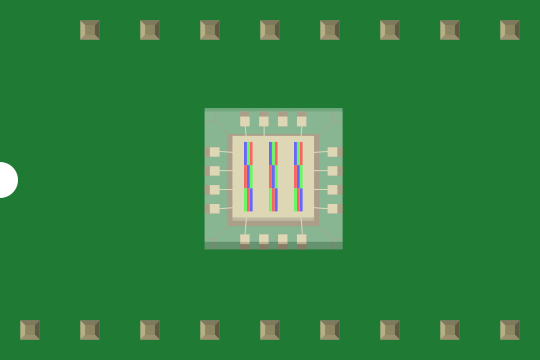

Image of HDJD-S822-QR999
Cirkit Designer LogoDesign with HDJD-S822-QR999 in Cirkit Designer

Introduction

The HDJD-S822-QR999, manufactured by Avago Technologies, is an infrared emitter and detector module designed for proximity sensing and object detection applications. This module integrates an infrared LED and a phototransistor, enabling it to emit and detect infrared light. Its compact design and reliable performance make it ideal for non-contact sensing in a variety of applications.

Explore Projects Built with HDJD-S822-QR999
Use Cirkit Designer to design, explore, and prototype these projects online. Some projects support real-time simulation. Click "Open Project" to start designing instantly!
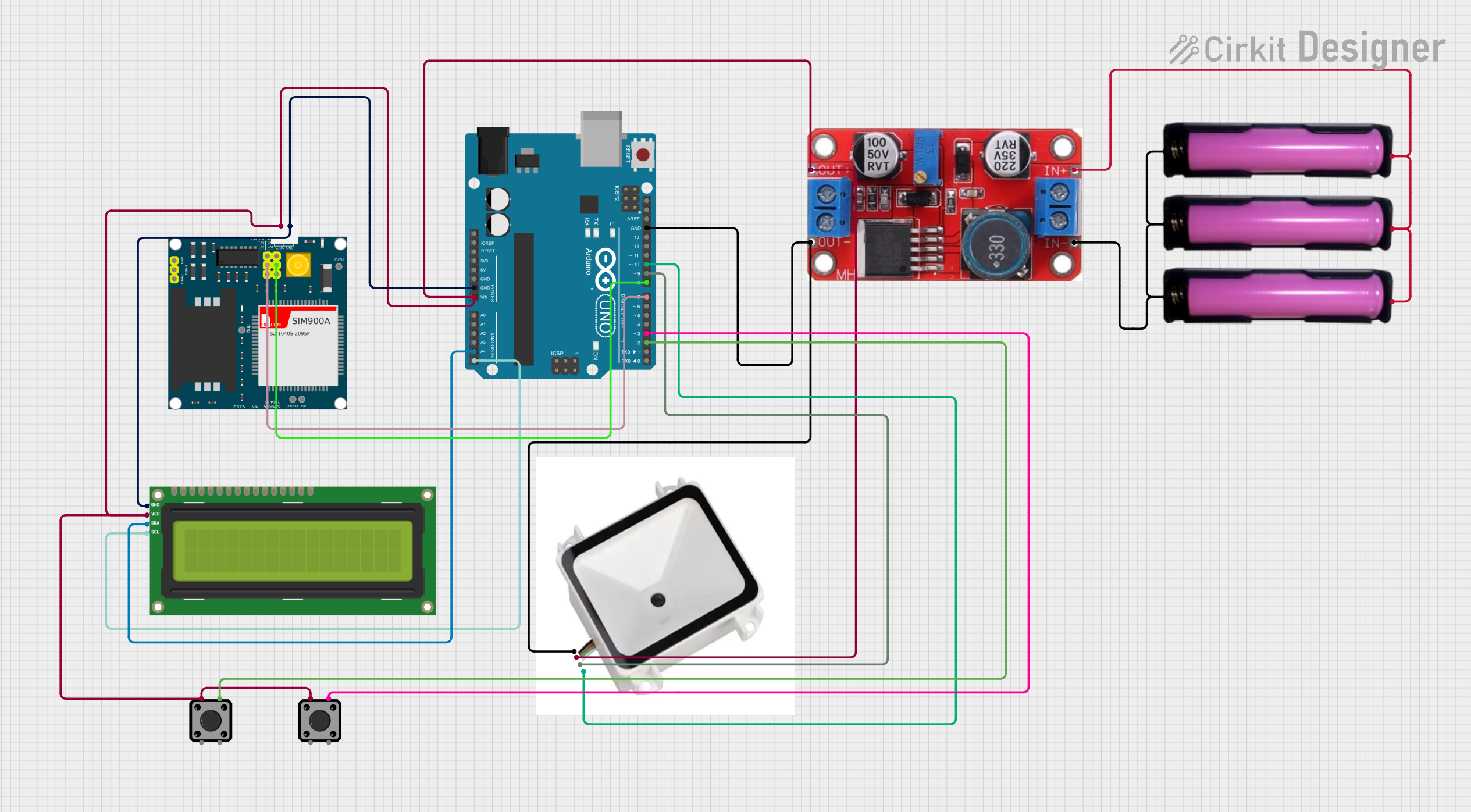
Arduino UNO GSM Communication Hub with QR Code Reader and LCD Interface
Image of park system: A project utilizing HDJD-S822-QR999 in a practical application
This circuit is designed to function as a communication and control system with cellular capabilities, QR code scanning, and display output. It is built around an Arduino UNO microcontroller, interfaced with a SIM900A module, a QR code reader, and an I2C LCD screen, powered by a series of 18650 batteries through a boost converter. Tactile switches provide user interaction, and the Arduino's embedded code controls the operation of the circuit.
Cirkit Designer LogoOpen Project in Cirkit Designer
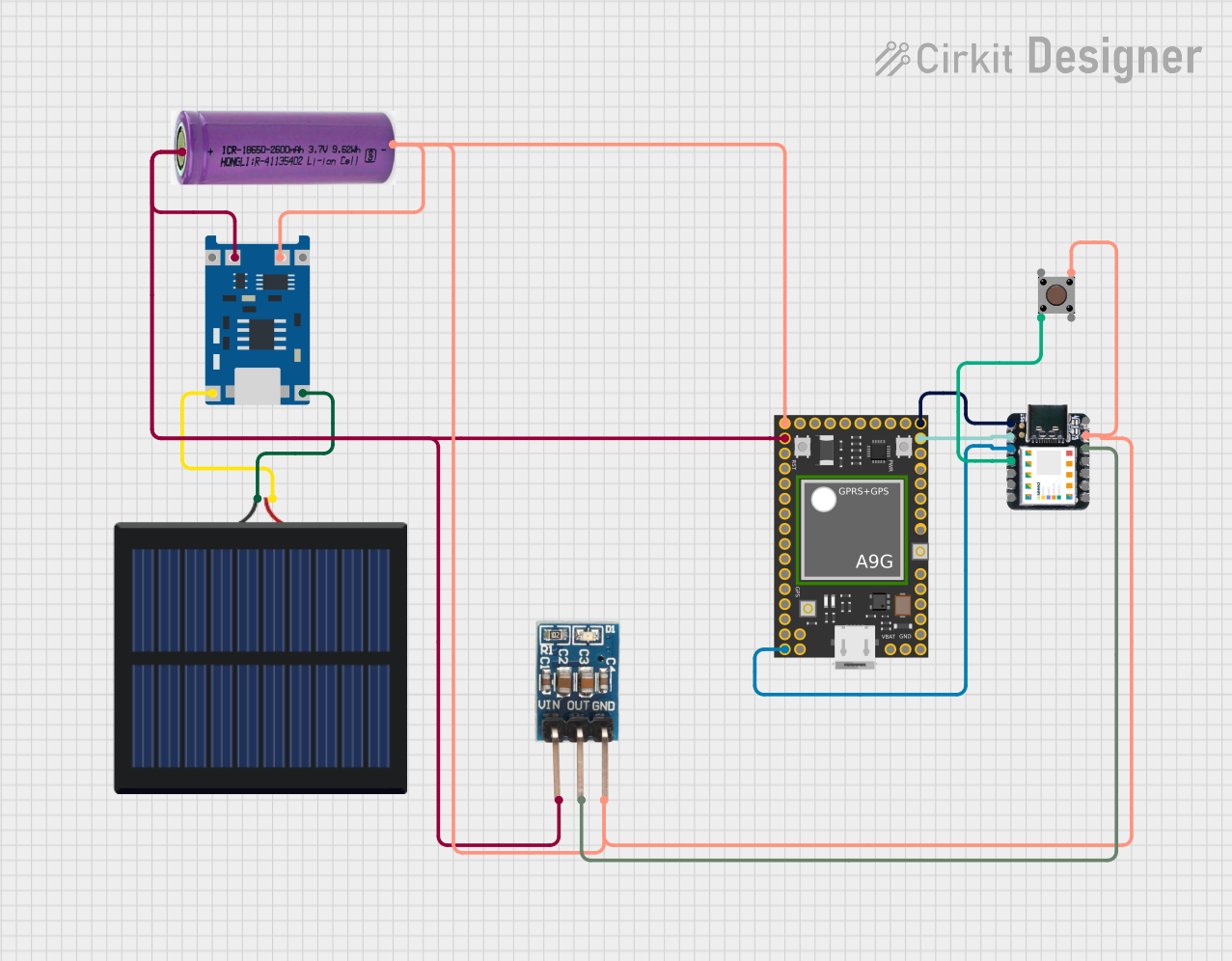
Solar-Powered GSM/GPRS+GPS Tracker with Seeeduino XIAO
Image of SOS System : A project utilizing HDJD-S822-QR999 in a practical application
This circuit features an Ai Thinker A9G development board for GSM/GPRS and GPS/BDS connectivity, interfaced with a Seeeduino XIAO microcontroller for control and data processing. A solar cell, coupled with a TP4056 charging module, charges a 3.3V battery, which powers the system through a 3.3V regulator ensuring stable operation. The circuit likely serves for remote data communication and location tracking, with the capability to be powered by renewable energy and interfaced with additional sensors or input devices via the Seeeduino XIAO.
Cirkit Designer LogoOpen Project in Cirkit Designer
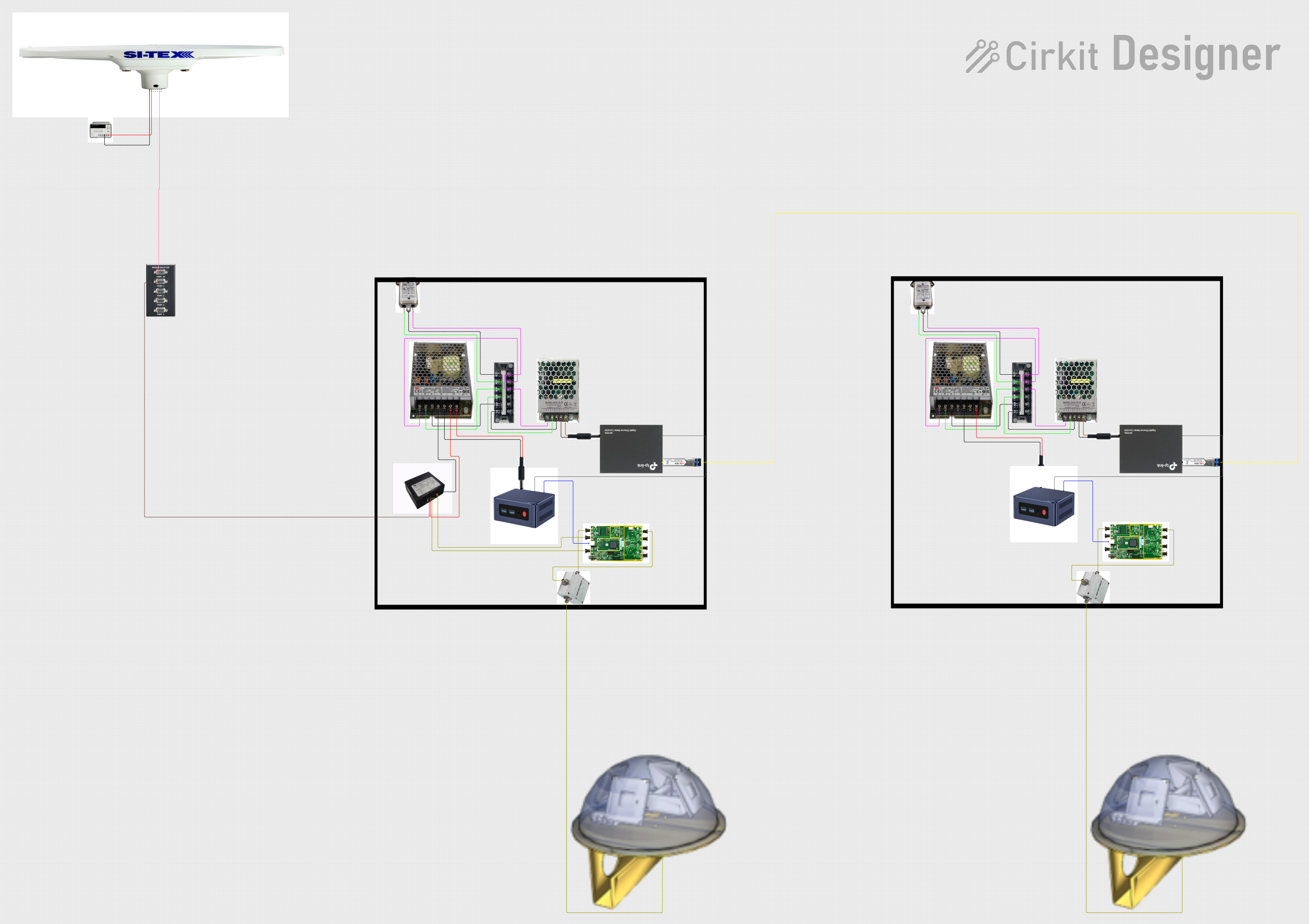
Satellite-Based Timing and Navigation System with SDR and Atomic Clock Synchronization
Image of GPS 시스템 측정 구성도_Confirm: A project utilizing HDJD-S822-QR999 in a practical application
This circuit appears to be a complex system involving power supply management, GPS and timing synchronization, and data communication. It includes a SI-TEX G1 Satellite Compass for GPS data, an XHTF1021 Atomic Rubidium Clock for precise timing, and Ettus USRP B200 units for software-defined radio communication. Power is supplied through various SMPS units and distributed via terminal blocks and DC jacks. Data communication is facilitated by Beelink MINI S12 N95 computers, RS232 splitters, and a 1000BASE-T Media Converter for network connectivity. RF Directional Couplers are used to interface antennas with the USRP units, and the entire system is likely contained within cases for protection and organization.
Cirkit Designer LogoOpen Project in Cirkit Designer
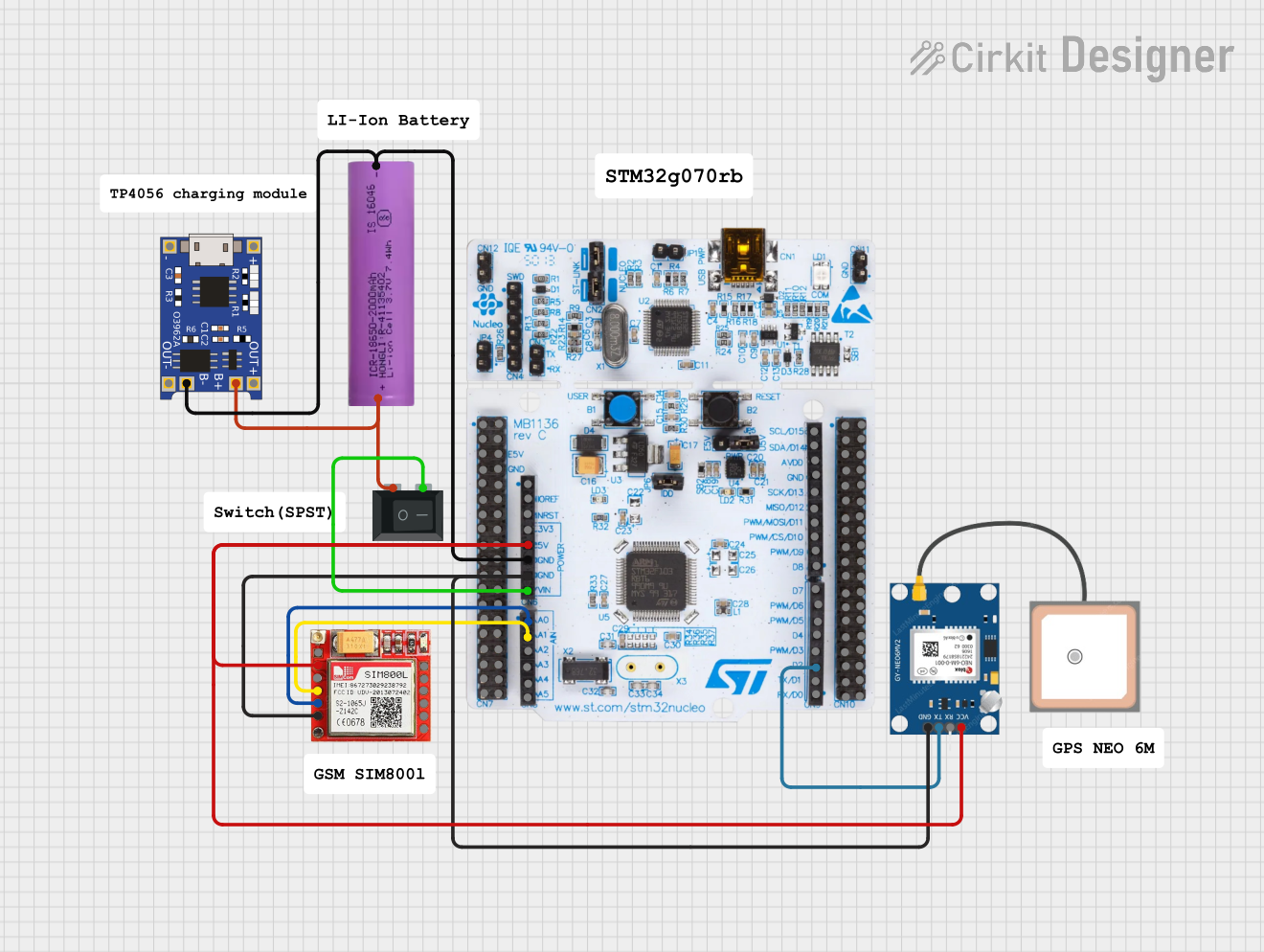
Battery-Powered Emergency Alert System with NUCLEO-F072RB, SIM800L, and GPS NEO 6M
Image of women safety: A project utilizing HDJD-S822-QR999 in a practical application
This circuit is an emergency alert system that uses a NUCLEO-F072RB microcontroller to send SMS alerts and make calls via a SIM800L GSM module, while obtaining location data from a GPS NEO 6M module. The system is powered by a Li-ion battery and includes a TP4056 module for battery charging and protection, with a rocker switch to control power to the microcontroller.
Cirkit Designer LogoOpen Project in Cirkit Designer

Explore Projects Built with HDJD-S822-QR999

Use Cirkit Designer to design, explore, and prototype these projects online. Some projects support real-time simulation. Click "Open Project" to start designing instantly!
Image of park system: A project utilizing HDJD-S822-QR999 in a practical application
Arduino UNO GSM Communication Hub with QR Code Reader and LCD Interface
This circuit is designed to function as a communication and control system with cellular capabilities, QR code scanning, and display output. It is built around an Arduino UNO microcontroller, interfaced with a SIM900A module, a QR code reader, and an I2C LCD screen, powered by a series of 18650 batteries through a boost converter. Tactile switches provide user interaction, and the Arduino's embedded code controls the operation of the circuit.
Cirkit Designer LogoOpen Project in Cirkit Designer
Image of SOS System : A project utilizing HDJD-S822-QR999 in a practical application
Solar-Powered GSM/GPRS+GPS Tracker with Seeeduino XIAO
This circuit features an Ai Thinker A9G development board for GSM/GPRS and GPS/BDS connectivity, interfaced with a Seeeduino XIAO microcontroller for control and data processing. A solar cell, coupled with a TP4056 charging module, charges a 3.3V battery, which powers the system through a 3.3V regulator ensuring stable operation. The circuit likely serves for remote data communication and location tracking, with the capability to be powered by renewable energy and interfaced with additional sensors or input devices via the Seeeduino XIAO.
Cirkit Designer LogoOpen Project in Cirkit Designer
Image of GPS 시스템 측정 구성도_Confirm: A project utilizing HDJD-S822-QR999 in a practical application
Satellite-Based Timing and Navigation System with SDR and Atomic Clock Synchronization
This circuit appears to be a complex system involving power supply management, GPS and timing synchronization, and data communication. It includes a SI-TEX G1 Satellite Compass for GPS data, an XHTF1021 Atomic Rubidium Clock for precise timing, and Ettus USRP B200 units for software-defined radio communication. Power is supplied through various SMPS units and distributed via terminal blocks and DC jacks. Data communication is facilitated by Beelink MINI S12 N95 computers, RS232 splitters, and a 1000BASE-T Media Converter for network connectivity. RF Directional Couplers are used to interface antennas with the USRP units, and the entire system is likely contained within cases for protection and organization.
Cirkit Designer LogoOpen Project in Cirkit Designer
Image of women safety: A project utilizing HDJD-S822-QR999 in a practical application
Battery-Powered Emergency Alert System with NUCLEO-F072RB, SIM800L, and GPS NEO 6M
This circuit is an emergency alert system that uses a NUCLEO-F072RB microcontroller to send SMS alerts and make calls via a SIM800L GSM module, while obtaining location data from a GPS NEO 6M module. The system is powered by a Li-ion battery and includes a TP4056 module for battery charging and protection, with a rocker switch to control power to the microcontroller.
Cirkit Designer LogoOpen Project in Cirkit Designer

Common Applications

  • Proximity sensing in consumer electronics
  • Object detection in industrial automation
  • Gesture recognition systems
  • Line-following robots
  • Security systems and intrusion detection

Technical Specifications

Key Technical Details

Parameter Value
Manufacturer Avago Technologies
Part Number HDJD-S822-QR999
Operating Voltage 2.7V to 5.5V
Infrared LED Wavelength 940 nm
Phototransistor Sensitivity 850 nm to 950 nm
Operating Temperature Range -40°C to +85°C
Package Type Surface Mount (SMD)

Pin Configuration and Descriptions

The HDJD-S822-QR999 module typically has four pins. Below is the pinout and description:

Pin Number Pin Name Description
1 VCC Power supply input (2.7V to 5.5V)
2 GND Ground connection
3 IR LED Anode Positive terminal of the infrared LED
4 Phototransistor Collector Output signal from the phototransistor

Usage Instructions

How to Use the Component in a Circuit

  1. Power Supply: Connect the VCC pin to a regulated power supply (2.7V to 5.5V) and the GND pin to the ground of the circuit.
  2. Infrared LED: Use a current-limiting resistor in series with the IR LED Anode pin to prevent excessive current through the LED. The resistor value can be calculated using Ohm's Law: [ R = \frac{V_{supply} - V_{LED}}{I_{LED}} ] where ( V_{LED} ) is the forward voltage of the LED (typically 1.2V) and ( I_{LED} ) is the desired current (e.g., 20mA).
  3. Phototransistor Output: Connect the Phototransistor Collector pin to a pull-up resistor and then to the power supply. The output signal can be read as a voltage drop across the pull-up resistor, which changes based on the amount of infrared light detected.

Important Considerations and Best Practices

  • Ambient Light Interference: To minimize interference from ambient light, consider using modulation techniques (e.g., pulsing the IR LED at a specific frequency) and filtering the phototransistor output.
  • Distance and Alignment: Ensure proper alignment between the emitter and the object to be detected for accurate sensing. The detection range depends on the object's reflectivity and the intensity of the emitted IR light.
  • Heat Dissipation: Avoid exceeding the maximum current rating of the IR LED to prevent overheating and damage.

Example: Connecting to an Arduino UNO

Below is an example of how to use the HDJD-S822-QR999 with an Arduino UNO for proximity sensing:

Circuit Connections

  • Connect VCC to the Arduino's 5V pin.
  • Connect GND to the Arduino's GND pin.
  • Connect the IR LED Anode to a digital pin (e.g., D3) through a 220Ω resistor.
  • Connect the Phototransistor Collector to an analog input pin (e.g., A0) with a 10kΩ pull-up resistor.

Arduino Code

// Define pin connections
const int irLedPin = 3;       // Digital pin connected to IR LED
const int sensorPin = A0;     // Analog pin connected to phototransistor

void setup() {
  pinMode(irLedPin, OUTPUT);  // Set IR LED pin as output
  Serial.begin(9600);         // Initialize serial communication
}

void loop() {
  digitalWrite(irLedPin, HIGH);  // Turn on the IR LED
  delay(10);                     // Allow time for the LED to stabilize

  int sensorValue = analogRead(sensorPin);  // Read phototransistor output
  Serial.print("Sensor Value: ");
  Serial.println(sensorValue);              // Print the sensor value

  digitalWrite(irLedPin, LOW);   // Turn off the IR LED
  delay(100);                    // Wait before the next reading
}

Troubleshooting and FAQs

Common Issues and Solutions

  1. No Output Signal from Phototransistor

    • Cause: Incorrect wiring or insufficient IR light.
    • Solution: Verify the connections and ensure the IR LED is emitting light. Check the current-limiting resistor value.
  2. Inconsistent Readings

    • Cause: Ambient light interference or poor alignment.
    • Solution: Use modulation techniques to filter out ambient light and ensure proper alignment between the emitter and the object.
  3. Short Detection Range

    • Cause: Low IR LED intensity or low object reflectivity.
    • Solution: Increase the current through the IR LED (within safe limits) or use a more reflective object.

FAQs

Q1: Can the HDJD-S822-QR999 detect transparent objects?
A1: Transparent objects may not reflect sufficient infrared light for detection. Use reflective or opaque objects for best results.

Q2: What is the maximum detection range of this module?
A2: The detection range depends on the object's reflectivity and the IR LED intensity. Typically, it ranges from a few centimeters to several meters.

Q3: Can this module be used outdoors?
A3: Yes, but ambient sunlight may interfere with its performance. Use modulation techniques to improve reliability in outdoor environments.