
How to Use DUAL USB 5V 1A 2.1A 18650 battery charger PCB power module: Examples, Pinouts, and Specs
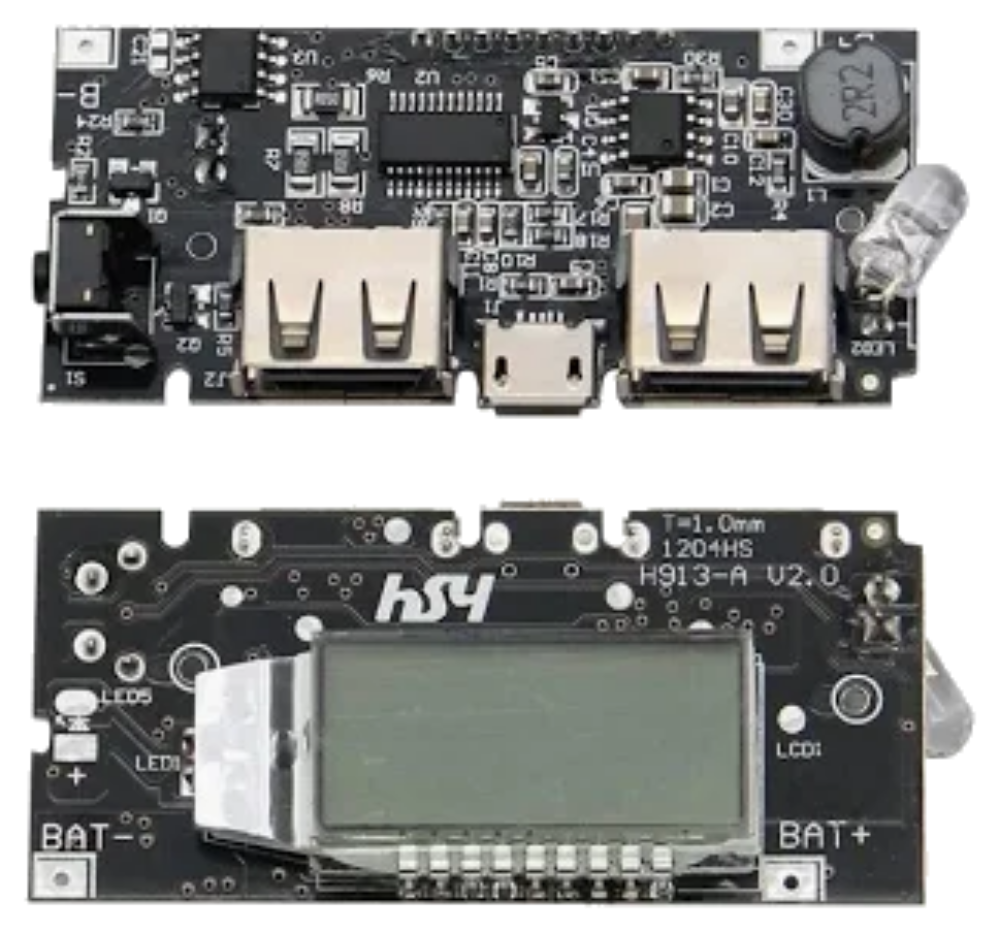
 Design with DUAL USB 5V 1A 2.1A 18650 battery charger PCB power module in Cirkit Designer
Introduction
The DUAL USB 5V 1A 2.1A 18650 Battery Charger PCB Power Module is a compact and efficient solution for charging and powering USB devices. This module is designed to convert the energy stored in 18650 lithium-ion batteries into a stable 5V output, suitable for charging or powering devices such as smartphones, tablets, and other USB-powered electronics. It features dual USB output ports, with one port providing 1A and the other 2.1A, making it ideal for simultaneously charging devices with different power requirements.
Explore Projects Built with DUAL USB 5V 1A 2.1A 18650 battery charger PCB power module
 Open Project in Cirkit Designer
 Open Project in Cirkit Designer
 Open Project in Cirkit Designer
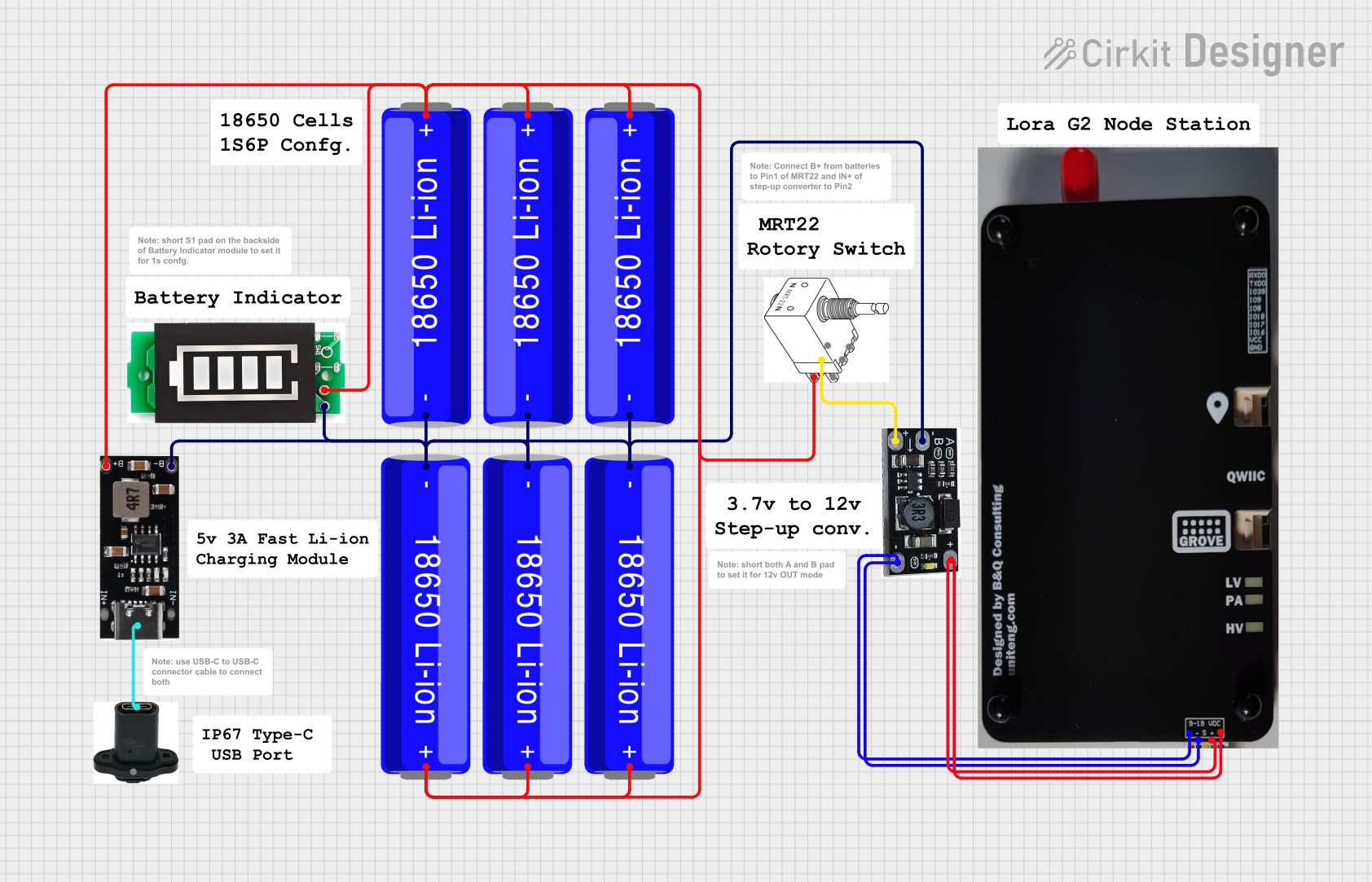 Open Project in Cirkit Designer
Explore Projects Built with DUAL USB 5V 1A 2.1A 18650 battery charger PCB power module
Open Project in Cirkit DesignerOpen Project in Cirkit DesignerOpen Project in Cirkit DesignerOpen Project in Cirkit DesignerCommon Applications and Use Cases
- Portable power banks
- DIY battery-powered USB chargers
- Emergency backup power supplies
- Prototyping and educational projects involving USB-powered devices
Technical Specifications
Key Technical Details
| Parameter | Value |
|---|---|
| Input Voltage | 3.7V (Nominal, from 18650 battery) |
| Output Voltage | 5V ± 0.1V |
| Output Current (Port 1) | 1A |
| Output Current (Port 2) | 2.1A |
| Efficiency | Up to 92% |
| Battery Type Supported | 18650 Lithium-Ion |
| Protection Features | Overcharge, Overdischarge, |
| Overcurrent, Short Circuit | |
| Dimensions | Varies (typically compact) |
Pin Configuration and Descriptions
| Pin/Port Name | Type | Description |
|---|---|---|
| B+ | Input | Positive terminal for the 18650 battery |
| B- | Input | Negative terminal for the 18650 battery |
| USB Port 1 | Output (1A) | USB output port providing 5V at 1A |
| USB Port 2 | Output (2.1A) | USB output port providing 5V at 2.1A |
| Indicator LEDs | Output | Status LEDs for charging and power indication |
Usage Instructions
How to Use the Component in a Circuit
- Connect the Battery:
- Attach the positive terminal of the 18650 battery to the
B+pin and the negative terminal to theB-pin. Ensure proper polarity to avoid damage.
- Attach the positive terminal of the 18650 battery to the
- Connect USB Devices:
- Plug your USB-powered devices into the appropriate USB ports. Use the 1A port for low-power devices and the 2.1A port for high-power devices.
- Monitor Status:
- Observe the indicator LEDs to check the charging status and power output.
Important Considerations and Best Practices
- Battery Selection: Use only high-quality 18650 lithium-ion batteries with built-in protection circuits to ensure safety.
- Heat Management: Avoid prolonged use at maximum current output to prevent overheating. Ensure adequate ventilation around the module.
- Polarity Check: Double-check the battery polarity before connecting to the module to prevent damage.
- Load Balancing: Avoid connecting devices that exceed the rated current of each USB port.
Arduino UNO Integration Example
While this module is not directly programmable, it can be used to power an Arduino UNO via its USB port. Below is an example of powering an Arduino UNO using this module:
/* Example: Powering Arduino UNO with the DUAL USB 5V 1A 2.1A Module
   - Connect the module's 2.1A USB port to the Arduino UNO's USB input.
   - Ensure the 18650 battery is properly connected to the module.
   - This example demonstrates a simple LED blink program. */

void setup() {
  pinMode(13, OUTPUT); // Set pin 13 as an output for the onboard LED
}

void loop() {
  digitalWrite(13, HIGH); // Turn the LED on
  delay(1000);            // Wait for 1 second
  digitalWrite(13, LOW);  // Turn the LED off
  delay(1000);            // Wait for 1 second
}
Troubleshooting and FAQs
Common Issues and Solutions
No Output Voltage:
- Cause: Incorrect battery polarity or discharged battery.
- Solution: Verify the battery polarity and ensure the battery is charged.
Overheating:
- Cause: Prolonged use at maximum current output or poor ventilation.
- Solution: Reduce the load or improve ventilation around the module.
Device Not Charging:
- Cause: Device requires more current than the port can provide.
- Solution: Use the 2.1A port for high-power devices.
LED Indicators Not Working:
- Cause: Faulty module or disconnected battery.
- Solution: Check the battery connection and replace the module if necessary.
FAQs
Can I use other types of batteries with this module?
- No, this module is specifically designed for 18650 lithium-ion batteries.
What happens if I connect devices that exceed the current rating?
- The module's protection features will activate, shutting down the output to prevent damage.
Can I charge the 18650 battery while powering devices?
- No, this module does not support simultaneous charging and discharging.
Is it safe to leave the module connected to the battery for extended periods?
- Yes, as long as the battery has a built-in protection circuit and the module is not overheating.