
How to Use MQ-2 Gas Sensor Module: Examples, Pinouts, and Specs
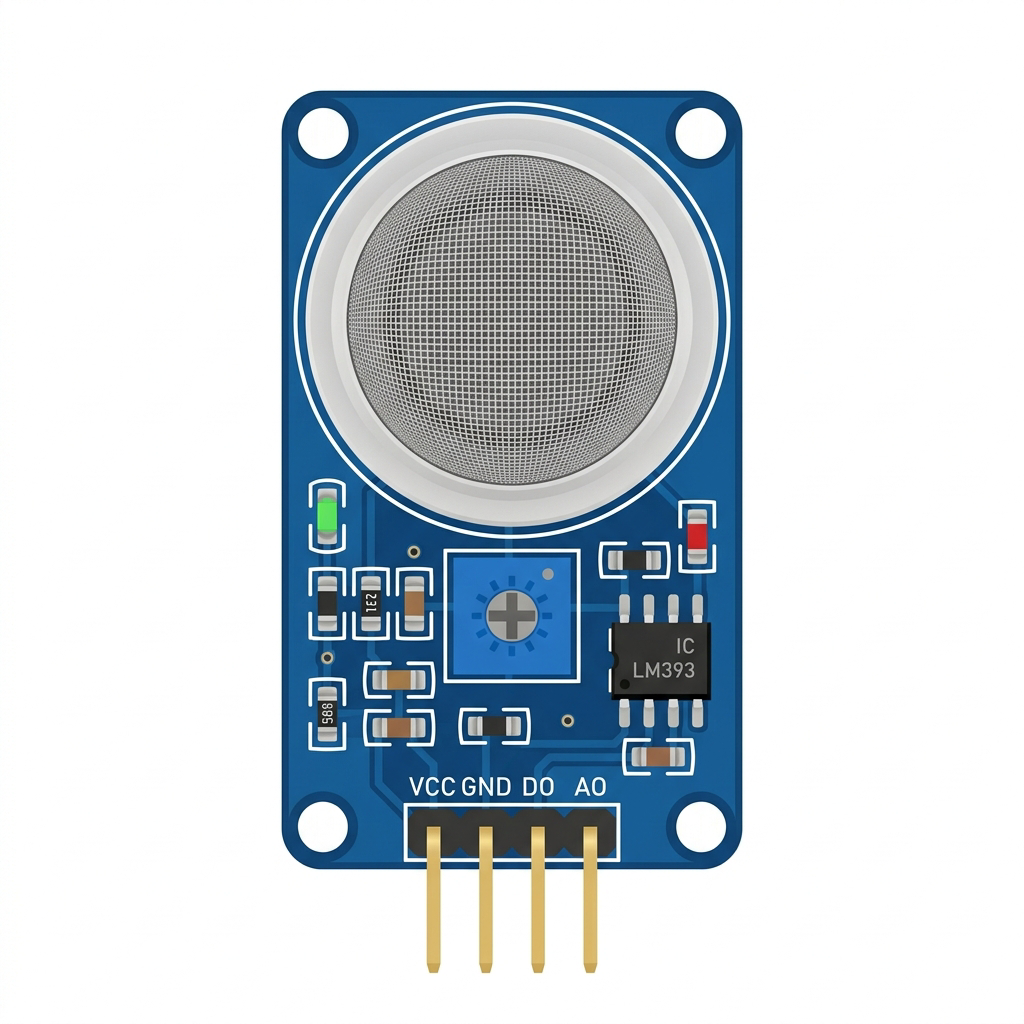
 Design with MQ-2 Gas Sensor Module in Cirkit Designer
Introduction
The MQ-2 Gas Sensor Module, manufactured by Winsen or available as a generic component, is a versatile gas detection device designed to sense gases such as LPG, propane, methane, hydrogen, and smoke. It is widely used in safety systems, home automation, and industrial applications to detect gas leaks or monitor air quality. The sensor operates by measuring changes in resistance of its sensitive element when exposed to target gases, providing both analog and digital outputs for easy integration with microcontrollers.
Explore Projects Built with MQ-2 Gas Sensor Module
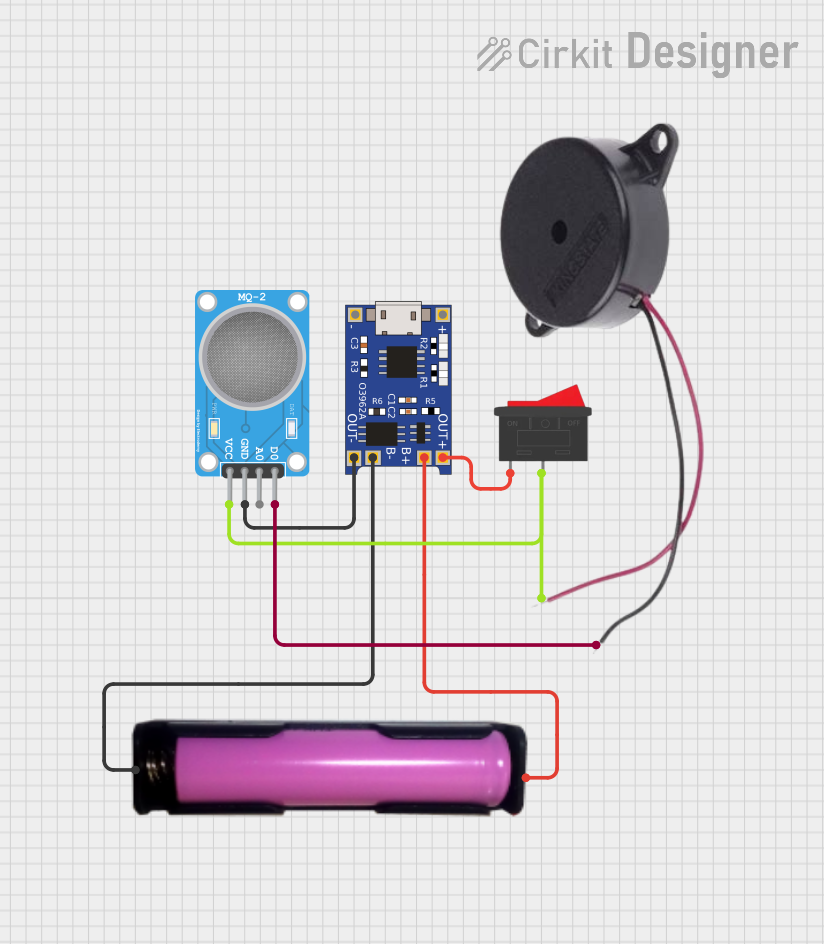 Open Project in Cirkit Designer
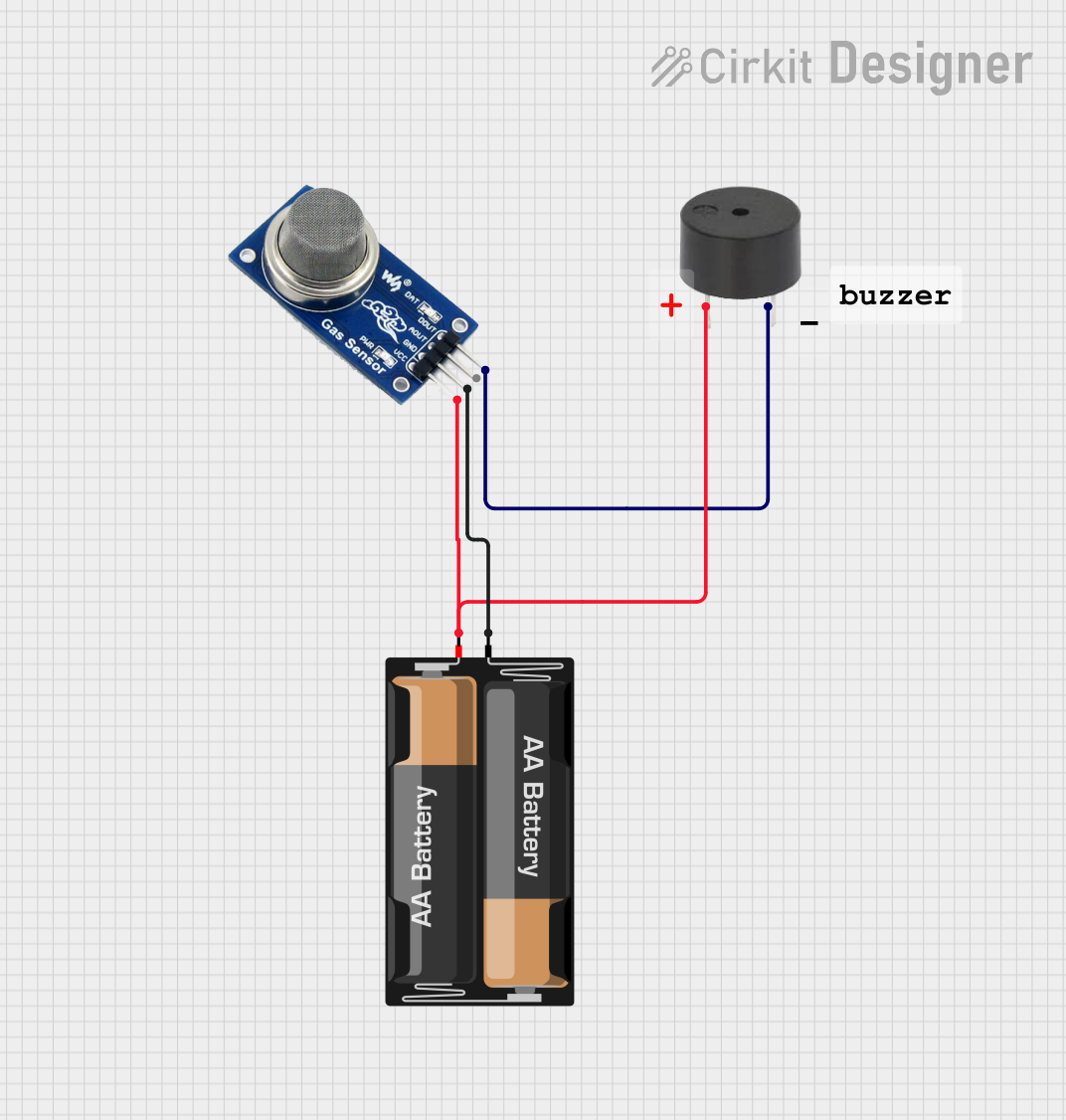 Open Project in Cirkit Designer
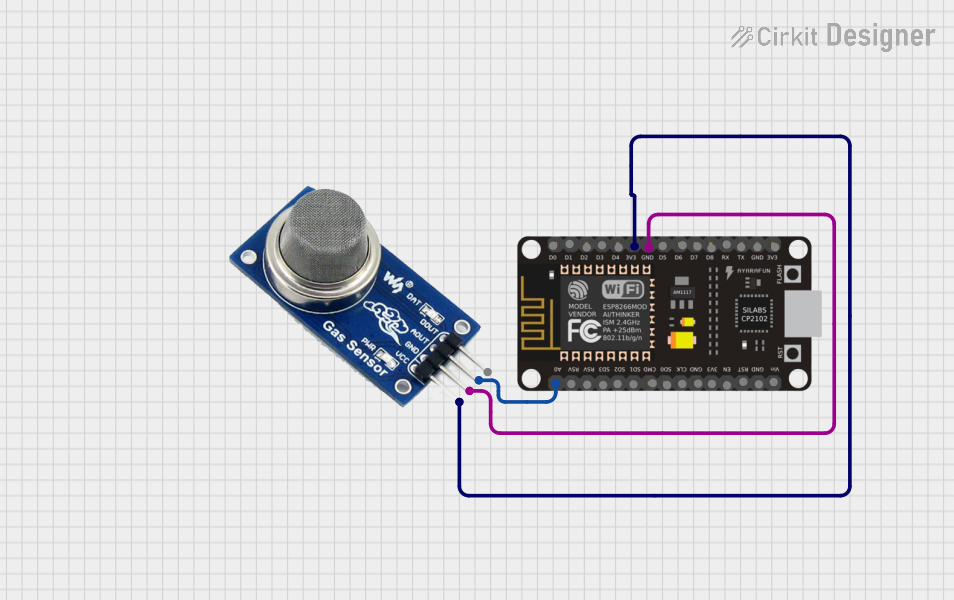 Open Project in Cirkit Designer
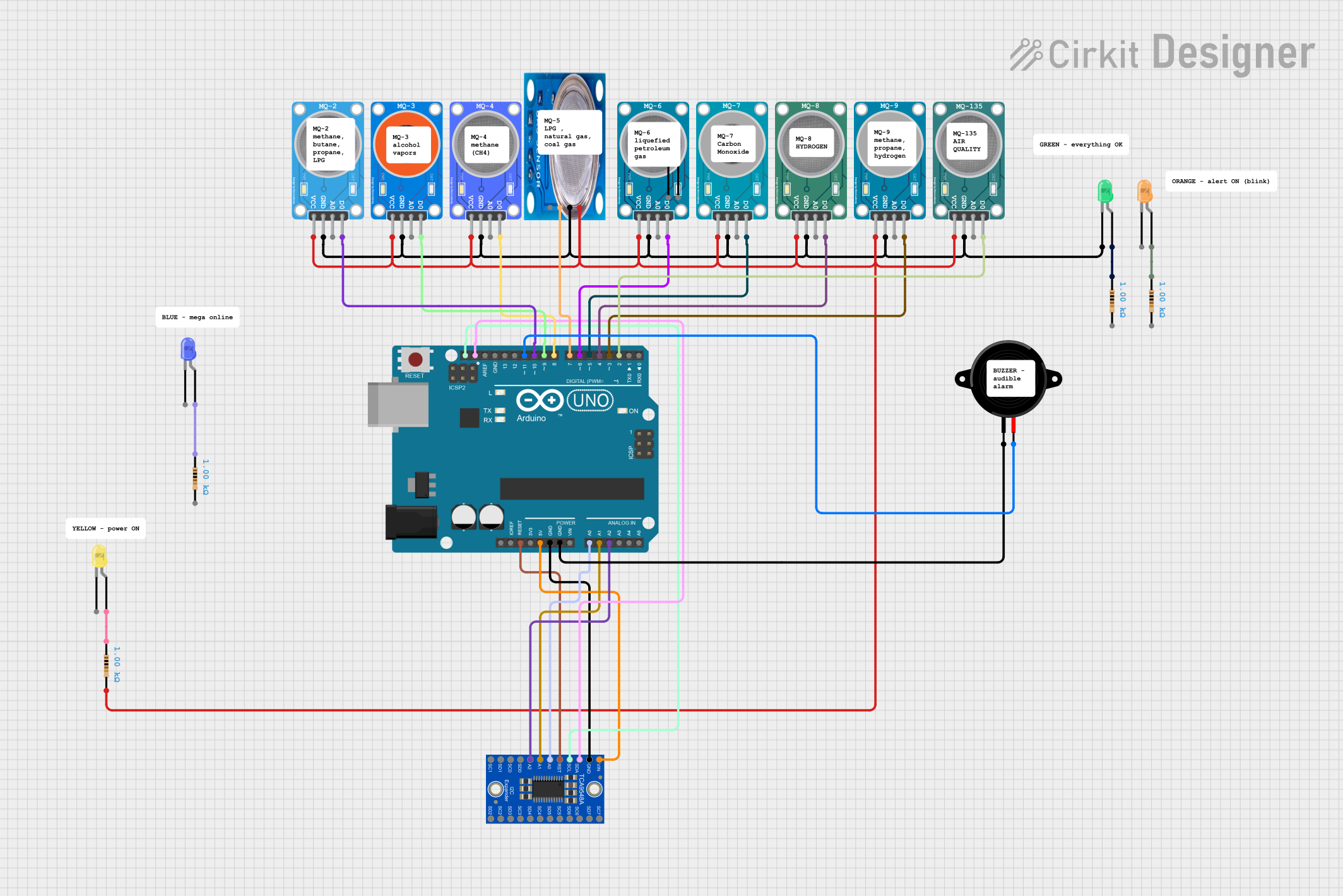 Open Project in Cirkit Designer
Explore Projects Built with MQ-2 Gas Sensor Module
Open Project in Cirkit DesignerOpen Project in Cirkit DesignerOpen Project in Cirkit DesignerOpen Project in Cirkit DesignerCommon Applications
- Gas leak detection systems (e.g., LPG, methane)
- Smoke detection in fire alarm systems
- Air quality monitoring
- Industrial safety systems
- Home automation projects
Technical Specifications
Key Specifications
| Parameter | Value |
|---|---|
| Operating Voltage | 5V DC |
| Operating Current | ~150 mA |
| Detection Range | 200 ppm to 10,000 ppm |
| Preheat Time | 20 seconds |
| Output Types | Analog (AO) and Digital (DO) |
| Sensitivity | Adjustable via onboard potentiometer |
| Dimensions | ~32mm x 20mm x 22mm |
| Operating Temperature | -20°C to 50°C |
| Manufacturer Part ID | MQ-2 |
Pin Configuration
The MQ-2 Gas Sensor Module typically has four pins. The table below describes each pin:
| Pin Name | Description |
|---|---|
| VCC | Power supply input (5V DC) |
| GND | Ground connection |
| AO | Analog output (proportional to gas concentration) |
| DO | Digital output (HIGH/LOW based on threshold) |
Usage Instructions
How to Use the MQ-2 Gas Sensor in a Circuit
- Power the Sensor: Connect the
VCCpin to a 5V DC power source and theGNDpin to ground. - Connect Outputs:
- Use the
AOpin to read analog values corresponding to gas concentration. - Use the
DOpin for digital HIGH/LOW output, which is triggered based on the threshold set by the onboard potentiometer.
- Use the
- Preheat the Sensor: Allow the sensor to preheat for at least 20 seconds after powering it on to ensure accurate readings.
- Read Data:
- For analog readings, connect the
AOpin to an analog input pin of a microcontroller (e.g., Arduino). - For digital readings, connect the
DOpin to a digital input pin of the microcontroller.
- For analog readings, connect the
Important Considerations
- Preheat Time: Always allow the sensor to preheat before taking measurements.
- Ventilation: Ensure proper ventilation around the sensor for accurate gas detection.
- Calibration: For precise applications, calibrate the sensor using known gas concentrations.
- Power Supply: Use a stable 5V DC power source to avoid fluctuations in readings.
- Avoid Contamination: Keep the sensor away from water, dust, and corrosive gases to maintain its sensitivity.
Example: Using MQ-2 with Arduino UNO
Below is an example of how to connect and use the MQ-2 Gas Sensor Module with an Arduino UNO to read analog values:
// MQ-2 Gas Sensor Example with Arduino UNO
// Connect AO to A0, DO to D2, VCC to 5V, and GND to GND

const int analogPin = A0;  // Analog pin connected to AO
const int digitalPin = 2;  // Digital pin connected to DO
int analogValue = 0;       // Variable to store analog reading
int digitalValue = 0;      // Variable to store digital reading

void setup() {
  Serial.begin(9600);      // Initialize serial communication
  pinMode(digitalPin, INPUT); // Set digital pin as input
}

void loop() {
  // Read analog value from AO pin
  analogValue = analogRead(analogPin);

  // Read digital value from DO pin
  digitalValue = digitalRead(digitalPin);

  // Print readings to Serial Monitor
  Serial.print("Analog Value: ");
  Serial.print(analogValue);
  Serial.print(" | Digital Value: ");
  Serial.println(digitalValue);

  delay(1000); // Wait 1 second before next reading
}
Notes:
- The analog value (
analogValue) represents the gas concentration, with higher values indicating higher concentrations. - The digital value (
digitalValue) will be HIGH (1) if the gas concentration exceeds the threshold set by the potentiometer.
Troubleshooting and FAQs
Common Issues and Solutions
| Issue | Possible Cause | Solution |
|---|---|---|
| No output from the sensor | Incorrect wiring or loose connections | Verify all connections and wiring. |
| Analog readings are unstable | Insufficient preheat time | Allow the sensor to preheat for 20 seconds. |
| Digital output always HIGH or LOW | Threshold not set correctly | Adjust the potentiometer to set the threshold. |
| Sensor not detecting gas | Sensor contamination or damage | Clean the sensor or replace if damaged. |
| Fluctuating readings | Power supply instability | Use a stable 5V DC power source. |
FAQs
Can the MQ-2 detect multiple gases simultaneously?
- Yes, the MQ-2 can detect multiple gases, but it cannot differentiate between them. It provides a combined reading for all detectable gases.
How do I calibrate the MQ-2 sensor?
- Calibration involves exposing the sensor to a known concentration of gas and adjusting the potentiometer or interpreting the analog output accordingly.
What is the lifespan of the MQ-2 sensor?
- The typical lifespan of the MQ-2 sensor is around 2-3 years, depending on usage and environmental conditions.
Can I use the MQ-2 with a 3.3V microcontroller?
- The MQ-2 is designed for 5V operation. If using a 3.3V microcontroller, a level shifter or voltage regulator may be required.
By following this documentation, users can effectively integrate the MQ-2 Gas Sensor Module into their projects for reliable gas detection and monitoring.