
How to Use HLK-LD6002H: Examples, Pinouts, and Specs
 Design with HLK-LD6002H in Cirkit Designer
Introduction
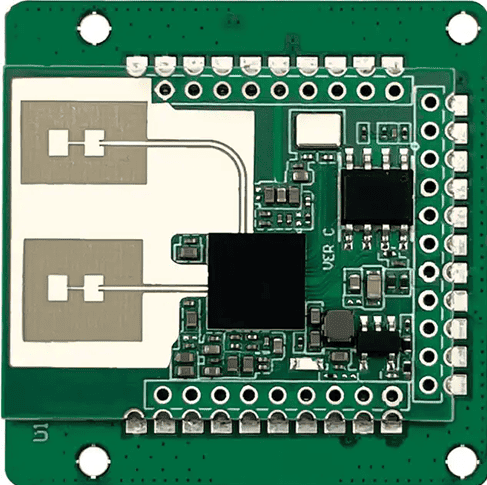
The HLK-LD6002H is a compact, high-efficiency AC-DC power supply module designed to convert an input voltage range of 85-265V AC into a stable 5V DC output. This module is ideal for powering low-power electronic devices, offering a reliable and efficient solution for embedded systems, IoT devices, and other small-scale electronics.
Explore Projects Built with HLK-LD6002H
 Open Project in Cirkit Designer
 Open Project in Cirkit Designer
 Open Project in Cirkit Designer
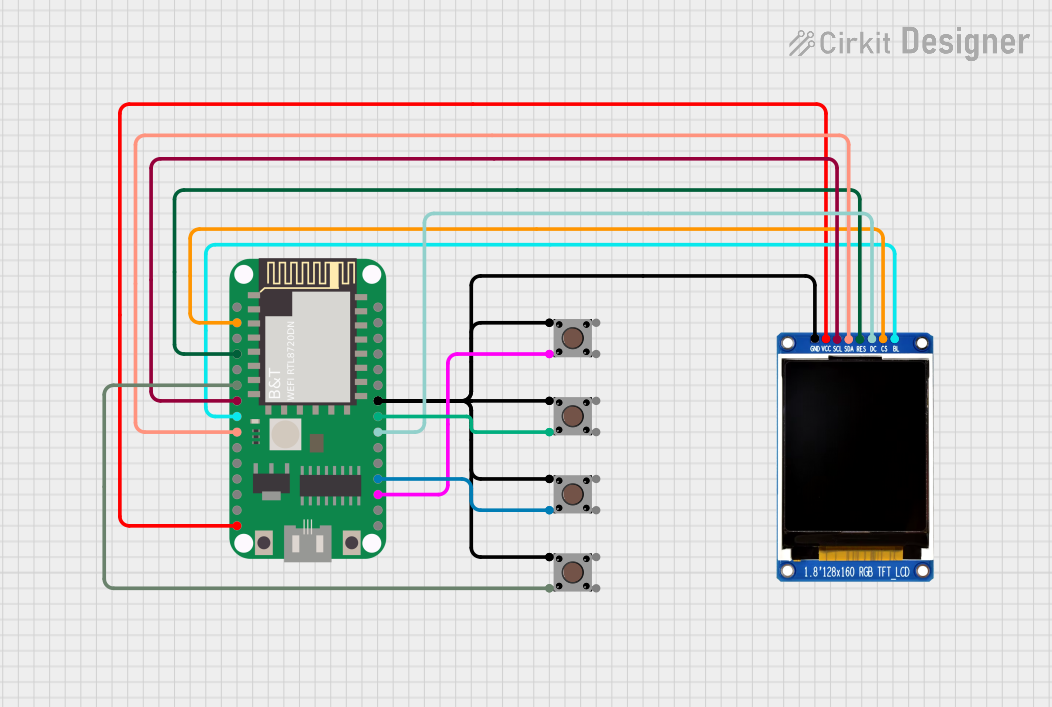 Open Project in Cirkit Designer
Explore Projects Built with HLK-LD6002H
Open Project in Cirkit DesignerOpen Project in Cirkit DesignerOpen Project in Cirkit DesignerOpen Project in Cirkit DesignerCommon Applications and Use Cases
- Powering microcontrollers (e.g., Arduino, ESP32, Raspberry Pi Pico)
- IoT devices and smart home applications
- Low-power sensors and actuators
- Industrial control systems
- Consumer electronics requiring a 5V DC power source
Technical Specifications
The HLK-LD6002H is designed to meet the needs of compact and efficient power conversion. Below are its key technical specifications:
| Parameter | Value |
|---|---|
| Input Voltage Range | 85-265V AC |
| Output Voltage | 5V DC |
| Output Current | 600mA (max) |
| Output Power | 3W |
| Efficiency | ≥ 75% |
| Operating Temperature | -20°C to +60°C |
| Storage Temperature | -40°C to +85°C |
| Dimensions | 35mm x 18mm x 15mm |
| Isolation Voltage | 3000V AC |
| Safety Standards | CE, RoHS compliant |
Pin Configuration and Descriptions
The HLK-LD6002H module has six pins for input and output connections. The table below describes each pin:
| Pin Number | Pin Name | Description |
|---|---|---|
| 1 | AC IN (L) | Live wire input for AC voltage |
| 2 | AC IN (N) | Neutral wire input for AC voltage |
| 3 | GND | Ground connection for DC output |
| 4 | +5V OUT | Positive 5V DC output |
| 5 | NC | Not connected (leave unconnected in the circuit) |
| 6 | NC | Not connected (leave unconnected in the circuit) |
Usage Instructions
How to Use the HLK-LD6002H in a Circuit
Connect the AC Input:
- Connect the
AC IN (L)pin to the live wire of the AC power source. - Connect the
AC IN (N)pin to the neutral wire of the AC power source. - Ensure proper insulation and safety precautions when handling AC connections.
- Connect the
Connect the DC Output:
- Connect the
+5V OUTpin to the positive terminal of your load or circuit. - Connect the
GNDpin to the ground terminal of your load or circuit.
- Connect the
Mounting and Placement:
- Place the module in a well-ventilated area to prevent overheating.
- Avoid placing the module near high-temperature components or in humid environments.
Safety Precautions:
- Ensure the input voltage is within the specified range (85-265V AC).
- Do not touch the module while it is powered to avoid electric shock.
- Use proper fuses or circuit breakers for additional safety.
Important Considerations and Best Practices
- Isolation: The module provides 3000V AC isolation, making it safe for use in most applications. However, ensure proper grounding to avoid electrical noise.
- Load Requirements: Do not exceed the maximum output current of 600mA to prevent damage to the module.
- Filtering: For sensitive applications, consider adding a capacitor (e.g., 470µF) across the output terminals to reduce noise and ripple.
Example: Using HLK-LD6002H with an Arduino UNO
The HLK-LD6002H can be used to power an Arduino UNO directly. Below is an example circuit and code:
Circuit Connections
- Connect
+5V OUTto the Arduino's5Vpin. - Connect
GNDto the Arduino'sGNDpin. - Connect
AC IN (L)andAC IN (N)to the AC power source.
Arduino Code Example
// Example code to blink an LED using Arduino UNO powered by HLK-LD6002H

const int ledPin = 13; // Pin connected to the onboard LED

void setup() {
  pinMode(ledPin, OUTPUT); // Set the LED pin as an output
}

void loop() {
  digitalWrite(ledPin, HIGH); // Turn the LED on
  delay(1000);                // Wait for 1 second
  digitalWrite(ledPin, LOW);  // Turn the LED off
  delay(1000);                // Wait for 1 second
}
Troubleshooting and FAQs
Common Issues and Solutions
No Output Voltage:
- Cause: Incorrect AC input connections or insufficient input voltage.
- Solution: Verify that the
AC IN (L)andAC IN (N)pins are connected correctly and that the input voltage is within the specified range.
Overheating:
- Cause: Exceeding the maximum output current or poor ventilation.
- Solution: Ensure the load does not exceed 600mA and place the module in a well-ventilated area.
High Output Noise:
- Cause: Insufficient filtering for sensitive applications.
- Solution: Add a capacitor (e.g., 470µF) across the output terminals to reduce noise and ripple.
Module Not Working After Installation:
- Cause: Damage due to incorrect wiring or overvoltage.
- Solution: Double-check all connections before powering the module. Replace the module if damaged.
FAQs
Q1: Can the HLK-LD6002H power a Raspberry Pi?
A1: No, the HLK-LD6002H provides a maximum current of 600mA, which is insufficient for most Raspberry Pi models. Use a power supply with a higher current rating.
Q2: Is the module safe to use in outdoor applications?
A2: The HLK-LD6002H is not waterproof or weatherproof. Use it in indoor or enclosed environments only.
Q3: Can I use the module with a 12V DC input?
A3: No, the HLK-LD6002H is designed for AC input only. Using a DC input may damage the module.
Q4: What happens if I exceed the maximum output current?
A4: Exceeding 600mA may cause the module to overheat or fail. Always ensure the load is within the specified limits.