
How to Use ESP32-C3: Examples, Pinouts, and Specs
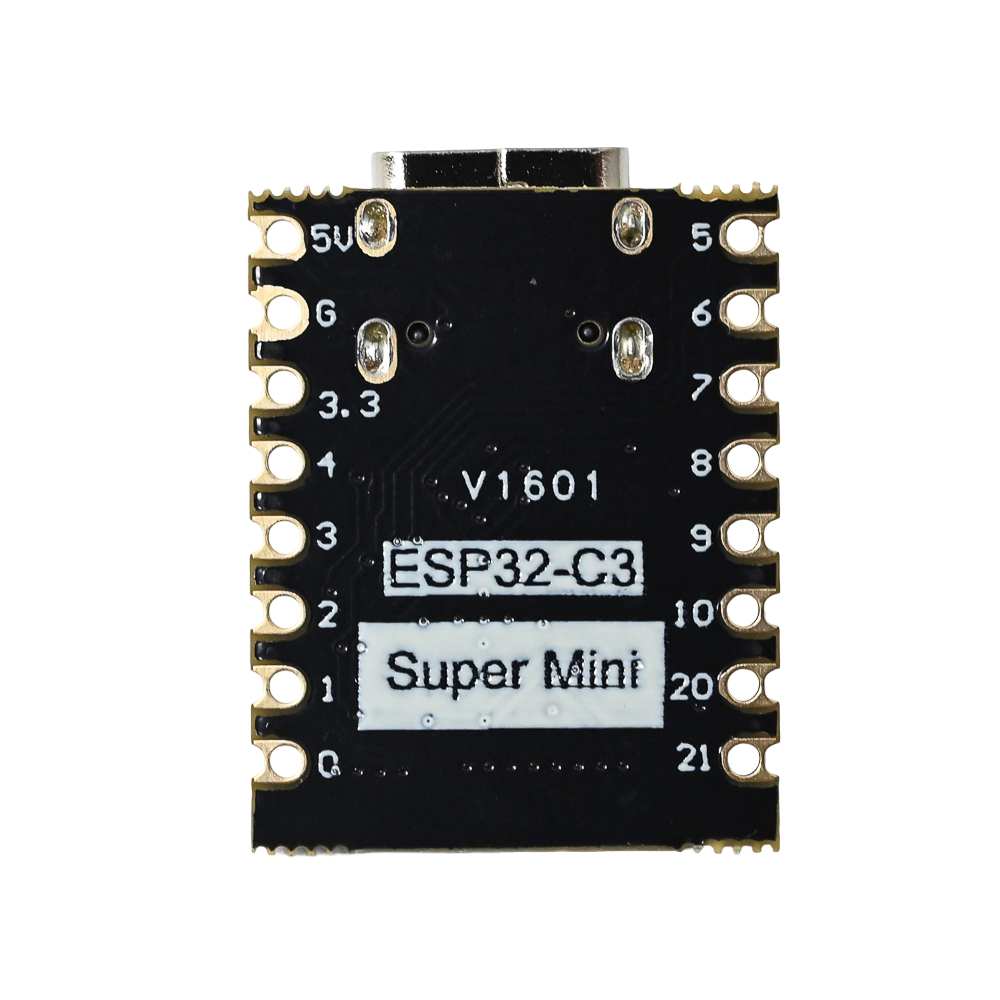
 Design with ESP32-C3 in Cirkit Designer
Introduction
The ESP32-C3 is a low-power system-on-a-chip (SoC) developed by Espressif Systems. It is designed for Internet of Things (IoT) applications, offering integrated Wi-Fi and Bluetooth Low Energy (BLE) capabilities. The ESP32-C3 is based on a RISC-V single-core processor, providing a balance of performance and efficiency. Its compact size, rich set of GPIOs, and support for multiple communication protocols make it an excellent choice for smart devices, sensor networks, and other IoT applications.
Explore Projects Built with ESP32-C3
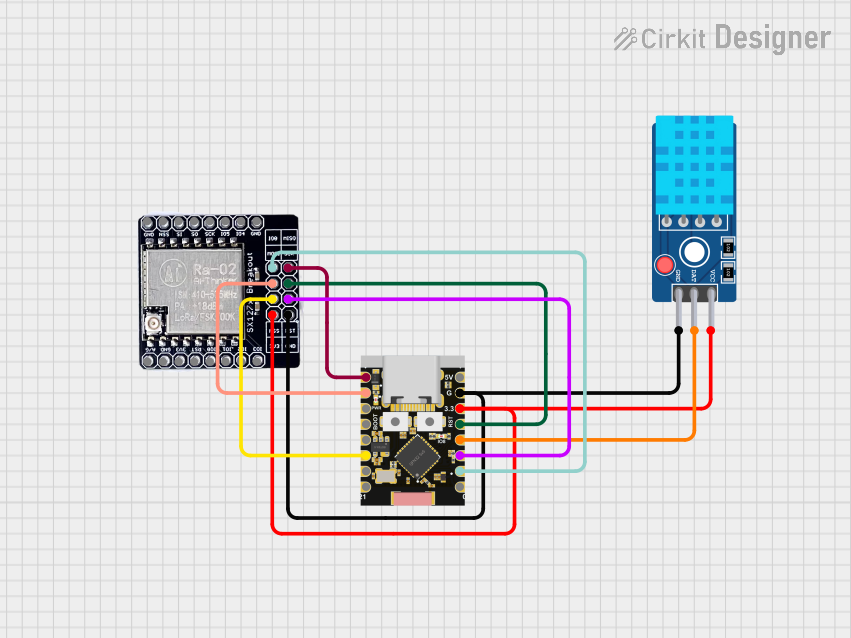 Open Project in Cirkit Designer
 Open Project in Cirkit Designer
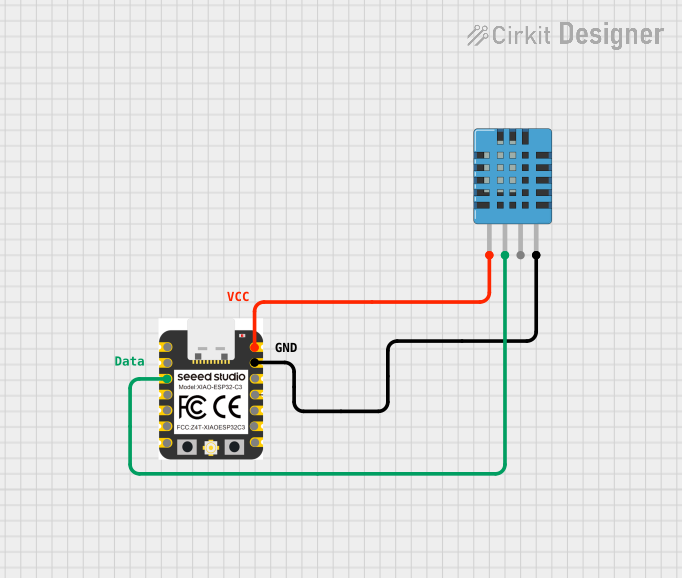 Open Project in Cirkit Designer
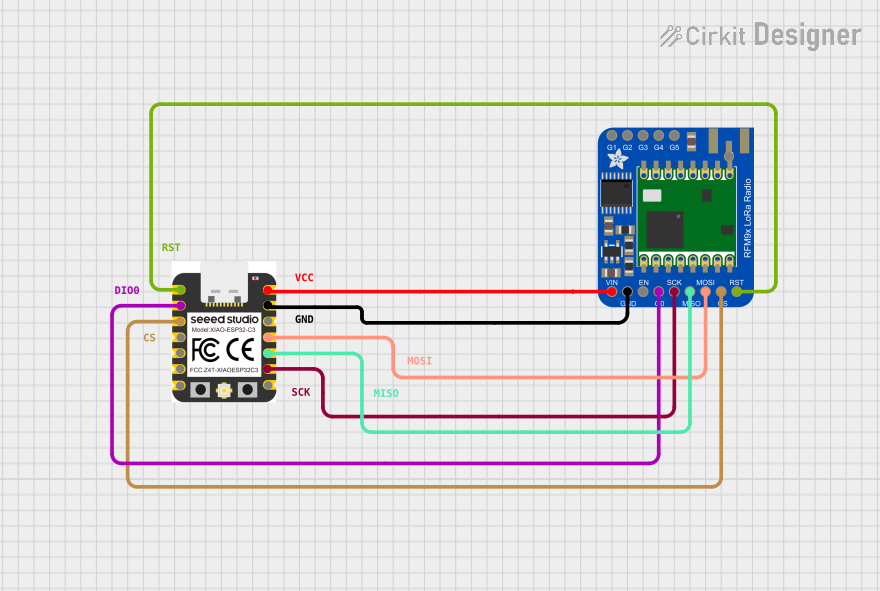 Open Project in Cirkit Designer
Explore Projects Built with ESP32-C3
Open Project in Cirkit DesignerOpen Project in Cirkit DesignerOpen Project in Cirkit DesignerOpen Project in Cirkit DesignerCommon Applications
- Smart home devices (e.g., smart plugs, lights, and thermostats)
- Wearable devices
- Industrial IoT systems
- Wireless sensor networks
- Low-power BLE beacons
- Embedded systems requiring Wi-Fi and BLE connectivity
Technical Specifications
Key Technical Details
| Parameter | Value |
|---|---|
| Manufacturer | Espressif Systems |
| Part Number | ESP32-C3-MINI-1-N4 (Standard 85°C variant) |
| Processor | RISC-V single-core, 32-bit, up to 160 MHz |
| Flash Memory | 4 MB (integrated) |
| RAM | 400 KB (SRAM) |
| Wi-Fi Standard | IEEE 802.11 b/g/n (2.4 GHz) |
| Bluetooth | Bluetooth 5.0 Low Energy (BLE) |
| Operating Voltage | 3.0V to 3.6V |
| GPIO Pins | 22 GPIOs |
| Communication Interfaces | UART, SPI, I2C, I2S, PWM, ADC |
| ADC Resolution | 12-bit |
| Operating Temperature | -40°C to 85°C |
| Power Consumption | Ultra-low power in deep sleep mode (<5 µA) |
| Package Dimensions | 10 mm x 10 mm x 2.4 mm |
Pin Configuration and Descriptions
The ESP32-C3 module has 22 GPIO pins, each capable of multiple functions. Below is a summary of the pin configuration:
| Pin Number | Pin Name | Functionality |
|---|---|---|
| 1 | GND | Ground |
| 2 | 3V3 | Power supply (3.3V) |
| 3 | GPIO0 | General-purpose I/O, boot mode selection |
| 4 | GPIO1 | General-purpose I/O, UART TX |
| 5 | GPIO2 | General-purpose I/O, UART RX |
| 6 | GPIO3 | General-purpose I/O, SPI MOSI |
| 7 | GPIO4 | General-purpose I/O, SPI MISO |
| 8 | GPIO5 | General-purpose I/O, SPI CLK |
| 9 | GPIO6 | General-purpose I/O, I2C SDA |
| 10 | GPIO7 | General-purpose I/O, I2C SCL |
| 11 | GPIO8 | General-purpose I/O, PWM output |
| 12 | GPIO9 | General-purpose I/O, ADC input |
| 13 | GPIO10 | General-purpose I/O, ADC input |
| 14 | GPIO11 | General-purpose I/O, ADC input |
| 15 | GPIO12 | General-purpose I/O, ADC input |
| 16 | GPIO13 | General-purpose I/O, ADC input |
| 17 | GPIO14 | General-purpose I/O, ADC input |
| 18 | GPIO15 | General-purpose I/O, ADC input |
| 19 | GPIO16 | General-purpose I/O, ADC input |
| 20 | GPIO17 | General-purpose I/O, ADC input |
| 21 | EN | Enable pin (active high) |
| 22 | RST | Reset pin |
Usage Instructions
How to Use the ESP32-C3 in a Circuit
- Power Supply: Connect the 3V3 pin to a 3.3V power source and the GND pin to ground.
- Boot Mode: To enter bootloader mode for programming, connect GPIO0 to ground during reset.
- Communication Interfaces: Use the UART, SPI, or I2C pins for communication with other devices.
- Programming: The ESP32-C3 can be programmed using the Arduino IDE, Espressif IDF, or other compatible tools.
Example: Connecting ESP32-C3 to an Arduino UNO
The ESP32-C3 can be used as a standalone microcontroller or as a Wi-Fi/BLE module for an Arduino UNO. Below is an example of using the ESP32-C3 with the Arduino IDE:
Arduino Code Example: Blink an LED
// This example demonstrates how to blink an LED connected to GPIO8 of the ESP32-C3.
// Ensure the LED's anode is connected to GPIO8 and the cathode is connected to GND.

#define LED_PIN 8  // Define the GPIO pin connected to the LED

void setup() {
  pinMode(LED_PIN, OUTPUT);  // Set the LED pin as an output
}

void loop() {
  digitalWrite(LED_PIN, HIGH);  // Turn the LED on
  delay(1000);                  // Wait for 1 second
  digitalWrite(LED_PIN, LOW);   // Turn the LED off
  delay(1000);                  // Wait for 1 second
}
Important Considerations
- Voltage Levels: Ensure all connected devices operate at 3.3V logic levels to avoid damaging the ESP32-C3.
- Antenna Placement: For optimal Wi-Fi and BLE performance, avoid placing metal objects near the module's antenna.
- Deep Sleep Mode: Use deep sleep mode to minimize power consumption in battery-powered applications.
- Boot Mode: Always disconnect GPIO0 from ground after programming to allow normal operation.
Troubleshooting and FAQs
Common Issues and Solutions
ESP32-C3 Not Detected by Computer
- Ensure the correct USB-to-serial driver is installed.
- Verify the USB cable is functional and supports data transfer.
Wi-Fi Connection Fails
- Check the Wi-Fi credentials in your code.
- Ensure the ESP32-C3 is within range of the Wi-Fi router.
Program Upload Fails
- Ensure GPIO0 is connected to ground during reset for bootloader mode.
- Verify the correct COM port and board settings in the Arduino IDE.
Module Overheats
- Check for short circuits or excessive current draw in your circuit.
- Ensure the module is operating within the specified voltage range (3.0V to 3.6V).
FAQs
Q: Can the ESP32-C3 operate on 5V?
A: No, the ESP32-C3 operates at 3.3V. Using 5V can damage the module.
Q: How do I reset the ESP32-C3?
A: Use the RST pin to reset the module or press the reset button if available.
Q: Can I use the ESP32-C3 for both Wi-Fi and BLE simultaneously?
A: Yes, the ESP32-C3 supports concurrent Wi-Fi and BLE operation.
Q: What is the maximum range of the ESP32-C3's Wi-Fi?
A: The range depends on environmental factors but typically extends up to 100 meters in open space.
This concludes the documentation for the ESP32-C3. For further details, refer to the official datasheet provided by Espressif Systems.