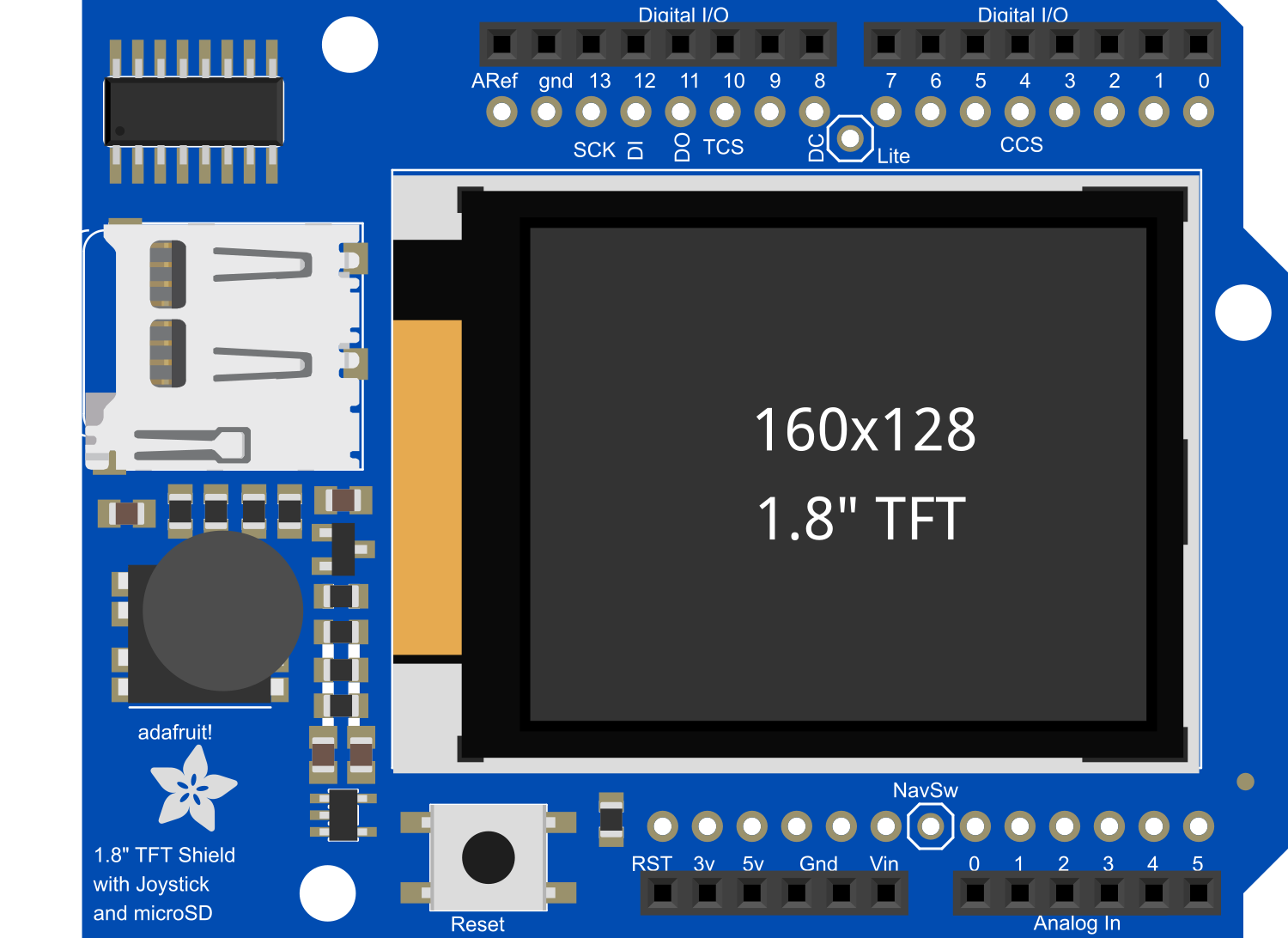
The Adafruit 1.8 inch TFT Shield is a vibrant and colorful display module designed for Arduino boards. This shield allows users to add a small yet high-quality display to their Arduino projects, enabling the creation of graphical interfaces, data visualization, and dynamic user interactions. It is commonly used in handheld devices, DIY gaming consoles, and interactive projects.
Explore Projects Built with Adafruit 1.8 inch TFT Shield
Use Cirkit Designer to design, explore, and prototype these projects online. Some projects support real-time simulation. Click "Open Project" to start designing instantly!
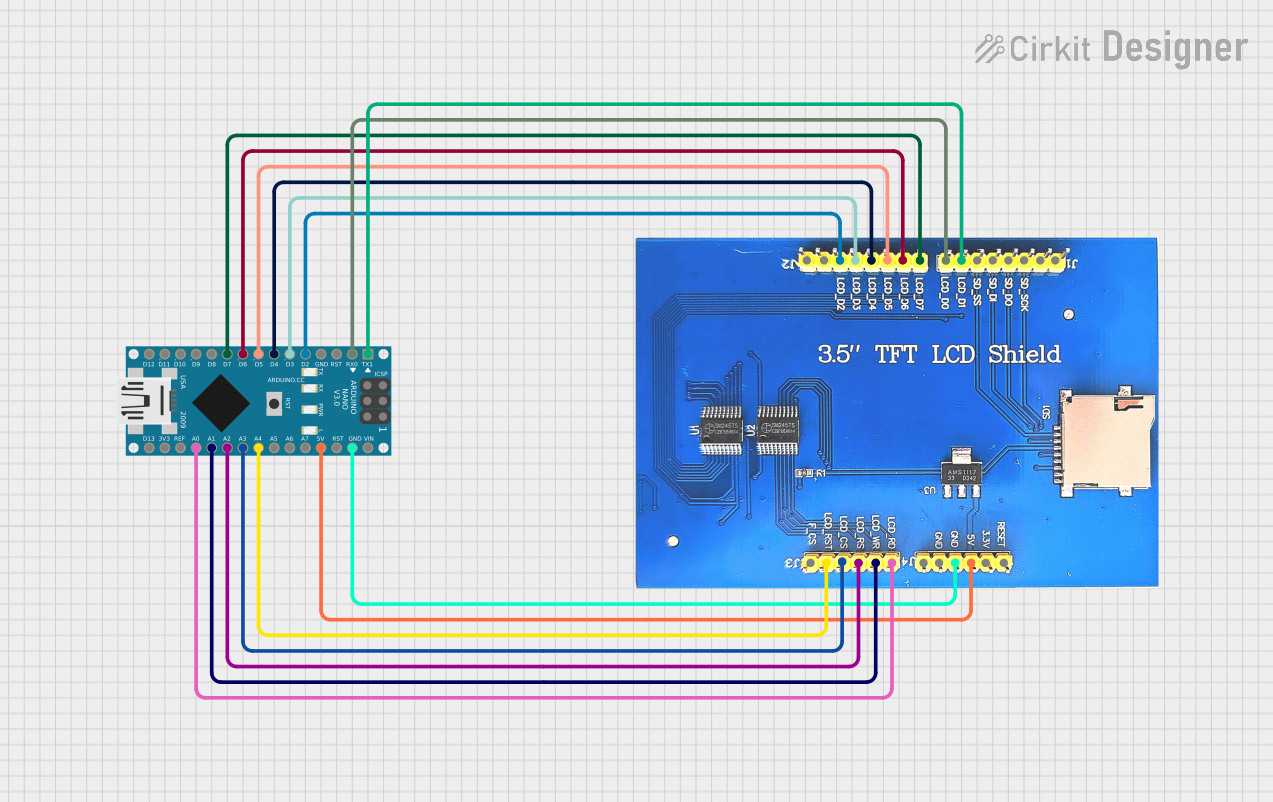
This circuit interfaces an Arduino Nano with a 3.5-inch TFT LCD Shield, allowing the Arduino to control the display and read/write data to it. The connections include data lines, control signals, and power, enabling the Arduino to drive the LCD for various display applications.
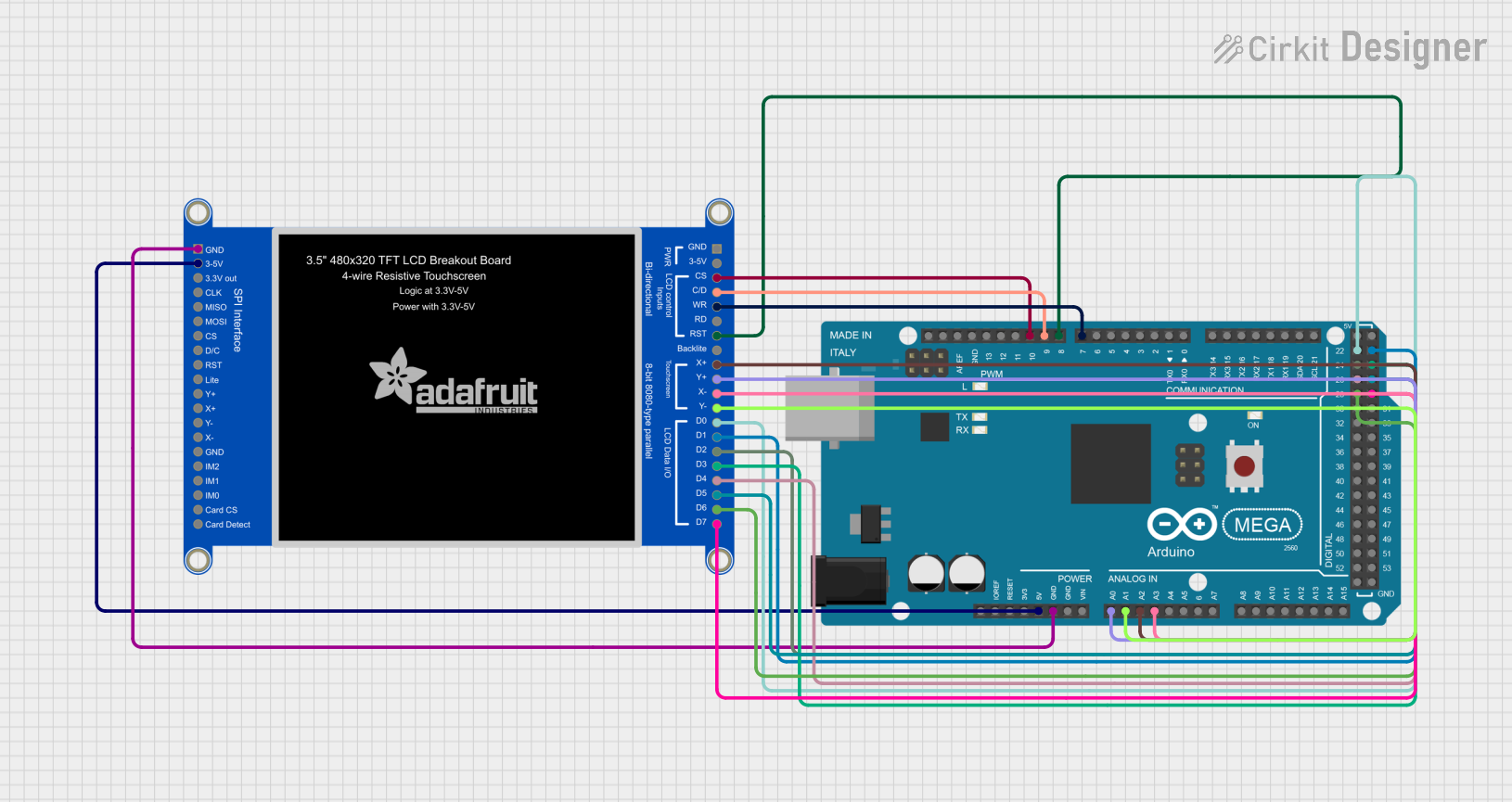
This circuit connects an Arduino Mega 2560 microcontroller to a 3.5-inch 480x320 TFT LCD display. The Arduino provides power, ground, and digital signals to control the display, including data lines for pixel information and control lines for reset, write, and command/data selection. The embedded code initializes the display and configures the Arduino's pins for communication, likely to create a user interface or visual output for a project.
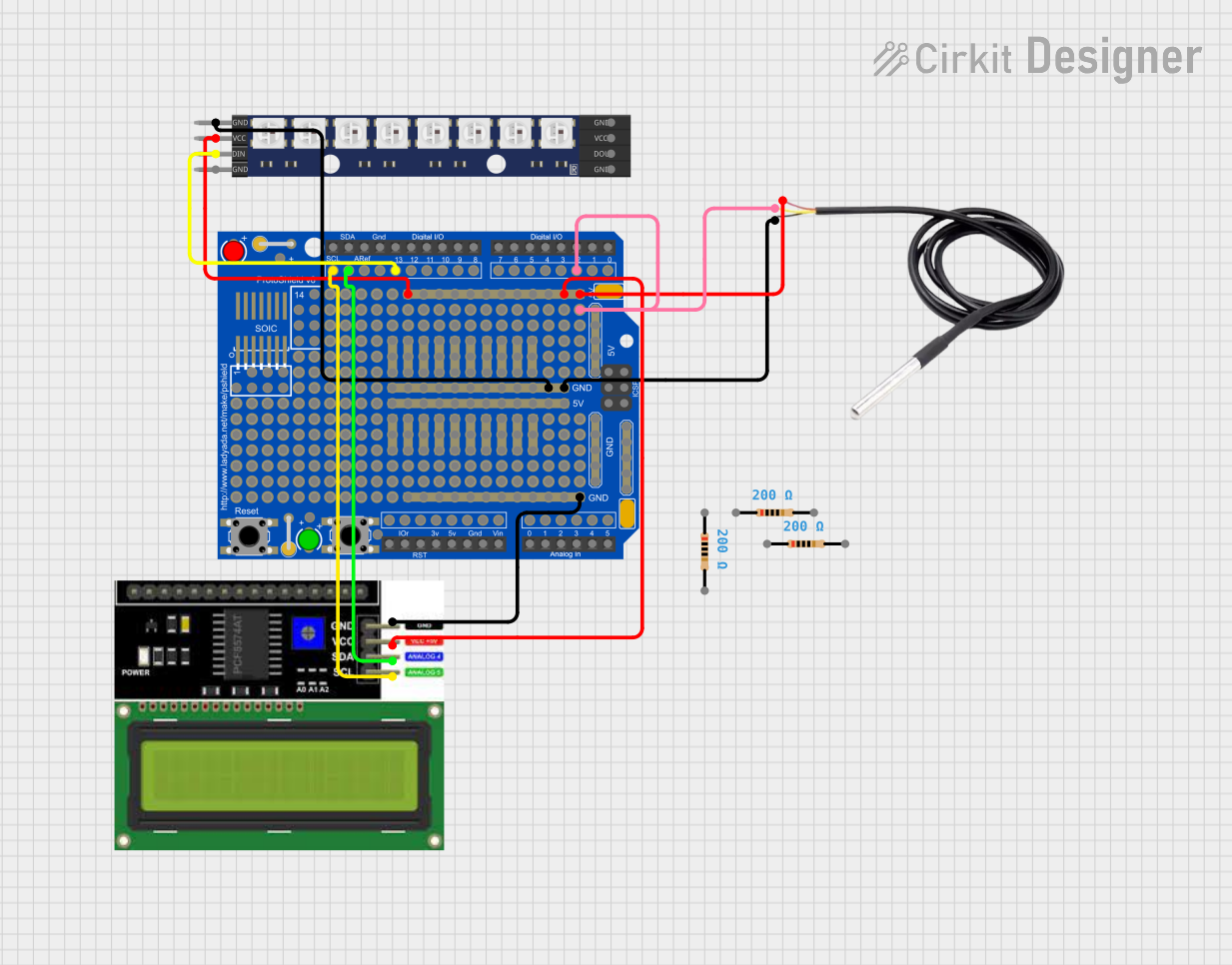
This circuit features an Adafruit Proto Shield R3 configured with a DS18B20 temperature sensor, a WS2812 RGB LED matrix, and an LCD I2C display. The microcontroller on the Proto Shield reads the temperature from the DS18B20 sensor and displays it on the LCD. It also controls the LED matrix to show random colors and indicates temperature status with onboard LEDs.
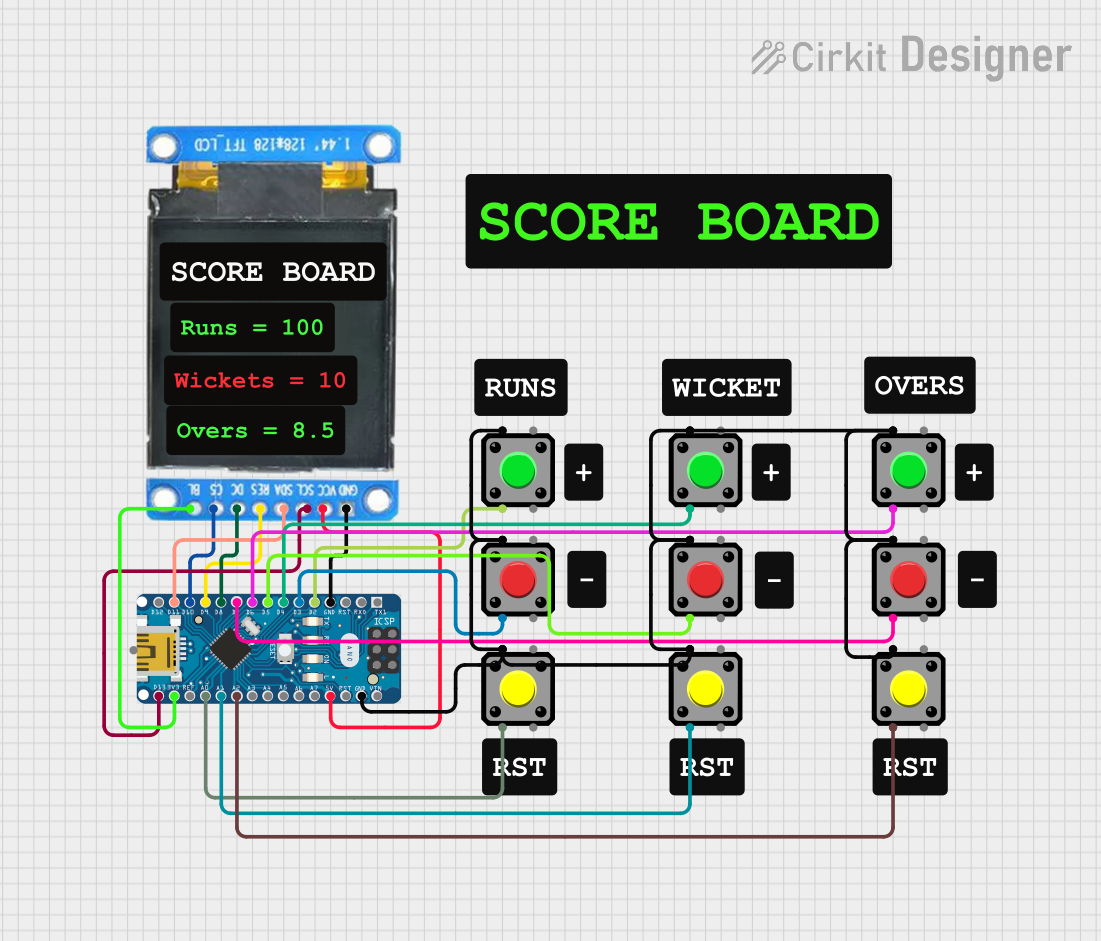
This circuit features an Arduino Nano microcontroller connected to a ST7735 128x128 1.44 TFT I2C Color display and multiple pushbuttons. The display is interfaced with the Arduino via digital pins for control signals and SPI pins for data transfer. The pushbuttons are connected to various digital and analog input pins on the Arduino, likely intended for user input to control the display or other functions within the code.
Educational tools for learning electronics and programming
Technical Specifications
Key Technical Details
Display Size: 1.8 inches diagonal
Resolution: 128x160 pixels
Interface: SPI
Operating Voltage: 3.3V to 5V (logic level shifters included)
Current Draw: 20mA (typical), 50mA (max with backlight)
Screen: TFT LCD with 18-bit color (262,144 colors)
Backlight: LED
Pin Configuration and Descriptions
Pin Number
Function
Description
1
GND
Ground
2
VCC
Power supply (3.3V to 5V)
3
CS
Chip Select for the TFT (active low)
4
RESET
Reset pin for the TFT
5
D/C
Data/Command control pin
6
MOSI
Master Out Slave In for SPI communication
7
SCK
Serial Clock for SPI communication
8
LED
Backlight control (anode)
9
MISO
Master In Slave Out for SPI communication (unused)
10
SDA
I2C Data Line for touchscreen (if available)
11
SCL
I2C Clock Line for touchscreen (if available)
Usage Instructions
How to Use the Component in a Circuit
Mounting the Shield: Align the pins of the Adafruit 1.8 inch TFT Shield with the headers on your Arduino board and press down gently to ensure a secure connection.
Powering the Shield: The shield can be powered directly from the Arduino's 5V pin, as it includes onboard logic level shifters.
Programming the Shield: Use the Adafruit_GFX and Adafruit_ST7735 libraries for interfacing with the display. These libraries provide functions for drawing text, shapes, and images.
Important Considerations and Best Practices
Library Installation: Before using the shield, install the Adafruit_GFX and Adafruit_ST7735 libraries through the Arduino Library Manager.
Logic Levels: Although the shield includes level shifters, always ensure that the logic levels match your Arduino board to prevent damage.
Backlight Control: The backlight can be controlled via PWM to adjust brightness. Be cautious not to exceed the maximum current rating.
Screen Protection: The TFT is delicate. Avoid applying pressure to the screen and consider adding a protective layer or case.
Example Code for Arduino UNO
#include <Adafruit_GFX.h>    // Core graphics library
#include <Adafruit_ST7735.h> // Hardware-specific library for ST7735

// Pin definitions for the Adafruit 1.8" TFT Shield
#define TFT_CS     10
#define TFT_RST    9  // You can also connect this to the Arduino reset
#define TFT_DC     8

// Initialize Adafruit ST7735 TFT library
Adafruit_ST7735 tft = Adafruit_ST7735(TFT_CS, TFT_DC, TFT_RST);

void setup() {
  tft.initR(INITR_BLACKTAB);   // Initialize display with black tab
  tft.fillScreen(ST7735_BLACK); // Fill screen with black color
}

void loop() {
  tft.setCursor(0, 0);         // Set cursor at top-left corner
  tft.setTextColor(ST7735_WHITE); // Set text color to white
  tft.setTextSize(1);          // Set text size to normal
  tft.println("Hello, World!"); // Print a message to the screen
  delay(1000);                 // Wait for a second
  tft.fillScreen(ST7735_BLACK); // Clear the screen
  delay(1000);                 // Wait for a second
}
Troubleshooting and FAQs
Common Issues Users Might Face
Display Not Turning On: Ensure that the shield is properly seated on the Arduino and that the power supply is adequate.
Garbled or No Display: Check that the correct pins are defined in your code and that the libraries are up to date.
Dim Display: Adjust the backlight control or check if the Arduino is supplying sufficient current.
Solutions and Tips for Troubleshooting
Recheck Connections: Double-check that all connections are secure and correct.
Update Libraries: Make sure you have the latest version of the Adafruit_GFX and Adafruit_ST7735 libraries.
Power Supply: Verify that the power supply is within the specified range and that the Arduino board is capable of delivering the required current.
FAQs
Q: Can I use this shield with other microcontrollers besides Arduino?
A: Yes, as long as the microcontroller supports SPI communication and operates at compatible logic levels.
Q: How do I install the required libraries?
A: In the Arduino IDE, go to Sketch > Include Library > Manage Libraries. Search for "Adafruit_GFX" and "Adafruit_ST7735" and install them.
Q: Can I display images on the TFT Shield?
A: Yes, you can convert images to a bitmap array and use the library functions to display them on the screen.
Q: Is the touchscreen functionality available on this shield?
A: Some versions of the Adafruit 1.8 inch TFT Shield may include a touchscreen. If available, use the Adafruit_STMPE610 library for touchscreen functionality.

 Open Project in Cirkit Designer