Cirkit Designer Logo
Cirkit Designer
Your all-in-one circuit design IDE
Home / 
Component Documentation

How to Use 120V Outlet: Examples, Pinouts, and Specs
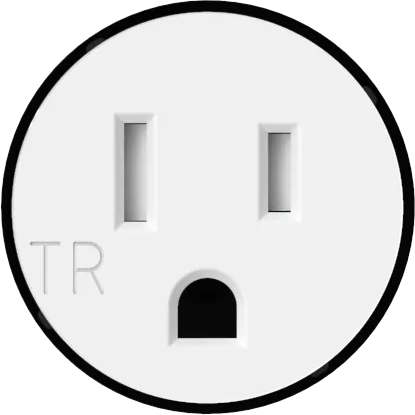

Image of 120V Outlet
Cirkit Designer LogoDesign with 120V Outlet in Cirkit Designer

Introduction

A 120V outlet is a standard electrical outlet that provides 120 volts of alternating current (AC) power. It is commonly used in residential and commercial buildings for powering various electrical devices such as lamps, computers, and kitchen appliances. This documentation provides detailed information on the technical specifications, usage instructions, and troubleshooting tips for a 120V outlet.

Explore Projects Built with 120V Outlet
Use Cirkit Designer to design, explore, and prototype these projects online. Some projects support real-time simulation. Click "Open Project" to start designing instantly!
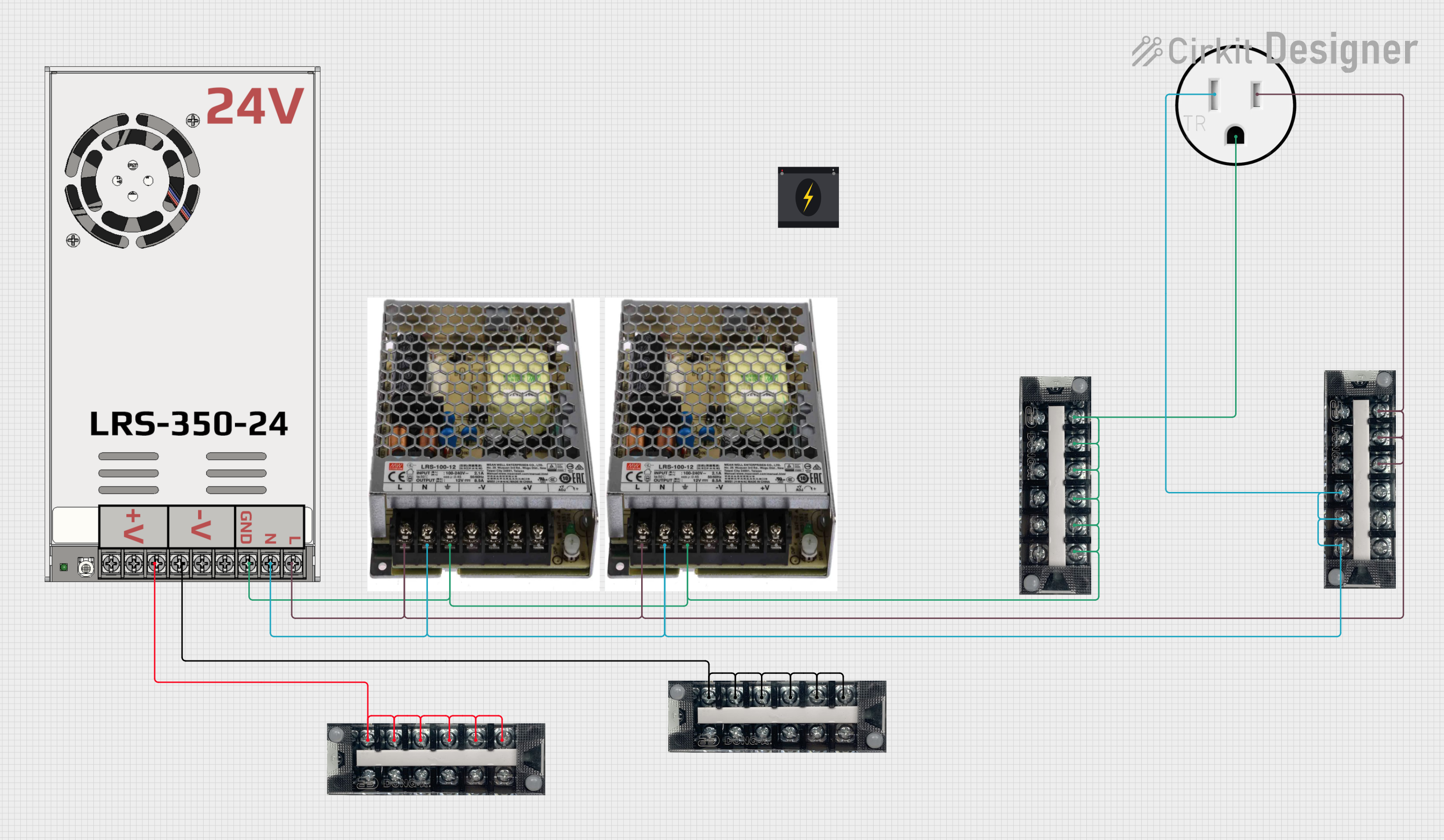
Modular Power Distribution System with Multiple SMPS Units and 120V Outlet
Image of Cellion-Tesla: A project utilizing 120V Outlet in a practical application
This circuit is designed to convert 240V AC power to both 12V and 24V DC outputs using multiple SMPS units. Terminal blocks are used to organize and distribute the power, while a 120V outlet provides additional AC power access. The circuit is likely used for powering various electronic devices that require different voltage levels.
Cirkit Designer LogoOpen Project in Cirkit Designer
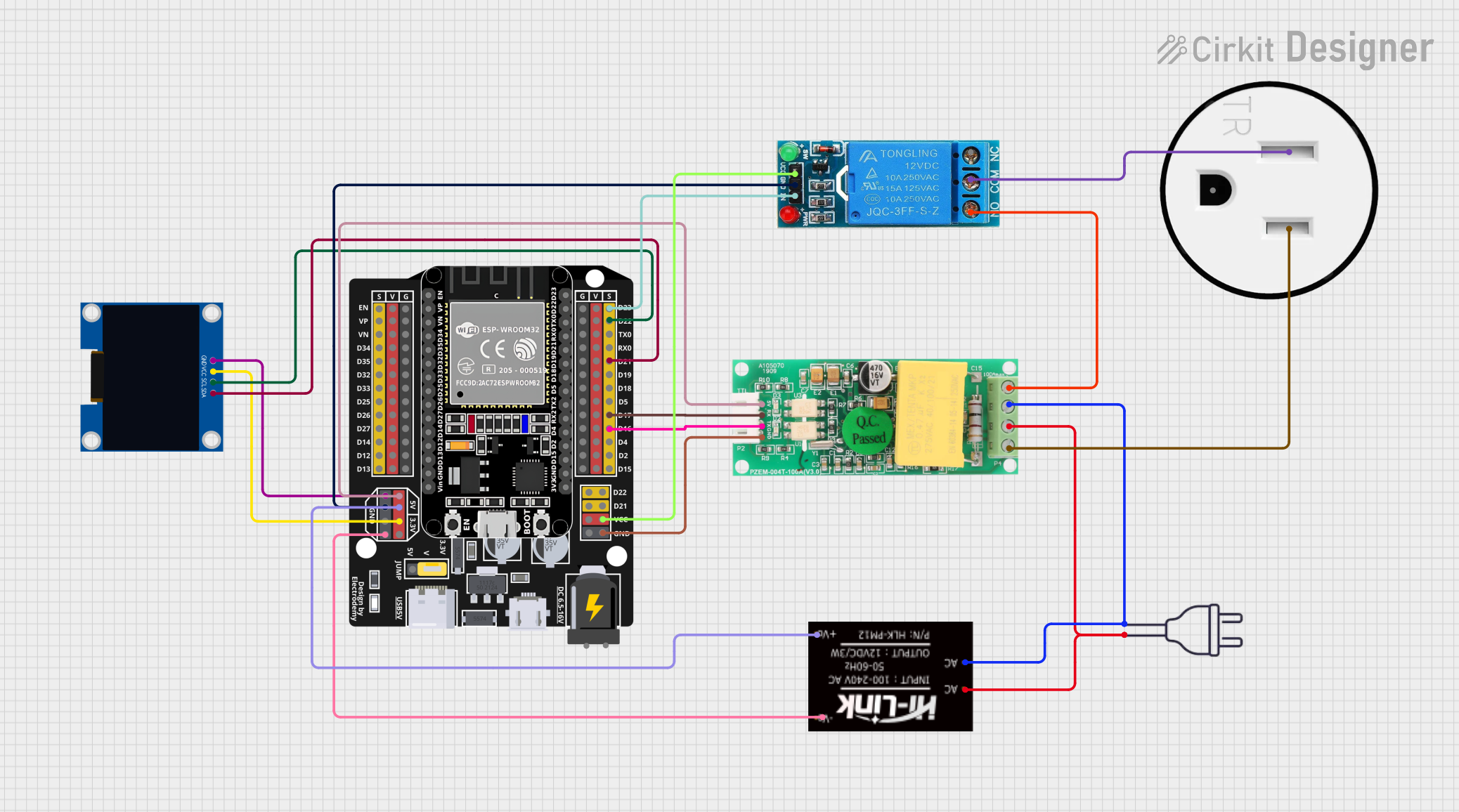
ESP32-Based Smart Power Monitoring and Control System with OLED Display
Image of Sistem monitoring terminal listrik rumah tangga: A project utilizing 120V Outlet in a practical application
This circuit is designed to monitor and control a 120V AC outlet using an ESP32 microcontroller. It includes a PZEM004t module for measuring voltage, current, and power, and a 12V relay to switch the outlet on and off. An OLED display is used to show real-time data, and the HLK-PM12 module provides the necessary 5V and 3.3V power to the components.
Cirkit Designer LogoOpen Project in Cirkit Designer
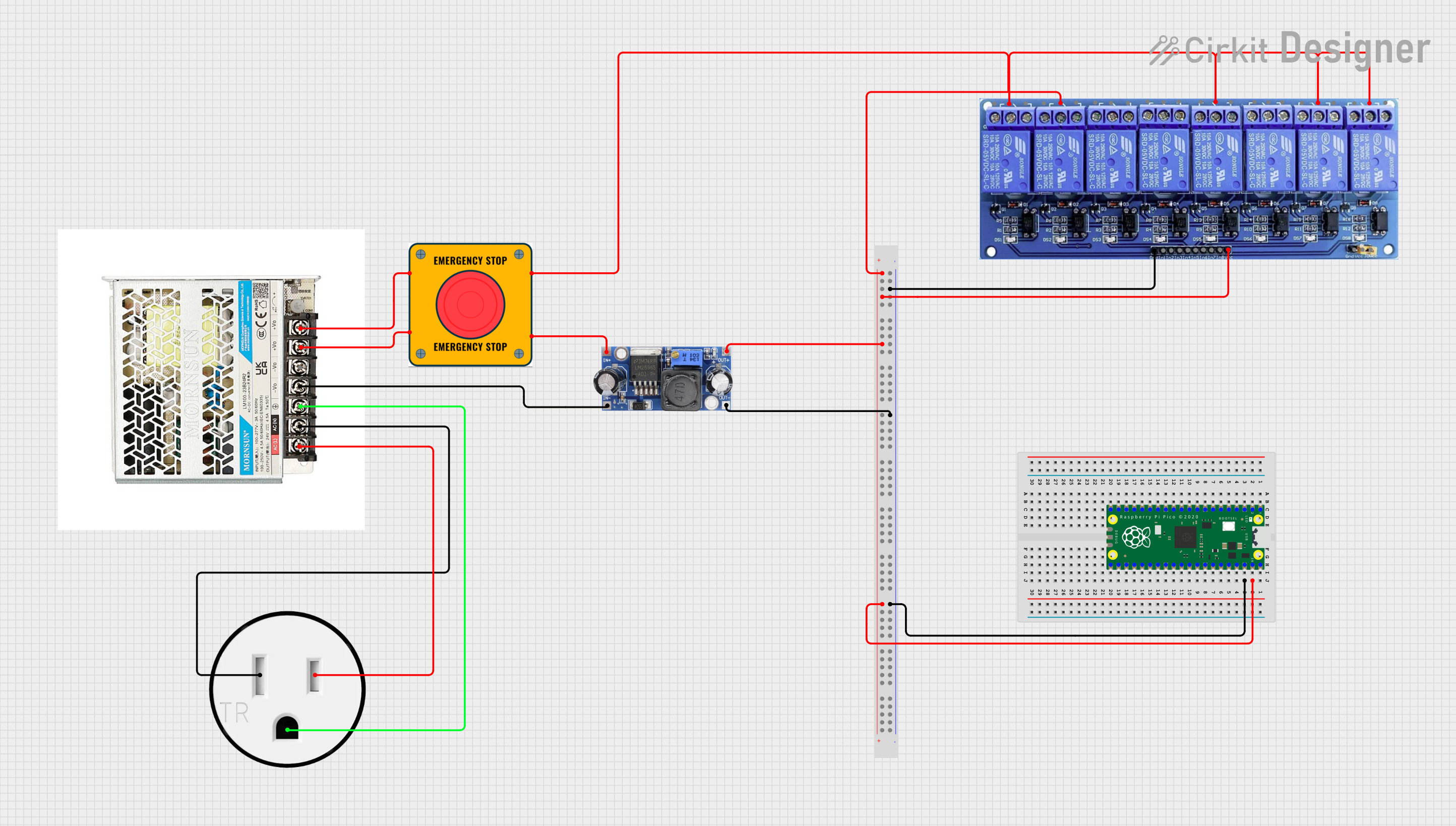
Raspberry Pi Pico Controlled Smart Relay System with Emergency Stop
Image of Labo power: A project utilizing 120V Outlet in a practical application
This circuit converts 120V AC power from an outlet to a regulated DC voltage using an AC/DC converter and a DC/DC converter. It includes a Raspberry Pi Pico microcontroller connected to an 8-channel relay module for controlling various devices, with an emergency stop button integrated for safety.
Cirkit Designer LogoOpen Project in Cirkit Designer
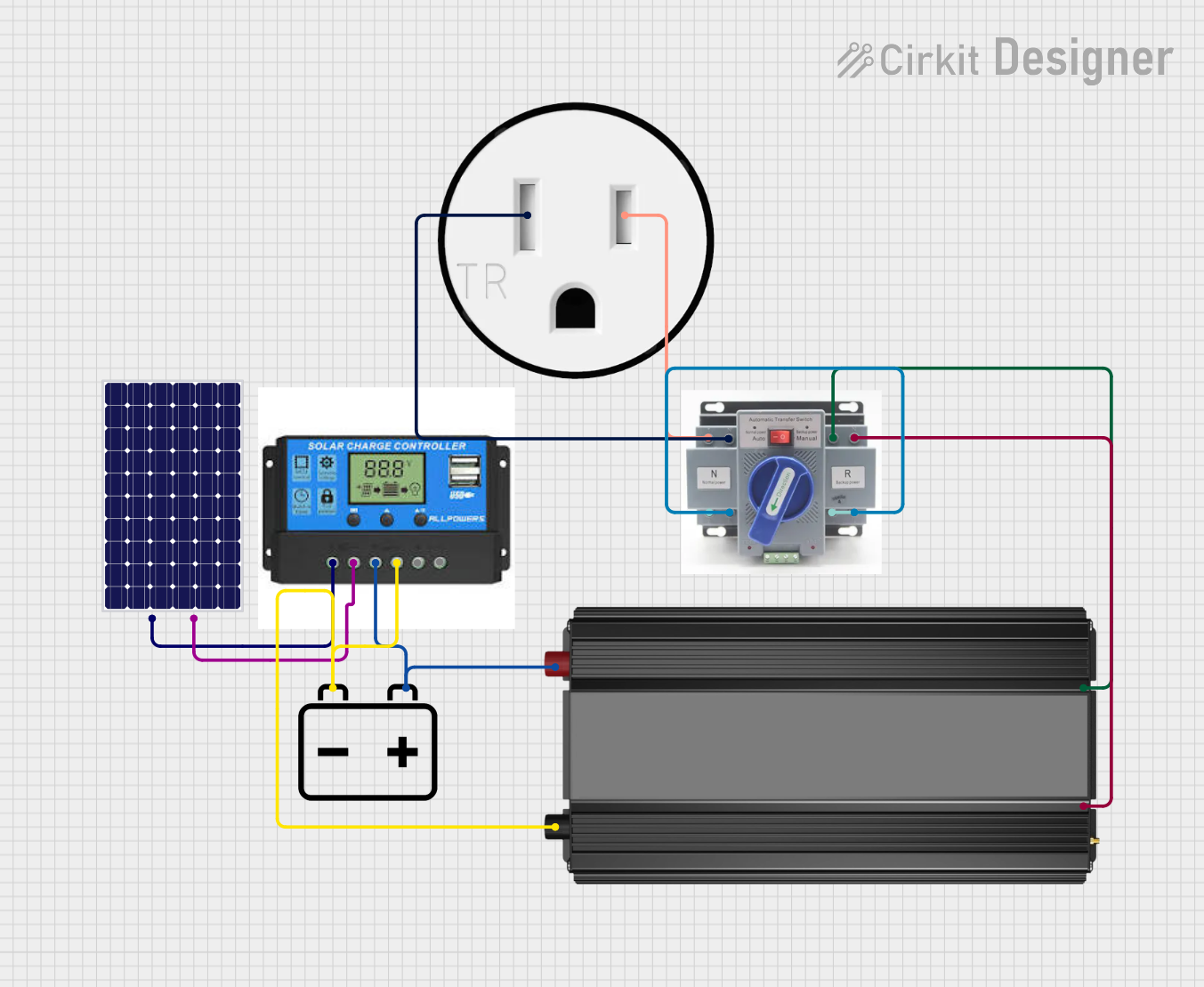
Solar-Powered Battery Backup System with Automatic Transfer Switch and AC Outlet
Image of last: A project utilizing 120V Outlet in a practical application
This circuit is designed to harness solar energy, regulate its storage, and convert it for use in standard AC appliances. A solar panel charges a 12V battery through a charge controller, which ensures safe charging and discharging of the battery. The power inverter then converts the stored DC power from the battery into AC power, which is supplied to a 120V outlet through an Automatic Transfer Switch (ATS), ensuring power continuity and safety.
Cirkit Designer LogoOpen Project in Cirkit Designer

Explore Projects Built with 120V Outlet

Use Cirkit Designer to design, explore, and prototype these projects online. Some projects support real-time simulation. Click "Open Project" to start designing instantly!
Image of Cellion-Tesla: A project utilizing 120V Outlet in a practical application
Modular Power Distribution System with Multiple SMPS Units and 120V Outlet
This circuit is designed to convert 240V AC power to both 12V and 24V DC outputs using multiple SMPS units. Terminal blocks are used to organize and distribute the power, while a 120V outlet provides additional AC power access. The circuit is likely used for powering various electronic devices that require different voltage levels.
Cirkit Designer LogoOpen Project in Cirkit Designer
Image of Sistem monitoring terminal listrik rumah tangga: A project utilizing 120V Outlet in a practical application
ESP32-Based Smart Power Monitoring and Control System with OLED Display
This circuit is designed to monitor and control a 120V AC outlet using an ESP32 microcontroller. It includes a PZEM004t module for measuring voltage, current, and power, and a 12V relay to switch the outlet on and off. An OLED display is used to show real-time data, and the HLK-PM12 module provides the necessary 5V and 3.3V power to the components.
Cirkit Designer LogoOpen Project in Cirkit Designer
Image of Labo power: A project utilizing 120V Outlet in a practical application
Raspberry Pi Pico Controlled Smart Relay System with Emergency Stop
This circuit converts 120V AC power from an outlet to a regulated DC voltage using an AC/DC converter and a DC/DC converter. It includes a Raspberry Pi Pico microcontroller connected to an 8-channel relay module for controlling various devices, with an emergency stop button integrated for safety.
Cirkit Designer LogoOpen Project in Cirkit Designer
Image of last: A project utilizing 120V Outlet in a practical application
Solar-Powered Battery Backup System with Automatic Transfer Switch and AC Outlet
This circuit is designed to harness solar energy, regulate its storage, and convert it for use in standard AC appliances. A solar panel charges a 12V battery through a charge controller, which ensures safe charging and discharging of the battery. The power inverter then converts the stored DC power from the battery into AC power, which is supplied to a 120V outlet through an Automatic Transfer Switch (ATS), ensuring power continuity and safety.
Cirkit Designer LogoOpen Project in Cirkit Designer

Technical Specifications

Key Technical Details

Parameter Value
Voltage 120V AC
Current Rating 15A or 20A
Frequency 60 Hz
Power Rating 1800W (for 15A outlet)
Outlet Type NEMA 5-15 or NEMA 5-20
Grounding Yes
Number of Outlets 2 (standard duplex)

Pin Configuration and Descriptions

Pin Number Description Function
1 Hot (Live) Provides 120V AC power
2 Neutral Returns current to the power source
3 Ground Safety ground to prevent electric shock

Usage Instructions

How to Use the Component in a Circuit

  1. Safety First: Ensure the power is turned off at the circuit breaker before working with the outlet.
  2. Wiring the Outlet:
    • Connect the Hot (Live) wire (usually black or red) to the brass-colored screw.
    • Connect the Neutral wire (usually white) to the silver-colored screw.
    • Connect the Ground wire (usually green or bare copper) to the green-colored screw.
  3. Mounting the Outlet: Secure the outlet into the electrical box using the provided screws.
  4. Testing: Turn the power back on and use a voltage tester to ensure the outlet is properly wired and functioning.

Important Considerations and Best Practices

  • Use Proper Tools: Always use insulated tools when working with electrical components.
  • Check Local Codes: Ensure that the installation complies with local electrical codes and standards.
  • Avoid Overloading: Do not exceed the outlet's current rating to prevent overheating and potential fire hazards.
  • Regular Inspection: Periodically check the outlet for signs of wear or damage and replace if necessary.

Troubleshooting and FAQs

Common Issues Users Might Face

  1. Outlet Not Working:

    • Solution: Check the circuit breaker to ensure it is not tripped. Verify that the outlet is properly wired and that there is no loose connection.
  2. Outlet Sparks When Plugging In:

    • Solution: This could be due to a loose connection or a faulty outlet. Turn off the power and inspect the wiring. Replace the outlet if necessary.
  3. Outlet Feels Warm:

    • Solution: This may indicate an overloaded circuit or a loose connection. Ensure that the total load does not exceed the outlet's rating and check for secure connections.

FAQs

Q1: Can I use a 120V outlet for high-power appliances?

  • A1: It depends on the appliance's power requirements. Ensure that the total load does not exceed the outlet's current rating (15A or 20A).

Q2: How do I know if my outlet is grounded?

  • A2: Use a receptacle tester to check for proper grounding. The tester will indicate if the outlet is correctly wired and grounded.

Q3: Can I install a 120V outlet outdoors?

  • A3: Yes, but you must use a weather-resistant outlet and cover, and ensure it is installed in a GFCI (Ground Fault Circuit Interrupter) protected circuit.

By following this documentation, users can safely and effectively use a 120V outlet in their electrical projects. Whether you are a beginner or an experienced user, these guidelines will help you ensure a safe and reliable installation.