
How to Use PMS7003 : Examples, Pinouts, and Specs
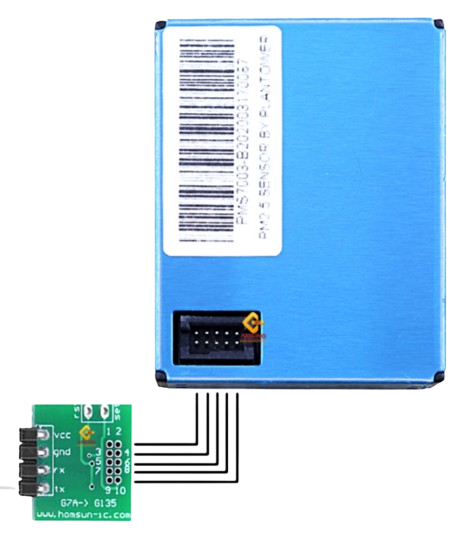
 Design with PMS7003 in Cirkit Designer
Introduction
The PMS7003 is a digital particulate matter sensor designed to measure PM1.0, PM2.5, and PM10 concentrations in the air. It utilizes advanced laser scattering technology to detect and quantify airborne particles with high precision. The sensor outputs real-time data via a UART (serial) interface, making it easy to integrate into various systems. Its compact size, low power consumption, and reliable performance make it ideal for air quality monitoring applications.
Explore Projects Built with PMS7003
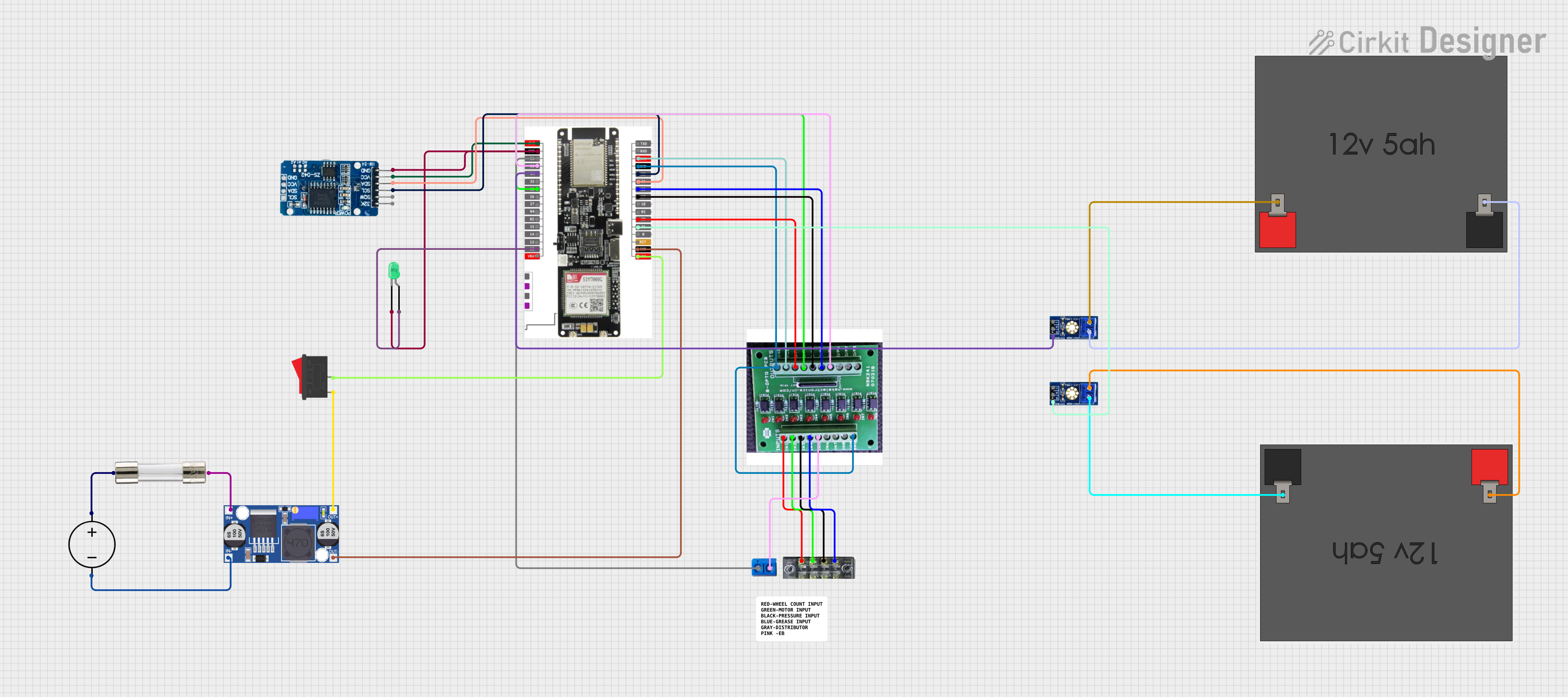 Open Project in Cirkit Designer
 Open Project in Cirkit Designer
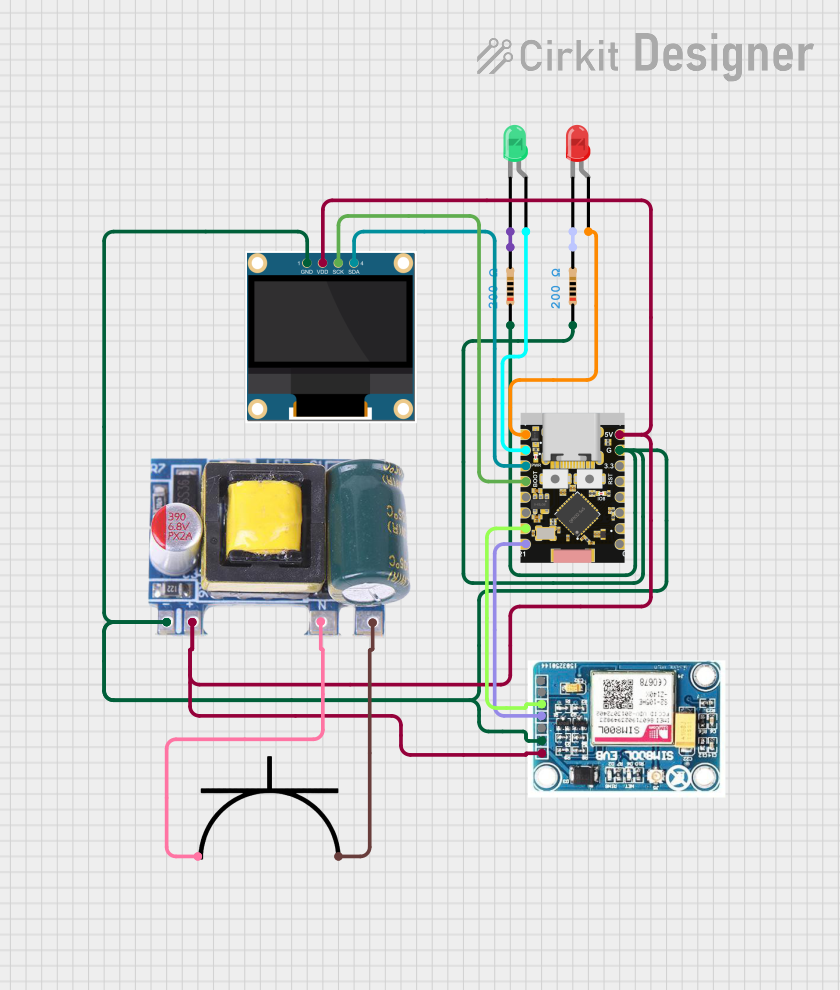 Open Project in Cirkit Designer
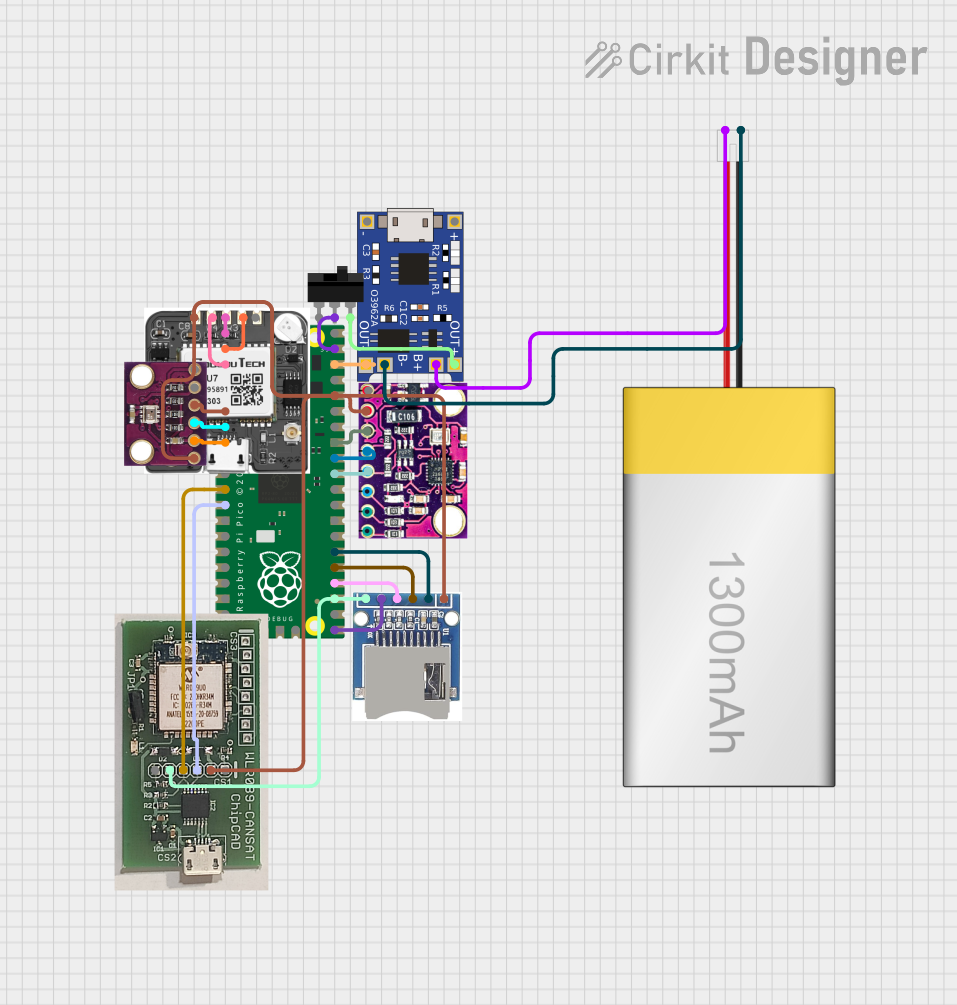 Open Project in Cirkit Designer
Explore Projects Built with PMS7003
Open Project in Cirkit DesignerOpen Project in Cirkit DesignerOpen Project in Cirkit DesignerOpen Project in Cirkit DesignerCommon Applications
- Indoor and outdoor air quality monitoring
- Smart home devices and IoT systems
- HVAC (Heating, Ventilation, and Air Conditioning) systems
- Environmental monitoring stations
- Air purifiers and filtration systems
Technical Specifications
Below are the key technical details of the PMS7003 sensor:
| Parameter | Value |
|---|---|
| Measurement Range | 0.3 µm to 10 µm (particle size) |
| PM Measurement Types | PM1.0, PM2.5, PM10 |
| Output Interface | UART (3.3V logic level) |
| Operating Voltage | 4.5V to 5.5V |
| Operating Current | ≤ 100 mA |
| Standby Current | ≤ 200 µA |
| Response Time | ≤ 1 second |
| Operating Temperature | -10°C to 60°C |
| Operating Humidity | 0% to 99% RH (non-condensing) |
| Dimensions | 50 mm × 38 mm × 21 mm |
| Weight | ~50 g |
Pin Configuration and Descriptions
The PMS7003 has a 7-pin connector for power, data communication, and control. Below is the pinout:
| Pin Number | Pin Name | Description |
|---|---|---|
| 1 | VCC | Power supply input (4.5V to 5.5V) |
| 2 | GND | Ground |
| 3 | SET | Sleep mode control (Low: Sleep, High: Active) |
| 4 | RX | UART Receive (3.3V logic level) |
| 5 | TX | UART Transmit (3.3V logic level) |
| 6 | RESET | Reset pin (Low: Reset, High: Normal operation) |
| 7 | NC | Not connected |
Usage Instructions
How to Use the PMS7003 in a Circuit
- Power Supply: Connect the VCC pin to a 5V power source and the GND pin to ground.
- UART Communication: Connect the TX pin of the PMS7003 to the RX pin of your microcontroller, and the RX pin of the PMS7003 to the TX pin of your microcontroller. Ensure the microcontroller operates at 3.3V logic levels or use a level shifter if necessary.
- Sleep Mode Control: Use the SET pin to toggle between active and sleep modes. Pull the pin high for active mode and low for sleep mode.
- Reset: Optionally, connect the RESET pin to a GPIO pin on your microcontroller for manual resets.
Important Considerations
- Airflow: Ensure the sensor is placed in an environment with proper airflow for accurate readings. Avoid obstructing the air inlet and outlet.
- Orientation: Install the sensor in the recommended orientation (horizontal) for optimal performance.
- Warm-Up Time: Allow the sensor to warm up for 30 seconds after powering on to stabilize readings.
- UART Settings: Configure the UART interface with the following settings:
- Baud Rate: 9600 bps
- Data Bits: 8
- Stop Bits: 1
- Parity: None
Example Code for Arduino UNO
Below is an example of how to interface the PMS7003 with an Arduino UNO to read PM2.5 data:
#include <SoftwareSerial.h>

// Define the RX and TX pins for SoftwareSerial
SoftwareSerial pmsSerial(10, 11); // RX = Pin 10, TX = Pin 11

// Buffer to store incoming data from the PMS7003
uint8_t pmsData[32];

void setup() {
  Serial.begin(9600); // Initialize Serial Monitor
  pmsSerial.begin(9600); // Initialize PMS7003 UART communication

  Serial.println("PMS7003 Sensor Initialized");
}

void loop() {
  if (pmsSerial.available() >= 32) { // Check if 32 bytes are available
    for (int i = 0; i < 32; i++) {
      pmsData[i] = pmsSerial.read(); // Read data into buffer
    }

    // Verify the data frame header
    if (pmsData[0] == 0x42 && pmsData[1] == 0x4D) {
      // Extract PM2.5 concentration (bytes 12 and 13)
      uint16_t pm25 = (pmsData[12] << 8) | pmsData[13];

      // Print PM2.5 concentration to Serial Monitor
      Serial.print("PM2.5 Concentration: ");
      Serial.print(pm25);
      Serial.println(" µg/m³");
    }
  }

  delay(1000); // Wait 1 second before reading again
}
Notes:
- Use a level shifter if connecting the PMS7003 to a 5V microcontroller like the Arduino UNO.
- Ensure the sensor is not exposed to excessive dust or moisture, as this may affect its performance.
Troubleshooting and FAQs
Common Issues and Solutions
No Data Output:
- Ensure the sensor is powered correctly (4.5V to 5.5V).
- Verify the UART connections (TX to RX and RX to TX).
- Check the SET pin is pulled high for active mode.
Incorrect Readings:
- Allow the sensor to warm up for at least 30 seconds after powering on.
- Ensure the sensor is installed in a clean, unobstructed environment with proper airflow.
Frequent Resets:
- Check the power supply for stability. Use a decoupling capacitor (e.g., 10 µF) near the VCC pin.
Data Frame Errors:
- Verify the UART settings (9600 bps, 8N1).
- Ensure the data frame header (0x42, 0x4D) is received correctly.
FAQs
Q: Can the PMS7003 detect gases like CO2 or VOCs?
A: No, the PMS7003 is designed to measure particulate matter (PM1.0, PM2.5, PM10) and cannot detect gases.
Q: How often should the sensor be calibrated?
A: The PMS7003 is factory-calibrated and does not require user calibration. However, periodic cleaning of the air inlet/outlet may help maintain accuracy.
Q: Can the sensor operate continuously?
A: Yes, the PMS7003 is designed for continuous operation. However, using the sleep mode when not in use can extend its lifespan.
Q: Is the sensor affected by humidity?
A: The PMS7003 can operate in up to 99% relative humidity, but condensation should be avoided to prevent damage.