
How to Use LIPO-2000mAh: Examples, Pinouts, and Specs
 Design with LIPO-2000mAh in Cirkit Designer
Introduction
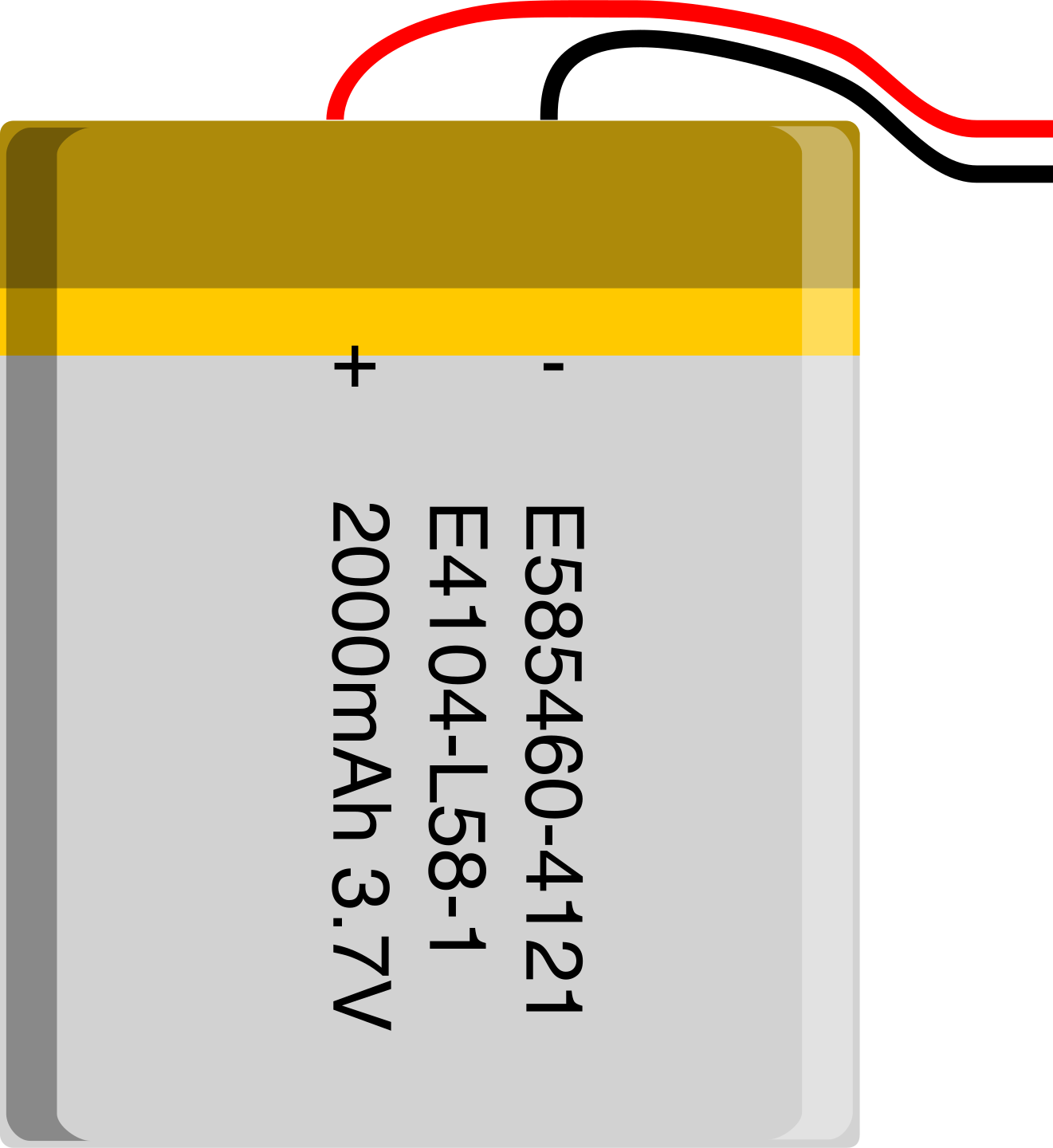
The LIPO-2000mAh is a lithium polymer (LiPo) battery with a capacity of 2000mAh, designed for applications requiring lightweight, high-energy-density power sources. This battery is widely used in remote-controlled (RC) vehicles, drones, portable electronics, and other devices where compact and efficient energy storage is critical. Its rechargeable nature and high discharge rates make it a versatile choice for both hobbyists and professionals.
Explore Projects Built with LIPO-2000mAh
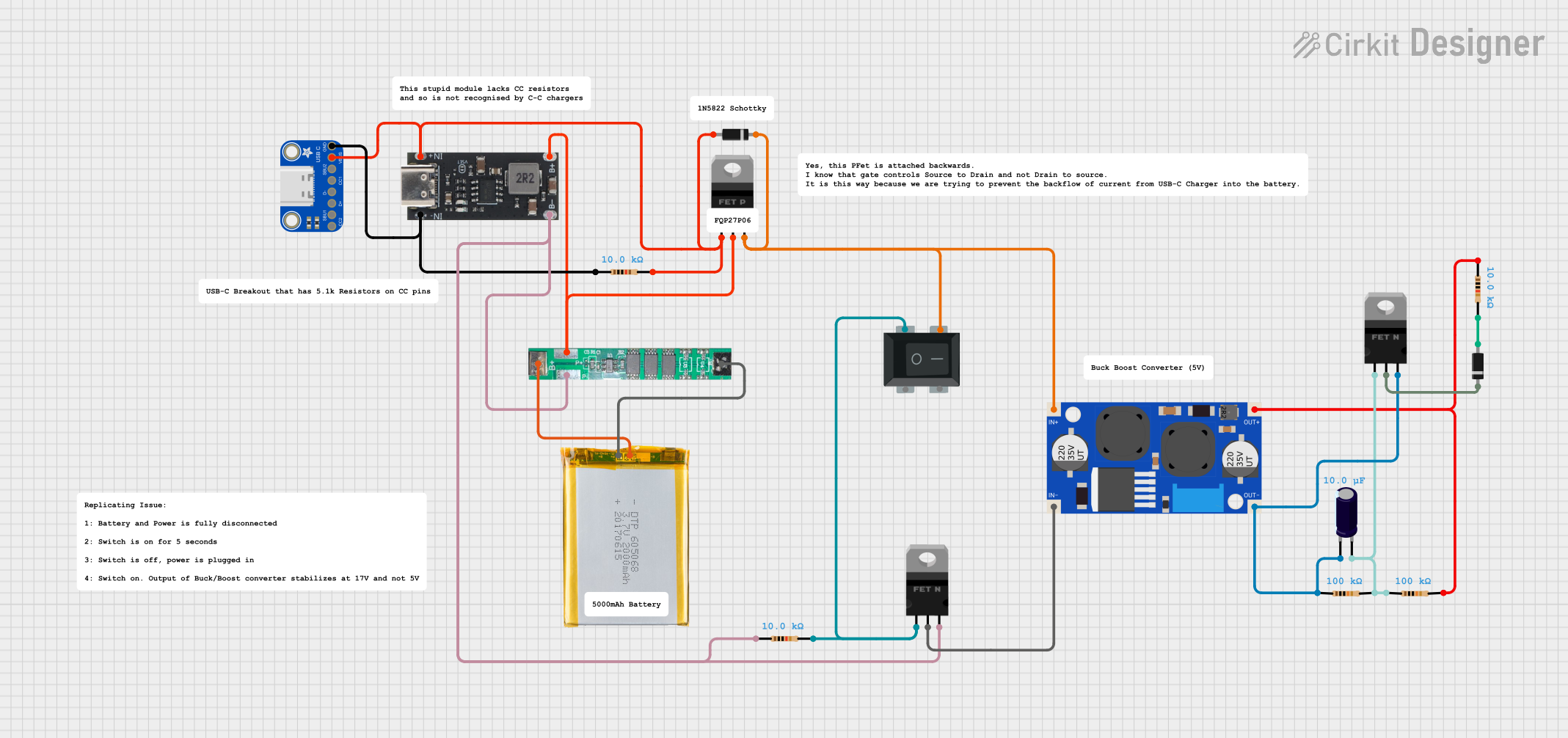 Open Project in Cirkit Designer
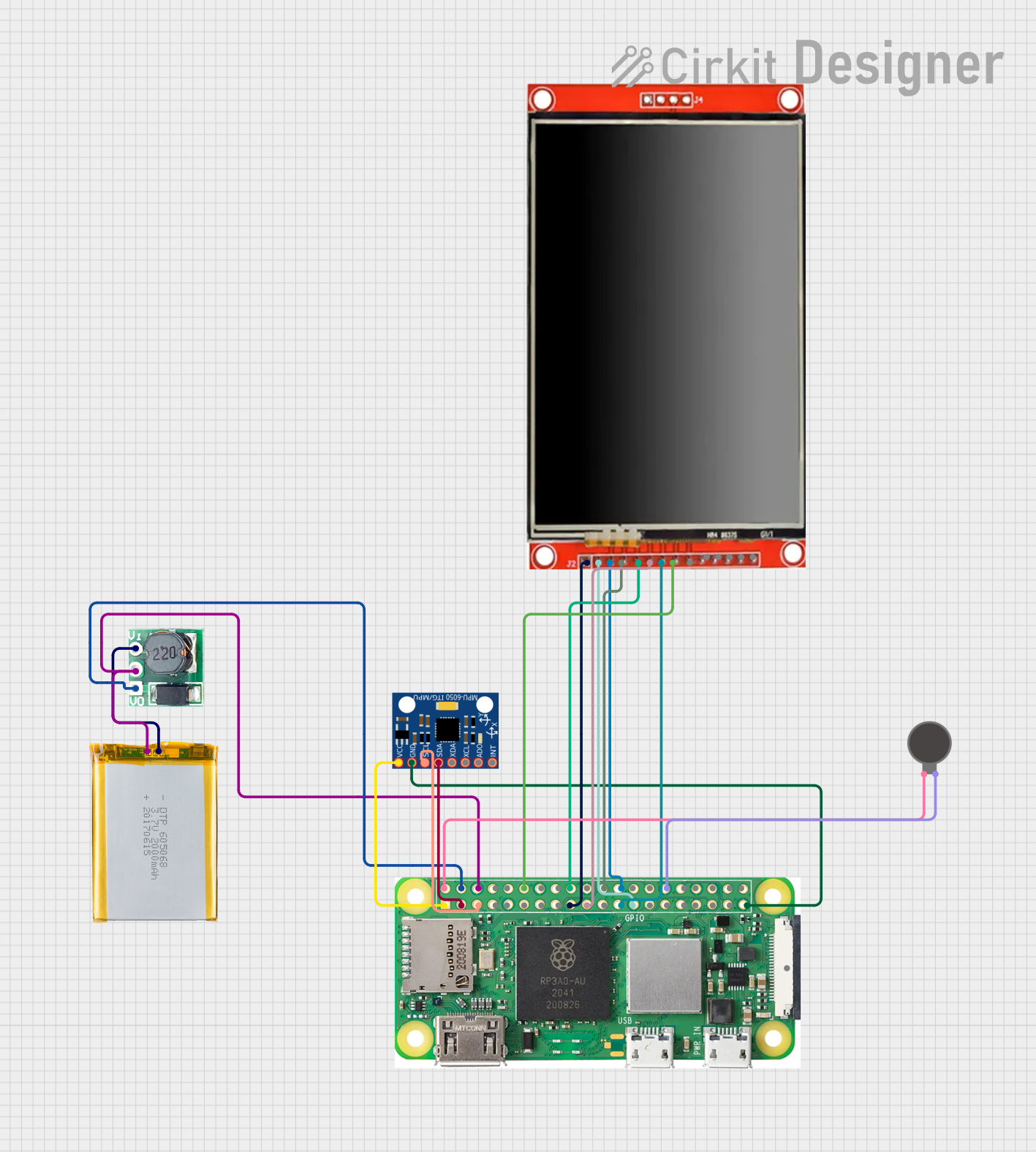 Open Project in Cirkit Designer
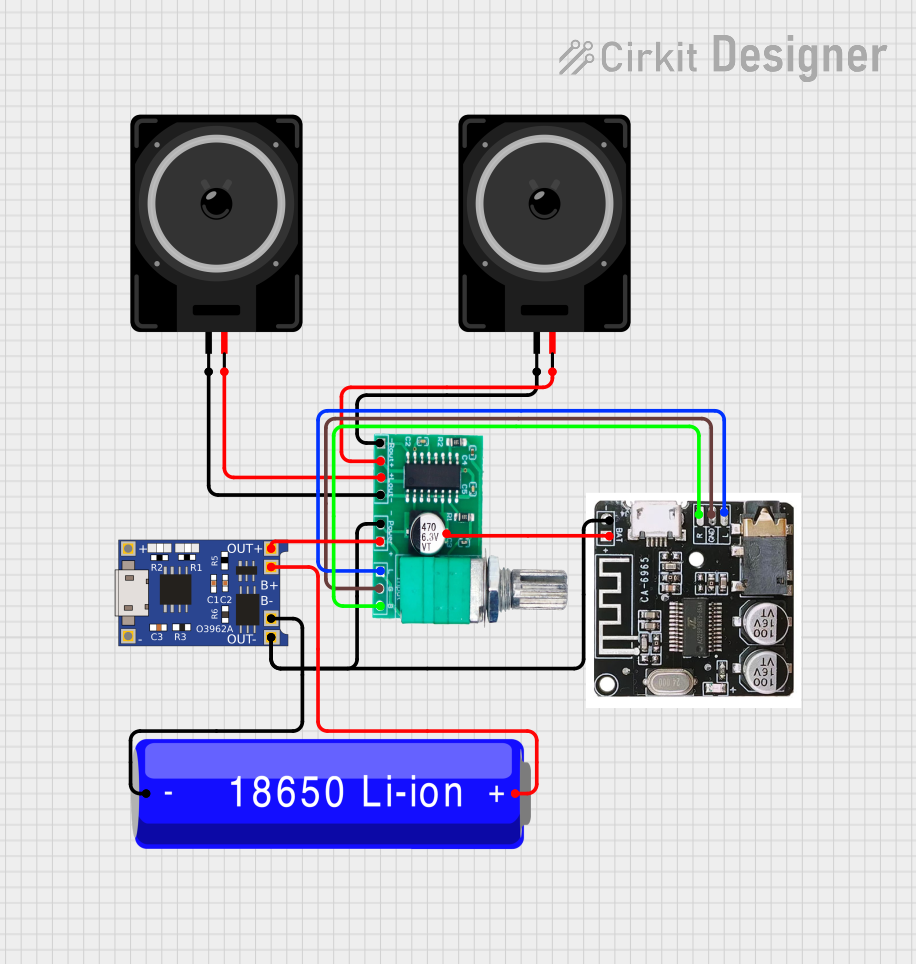 Open Project in Cirkit Designer
 Open Project in Cirkit Designer
Explore Projects Built with LIPO-2000mAh
Open Project in Cirkit DesignerOpen Project in Cirkit DesignerOpen Project in Cirkit DesignerOpen Project in Cirkit DesignerTechnical Specifications
Below are the key technical details of the LIPO-2000mAh battery:
| Specification | Value |
|---|---|
| Nominal Voltage | 3.7V |
| Capacity | 2000mAh (2Ah) |
| Maximum Discharge Rate | 20C (40A) |
| Charging Voltage | 4.2V (maximum) |
| Minimum Discharge Voltage | 3.0V |
| Chemistry | Lithium Polymer (LiPo) |
| Weight | ~45g |
| Dimensions | ~60mm x 35mm x 8mm |
| Connector Type | JST or XT60 (varies by model) |
| Charging Method | Constant Current/Constant Voltage (CC/CV) |
Pin Configuration and Descriptions
The LIPO-2000mAh battery typically has two main connectors: a power connector and a balance connector. Below is a description of these connectors:
Power Connector (e.g., JST or XT60)
| Pin | Description |
|---|---|
| Red | Positive terminal (+) |
| Black | Negative terminal (-) |
Balance Connector (for 1S LiPo)
| Pin | Description |
|---|---|
| Pin 1 | Positive terminal (+) |
| Pin 2 | Negative terminal (-) |
Note: The balance connector is primarily used for charging and monitoring the battery's voltage.
Usage Instructions
How to Use the LIPO-2000mAh in a Circuit
- Connect the Power Connector: Attach the red wire to the positive terminal of your circuit and the black wire to the negative terminal.
- Use a Voltage Regulator (if needed): If your circuit requires a specific voltage, use a voltage regulator to step down or step up the battery's output.
- Monitor Voltage Levels: Use a LiPo voltage alarm or a battery management system (BMS) to ensure the battery does not discharge below 3.0V or charge above 4.2V.
- Charging the Battery:
- Use a LiPo-compatible charger with a CC/CV charging profile.
- Connect the balance connector to the charger for safe and balanced charging.
Important Considerations and Best Practices
- Avoid Overcharging or Overdischarging: Overcharging above 4.2V or discharging below 3.0V can damage the battery and reduce its lifespan.
- Use a Proper Charger: Always use a charger specifically designed for LiPo batteries to prevent accidents.
- Handle with Care: Avoid puncturing, bending, or exposing the battery to high temperatures.
- Storage: Store the battery at a voltage of approximately 3.8V per cell (storage charge) in a cool, dry place when not in use for extended periods.
Example: Using LIPO-2000mAh with Arduino UNO
Below is an example of powering an Arduino UNO with the LIPO-2000mAh battery using a voltage regulator:
Circuit Setup
- Connect the LIPO-2000mAh battery to a 5V voltage regulator (e.g., LM7805).
- Connect the output of the voltage regulator to the Arduino UNO's 5V and GND pins.
Sample Code
// Example code for Arduino UNO powered by LIPO-2000mAh
// This code blinks an LED connected to pin 13

void setup() {
  pinMode(13, OUTPUT); // Set pin 13 as an output
}

void loop() {
  digitalWrite(13, HIGH); // Turn the LED on
  delay(1000);            // Wait for 1 second
  digitalWrite(13, LOW);  // Turn the LED off
  delay(1000);            // Wait for 1 second
}
Note: Ensure the voltage regulator provides a stable 5V output to avoid damaging the Arduino UNO.
Troubleshooting and FAQs
Common Issues
Battery Not Charging:
- Cause: Faulty charger or incorrect connection.
- Solution: Verify the charger is LiPo-compatible and check all connections.
Battery Swelling:
- Cause: Overcharging, overdischarging, or physical damage.
- Solution: Stop using the battery immediately and dispose of it safely.
Short Runtime:
- Cause: Battery degradation or excessive current draw.
- Solution: Check the battery's health and ensure the load does not exceed the maximum discharge rate.
Voltage Drops Rapidly:
- Cause: Overdischarged battery or high internal resistance.
- Solution: Recharge the battery to the recommended voltage and avoid deep discharges.
FAQs
Q: Can I use the LIPO-2000mAh battery without a voltage regulator?
A: Yes, if your circuit can operate within the battery's voltage range (3.0V to 4.2V). Otherwise, a regulator is recommended.Q: How long does it take to charge the battery?
A: Charging time depends on the charger's current rating. For a 1A charger, it takes approximately 2 hours.Q: Is it safe to leave the battery connected to the charger?
A: No, disconnect the battery once fully charged to prevent overcharging.Q: Can I use this battery for high-current applications?
A: Yes, the LIPO-2000mAh supports a maximum discharge rate of 20C (40A), making it suitable for high-current applications.
By following this documentation, you can safely and effectively use the LIPO-2000mAh battery in your projects.