
How to Use Water Pump: Examples, Pinouts, and Specs
 Design with Water Pump in Cirkit Designer
Introduction
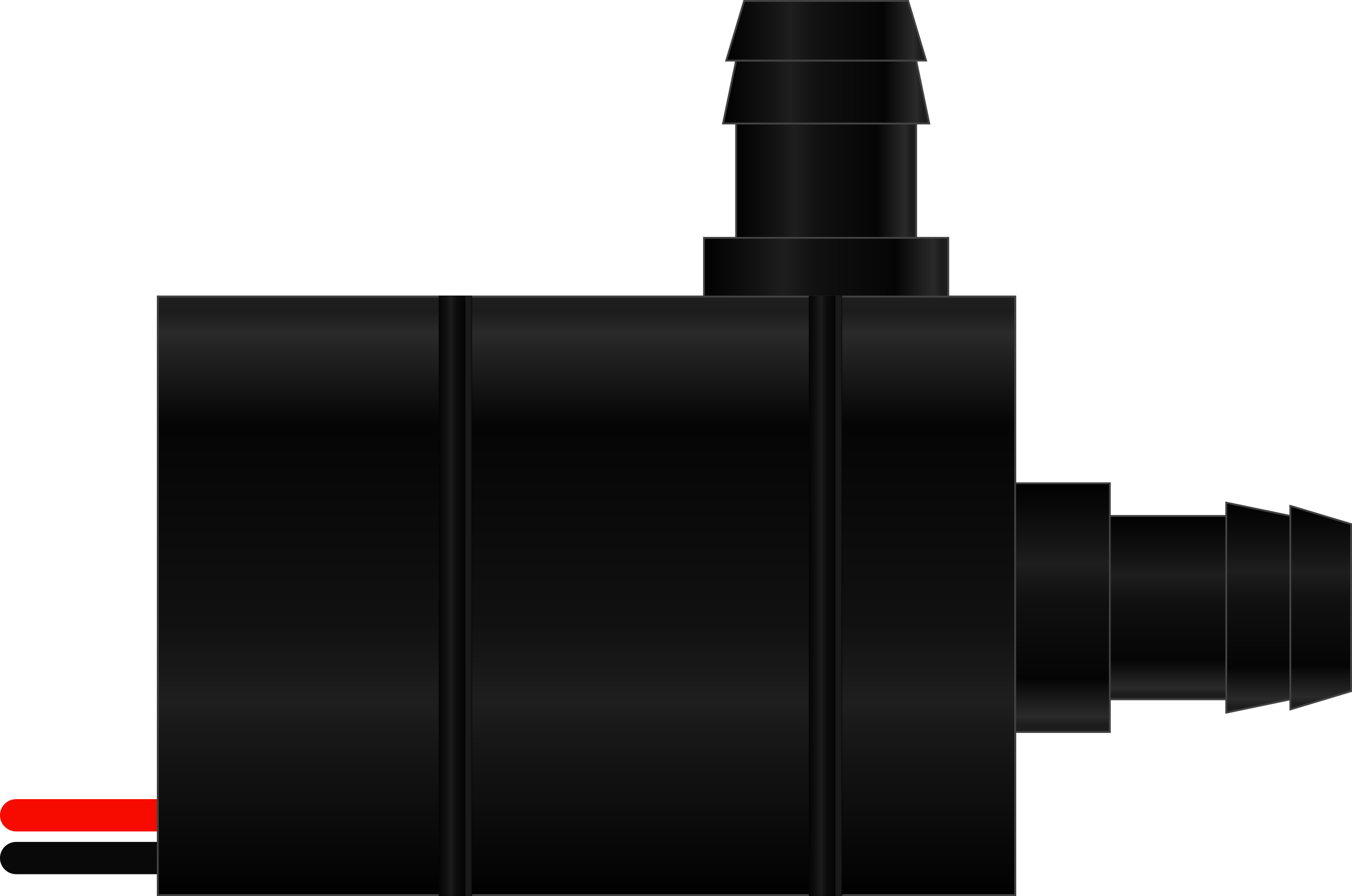
The water pump is a device designed to move water from one location to another. It is commonly used in applications such as irrigation systems, drainage systems, water supply networks, and cooling systems. Water pumps are essential in both residential and industrial settings, providing efficient water transfer for a variety of purposes.
Explore Projects Built with Water Pump
 Open Project in Cirkit Designer
 Open Project in Cirkit Designer
 Open Project in Cirkit Designer
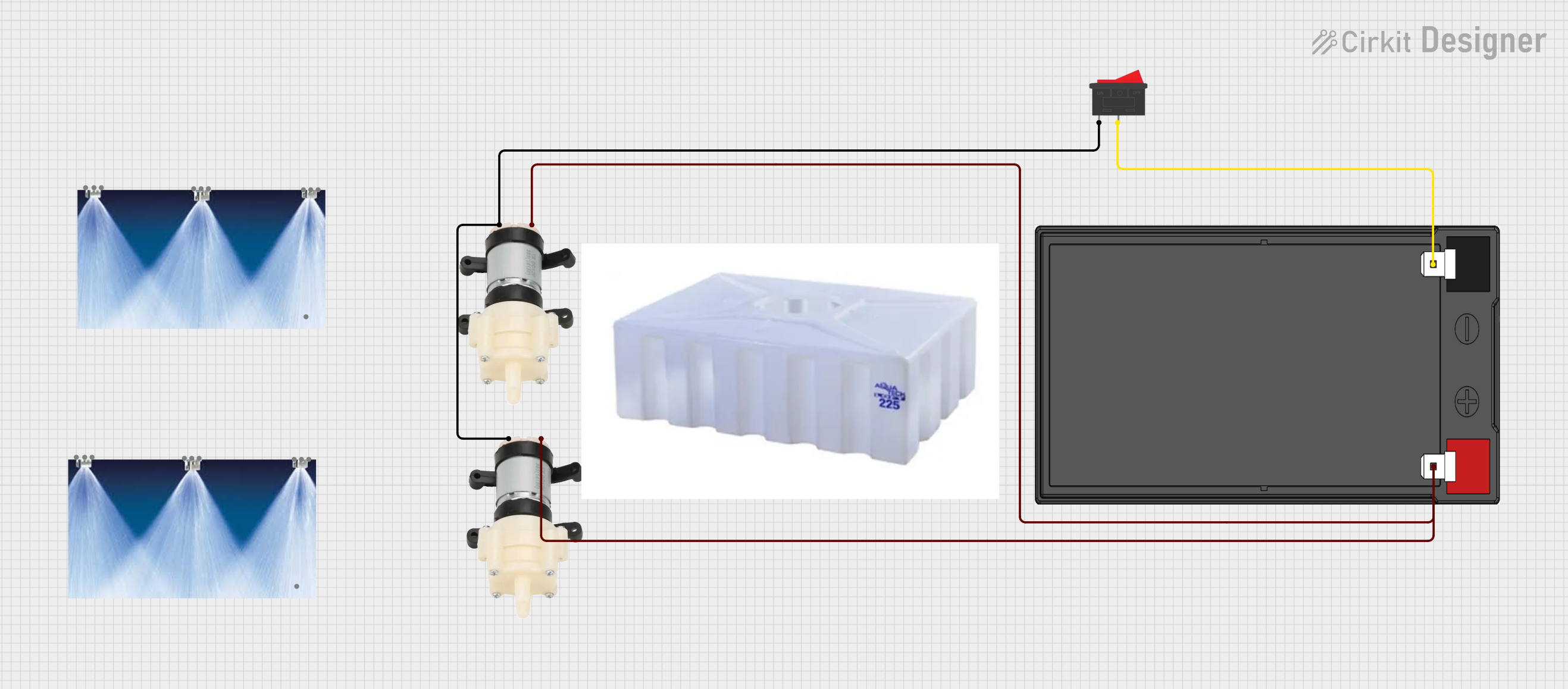 Open Project in Cirkit Designer
Explore Projects Built with Water Pump
Open Project in Cirkit DesignerOpen Project in Cirkit DesignerOpen Project in Cirkit DesignerOpen Project in Cirkit DesignerTechnical Specifications
Below are the general technical specifications for a typical DC-powered water pump. Specifications may vary depending on the specific model and manufacturer.
General Specifications
| Parameter | Value |
|---|---|
| Operating Voltage | 3V - 12V DC |
| Operating Current | 0.1A - 0.5A |
| Power Consumption | 1W - 6W |
| Maximum Flow Rate | 80 - 300 liters per hour (L/h) |
| Maximum Lift Height | 0.5m - 3m |
| Inlet/Outlet Diameter | 5mm - 10mm |
| Material | Plastic or metal |
| Waterproof Rating | IPX4 or higher |
Pin Configuration and Descriptions
For a typical two-wire DC water pump:
| Pin/Connection | Description |
|---|---|
| Red Wire (+) | Positive terminal (connect to VCC) |
| Black Wire (-) | Negative terminal (connect to GND) |
For a three-wire water pump with speed control:
| Pin/Connection | Description |
|---|---|
| Red Wire (+) | Positive terminal (connect to VCC) |
| Black Wire (-) | Negative terminal (connect to GND) |
| Yellow Wire | PWM input for speed control |
Usage Instructions
How to Use the Water Pump in a Circuit
- Power Supply: Ensure the water pump is powered by a DC voltage source within its operating range (e.g., 3V to 12V). Exceeding the voltage rating may damage the pump.
- Connections:
- For a two-wire pump, connect the red wire to the positive terminal of the power supply and the black wire to the ground.
- For a three-wire pump, connect the red and black wires as above, and use a PWM signal on the yellow wire to control the pump's speed.
- Water Flow: Attach appropriate tubing to the inlet and outlet ports. Ensure the tubing is securely fastened to prevent leaks.
- Priming: If required, fill the pump with water before operation to avoid running it dry, which can damage the internal components.
- Control: If using a microcontroller like an Arduino, you can control the pump's operation using a relay module or a motor driver.
Important Considerations and Best Practices
- Dry Run Protection: Avoid running the pump without water, as this can cause overheating and damage.
- Voltage Regulation: Use a regulated power supply to prevent voltage spikes.
- Filtration: Use a filter on the inlet to prevent debris from entering the pump and causing blockages.
- Cooling: Ensure proper ventilation around the pump to prevent overheating during extended use.
- PWM Control: If using PWM for speed control, ensure the frequency is compatible with the pump's specifications.
Example: Controlling a Water Pump with Arduino UNO
Below is an example of how to control a two-wire water pump using an Arduino UNO and a relay module.
// Example: Controlling a water pump with Arduino and a relay module
// Connect the relay module's IN pin to Arduino pin 7
// Ensure the relay module is connected to the pump and power supply

const int relayPin = 7; // Pin connected to the relay module

void setup() {
  pinMode(relayPin, OUTPUT); // Set relay pin as output
  digitalWrite(relayPin, LOW); // Ensure the pump is off initially
}

void loop() {
  // Turn the pump ON for 5 seconds
  digitalWrite(relayPin, HIGH); // Activate the relay
  delay(5000); // Wait for 5 seconds

  // Turn the pump OFF for 5 seconds
  digitalWrite(relayPin, LOW); // Deactivate the relay
  delay(5000); // Wait for 5 seconds
}
Troubleshooting and FAQs
Common Issues and Solutions
Pump Does Not Start:
- Cause: Insufficient power supply or loose connections.
- Solution: Verify the power supply voltage and current. Check all connections.
Low Water Flow:
- Cause: Blocked inlet or outlet, or insufficient voltage.
- Solution: Clean the inlet and outlet. Ensure the power supply meets the pump's requirements.
Pump Overheats:
- Cause: Running the pump dry or insufficient cooling.
- Solution: Ensure the pump is primed with water before use. Provide adequate ventilation.
Noisy Operation:
- Cause: Air trapped in the pump or worn-out components.
- Solution: Prime the pump to remove air. Inspect and replace worn parts if necessary.
FAQs
Q: Can I use the water pump with an AC power source?
A: No, this pump is designed for DC power only. Use a DC power adapter or battery.Q: How do I control the pump's speed?
A: For a three-wire pump, use a PWM signal on the yellow wire. For a two-wire pump, you can use a motor driver with PWM capability.Q: Is the pump safe for use with drinking water?
A: Check the manufacturer's specifications. Some pumps are made with food-grade materials, while others are not.Q: Can the pump be submerged in water?
A: Only submersible pumps with an appropriate waterproof rating (e.g., IPX7) can be submerged. Check the pump's specifications before use.