
How to Use TIP-122: Examples, Pinouts, and Specs
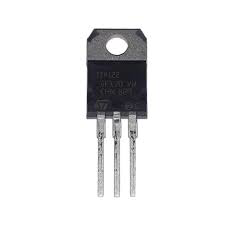
 Design with TIP-122 in Cirkit Designer
Introduction
The TIP-122 is a high-power NPN Darlington transistor manufactured by STMicroelectronics. It is designed for use in switching and amplification applications, capable of handling high currents and voltages. The TIP-122 is particularly well-suited for driving motors, solenoids, and other high-power devices in industrial and hobbyist projects.
Explore Projects Built with TIP-122
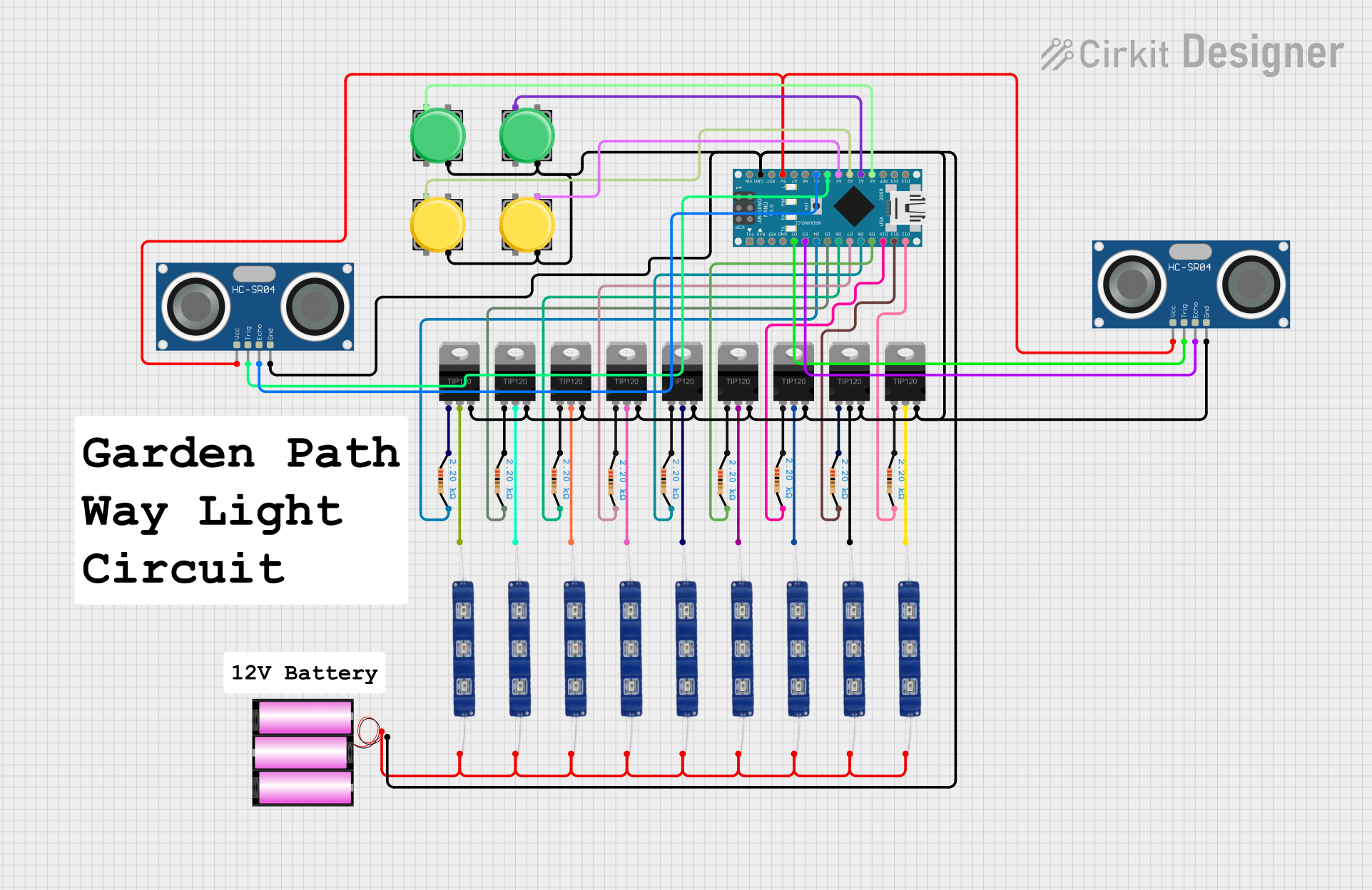 Open Project in Cirkit Designer
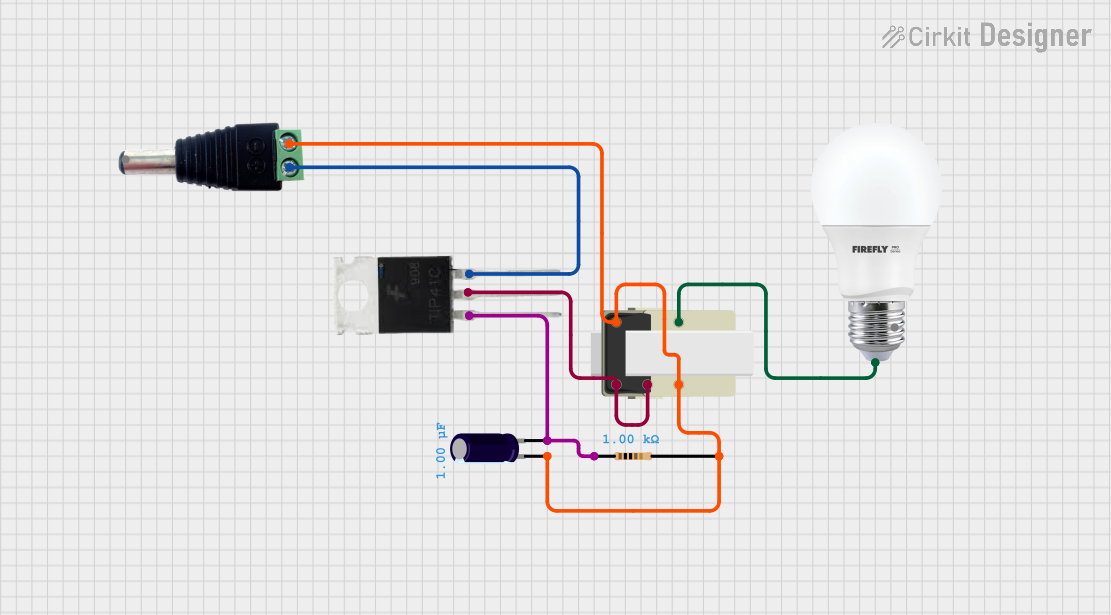 Open Project in Cirkit Designer
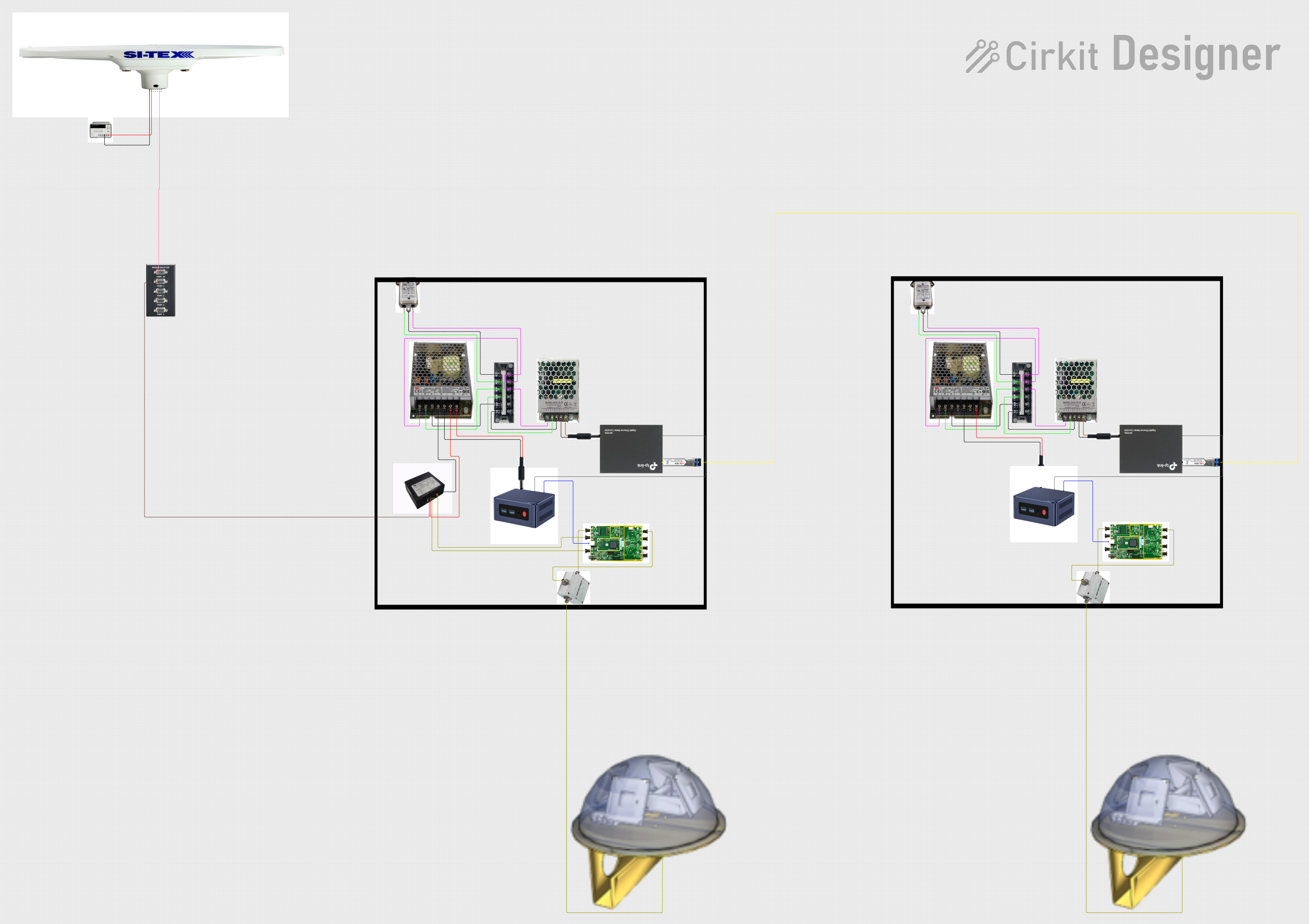 Open Project in Cirkit Designer
 Open Project in Cirkit Designer
Explore Projects Built with TIP-122
Open Project in Cirkit DesignerOpen Project in Cirkit DesignerOpen Project in Cirkit DesignerOpen Project in Cirkit DesignerCommon Applications
- Motor control and speed regulation
- Solenoid and relay driving
- High-power LED driving
- Audio amplification
- General-purpose switching in high-current circuits
Technical Specifications
The TIP-122 is a robust component with the following key specifications:
| Parameter | Value |
|---|---|
| Manufacturer Part ID | TIP122 |
| Transistor Type | NPN Darlington |
| Maximum Collector-Emitter Voltage (VCEO) | 100V |
| Maximum Collector Current (IC) | 5A |
| Maximum Base Current (IB) | 120mA |
| Maximum Power Dissipation (PD) | 65W |
| DC Current Gain (hFE) | 1000 (minimum) |
| Operating Temperature Range | -65°C to +150°C |
| Package Type | TO-220 |
Pin Configuration
The TIP-122 is housed in a TO-220 package with three pins. The pinout is as follows:
| Pin Number | Pin Name | Description |
|---|---|---|
| 1 | Base (B) | Controls the transistor's operation |
| 2 | Collector (C) | Current flows into this pin |
| 3 | Emitter (E) | Current flows out of this pin |
Usage Instructions
The TIP-122 is straightforward to use in circuits, but proper design considerations are essential to ensure optimal performance and longevity.
How to Use the TIP-122 in a Circuit
Base Resistor: Always use a base resistor to limit the current flowing into the base pin. The value of the resistor can be calculated using Ohm's law: [ R_B = \frac{V_{IN} - V_{BE}}{I_B} ] where ( V_{IN} ) is the input voltage, ( V_{BE} ) is the base-emitter voltage (approximately 2.5V for the TIP-122), and ( I_B ) is the desired base current.
Heat Dissipation: The TIP-122 can dissipate up to 65W of power. For high-power applications, attach a heatsink to the TO-220 package to prevent overheating.
Load Connection: Connect the load (e.g., motor, LED, or relay) between the collector pin and the positive supply voltage. The emitter pin should be connected to ground.
Switching: To turn the transistor on, apply a sufficient voltage to the base pin. To turn it off, ensure the base pin is at 0V.
Example: Controlling a Motor with Arduino UNO
The TIP-122 can be used to control a DC motor with an Arduino UNO. Below is an example circuit and code:
Circuit Connections
- Connect the motor's positive terminal to the collector pin of the TIP-122.
- Connect the emitter pin to ground.
- Connect the base pin to an Arduino digital pin (e.g., D9) through a 1kΩ resistor.
- Connect a flyback diode (e.g., 1N4007) across the motor terminals to protect the transistor from voltage spikes.
Arduino Code
// TIP-122 Motor Control Example
// This code demonstrates how to control a motor using the TIP-122 transistor
// and an Arduino UNO. The motor speed is controlled via PWM.

const int motorPin = 9; // TIP-122 base connected to pin D9 through a resistor

void setup() {
  pinMode(motorPin, OUTPUT); // Set motorPin as an output
}

void loop() {
  // Gradually increase motor speed
  for (int speed = 0; speed <= 255; speed++) {
    analogWrite(motorPin, speed); // Write PWM signal to motorPin
    delay(10); // Small delay for smooth acceleration
  }

  delay(1000); // Run motor at full speed for 1 second

  // Gradually decrease motor speed
  for (int speed = 255; speed >= 0; speed--) {
    analogWrite(motorPin, speed); // Write PWM signal to motorPin
    delay(10); // Small delay for smooth deceleration
  }

  delay(1000); // Pause before repeating the cycle
}
Important Considerations
- Voltage and Current Ratings: Do not exceed the maximum voltage (100V) or current (5A) ratings to avoid damaging the transistor.
- Flyback Diode: Always use a flyback diode when driving inductive loads (e.g., motors or relays) to protect the TIP-122 from voltage spikes.
- Heatsink: Use a heatsink for high-power applications to prevent overheating.
Troubleshooting and FAQs
Common Issues
Transistor Overheating
- Cause: Excessive power dissipation or insufficient cooling.
- Solution: Attach a heatsink to the TIP-122 and ensure proper ventilation.
Motor Not Running
- Cause: Incorrect wiring or insufficient base current.
- Solution: Double-check the circuit connections and ensure the base resistor value is appropriate.
Low Output Current
- Cause: Insufficient base drive or damaged transistor.
- Solution: Verify the base resistor value and replace the transistor if necessary.
Voltage Spikes Damaging the Transistor
- Cause: Inductive load without a flyback diode.
- Solution: Add a flyback diode across the load terminals.
FAQs
Q: Can the TIP-122 be used for audio amplification?
A: Yes, the TIP-122 can be used in audio amplifier circuits, but it is more commonly used for switching applications due to its high current handling capability.
Q: What is the difference between the TIP-122 and TIP-120?
A: The TIP-122 has a slightly higher current gain (hFE) compared to the TIP-120, making it more efficient in certain applications.
Q: Can I use the TIP-122 without a heatsink?
A: For low-power applications, a heatsink may not be necessary. However, for high-power applications, a heatsink is essential to prevent overheating.
Q: What is the maximum PWM frequency for the TIP-122?
A: The TIP-122 can handle PWM frequencies up to a few kHz. For higher frequencies, consider using a MOSFET instead.