
How to Use 12V 50Ah Battery: Examples, Pinouts, and Specs
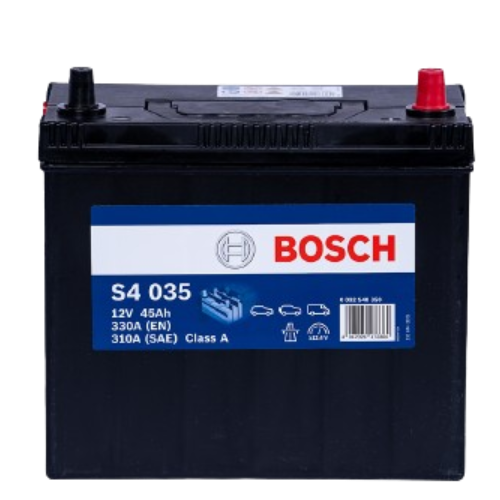
 Design with 12V 50Ah Battery in Cirkit Designer
Introduction
The 12V 50Ah battery is a rechargeable energy storage device that provides a nominal voltage of 12 volts and a capacity of 50 ampere-hours (Ah). This battery is commonly used in applications requiring reliable and long-lasting power, such as uninterruptible power supplies (UPS), solar energy systems, electric vehicles, and portable electronics. Its high capacity and stable voltage output make it ideal for both small-scale and large-scale energy needs.
Explore Projects Built with 12V 50Ah Battery
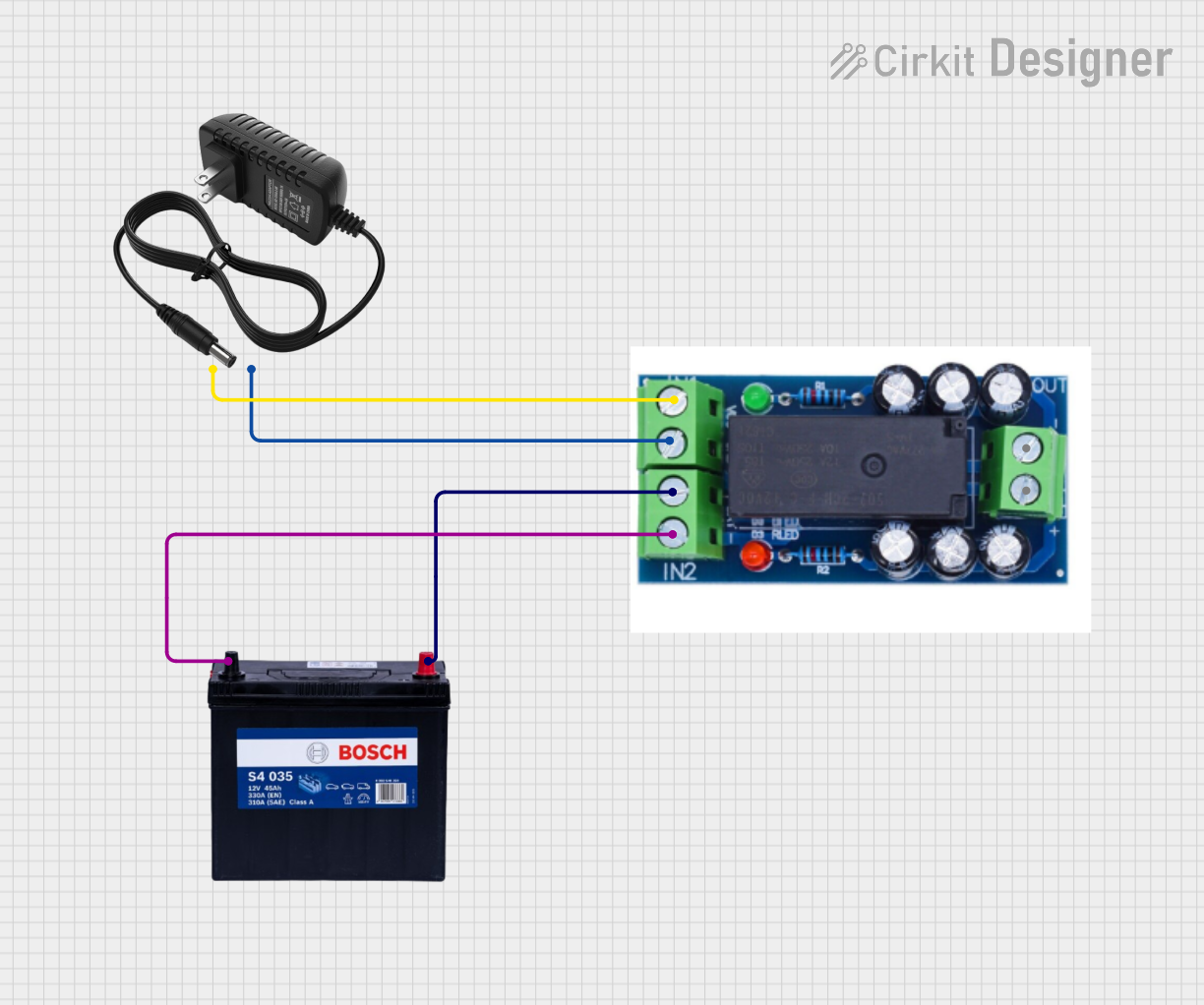 Open Project in Cirkit Designer
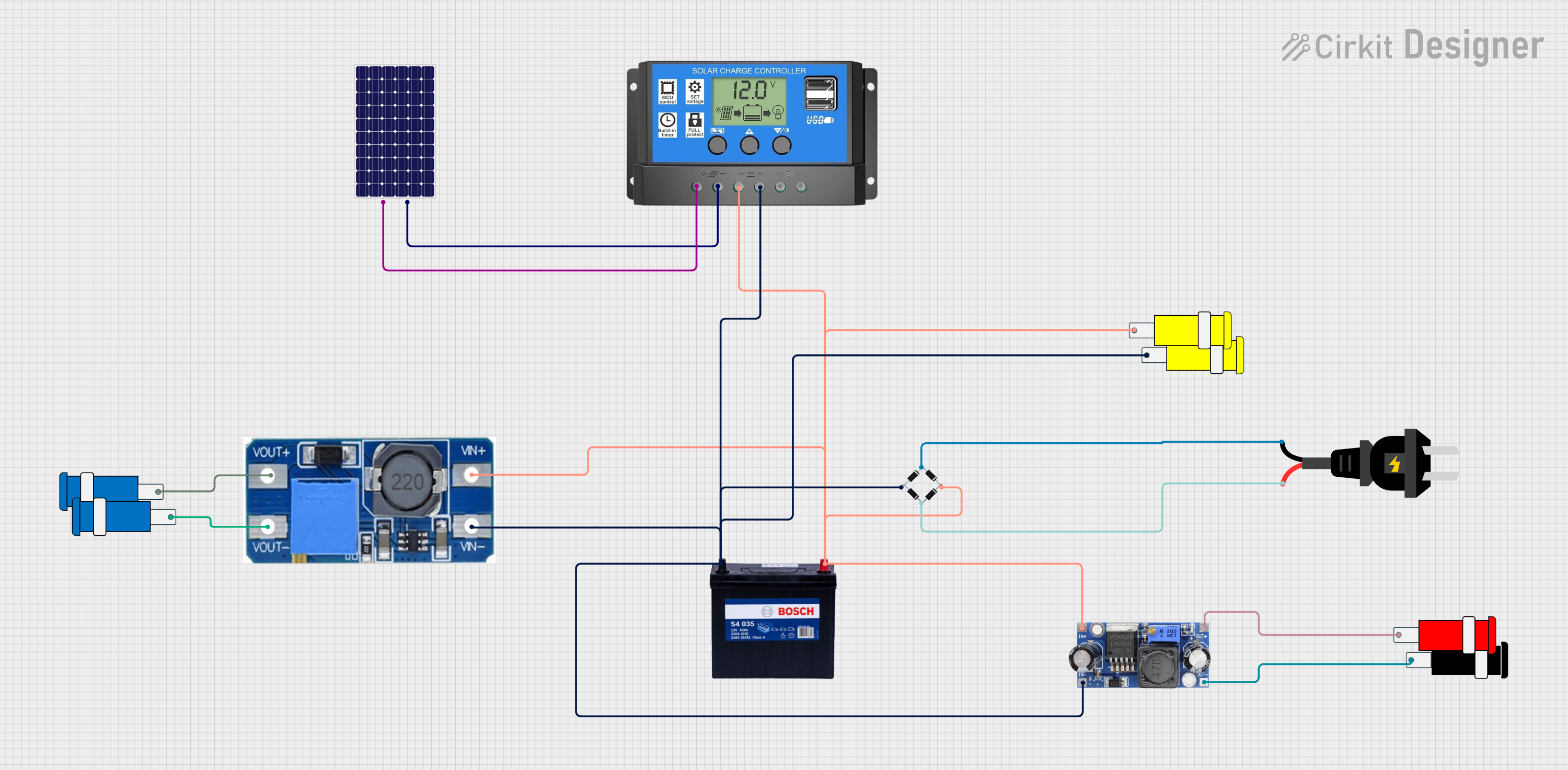 Open Project in Cirkit Designer
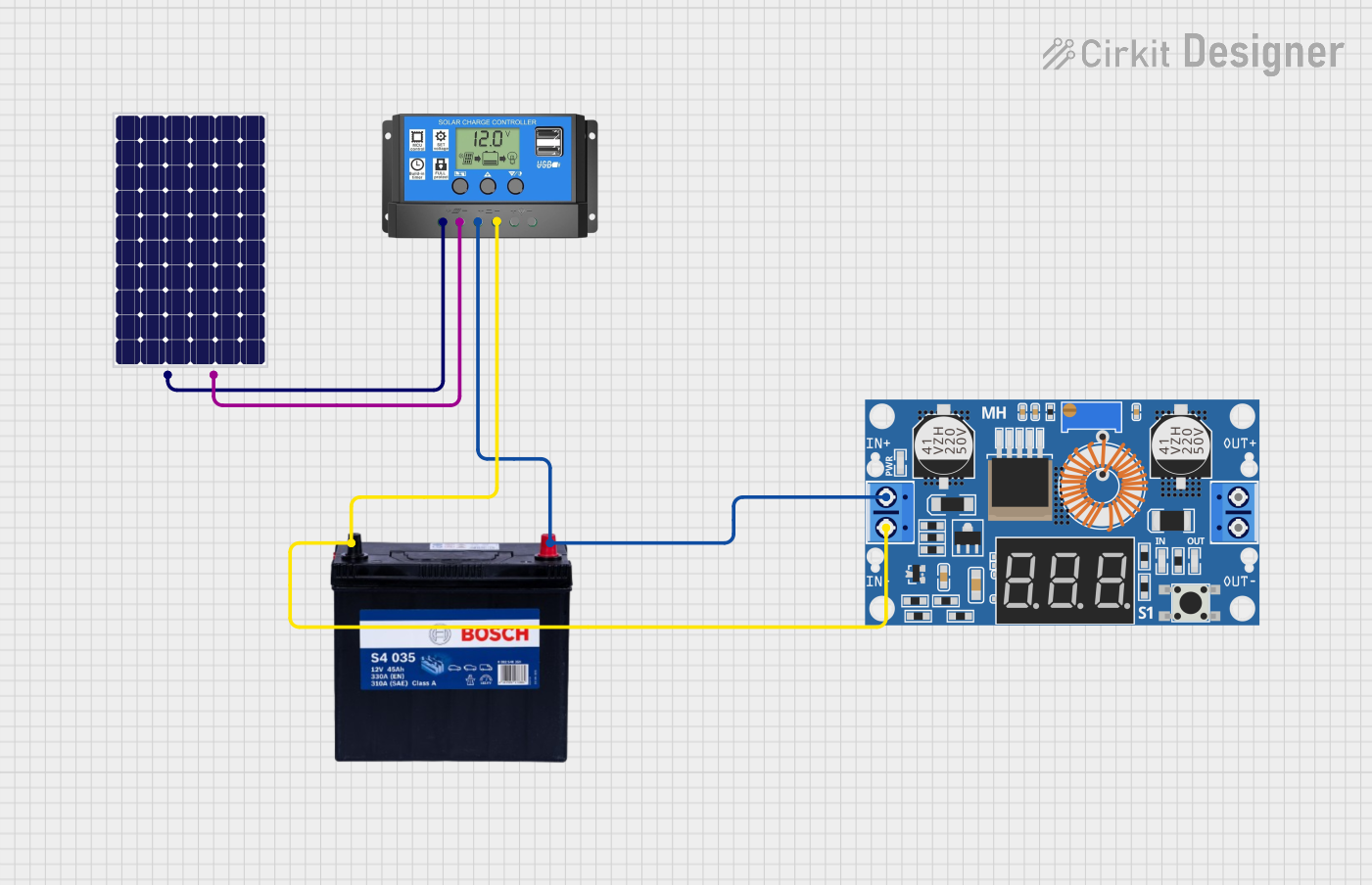 Open Project in Cirkit Designer
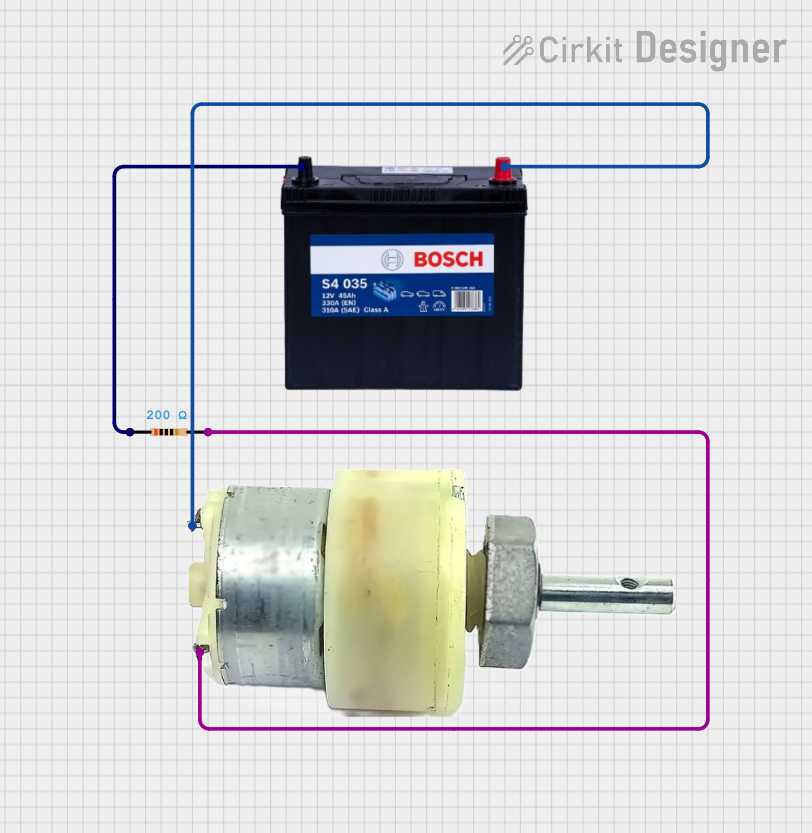 Open Project in Cirkit Designer
Explore Projects Built with 12V 50Ah Battery
Open Project in Cirkit DesignerOpen Project in Cirkit DesignerOpen Project in Cirkit DesignerOpen Project in Cirkit DesignerCommon Applications
- Solar power systems for residential and commercial use
- Backup power for uninterruptible power supplies (UPS)
- Electric vehicles, golf carts, and mobility scooters
- Marine applications, such as powering trolling motors
- Portable power stations and camping equipment
- Emergency lighting systems
Technical Specifications
Key Specifications
| Parameter | Value |
|---|---|
| Nominal Voltage | 12V |
| Capacity | 50Ah |
| Chemistry | Lead-acid / Lithium-ion* |
| Maximum Discharge Current | Varies by model (e.g., 50A) |
| Charging Voltage Range | 13.8V - 14.4V |
| Operating Temperature | -20°C to 60°C |
| Weight | ~12-15 kg (varies by type) |
| Cycle Life | 300-500 cycles (Lead-acid) / 2000+ cycles (Lithium-ion) |
*Note: The chemistry of the battery (Lead-acid or Lithium-ion) depends on the specific model. Always verify the type before use.
Pin Configuration and Terminals
The 12V 50Ah battery typically has two terminals:
| Terminal | Description |
|---|---|
| Positive (+) | Connects to the positive side of the circuit |
| Negative (-) | Connects to the negative side of the circuit |
Important Note: Ensure proper polarity when connecting the battery to avoid damage to the battery or connected devices.
Usage Instructions
How to Use the 12V 50Ah Battery in a Circuit
- Determine Load Requirements: Ensure the connected devices do not exceed the battery's maximum discharge current.
- Connect Terminals:
- Connect the positive terminal of the battery to the positive input of the load.
- Connect the negative terminal of the battery to the negative input of the load.
- Use Proper Cables: Use cables rated for the current draw of your application to prevent overheating or voltage drops.
- Charging the Battery:
- Use a compatible charger with the correct voltage and current ratings (e.g., 14.4V for charging).
- Avoid overcharging or deep discharging the battery to extend its lifespan.
Important Considerations
- Polarity: Always double-check the polarity of the connections to prevent short circuits or damage.
- Ventilation: For lead-acid batteries, ensure proper ventilation to avoid the buildup of hydrogen gas during charging.
- Temperature: Operate the battery within the specified temperature range to maintain performance and safety.
- Storage: Store the battery in a cool, dry place when not in use. For long-term storage, maintain a partial charge (e.g., 50-70%).
Example: Connecting to an Arduino UNO
The 12V 50Ah battery can be used to power an Arduino UNO via a voltage regulator or DC-DC converter to step down the voltage to 5V. Below is an example circuit and code:
Circuit Setup
- Connect the positive terminal of the battery to the input of a 12V-to-5V DC-DC converter.
- Connect the output of the converter to the Arduino UNO's 5V and GND pins.
- Ensure proper grounding between the battery, converter, and Arduino.
Example Code
// Example code to blink an LED connected to an Arduino UNO
// powered by a 12V 50Ah battery via a DC-DC converter.

const int ledPin = 13; // Pin connected to the onboard LED

void setup() {
  pinMode(ledPin, OUTPUT); // Set the LED pin as an output
}

void loop() {
  digitalWrite(ledPin, HIGH); // Turn the LED on
  delay(1000);               // Wait for 1 second
  digitalWrite(ledPin, LOW);  // Turn the LED off
  delay(1000);               // Wait for 1 second
}
Troubleshooting and FAQs
Common Issues and Solutions
| Issue | Possible Cause | Solution |
|---|---|---|
| Battery not charging | Faulty charger or incorrect voltage | Verify charger compatibility and connections |
| Rapid discharge | Excessive load or aging battery | Reduce load or replace the battery |
| Overheating during use | High current draw or poor ventilation | Ensure proper ventilation and use within rated current |
| No output voltage | Loose connections or internal damage | Check connections and test with a multimeter |
FAQs
Can I connect multiple 12V 50Ah batteries in series or parallel?
- Yes, you can connect batteries in series to increase voltage or in parallel to increase capacity. Ensure all batteries are of the same type and charge level.
How long will the battery last on a full charge?
- The runtime depends on the load. For example, a 50W device will run for approximately 12 hours (50Ah ÷ 4.17A).
Can I use a solar panel to charge this battery?
- Yes, ensure the solar charge controller is compatible with the battery's voltage and chemistry.
What is the difference between lead-acid and lithium-ion versions?
- Lithium-ion batteries are lighter, have a longer cycle life, and charge faster, but they are more expensive than lead-acid batteries.
By following this documentation, you can safely and effectively use the 12V 50Ah battery in your projects and applications.