The BC337 is an NPN bipolar junction transistor (BJT) designed for general-purpose amplification and switching applications. It is widely used in low to medium power circuits due to its ability to handle a maximum collector current of 800 mA and a voltage rating of 45 V. Its compact size and versatility make it a popular choice for hobbyists and professionals alike.
Explore Projects Built with BC337 Top
Use Cirkit Designer to design, explore, and prototype these projects online. Some projects support real-time simulation. Click "Open Project" to start designing instantly!
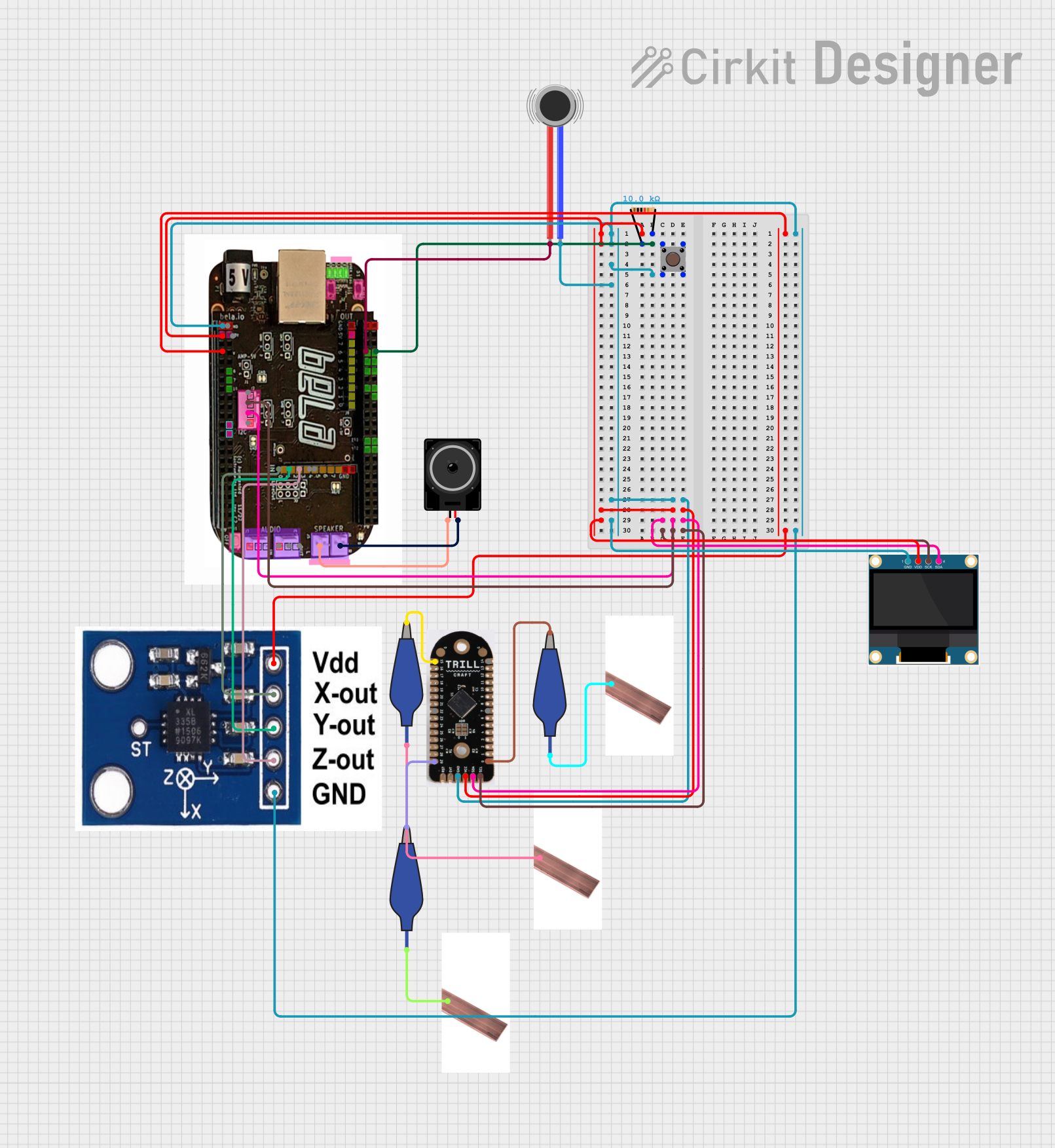
This circuit integrates a Bela Board with various sensors and actuators, including a TRILL CRAFT touch sensor, an ADXXL335 accelerometer, a vibration motor, and a loudspeaker. The Bela Board processes input from the touch sensor and accelerometer, and controls the vibration motor and loudspeaker, while an OLED display provides visual feedback.
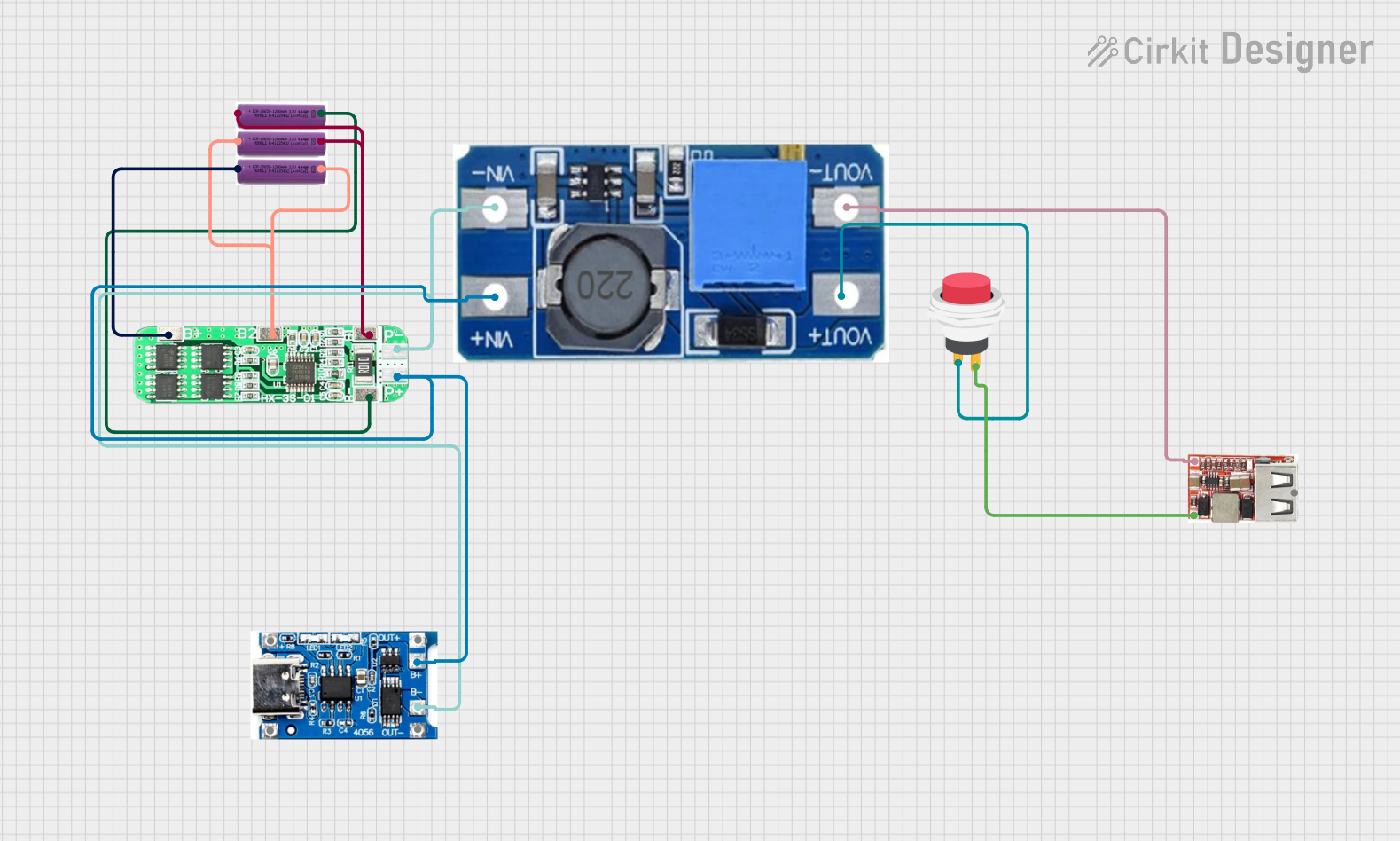
This circuit is a battery management and power supply system that uses three 3.7V batteries connected to a 3S 10A Li-ion 18650 Charger Protection Board Module for balanced charging and protection. The system includes a TP4056 Battery Charging Protection Module for additional charging safety, a Step Up Boost Power Converter to regulate and boost the voltage, and a USB regulator to provide a stable 5V output, controlled by a push switch.
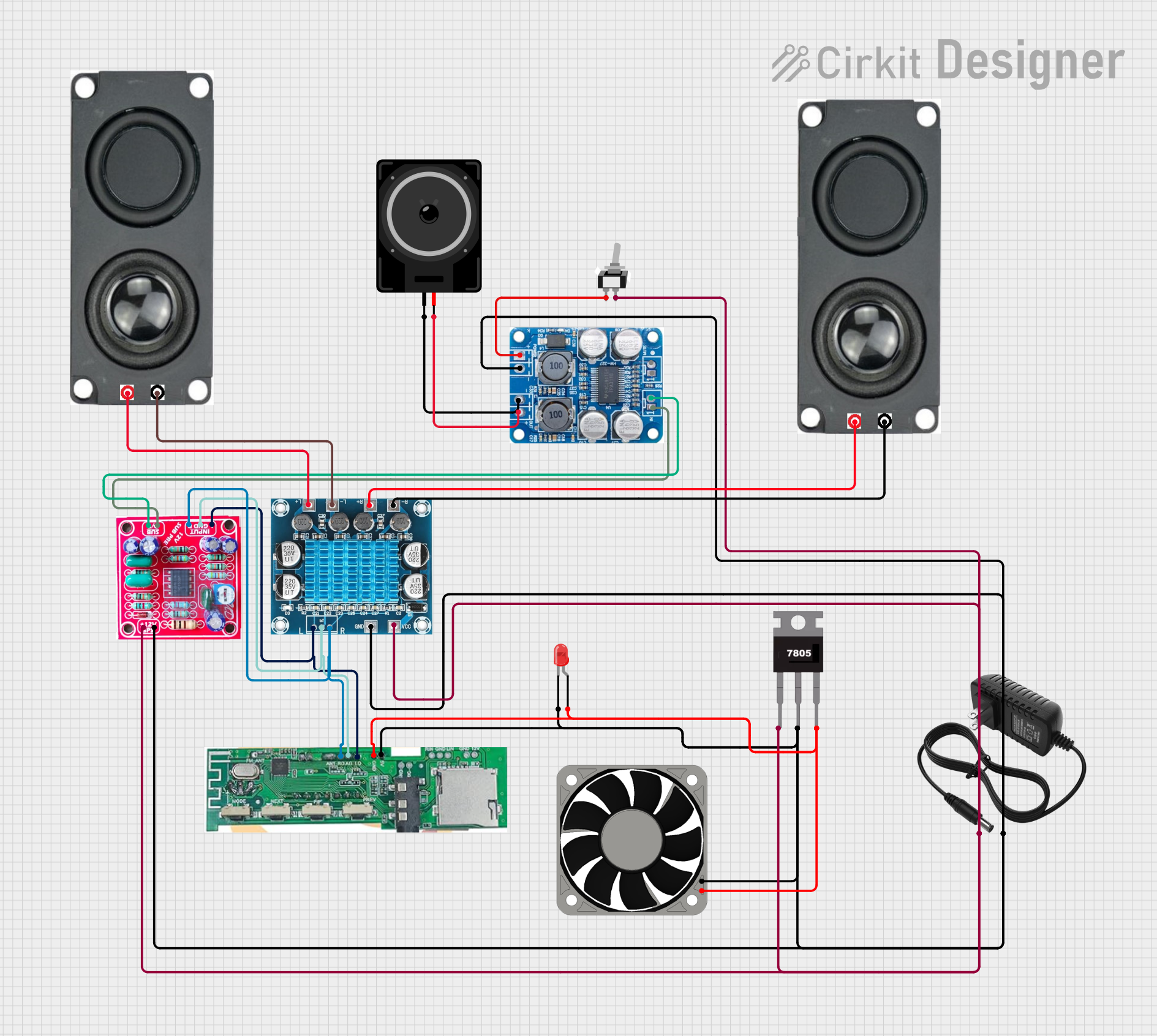
This circuit is a Bluetooth-enabled audio amplifier system with a subwoofer pre-amp and dual 8-ohm speakers. It includes a 12V power supply, a 7805 voltage regulator, and a cooling fan, with a toggle switch to control power. The Bluetooth module provides audio input to the amplifiers, which drive the speakers and subwoofer.
This circuit features an ESP32 S3 N32R8V microcontroller interfaced with multiple IBT-2 H-Bridge Motor Drivers to control several Linear Actuators, and it receives input from KY-018 LDR Photo Resistors and Pushbuttons. The ESP32 is powered by a 5V supply from an Adafruit MPM3610 5V Buck Converter, while the Linear Actuators and Motor Drivers are powered by a 12V 7Ah battery. Additionally, the ESP32 communicates with an Adafruit BNO085 9-DOF Orientation IMU Fusion Breakout for orientation sensing.
Driving small loads such as LEDs, relays, or small motors
Used in Darlington pair configurations for higher current gain
General-purpose electronic projects and prototyping
Technical Specifications
Below are the key technical details of the BC337 transistor:
Parameter
Value
Transistor Type
NPN
Maximum Collector Current (Ic)
800 mA
Maximum Collector-Emitter Voltage (Vce)
45 V
Maximum Collector-Base Voltage (Vcb)
50 V
Maximum Emitter-Base Voltage (Veb)
5 V
DC Current Gain (hFE)
100 to 630 (varies by model)
Power Dissipation (Ptot)
625 mW
Transition Frequency (ft)
100 MHz
Package Type
TO-92
Pin Configuration
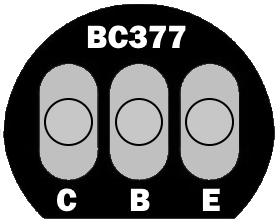
The BC337 transistor comes in a TO-92 package with three pins. The pinout is as follows:
Pin Number
Pin Name
Description
1
Collector
Current flows into this pin
2
Base
Controls the transistor's operation
3
Emitter
Current flows out of this pin
Below is a diagram of the BC337 pin configuration (viewed from the flat side of the TO-92 package):
   _______
  |       |
  |       |
  |_______|
   | | |
   1 2 3
   C B E
Usage Instructions
Using the BC337 in a Circuit
The BC337 transistor can be used as a switch or an amplifier. Below are the steps to use it in a circuit:
Determine the Operating Mode:
Switching Mode: Use the transistor to control a load (e.g., LED, motor) by applying a small current to the base.
Amplification Mode: Use the transistor to amplify a small input signal.
Base Resistor Calculation:
To protect the transistor, calculate the base resistor value using the formula:
[
R_b = \frac{V_{in} - V_{be}}{I_b}
]
Where:
( V_{in} ) is the input voltage to the base.
( V_{be} ) is the base-emitter voltage (typically 0.7 V for the BC337).
( I_b ) is the base current, which can be approximated as ( I_c / h_{FE} ).
Connect the Circuit:
Connect the collector to the positive side of the load.
Connect the emitter to ground.
Use a base resistor to connect the base to the control signal.
Example: Controlling an LED with Arduino UNO
Below is an example of using the BC337 to control an LED with an Arduino UNO:
Circuit Diagram
Collector: Connect to the positive terminal of the LED (with a current-limiting resistor in series).
Emitter: Connect to ground.
Base: Connect to an Arduino digital pin through a 1 kΩ resistor.
Arduino Code
// Define the pin connected to the BC337 base
const int transistorPin = 9; // Digital pin 9

void setup() {
  pinMode(transistorPin, OUTPUT); // Set the pin as an output
}

void loop() {
  digitalWrite(transistorPin, HIGH); // Turn on the LED
  delay(1000); // Wait for 1 second
  digitalWrite(transistorPin, LOW);  // Turn off the LED
  delay(1000); // Wait for 1 second
}
Important Considerations
Heat Dissipation: Ensure the transistor does not exceed its maximum power dissipation of 625 mW. Use a heatsink if necessary.
Voltage Ratings: Do not exceed the maximum voltage ratings (e.g., 45 V for Vce).
Current Ratings: Ensure the load does not draw more than 800 mA through the collector.
Troubleshooting and FAQs
Common Issues
Transistor Overheating:
Cause: Exceeding the maximum power dissipation or current rating.
Solution: Use a heatsink or reduce the load current.
No Output Signal:
Cause: Incorrect base resistor value or insufficient base current.
Solution: Recalculate the base resistor value and ensure the base current is sufficient.
Load Not Turning Off:
Cause: Leakage current or improper wiring.
Solution: Check the wiring and ensure the base is properly grounded when the transistor is off.
Damaged Transistor:
Cause: Exceeding voltage or current ratings.
Solution: Replace the transistor and ensure the circuit operates within safe limits.
FAQs
Q1: Can the BC337 be used for high-power applications?
A1: No, the BC337 is designed for low to medium power applications. For high-power applications, consider using power transistors like the TIP120.
Q2: What is the difference between the BC337 and BC547?
A2: The BC337 can handle higher currents (up to 800 mA) compared to the BC547 (100 mA), making it more suitable for driving larger loads.
Q3: Can I use the BC337 in a Darlington pair?
A3: Yes, the BC337 can be used in a Darlington pair configuration to achieve higher current gain.
Q4: What is the maximum frequency the BC337 can handle?
A4: The BC337 has a transition frequency (( f_t )) of 100 MHz, making it suitable for low-frequency applications.

 Open Project in Cirkit Designer