
How to Use ZH07 Laser Dust Sensor: Examples, Pinouts, and Specs
 Design with ZH07 Laser Dust Sensor in Cirkit Designer
Introduction
The ZH07 Laser Dust Sensor is a compact and efficient device designed to detect and measure particulate matter (PM) in the air using advanced laser technology. It provides real-time data on dust concentration, making it ideal for applications requiring air quality monitoring. The sensor is capable of detecting fine particles, such as PM2.5 and PM10, with high accuracy and reliability.
Explore Projects Built with ZH07 Laser Dust Sensor
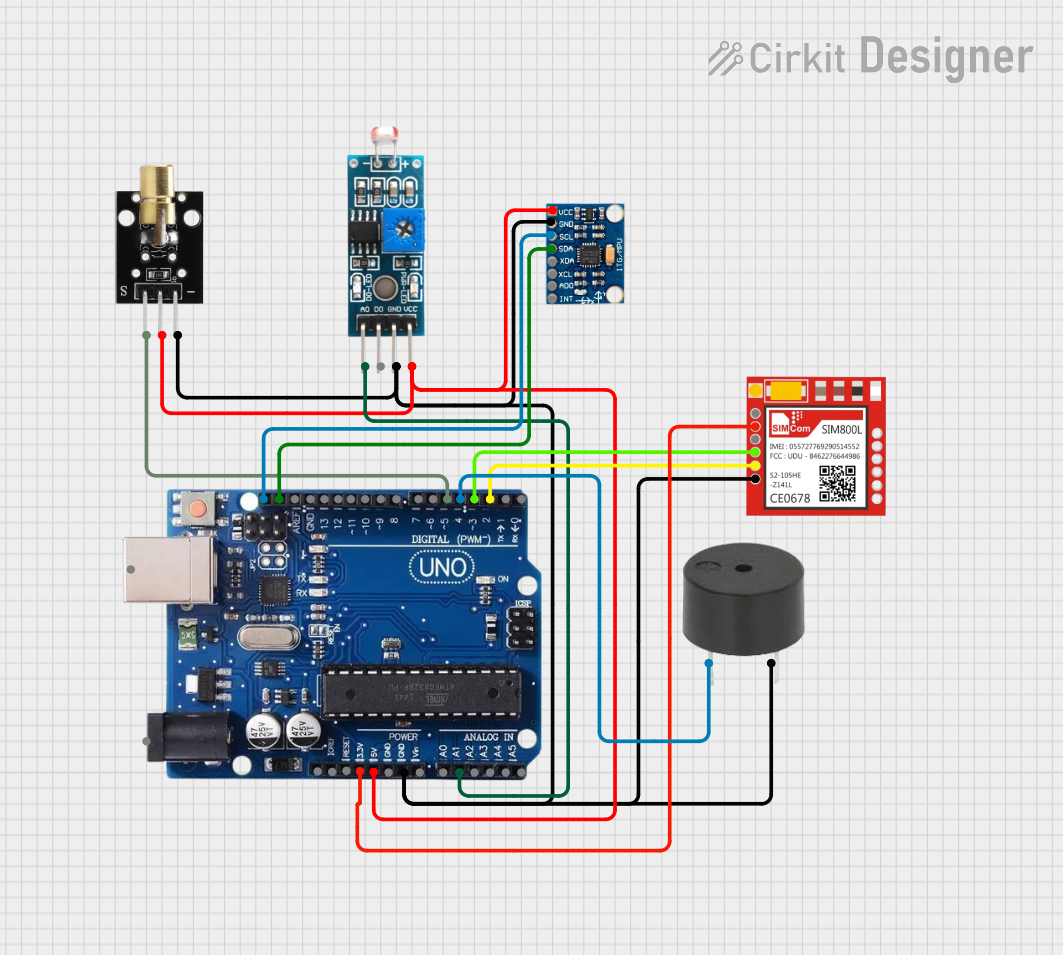 Open Project in Cirkit Designer
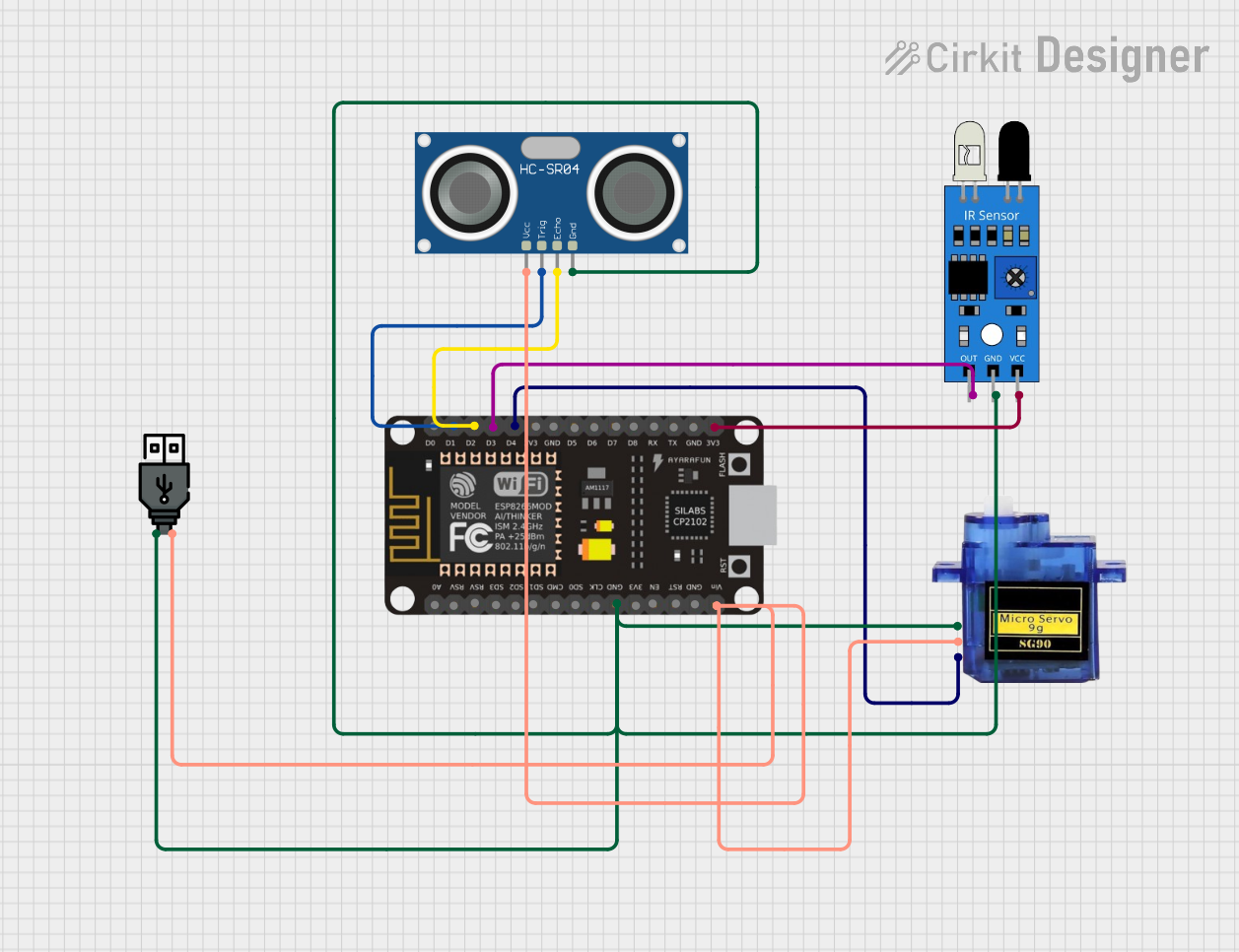 Open Project in Cirkit Designer
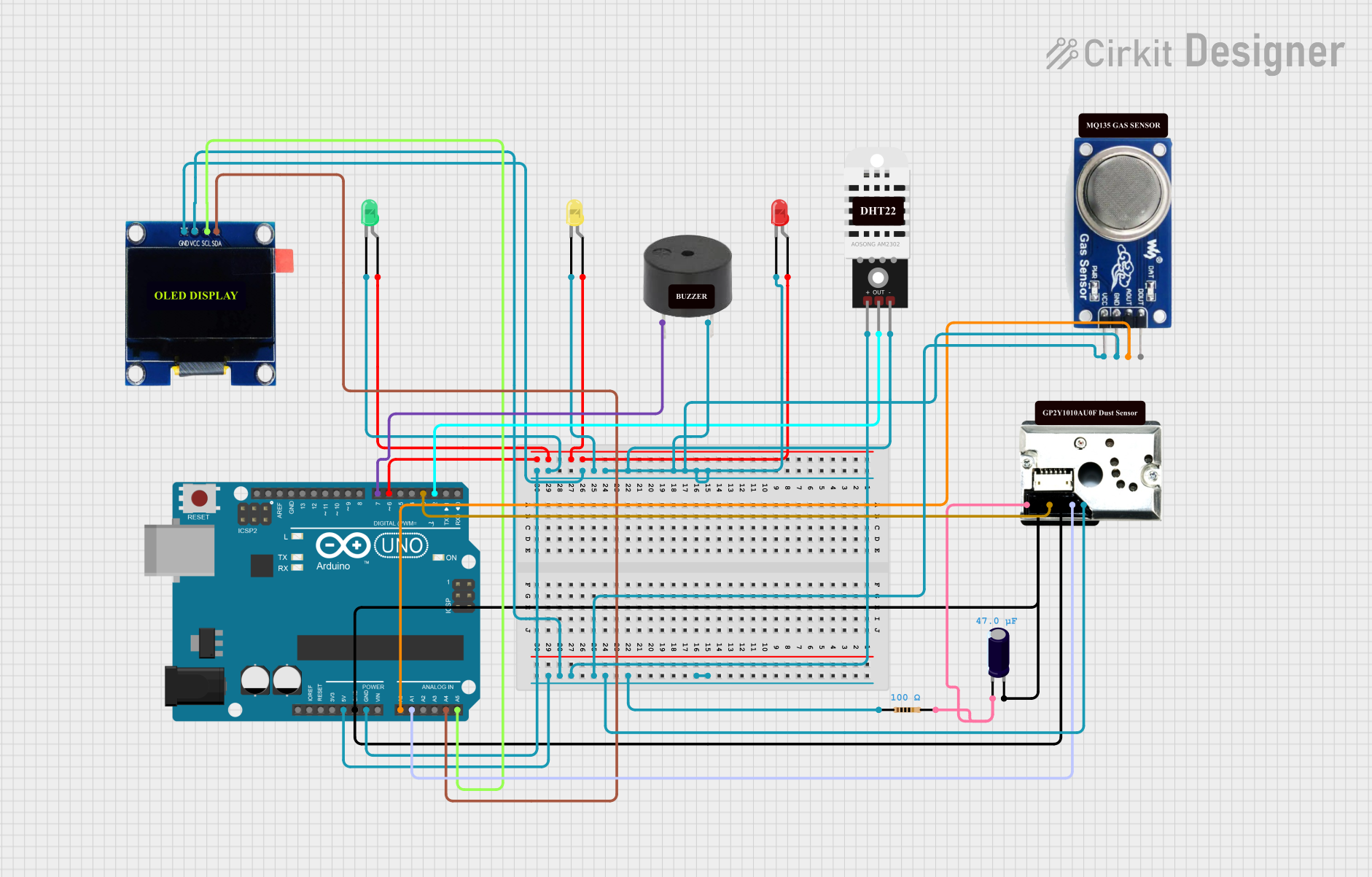 Open Project in Cirkit Designer
 Open Project in Cirkit Designer
Explore Projects Built with ZH07 Laser Dust Sensor
Open Project in Cirkit DesignerOpen Project in Cirkit DesignerOpen Project in Cirkit DesignerOpen Project in Cirkit DesignerCommon Applications and Use Cases
- Air purifiers and air quality monitors
- HVAC systems for indoor air quality control
- Environmental monitoring stations
- Smart home automation systems
- Industrial dust monitoring
Technical Specifications
The ZH07 Laser Dust Sensor is designed for ease of integration into various systems. Below are its key technical details:
Key Specifications
| Parameter | Value |
|---|---|
| Operating Voltage | 5V DC |
| Operating Current | ≤ 100mA |
| Particle Detection Size | 0.3µm to 10µm |
| Measurement Range | 0 to 1,000 µg/m³ |
| Output Interface | UART (3.3V TTL) |
| Response Time | ≤ 1 second |
| Operating Temperature | -10°C to 50°C |
| Operating Humidity | 0% to 99% RH (non-condensing) |
| Dimensions | 48mm x 37mm x 12mm |
| Weight | ~20g |
Pin Configuration and Descriptions
The ZH07 sensor has a 7-pin interface for power and communication. Below is the pinout:
| Pin Number | Name | Description |
|---|---|---|
| 1 | VCC | Power supply input (5V DC) |
| 2 | GND | Ground |
| 3 | RESET | Reset pin (active low, optional) |
| 4 | NC | Not connected |
| 5 | RXD | UART receive pin (3.3V TTL logic) |
| 6 | TXD | UART transmit pin (3.3V TTL logic) |
| 7 | NC | Not connected |
Usage Instructions
How to Use the ZH07 Laser Dust Sensor in a Circuit
- Power the Sensor: Connect the
VCCpin to a 5V DC power source and theGNDpin to ground. - Establish Communication: Use the
RXDandTXDpins to interface with a microcontroller or other UART-compatible device. Ensure the UART logic level is 3.3V. - Read Data: The sensor outputs particulate matter concentration data via UART in a predefined protocol. The data includes PM2.5 and PM10 values.
- Optional Reset: The
RESETpin can be used to reset the sensor if needed. Pull it low momentarily to trigger a reset.
Important Considerations and Best Practices
- Power Supply: Ensure a stable 5V DC power supply to avoid measurement inaccuracies.
- Placement: Install the sensor in a location with good airflow for accurate readings. Avoid placing it near sources of heat or moisture.
- UART Configuration: Set the UART baud rate to 9600 bps (default) for communication.
- Data Filtering: Implement software filtering to smooth out noise in the sensor's output data.
- Maintenance: Periodically clean the sensor's air inlet and outlet to prevent dust buildup, which can affect performance.
Example Code for Arduino UNO
Below is an example of how to interface the ZH07 Laser Dust Sensor with an Arduino UNO:
#include <SoftwareSerial.h>

// Define RX and TX pins for SoftwareSerial
SoftwareSerial zh07Serial(10, 11); // RX = Pin 10, TX = Pin 11

void setup() {
  Serial.begin(9600); // Initialize Serial Monitor at 9600 bps
  zh07Serial.begin(9600); // Initialize ZH07 UART communication at 9600 bps

  Serial.println("ZH07 Laser Dust Sensor Initialized");
}

void loop() {
  if (zh07Serial.available()) {
    // Read data from the sensor
    byte data[9];
    for (int i = 0; i < 9; i++) {
      data[i] = zh07Serial.read();
    }

    // Validate data packet (basic checksum example)
    if (data[0] == 0xFF && data[1] == 0x18) {
      int pm2_5 = (data[3] << 8) | data[4]; // PM2.5 concentration
      int pm10 = (data[5] << 8) | data[6];  // PM10 concentration

      // Print the results to the Serial Monitor
      Serial.print("PM2.5: ");
      Serial.print(pm2_5);
      Serial.print(" µg/m³, PM10: ");
      Serial.print(pm10);
      Serial.println(" µg/m³");
    }
  }

  delay(1000); // Wait 1 second before reading again
}
Troubleshooting and FAQs
Common Issues and Solutions
No Data Output:
- Cause: Incorrect wiring or UART configuration.
- Solution: Double-check the connections and ensure the UART baud rate is set to 9600 bps.
Inaccurate Readings:
- Cause: Dust buildup or poor airflow around the sensor.
- Solution: Clean the sensor's air inlet and outlet. Ensure proper placement with adequate airflow.
Sensor Not Responding:
- Cause: Power supply issues or damaged sensor.
- Solution: Verify the power supply voltage and current. Replace the sensor if necessary.
Checksum Errors in Data:
- Cause: Data corruption during transmission.
- Solution: Use shorter wires for UART communication and ensure a stable power supply.
FAQs
Q: Can the ZH07 detect particles smaller than 0.3µm?
A: No, the ZH07 is designed to detect particles in the range of 0.3µm to 10µm.
Q: Is the sensor compatible with 5V UART logic?
A: No, the ZH07 uses 3.3V TTL logic for UART communication. Use a level shifter if interfacing with a 5V system.
Q: How often should the sensor be cleaned?
A: Cleaning frequency depends on the environment. In dusty conditions, clean the sensor every 1-2 months.
Q: Can the sensor operate outdoors?
A: The ZH07 is not weatherproof. Use a protective enclosure if deploying it outdoors.