
How to Use Spektrum 14. 2200mAh 4S 100C Smart LiPo Battery: IC3, SPMX22004S100: Examples, Pinouts, and Specs
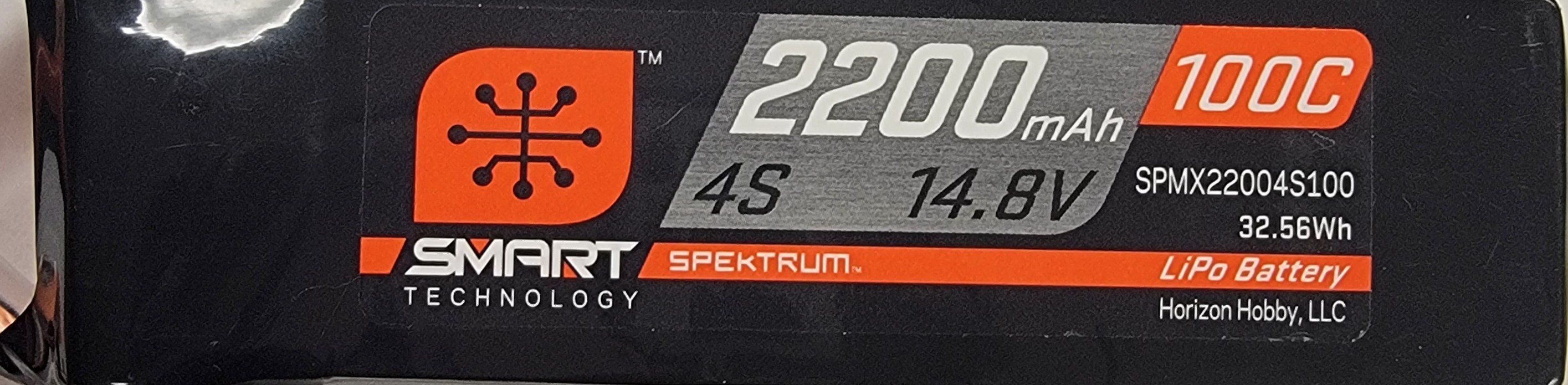
 Design with Spektrum 14. 2200mAh 4S 100C Smart LiPo Battery: IC3, SPMX22004S100 in Cirkit Designer
Introduction
The Spektrum 14. 2200mAh 4S 100C Smart LiPo Battery (SPMX22004S100) is a high-performance lithium polymer battery designed for demanding RC (radio-controlled) applications. With a 4-cell (4S) configuration, a capacity of 2200mAh, and a discharge rate of 100C, this battery delivers exceptional power and reliability for high-performance RC vehicles, drones, and aircraft. The integrated IC3 connector ensures secure and efficient connections, while the Smart technology provides advanced features such as automatic data logging and battery health monitoring.
Explore Projects Built with Spektrum 14. 2200mAh 4S 100C Smart LiPo Battery: IC3, SPMX22004S100
 Open Project in Cirkit Designer
 Open Project in Cirkit Designer
 Open Project in Cirkit Designer
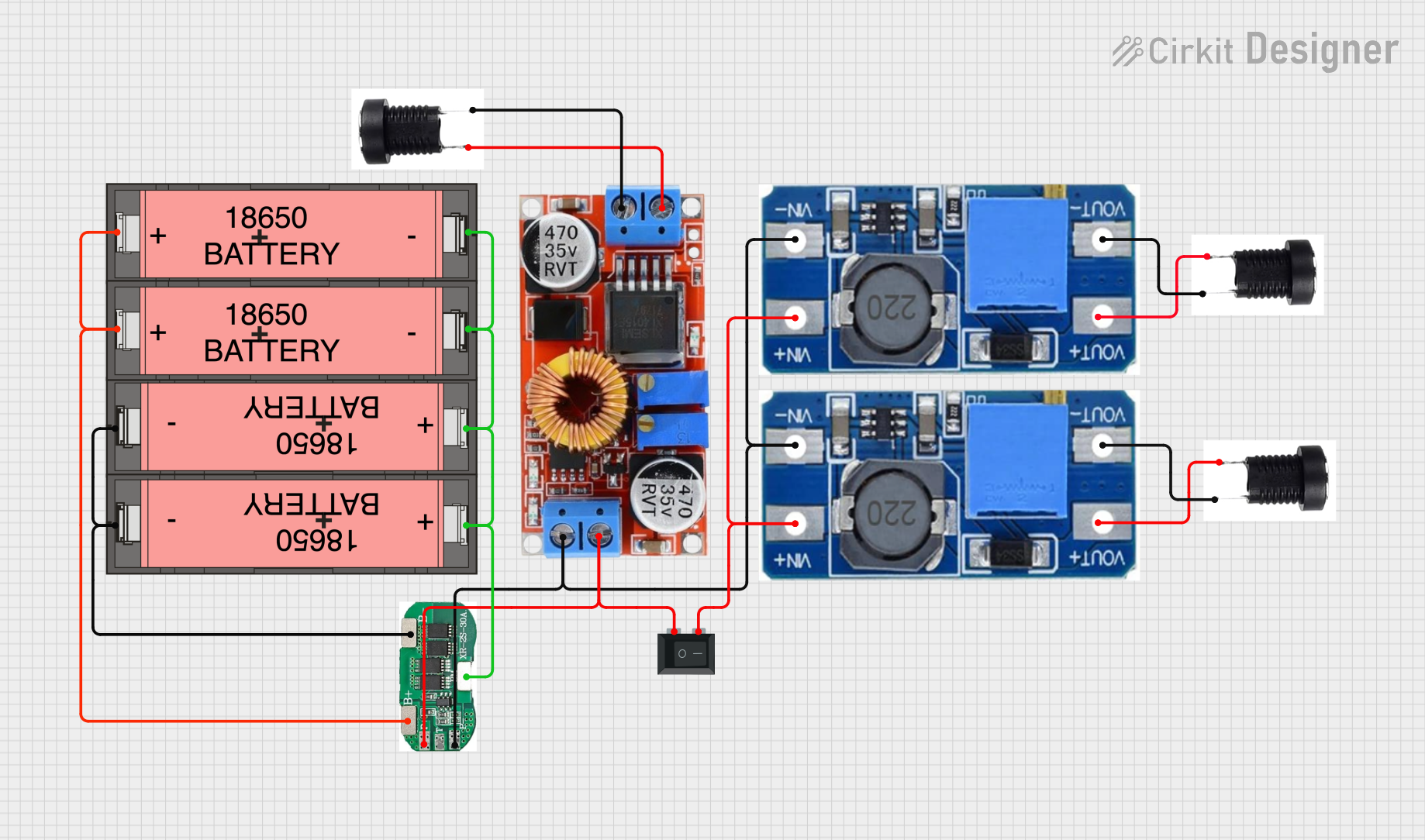 Open Project in Cirkit Designer
Explore Projects Built with Spektrum 14. 2200mAh 4S 100C Smart LiPo Battery: IC3, SPMX22004S100
Open Project in Cirkit DesignerOpen Project in Cirkit DesignerOpen Project in Cirkit DesignerOpen Project in Cirkit DesignerCommon Applications and Use Cases
- RC airplanes, helicopters, and drones requiring high power output
- RC cars and trucks for competitive racing or high-speed performance
- Applications where precise battery monitoring and management are critical
- Hobbyists and professionals seeking reliable, high-capacity power solutions
Technical Specifications
Key Technical Details
| Parameter | Specification |
|---|---|
| Manufacturer | Spektrum |
| Part ID | SPMX22004S100 |
| Battery Type | Lithium Polymer (LiPo) |
| Capacity | 2200mAh |
| Voltage | 14.8V (4S) |
| Discharge Rate | 100C |
| Maximum Burst Discharge | 200C |
| Connector Type | IC3 |
| Dimensions (L x W x H) | 106mm x 34mm x 27mm |
| Weight | 210g |
| Smart Technology Features | Automatic data logging, battery health monitoring, and charge cycle tracking |
Pin Configuration and Descriptions
The Spektrum Smart LiPo Battery features an IC3 connector and a balance lead. Below is the pin configuration:
IC3 Connector
| Pin Number | Description |
|---|---|
| 1 | Positive terminal (+) |
| 2 | Negative terminal (-) |
| 3 | Smart data communication pin |
Balance Lead
| Wire Color | Description |
|---|---|
| Red | Positive terminal for cell 1 |
| Black | Negative terminal for cell 4 |
| Other Wires | Intermediate cell connections for balancing |
Usage Instructions
How to Use the Component in a Circuit
Connecting the Battery:
- Ensure the IC3 connector is securely plugged into the corresponding IC3 port on your RC device or charger.
- Connect the balance lead to a compatible charger for proper cell balancing during charging.
Charging the Battery:
- Use a Spektrum Smart Charger or any compatible LiPo charger with IC3 support.
- Set the charger to the appropriate settings: 4S (14.8V) and a charging current of no more than 2.2A (1C rate) for safe charging.
- Monitor the charging process to ensure safety and prevent overcharging.
Using the Battery in an RC Device:
- Verify that the RC device is compatible with a 4S LiPo battery and can handle the 100C discharge rate.
- Secure the battery in the designated compartment to prevent movement during operation.
- Power on the RC device and monitor battery performance using the Smart telemetry features if supported.
Important Considerations and Best Practices
- Storage: Store the battery at a voltage of 3.8V per cell (storage charge) when not in use for extended periods.
- Temperature: Avoid exposing the battery to extreme temperatures (below 0°C or above 60°C).
- Safety: Never puncture, short-circuit, or overcharge the battery. Use a LiPo-safe bag during charging for added safety.
- Discharge Limits: Do not discharge the battery below 3.2V per cell to prevent damage and reduce lifespan.
Example Code for Monitoring Battery Telemetry with Arduino UNO
If you are using the battery's Smart telemetry features with an Arduino UNO, you can use the following example code to read data from the IC3 Smart pin. Note that additional hardware (e.g., a voltage divider or level shifter) may be required to interface with the Arduino.
// Example code to read battery telemetry data from the IC3 Smart pin
// Ensure proper voltage level shifting to protect the Arduino's input pins

const int smartPin = 2; // Pin connected to the IC3 Smart data pin
void setup() {
  Serial.begin(9600); // Initialize serial communication
  pinMode(smartPin, INPUT); // Set the Smart pin as input
}

void loop() {
  int smartData = digitalRead(smartPin); // Read data from the Smart pin
  Serial.print("Smart Data: ");
  Serial.println(smartData); // Print the data to the Serial Monitor

  delay(1000); // Delay for 1 second before the next read
}
Troubleshooting and FAQs
Common Issues and Solutions
Battery Not Charging:
- Cause: Incorrect charger settings or damaged balance lead.
- Solution: Verify the charger is set to 4S (14.8V) and inspect the balance lead for damage.
RC Device Shuts Down Prematurely:
- Cause: Battery voltage too low or device not compatible with 4S batteries.
- Solution: Check the battery voltage and ensure the RC device supports 4S configurations.
Battery Swelling or Overheating:
- Cause: Overcharging, over-discharging, or exposure to high temperatures.
- Solution: Discontinue use immediately and dispose of the battery safely if damaged.
Telemetry Data Not Displaying:
- Cause: Improper connection to the IC3 Smart pin or incompatible device.
- Solution: Verify the IC3 connector is securely connected and check device compatibility.
FAQs
Q: Can I use this battery with non-Spektrum devices?
- A: Yes, as long as the device supports 4S LiPo batteries and has an IC3 or compatible connector.
Q: What is the maximum safe discharge rate?
- A: The battery supports a continuous discharge rate of 100C and a burst rate of 200C.
Q: How do I know when the battery needs replacement?
- A: Use the Smart telemetry features to monitor battery health. Replace the battery if capacity drops significantly or if swelling occurs.
Q: Can I charge this battery with a non-Smart charger?
- A: Yes, but you will not have access to the Smart features. Ensure the charger supports 4S LiPo batteries and has an IC3 connector.
This documentation provides a comprehensive guide to using the Spektrum 14. 2200mAh 4S 100C Smart LiPo Battery. Always follow safety guidelines and manufacturer recommendations for optimal performance and longevity.