
How to Use 3.2v 50 Ah LiFePo4 Battery: Examples, Pinouts, and Specs
 Design with 3.2v 50 Ah LiFePo4 Battery in Cirkit Designer
Introduction
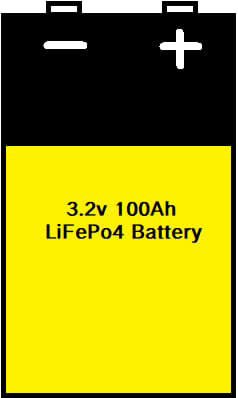
The 3.2V 50Ah LiFePo4 (Lithium Iron Phosphate) battery is a rechargeable energy storage device known for its high safety, stability, and long cycle life. With a nominal voltage of 3.2 volts and a capacity of 50 amp-hours, this battery is ideal for applications requiring reliable and efficient power delivery. It is widely used in electric vehicles (EVs), renewable energy storage systems, uninterruptible power supplies (UPS), and portable electronics.
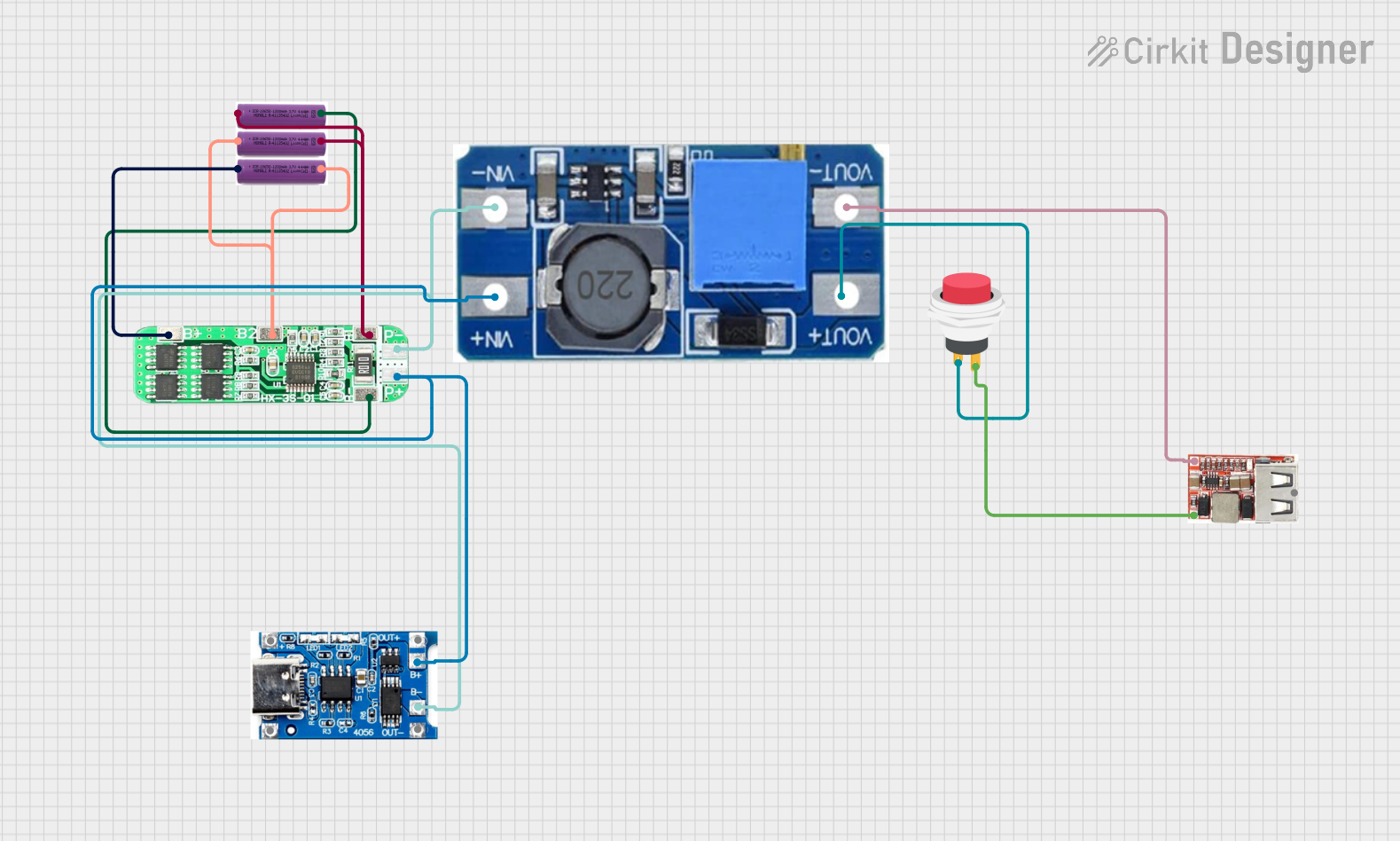
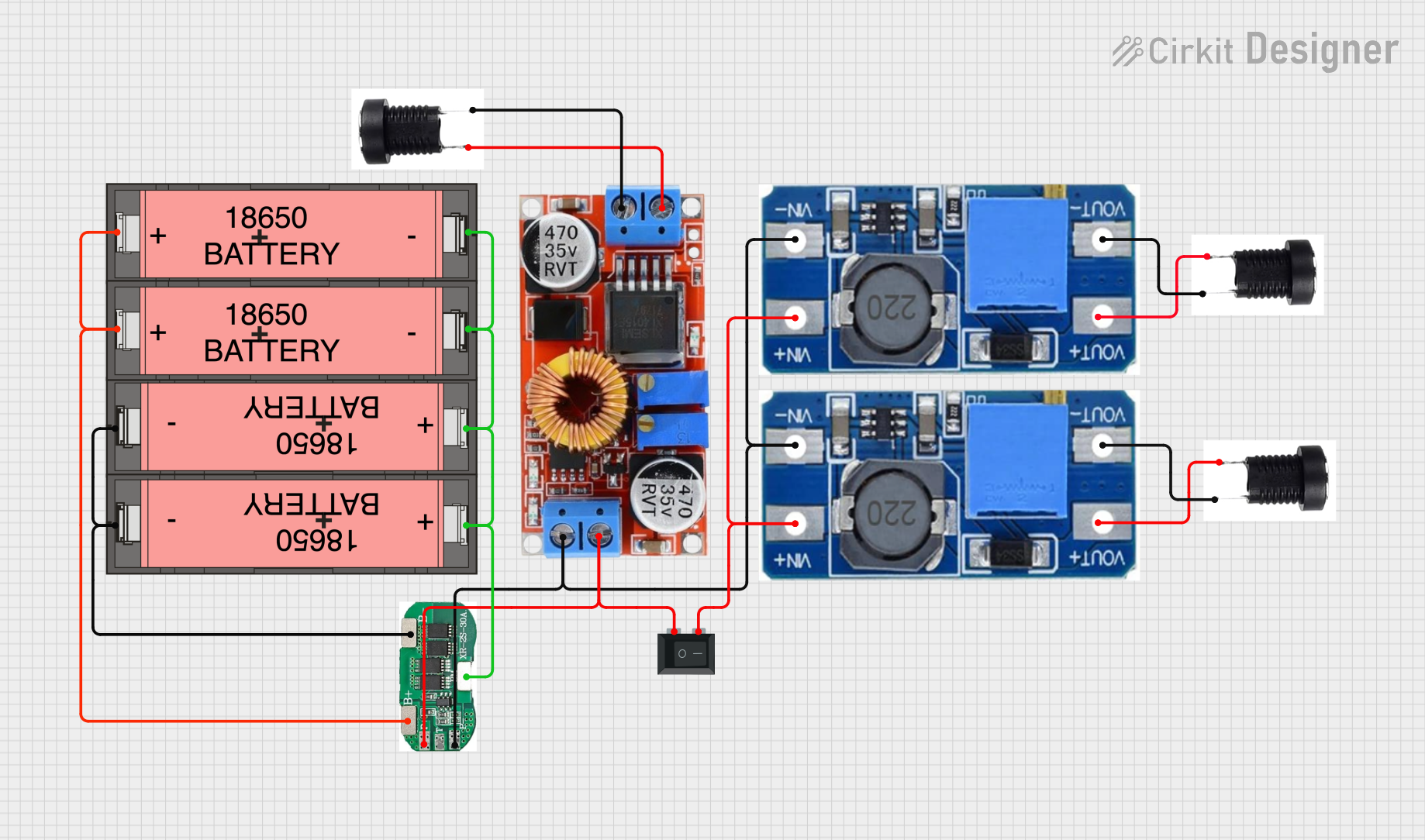
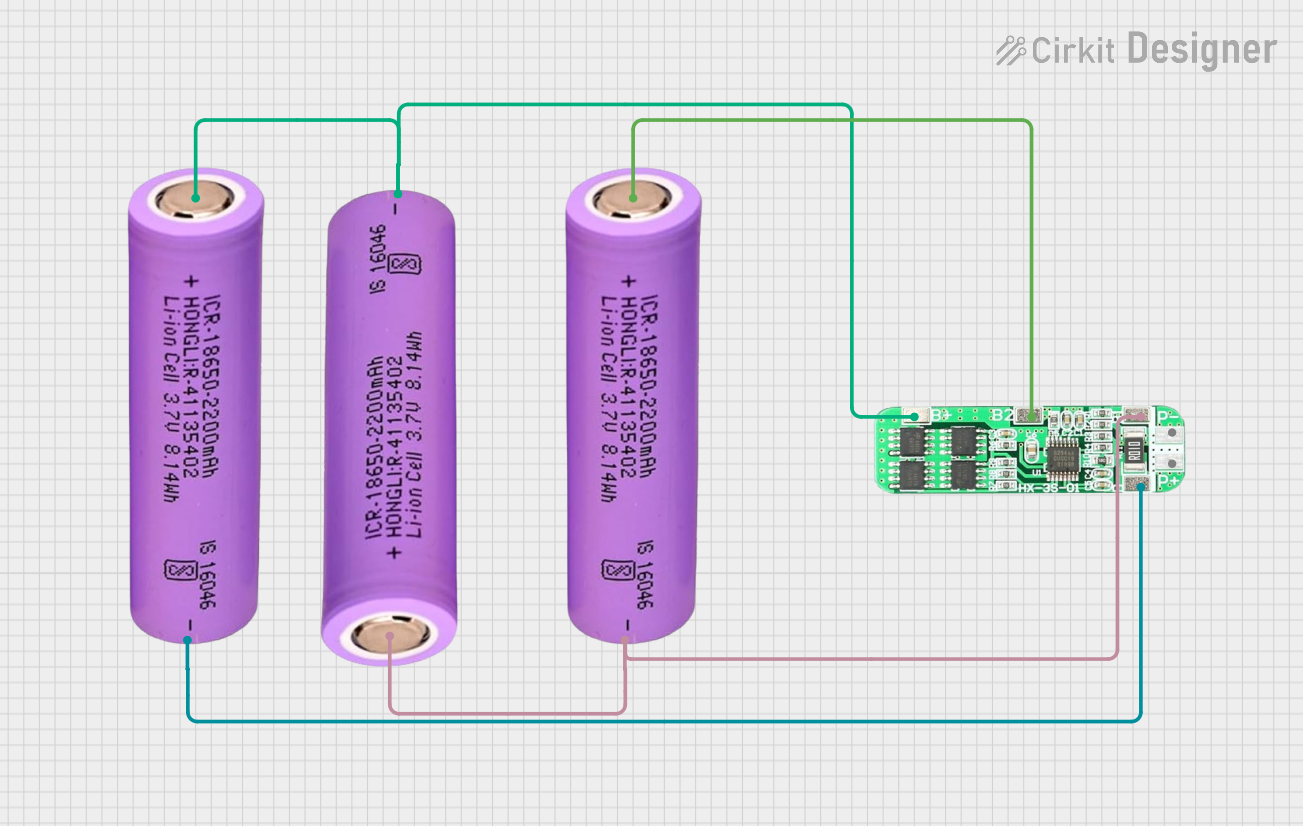
Explore Projects Built with 3.2v 50 Ah LiFePo4 Battery
 Open Project in Cirkit Designer
 Open Project in Cirkit Designer
 Open Project in Cirkit Designer
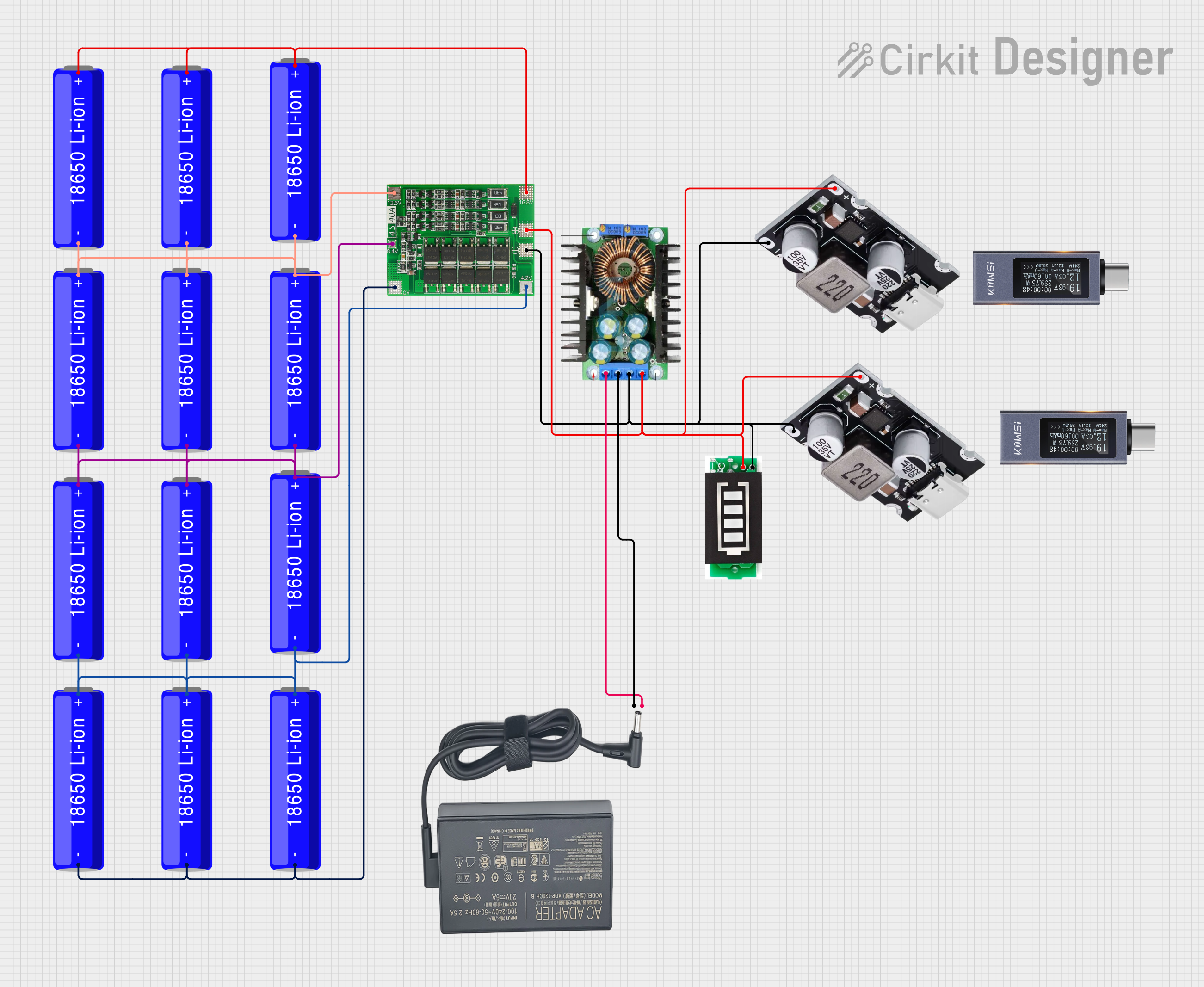 Open Project in Cirkit Designer
Explore Projects Built with 3.2v 50 Ah LiFePo4 Battery
Open Project in Cirkit DesignerOpen Project in Cirkit DesignerOpen Project in Cirkit DesignerOpen Project in Cirkit DesignerCommon Applications:
- Electric Vehicles (EVs): Provides a stable and long-lasting power source for electric cars, bikes, and scooters.
- Renewable Energy Storage: Used in solar and wind energy systems for storing excess energy.
- Uninterruptible Power Supplies (UPS): Ensures continuous power during outages.
- Portable Electronics: Powers devices such as power banks, medical equipment, and camping gear.
Technical Specifications
Key Specifications:
| Parameter | Value |
|---|---|
| Nominal Voltage | 3.2V |
| Capacity | 50Ah |
| Energy | 160Wh |
| Charge Voltage Range | 3.65V (max) |
| Discharge Voltage Range | 2.5V (min) |
| Maximum Continuous Current | 50A |
| Peak Discharge Current | 100A (for 10 seconds) |
| Cycle Life | >2000 cycles (at 80% DOD) |
| Operating Temperature | -20°C to 60°C (discharge) |
| Weight | ~1.5kg |
| Dimensions | ~135mm x 35mm x 200mm |
Pin Configuration and Descriptions:
The 3.2V 50Ah LiFePo4 battery typically has two terminals:
| Terminal | Symbol | Description |
|---|---|---|
| Positive | (+) | Connects to the positive side of the circuit. |
| Negative | (-) | Connects to the negative side of the circuit. |
Note: Some batteries may include additional terminals for battery management system (BMS) connections. Refer to the specific product datasheet for details.
Usage Instructions
How to Use the Battery in a Circuit:
Charging the Battery:
- Use a LiFePo4-compatible charger with a maximum charge voltage of 3.65V.
- Ensure the charging current does not exceed 50A to prevent overheating or damage.
- Monitor the battery temperature during charging to ensure it stays within the safe range (-20°C to 60°C).
Connecting the Battery:
- Connect the positive terminal (+) to the positive side of the load or circuit.
- Connect the negative terminal (-) to the negative side of the load or circuit.
- Use appropriately rated wires and connectors to handle the current.
Discharging the Battery:
- Ensure the load does not draw more than 50A continuously or 100A for short bursts.
- Avoid discharging the battery below 2.5V to prevent damage.
Battery Management System (BMS):
- Use a BMS to monitor and protect the battery from overcharging, over-discharging, and overheating.
- The BMS also helps balance the cells in multi-cell configurations.
Important Considerations:
- Safety First: Always handle the battery with care to avoid short circuits or physical damage.
- Storage: Store the battery in a cool, dry place at a partial charge (around 50%) for long-term storage.
- Series/Parallel Configurations: When connecting multiple batteries in series or parallel, ensure all batteries are of the same type, capacity, and charge level.
Example: Using the Battery with an Arduino UNO
To power an Arduino UNO with the 3.2V 50Ah LiFePo4 battery, you will need a DC-DC step-up converter to boost the voltage to 5V. Below is an example circuit and code:
Circuit:
- Connect the battery's positive terminal to the input (+) of the DC-DC converter.
- Connect the battery's negative terminal to the input (-) of the DC-DC converter.
- Set the DC-DC converter output to 5V.
- Connect the DC-DC converter output to the Arduino UNO's VIN and GND pins.
Code:
// Example code to blink an LED on Arduino UNO
// This assumes the Arduino is powered by the 3.2V LiFePo4 battery
// through a DC-DC step-up converter set to 5V.

void setup() {
  pinMode(13, OUTPUT); // Set pin 13 as an output for the onboard LED
}

void loop() {
  digitalWrite(13, HIGH); // Turn the LED on
  delay(1000);            // Wait for 1 second
  digitalWrite(13, LOW);  // Turn the LED off
  delay(1000);            // Wait for 1 second
}
Troubleshooting and FAQs
Common Issues:
Battery Not Charging:
- Cause: Charger not compatible with LiFePo4 chemistry.
- Solution: Use a charger specifically designed for LiFePo4 batteries.
Battery Overheating:
- Cause: Excessive charging or discharging current.
- Solution: Ensure the current stays within the specified limits (50A continuous, 100A peak).
Low Capacity or Short Runtime:
- Cause: Battery degradation or improper charging.
- Solution: Check the battery's cycle life and ensure proper charging practices.
Voltage Drops Below 2.5V:
- Cause: Over-discharging the battery.
- Solution: Use a BMS to prevent over-discharge and recharge the battery immediately.
FAQs:
Q: Can I connect multiple 3.2V 50Ah LiFePo4 batteries in series?
- A: Yes, you can connect them in series to increase the voltage. For example, connecting four batteries in series will provide a nominal voltage of 12.8V. Ensure all batteries are balanced and use a BMS.
Q: How long will the battery last?
- A: The battery has a cycle life of over 2000 cycles at 80% depth of discharge (DOD). This means it can last several years with proper use.
Q: Is the battery safe to use indoors?
- A: Yes, LiFePo4 batteries are known for their safety and thermal stability. However, ensure proper ventilation and avoid exposing the battery to extreme heat or physical damage.
Q: Can I use this battery for solar energy storage?
- A: Absolutely. The 3.2V 50Ah LiFePo4 battery is well-suited for solar energy systems due to its long cycle life and stable performance.
By following the guidelines in this documentation, you can safely and effectively use the 3.2V 50Ah LiFePo4 battery in your projects.