
How to Use NodeMCU 8266: Examples, Pinouts, and Specs
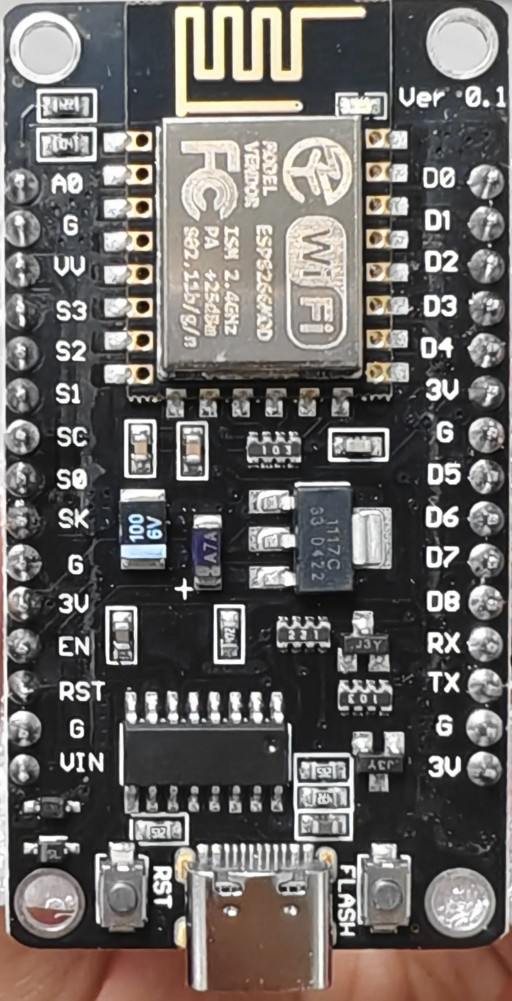
 Design with NodeMCU 8266 in Cirkit Designer
Introduction
The NodeMCU 8266 is a low-cost, open-source IoT platform based on the ESP8266 Wi-Fi module. It integrates a powerful microcontroller, built-in Wi-Fi capabilities, and a USB interface for easy programming. Designed for IoT applications, the NodeMCU 8266 simplifies the development of connected devices by providing a versatile and user-friendly platform.
Explore Projects Built with NodeMCU 8266
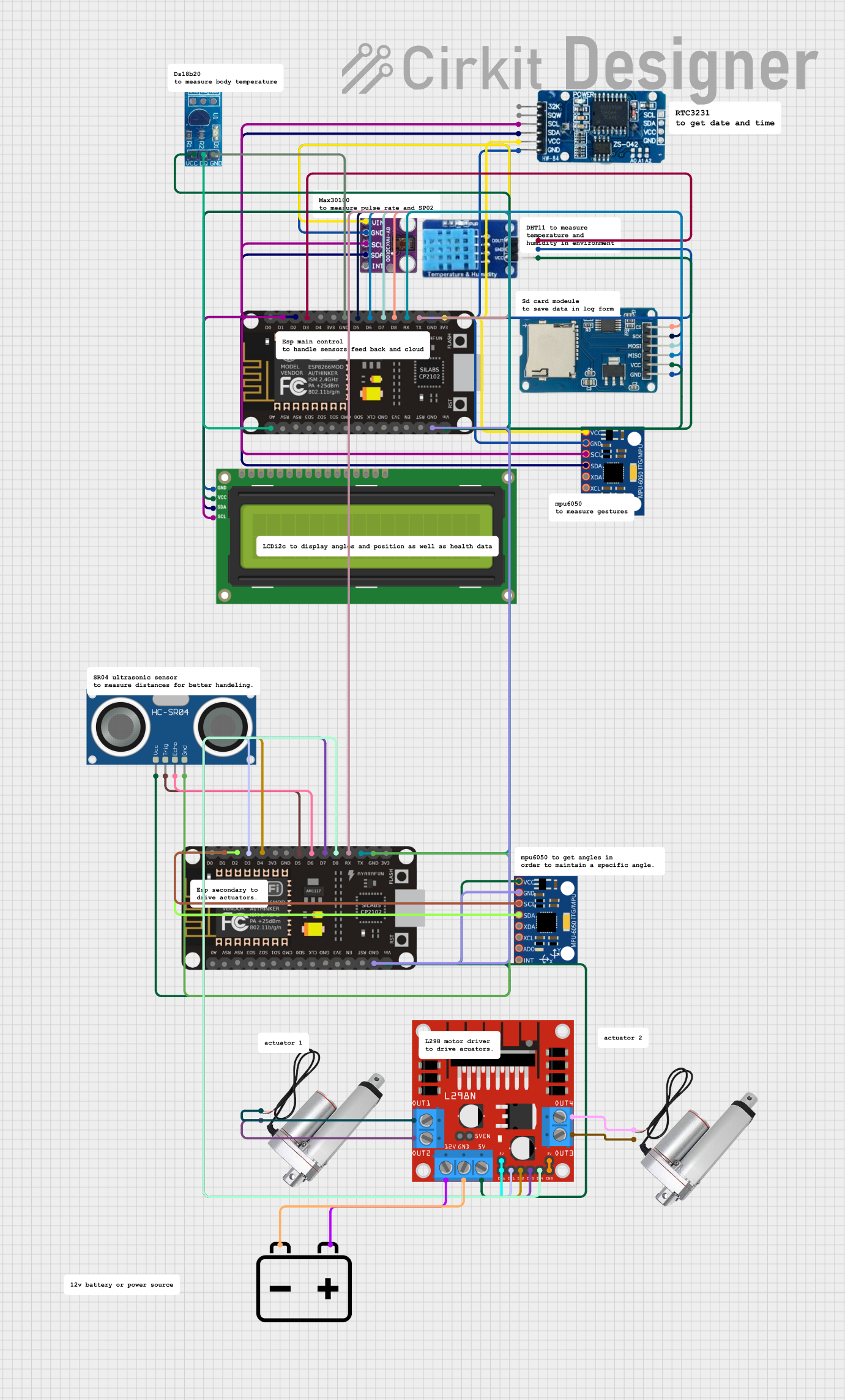 Open Project in Cirkit Designer
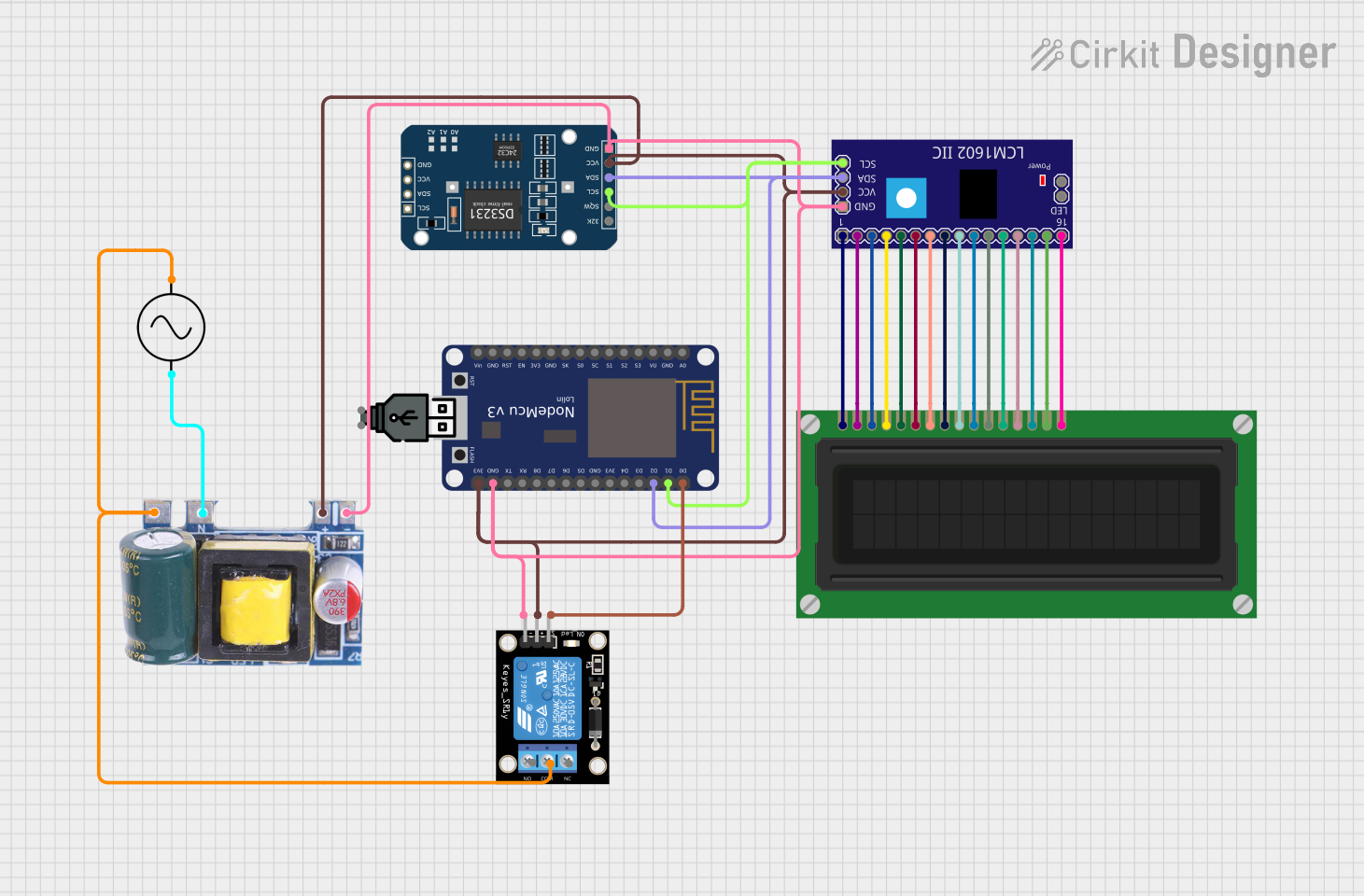 Open Project in Cirkit Designer
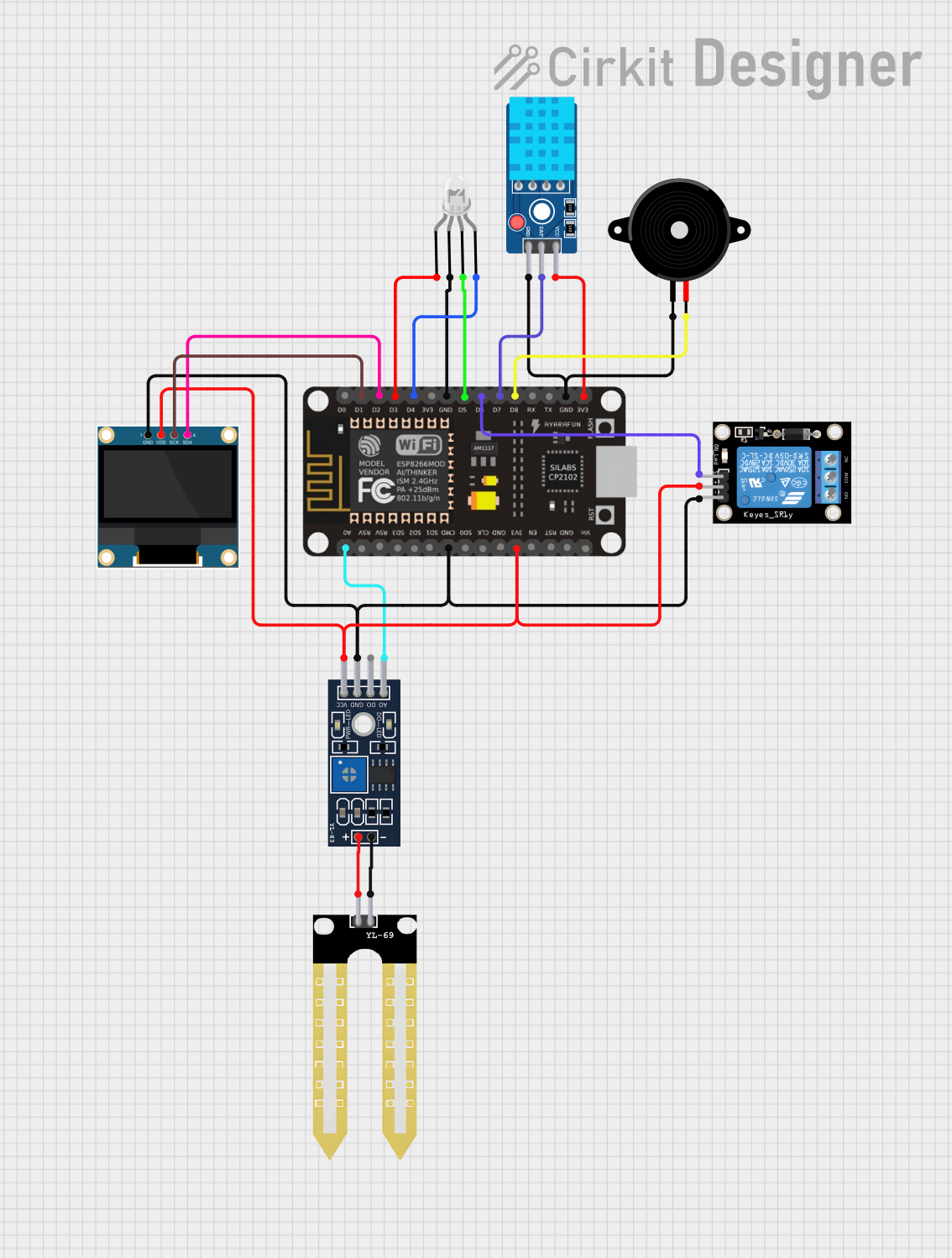 Open Project in Cirkit Designer
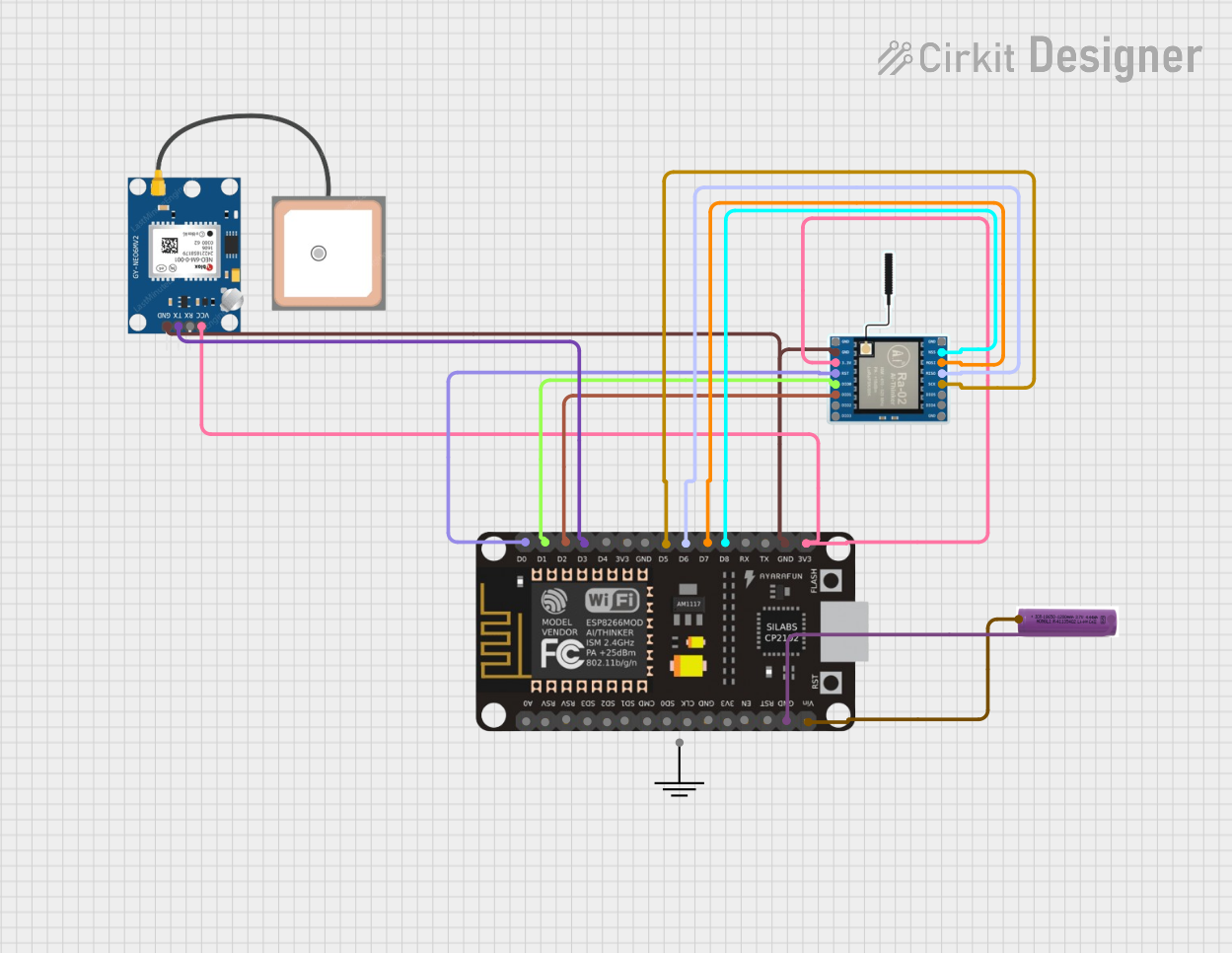 Open Project in Cirkit Designer
Explore Projects Built with NodeMCU 8266
Open Project in Cirkit DesignerOpen Project in Cirkit DesignerOpen Project in Cirkit DesignerOpen Project in Cirkit DesignerCommon Applications and Use Cases
- Home automation systems
- Smart appliances
- Wireless sensor networks
- IoT prototyping and development
- Remote monitoring and control systems
Technical Specifications
Key Technical Details
| Specification | Value |
|---|---|
| Microcontroller | ESP8266 (Tensilica L106 32-bit processor) |
| Clock Speed | 80 MHz (can be overclocked to 160 MHz) |
| Flash Memory | 4 MB (varies by model) |
| Operating Voltage | 3.3V |
| Input Voltage | 4.5V - 10V (via VIN pin) |
| Digital I/O Pins | 11 (GPIO0 to GPIO16, some shared) |
| Analog Input Pins | 1 (10-bit ADC, 0-1V range) |
| Wi-Fi Standard | 802.11 b/g/n |
| USB Interface | Micro-USB for programming and power |
| Communication Protocols | UART, SPI, I2C |
Pin Configuration and Descriptions
| Pin Name | Pin Number | Description |
|---|---|---|
| VIN | - | Input voltage (4.5V-10V) for powering the board. |
| 3V3 | - | 3.3V output from the onboard regulator. |
| GND | - | Ground pin. |
| GPIO0 | D3 | General-purpose I/O pin, also used for boot mode. |
| GPIO1 | TX | UART TX pin, used for serial communication. |
| GPIO2 | D4 | General-purpose I/O pin. |
| GPIO3 | RX | UART RX pin, used for serial communication. |
| GPIO4 | D2 | General-purpose I/O pin. |
| GPIO5 | D1 | General-purpose I/O pin. |
| GPIO12 | D6 | General-purpose I/O pin. |
| GPIO13 | D7 | General-purpose I/O pin. |
| GPIO14 | D5 | General-purpose I/O pin. |
| GPIO15 | D8 | General-purpose I/O pin, also used for boot mode. |
| GPIO16 | D0 | General-purpose I/O pin. |
| A0 | - | Analog input pin (0-1V range). |
Usage Instructions
How to Use the NodeMCU 8266 in a Circuit
Powering the Board:
- Use a Micro-USB cable to power the NodeMCU 8266 via a USB port or adapter.
- Alternatively, supply 4.5V-10V to the VIN pin or 3.3V to the 3V3 pin.
Programming the Board:
- Install the Arduino IDE and add the ESP8266 board package via the Board Manager.
- Connect the NodeMCU 8266 to your computer using a Micro-USB cable.
- Select the correct board ("NodeMCU 1.0 (ESP-12E Module)") and port in the Arduino IDE.
- Write or upload your code to the board.
Connecting Peripherals:
- Use the GPIO pins to connect sensors, actuators, or other peripherals.
- For analog sensors, connect them to the A0 pin (ensure the voltage is within 0-1V).
Important Considerations and Best Practices
- Voltage Levels: The GPIO pins operate at 3.3V. Avoid applying 5V directly to the pins to prevent damage.
- Wi-Fi Signal Strength: Ensure the NodeMCU 8266 is within range of your Wi-Fi network for reliable connectivity.
- Power Supply: Use a stable power source to avoid unexpected resets or malfunctions.
- Boot Modes: GPIO0 and GPIO15 are used for boot mode selection. Ensure they are configured correctly during programming.
Example Code for Arduino IDE
The following example demonstrates how to connect the NodeMCU 8266 to a Wi-Fi network and control an LED connected to GPIO2.
#include <ESP8266WiFi.h> // Include the ESP8266 Wi-Fi library

const char* ssid = "Your_SSID";       // Replace with your Wi-Fi network name
const char* password = "Your_Password"; // Replace with your Wi-Fi password

const int ledPin = 2; // GPIO2 (D4) is connected to the LED

void setup() {
  pinMode(ledPin, OUTPUT); // Set GPIO2 as an output pin
  Serial.begin(115200);    // Initialize serial communication
  delay(10);

  // Connect to Wi-Fi
  Serial.println("Connecting to Wi-Fi...");
  WiFi.begin(ssid, password);

  while (WiFi.status() != WL_CONNECTED) {
    delay(500);
    Serial.print(".");
  }
  Serial.println("\nWi-Fi connected!");
  Serial.print("IP Address: ");
  Serial.println(WiFi.localIP()); // Print the device's IP address
}

void loop() {
  digitalWrite(ledPin, HIGH); // Turn the LED on
  delay(1000);                // Wait for 1 second
  digitalWrite(ledPin, LOW);  // Turn the LED off
  delay(1000);                // Wait for 1 second
}
Troubleshooting and FAQs
Common Issues and Solutions
The NodeMCU 8266 is not detected by the computer:
- Ensure the correct USB driver (e.g., CH340 or CP2102) is installed.
- Try a different USB cable or port.
Wi-Fi connection fails:
- Double-check the SSID and password in your code.
- Ensure the Wi-Fi network is within range and not overloaded.
The board resets unexpectedly:
- Verify that the power supply is stable and sufficient.
- Avoid drawing excessive current from the GPIO pins.
Analog readings are inaccurate:
- Ensure the input voltage to the A0 pin is within the 0-1V range.
- Use a voltage divider if necessary.
FAQs
Can I use 5V sensors with the NodeMCU 8266?
Yes, but you must use a level shifter or voltage divider to step down the signal to 3.3V.What is the maximum Wi-Fi range of the NodeMCU 8266?
The range depends on environmental factors but is typically around 30-50 meters indoors.Can I power the NodeMCU 8266 with batteries?
Yes, you can use a 3.7V LiPo battery (via 3V3) or a 5V power source (via VIN).How do I reset the NodeMCU 8266?
Press the onboard reset button or pull the RST pin low momentarily.