
How to Use sensor tegangan: Examples, Pinouts, and Specs
 Design with sensor tegangan in Cirkit Designer
Introduction
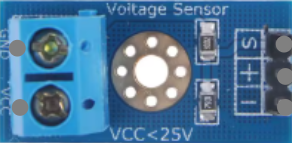
A voltage sensor is a device that detects and measures the voltage level in a circuit, providing an output signal that can be used for monitoring or control purposes. These sensors are widely used in various applications, including power management systems, battery monitoring, renewable energy systems, and industrial automation. By converting voltage levels into readable signals, voltage sensors enable precise monitoring and control of electrical systems.
Explore Projects Built with sensor tegangan
 Open Project in Cirkit Designer
 Open Project in Cirkit Designer
 Open Project in Cirkit Designer
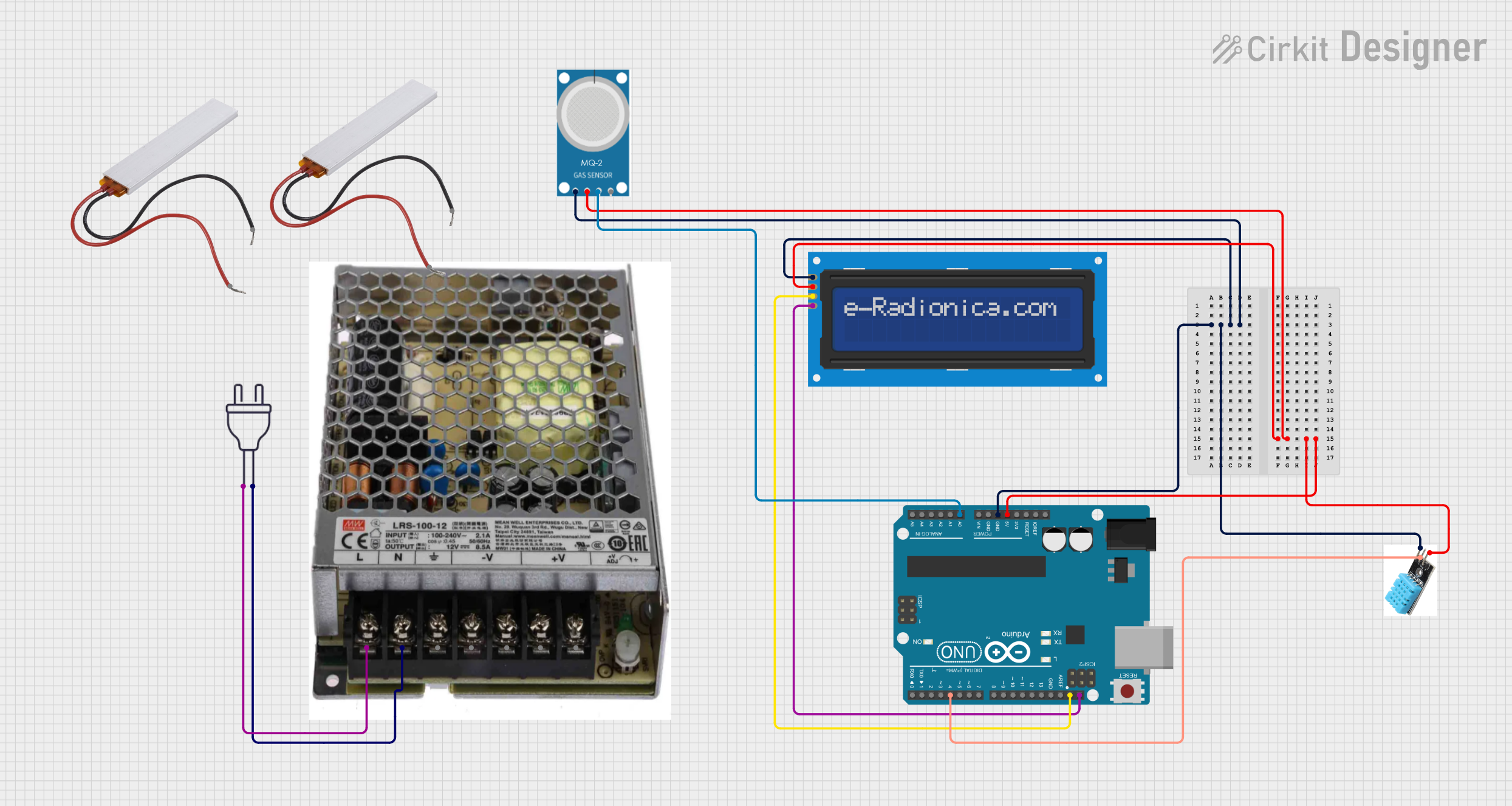 Open Project in Cirkit Designer
Explore Projects Built with sensor tegangan
Open Project in Cirkit DesignerOpen Project in Cirkit DesignerOpen Project in Cirkit DesignerOpen Project in Cirkit DesignerTechnical Specifications
Below are the general technical specifications for a typical voltage sensor module:
- Input Voltage Range: 0–25V DC (varies by model)
- Output Voltage Range: 0–5V DC (compatible with microcontrollers like Arduino)
- Accuracy: ±1% (typical)
- Operating Voltage: 3.3V or 5V DC
- Operating Current: <10mA
- Dimensions: 30mm x 20mm x 15mm (approx.)
- Interface: Analog output
- Temperature Range: -40°C to 85°C
Pin Configuration and Descriptions
The voltage sensor module typically has the following pins:
| Pin Name | Description |
|---|---|
VCC |
Power supply input (3.3V or 5V DC, depending on the module). |
GND |
Ground connection. |
OUT |
Analog output signal proportional to the input voltage. |
VIN+ |
Positive terminal for the voltage to be measured. |
VIN- |
Negative terminal for the voltage to be measured (connected to ground). |
Usage Instructions
How to Use the Voltage Sensor in a Circuit
- Power the Sensor: Connect the
VCCpin to a 3.3V or 5V DC power source and theGNDpin to the ground. - Connect the Voltage Source: Attach the voltage source to be measured across the
VIN+andVIN-terminals. Ensure the input voltage does not exceed the sensor's maximum input range (e.g., 25V DC). - Read the Output: Connect the
OUTpin to an analog input pin of a microcontroller (e.g., Arduino). The output voltage will be proportional to the input voltage.
Important Considerations and Best Practices
- Voltage Divider Circuit: Most voltage sensors use an internal voltage divider circuit to scale down the input voltage. Ensure the scaling factor is known (e.g., 5:1 or 10:1) to calculate the actual input voltage.
- Input Voltage Limits: Do not exceed the maximum input voltage rating of the sensor to avoid damage.
- Calibration: For accurate measurements, calibrate the sensor by comparing its output with a known reference voltage.
- Noise Reduction: Use decoupling capacitors if the sensor is used in a noisy environment to stabilize the output signal.
Example Code for Arduino UNO
Below is an example of how to use a voltage sensor with an Arduino UNO to measure and display voltage:
// Define the analog pin connected to the sensor's OUT pin
const int sensorPin = A0;

// Define the voltage divider scaling factor (e.g., 5:1)
const float scalingFactor = 5.0;

// Define the reference voltage of the Arduino (typically 5V)
const float referenceVoltage = 5.0;

void setup() {
  // Initialize serial communication for debugging
  Serial.begin(9600);
}

void loop() {
  // Read the analog value from the sensor
  int sensorValue = analogRead(sensorPin);

  // Convert the analog value to a voltage
  float outputVoltage = (sensorValue / 1023.0) * referenceVoltage;

  // Calculate the actual input voltage using the scaling factor
  float inputVoltage = outputVoltage * scalingFactor;

  // Print the measured voltage to the Serial Monitor
  Serial.print("Input Voltage: ");
  Serial.print(inputVoltage);
  Serial.println(" V");

  // Wait for 500ms before the next reading
  delay(500);
}
Notes on the Code
- The
scalingFactorshould match the voltage divider ratio of your specific sensor module. - The
referenceVoltageshould be adjusted if the Arduino is powered by a source other than 5V (e.g., 3.3V).
Troubleshooting and FAQs
Common Issues
Incorrect Voltage Readings:
- Cause: Incorrect scaling factor or reference voltage.
- Solution: Verify the voltage divider ratio of the sensor and ensure the correct reference voltage is used in calculations.
No Output Signal:
- Cause: Improper wiring or insufficient power supply.
- Solution: Double-check all connections and ensure the sensor is powered correctly.
Fluctuating Readings:
- Cause: Electrical noise or unstable input voltage.
- Solution: Add decoupling capacitors near the sensor's power pins or stabilize the input voltage source.
FAQs
Q: Can this sensor measure AC voltage?
A: No, this sensor is designed for DC voltage measurement only. For AC voltage, use a dedicated AC voltage sensor.
Q: What happens if the input voltage exceeds the sensor's maximum range?
A: Exceeding the maximum input voltage can damage the sensor. Always ensure the input voltage is within the specified range.
Q: Can I use this sensor with a 3.3V microcontroller?
A: Yes, as long as the sensor supports a 3.3V operating voltage. Check the module's specifications before use.
Q: How do I improve measurement accuracy?
A: Calibrate the sensor using a known reference voltage and ensure stable power supply and connections.
By following this documentation, you can effectively integrate a voltage sensor into your projects for accurate voltage monitoring and control.