
How to Use Lonely Binary ESP32-S3 DevKitC: Examples, Pinouts, and Specs
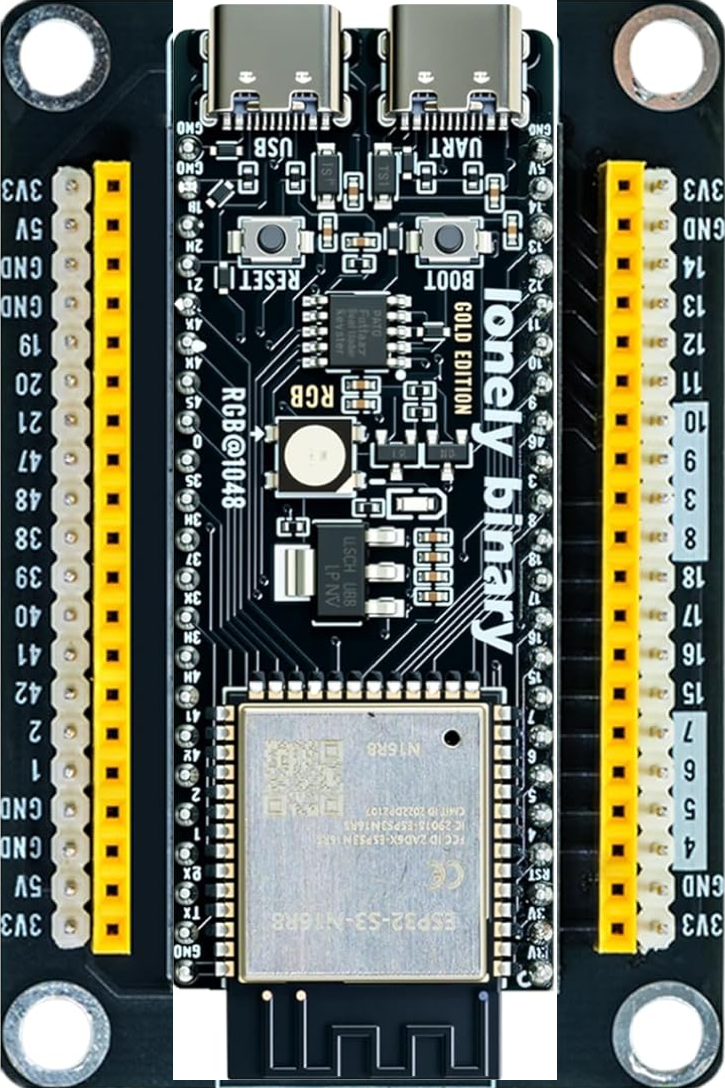
 Design with Lonely Binary ESP32-S3 DevKitC in Cirkit Designer
Introduction
The Lonely Binary ESP32-S3 DevKitC is a versatile development board built around the ESP32-S3 chip. This board is designed for Internet of Things (IoT) applications, offering integrated Wi-Fi and Bluetooth connectivity. It is ideal for prototyping and developing smart devices, wearables, and other connected systems. The board supports a wide range of peripherals and interfaces, making it a powerful tool for both beginners and experienced developers.
Explore Projects Built with Lonely Binary ESP32-S3 DevKitC
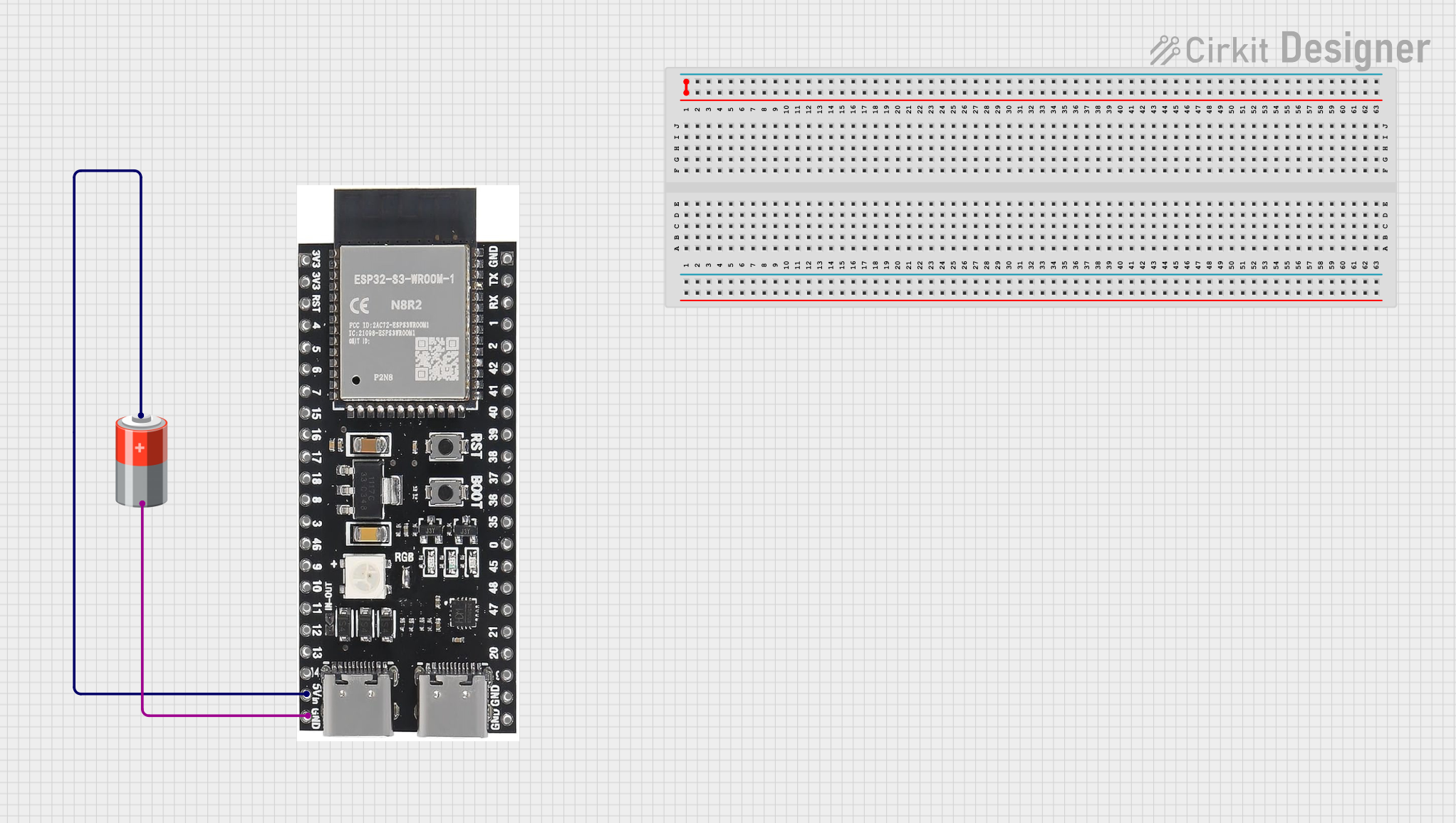 Open Project in Cirkit Designer
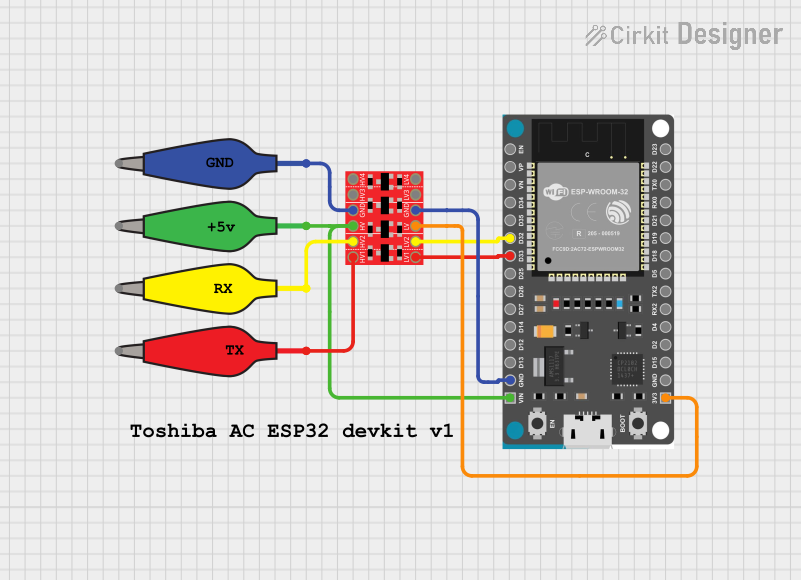 Open Project in Cirkit Designer
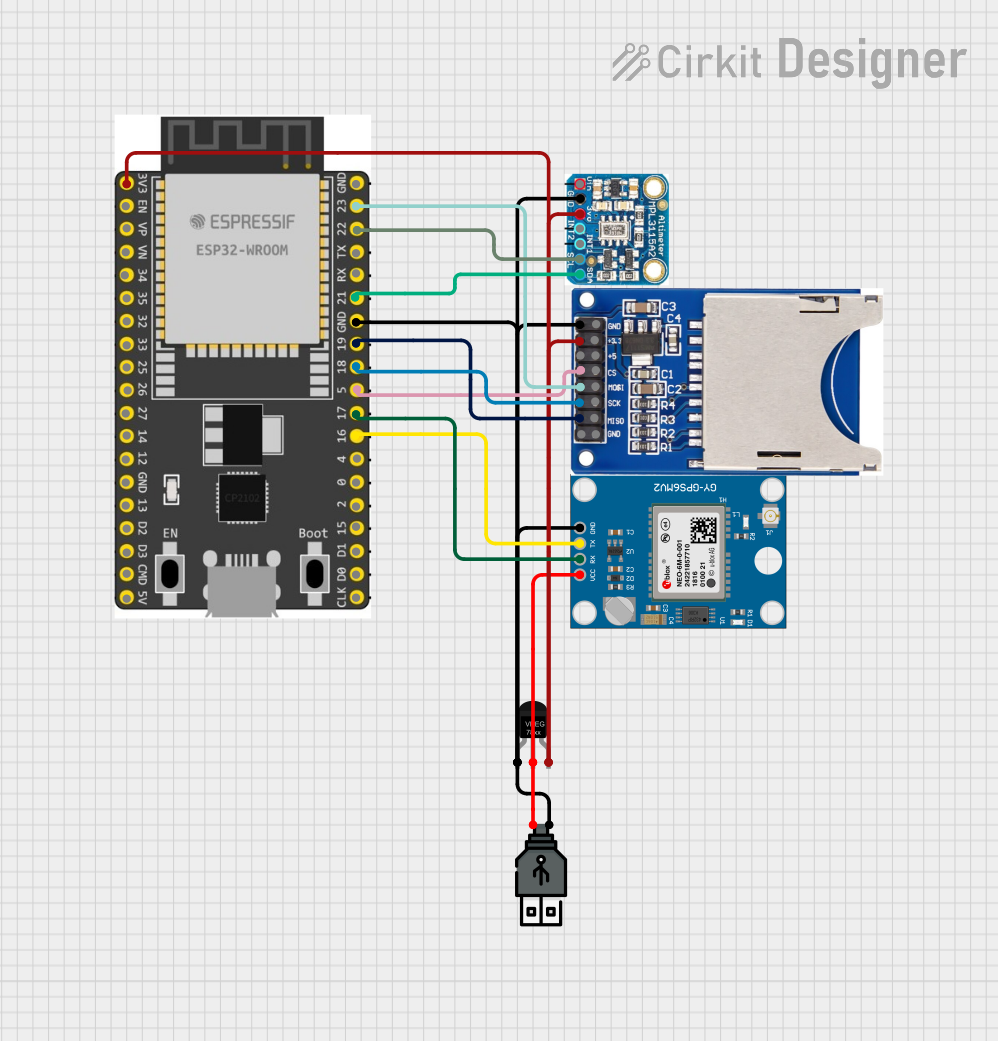 Open Project in Cirkit Designer
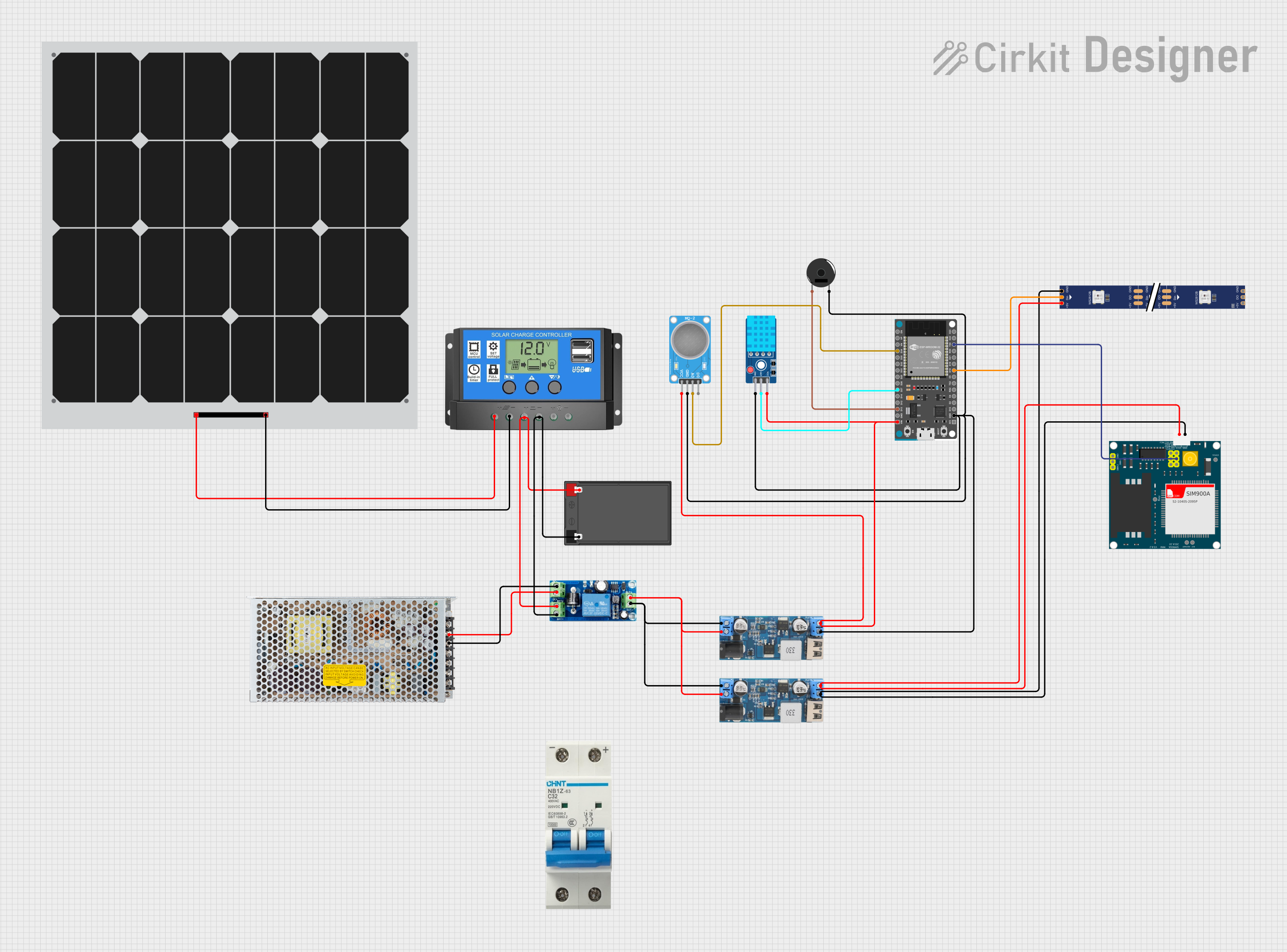 Open Project in Cirkit Designer
Explore Projects Built with Lonely Binary ESP32-S3 DevKitC
Open Project in Cirkit DesignerOpen Project in Cirkit DesignerOpen Project in Cirkit DesignerOpen Project in Cirkit DesignerCommon Applications and Use Cases
- IoT devices and smart home systems
- Wearable technology
- Wireless sensor networks
- Industrial automation
- Prototyping AI and machine learning applications at the edge
- Bluetooth Low Energy (BLE) beacons and gateways
Technical Specifications
The following table outlines the key technical specifications of the ESP32-S3 DevKitC:
| Specification | Details |
|---|---|
| Microcontroller | ESP32-S3 (Xtensa® 32-bit LX7 dual-core processor) |
| Clock Speed | Up to 240 MHz |
| Flash Memory | 8 MB (external SPI flash) |
| RAM | 512 KB SRAM + 2 MB PSRAM |
| Wireless Connectivity | Wi-Fi 802.11 b/g/n (2.4 GHz), Bluetooth 5.0 LE |
| GPIO Pins | 21 GPIO pins |
| Interfaces | UART, SPI, I2C, I2S, PWM, ADC, DAC |
| USB Connectivity | USB Type-C (supports programming and power supply) |
| Operating Voltage | 3.3V |
| Power Supply | 5V via USB Type-C or external power source |
| Dimensions | 54 mm x 25 mm |
Pin Configuration and Descriptions
The ESP32-S3 DevKitC features a 2x19 pin header layout. Below is the pin configuration:
| Pin Number | Pin Name | Description |
|---|---|---|
| 1 | GND | Ground |
| 2 | 3V3 | 3.3V power output |
| 3 | EN | Enable pin (active high) |
| 4 | IO0 | GPIO0, used for boot mode selection |
| 5 | IO1 | GPIO1, general-purpose I/O |
| 6 | IO2 | GPIO2, general-purpose I/O |
| 7 | IO3 | GPIO3, general-purpose I/O |
| 8 | IO4 | GPIO4, general-purpose I/O |
| 9 | IO5 | GPIO5, general-purpose I/O |
| 10 | IO6 | GPIO6, general-purpose I/O |
| ... | ... | ... (remaining GPIO pins follow similar use) |
For a complete pinout diagram, refer to the official datasheet provided by Lonely Binary.
Usage Instructions
How to Use the Component in a Circuit
Powering the Board:
Connect the board to your computer or a power source using a USB Type-C cable. The board operates at 3.3V internally but requires a 5V input via USB or an external power source.Programming the Board:
- Install the ESP32-S3 board support package in the Arduino IDE or use the ESP-IDF (Espressif IoT Development Framework) for advanced development.
- Select the correct board and port in the IDE.
- Write your code and upload it to the board.
Connecting Peripherals:
Use the GPIO pins to connect sensors, actuators, or other peripherals. Ensure that the voltage levels of connected devices are compatible with the 3.3V logic of the ESP32-S3.
Important Considerations and Best Practices
- Boot Mode Selection: To enter bootloader mode, hold the BOOT button while pressing the EN button.
- Voltage Levels: Avoid applying voltages higher than 3.3V to the GPIO pins to prevent damage.
- Power Supply: If using an external power source, ensure it provides a stable 5V input.
- Wi-Fi and Bluetooth Antenna: Keep the onboard antenna area clear of obstructions for optimal wireless performance.
Example Code for Arduino UNO Integration
Below is an example of how to use the ESP32-S3 DevKitC to read data from a DHT11 temperature and humidity sensor and send it to a serial monitor:
#include <DHT.h>

// Define the GPIO pin connected to the DHT11 sensor
#define DHTPIN 4  // GPIO4 on the ESP32-S3

// Define the type of DHT sensor
#define DHTTYPE DHT11

// Initialize the DHT sensor
DHT dht(DHTPIN, DHTTYPE);

void setup() {
  Serial.begin(115200);  // Start the serial communication
  dht.begin();           // Initialize the DHT sensor
  Serial.println("DHT11 Sensor Example with ESP32-S3");
}

void loop() {
  // Read temperature and humidity values
  float humidity = dht.readHumidity();
  float temperature = dht.readTemperature();

  // Check if the readings are valid
  if (isnan(humidity) || isnan(temperature)) {
    Serial.println("Failed to read from DHT sensor!");
    return;
  }

  // Print the readings to the serial monitor
  Serial.print("Humidity: ");
  Serial.print(humidity);
  Serial.print("%  Temperature: ");
  Serial.print(temperature);
  Serial.println("°C");

  delay(2000);  // Wait 2 seconds before the next reading
}
Troubleshooting and FAQs
Common Issues Users Might Face
Board Not Detected by the Computer:
- Ensure the USB cable is functional and supports data transfer.
- Verify that the correct drivers for the ESP32-S3 are installed.
Code Upload Fails:
- Check that the correct board and port are selected in the IDE.
- Enter bootloader mode by holding the BOOT button while pressing the EN button.
Wi-Fi or Bluetooth Connectivity Issues:
- Ensure the antenna area is unobstructed.
- Verify that the correct SSID and password are used for Wi-Fi connections.
GPIO Pin Malfunction:
- Confirm that the connected peripherals are operating within the 3.3V logic level.
- Avoid using reserved pins for general-purpose I/O.
Solutions and Tips for Troubleshooting
- Use a multimeter to check power supply voltages and continuity of connections.
- Refer to the official datasheet and pinout diagram for detailed information on pin functions.
- Update the ESP32-S3 firmware and development tools to the latest versions for improved stability and compatibility.
For further assistance, consult the official documentation and support resources provided by Lonely Binary.