The 12V 15A Power Supply (Manufacturer: AC, Part ID: Power Supply) is a robust and reliable device designed to convert AC mains voltage into a stable 12V DC output. With a maximum current capacity of 15A, this power supply is ideal for powering a wide range of electronic devices, including LED strips, motors, microcontrollers, and other high-current applications. Its compact design and high efficiency make it a popular choice for both hobbyists and professionals.
Explore Projects Built with 12V 15A Power Supply
Use Cirkit Designer to design, explore, and prototype these projects online. Some projects support real-time simulation. Click "Open Project" to start designing instantly!
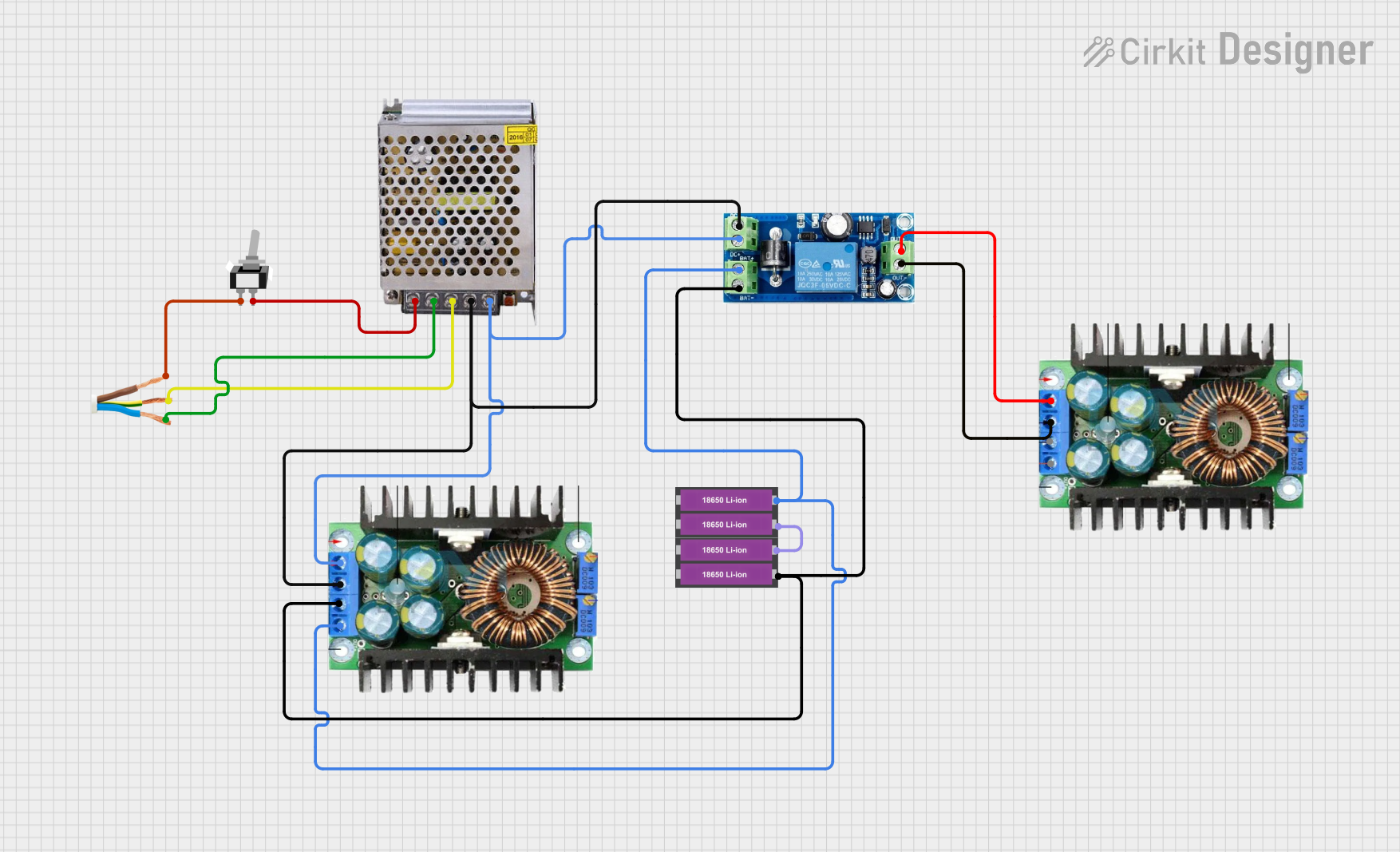
This circuit is designed to provide an uninterruptible power supply (UPS) system with a 12V DC output. It includes a 12V 5A power supply connected to an AC source through a toggle switch, which charges a pair of 18650 Li-ion batteries via a voltage regulator (XL4016). The UPS module ensures a continuous power supply to the load by switching between the power supply and the battery bank.
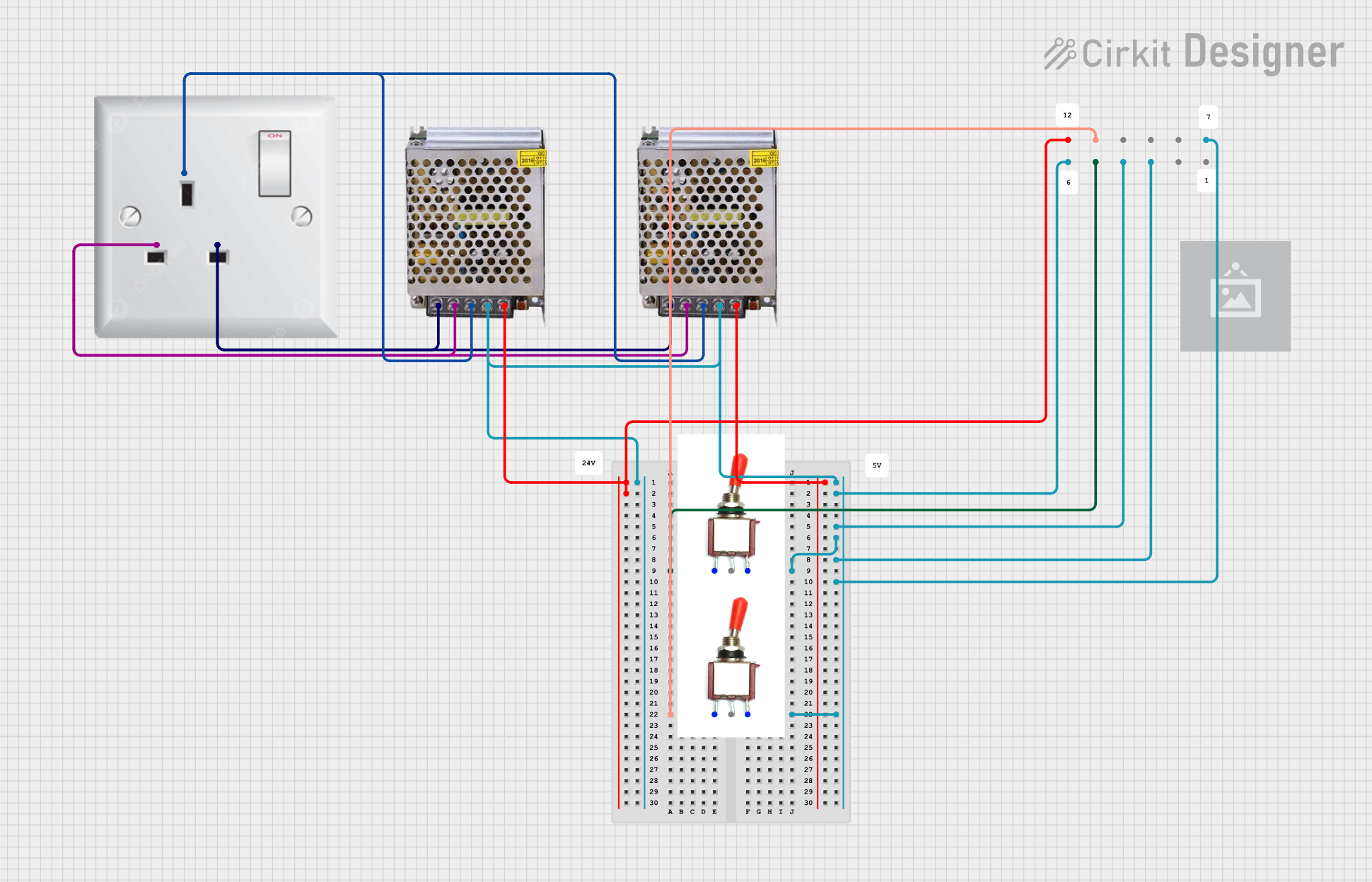
This circuit consists of two 5V 5A power supplies connected to an AC wall plug point, providing DC output through a 12-way connector. The ground connections from both power supplies are interconnected and also connected to the ground pins of two toggle switches. The DC outputs from the power supplies are separately connected to different pins on the 12-way connector, with each power supply output being switchable via one of the toggle switches.
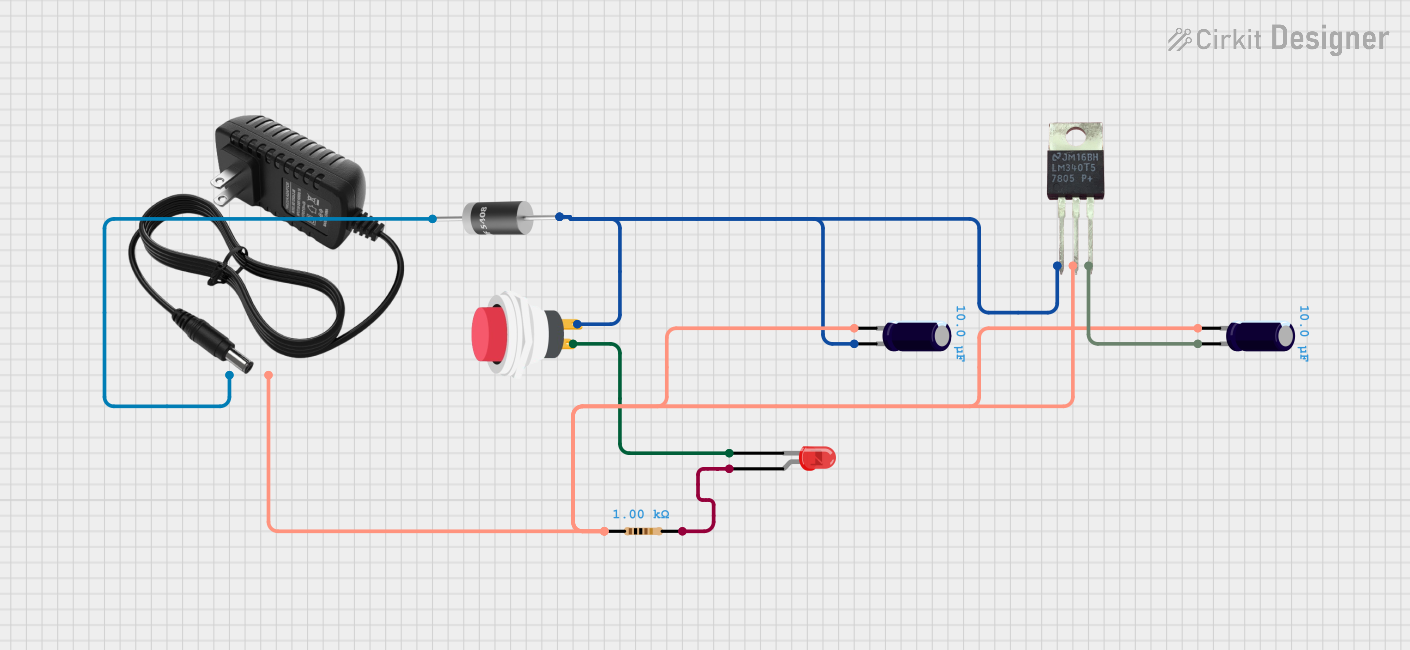
This circuit is a 12V to 5V regulated power supply with an LED indicator. It uses a 5408 diode for reverse polarity protection, an LM340T5 7805 voltage regulator to step down the voltage to 5V, and a push switch to control the LED indicator. The circuit also includes capacitors for filtering and a resistor to limit the current through the LED.
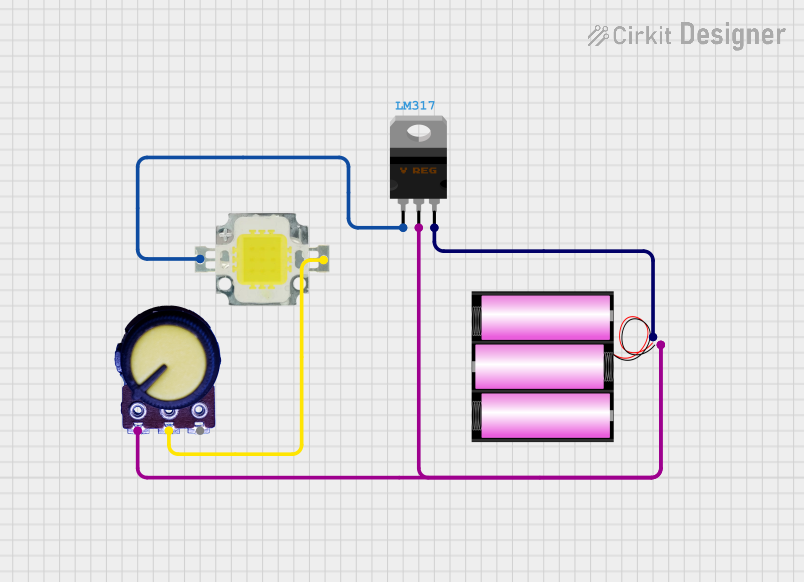
This circuit is a regulated power supply for a 12V, 10W LED, using an LM317 voltage regulator to control the output voltage. A potentiometer is used to adjust the voltage, and a 12V battery provides the input power.
Powering LED lighting systems (e.g., LED strips, LED panels)
Supplying power to microcontroller-based projects (e.g., Arduino, Raspberry Pi)
Driving DC motors in robotics and automation systems
Providing power for CCTV cameras and security systems
General-purpose DC power supply for laboratory and prototyping use
Technical Specifications
The following table outlines the key technical details of the 12V 15A Power Supply:
Parameter
Specification
Input Voltage
100-240V AC, 50/60Hz
Output Voltage
12V DC
Maximum Output Current
15A
Maximum Output Power
180W
Efficiency
≥85%
Operating Temperature
-10°C to +50°C
Dimensions
Varies by model (e.g., 200mm x 100mm x 50mm)
Weight
~500g to 1kg (depending on model)
Protection Features
Overload, Overvoltage, Short Circuit
Pin Configuration and Descriptions
The power supply typically has the following input and output terminals:
Terminal
Label
Description
Input 1
L
Live wire (AC mains input)
Input 2
N
Neutral wire (AC mains input)
Input 3
GND
Ground wire (optional, for safety)
Output 1
+V
Positive DC output (12V)
Output 2
-V
Negative DC output (Ground)
Adjustment
V-ADJ
Voltage adjustment potentiometer (±10% adjustment)
Usage Instructions
Connecting the Power Supply
Safety First: Ensure the power supply is disconnected from the mains before making any connections.
Input Connection:
Connect the L terminal to the live wire of the AC mains.
Connect the N terminal to the neutral wire of the AC mains.
Optionally, connect the GND terminal to the ground wire for safety.
Output Connection:
Connect the +V terminal to the positive input of your load or circuit.
Connect the -V terminal to the ground or negative input of your load or circuit.
Voltage Adjustment:
Use the V-ADJ potentiometer to fine-tune the output voltage if necessary (±10% adjustment range).
Important Considerations
Load Capacity: Ensure the total current drawn by the connected devices does not exceed 15A.
Ventilation: Place the power supply in a well-ventilated area to prevent overheating.
Polarity: Double-check the polarity of the output connections to avoid damaging your devices.
Fusing: Use an appropriate fuse on the input side for added protection.
Example: Powering an Arduino UNO
To power an Arduino UNO using the 12V 15A power supply:
Connect the +V terminal to the Arduino's VIN pin.
Connect the -V terminal to the Arduino's GND pin.
Ensure the Arduino's onboard voltage regulator is functioning properly to step down the 12V to 5V.
Troubleshooting and FAQs
Common Issues and Solutions
Issue
Possible Cause
Solution
No output voltage
Input AC power not connected
Verify the AC mains connection.
Blown fuse inside the power supply
Replace the fuse with the correct rating.
Output voltage too high/low
Voltage adjustment potentiometer misaligned
Adjust the V-ADJ potentiometer.
Power supply overheats
Insufficient ventilation
Ensure proper airflow around the power supply.
Load exceeds maximum current rating
Reduce the load to within 15A.
Device connected to output not working
Incorrect polarity or loose connections
Verify and correct the output connections.
FAQs
Can I use this power supply to charge a 12V battery?
Yes, but ensure the battery charging current does not exceed 15A. Use a charge controller for optimal performance and safety.
Is the power supply waterproof?
No, this power supply is not waterproof. Use it in a dry environment or enclose it in a waterproof housing if necessary.
Can I adjust the output voltage?
Yes, the output voltage can be adjusted within ±10% of 12V using the V-ADJ potentiometer.
What happens if the load exceeds 15A?
The power supply's overload protection will activate, shutting down the output to prevent damage.
Example Arduino Code
Below is an example of using the 12V 15A power supply to power an Arduino UNO and control an LED:
// Example: Controlling an LED with Arduino powered by 12V 15A Power Supply

// Define the LED pin
const int ledPin = 13; // Onboard LED pin on Arduino UNO

void setup() {
  pinMode(ledPin, OUTPUT); // Set the LED pin as an output
}

void loop() {
  digitalWrite(ledPin, HIGH); // Turn the LED on
  delay(1000);                // Wait for 1 second
  digitalWrite(ledPin, LOW);  // Turn the LED off
  delay(1000);                // Wait for 1 second
}
Note: Connect the power supply's +V to the Arduino's VIN pin and -V to the GND pin. Ensure the Arduino's onboard voltage regulator is functioning properly to step down the 12V to 5V.
Conclusion
The 12V 15A Power Supply is a versatile and reliable component for powering a wide range of electronic devices and circuits. By following the usage instructions and best practices outlined in this documentation, you can ensure safe and efficient operation. Whether you're a hobbyist or a professional, this power supply is an essential tool for your projects.

 Open Project in Cirkit Designer