
How to Use AC 3 FASA SOURCHE: Examples, Pinouts, and Specs

 Design with AC 3 FASA SOURCHE in Cirkit Designer
Introduction
The AC 3-Phase Source is a type of alternating current (AC) power source that delivers three-phase electrical power. Unlike single-phase power, which uses one alternating voltage waveform, a three-phase source provides three separate waveforms, each 120 degrees out of phase with the others. This configuration ensures a constant power transfer, making it ideal for industrial applications.
Explore Projects Built with AC 3 FASA SOURCHE
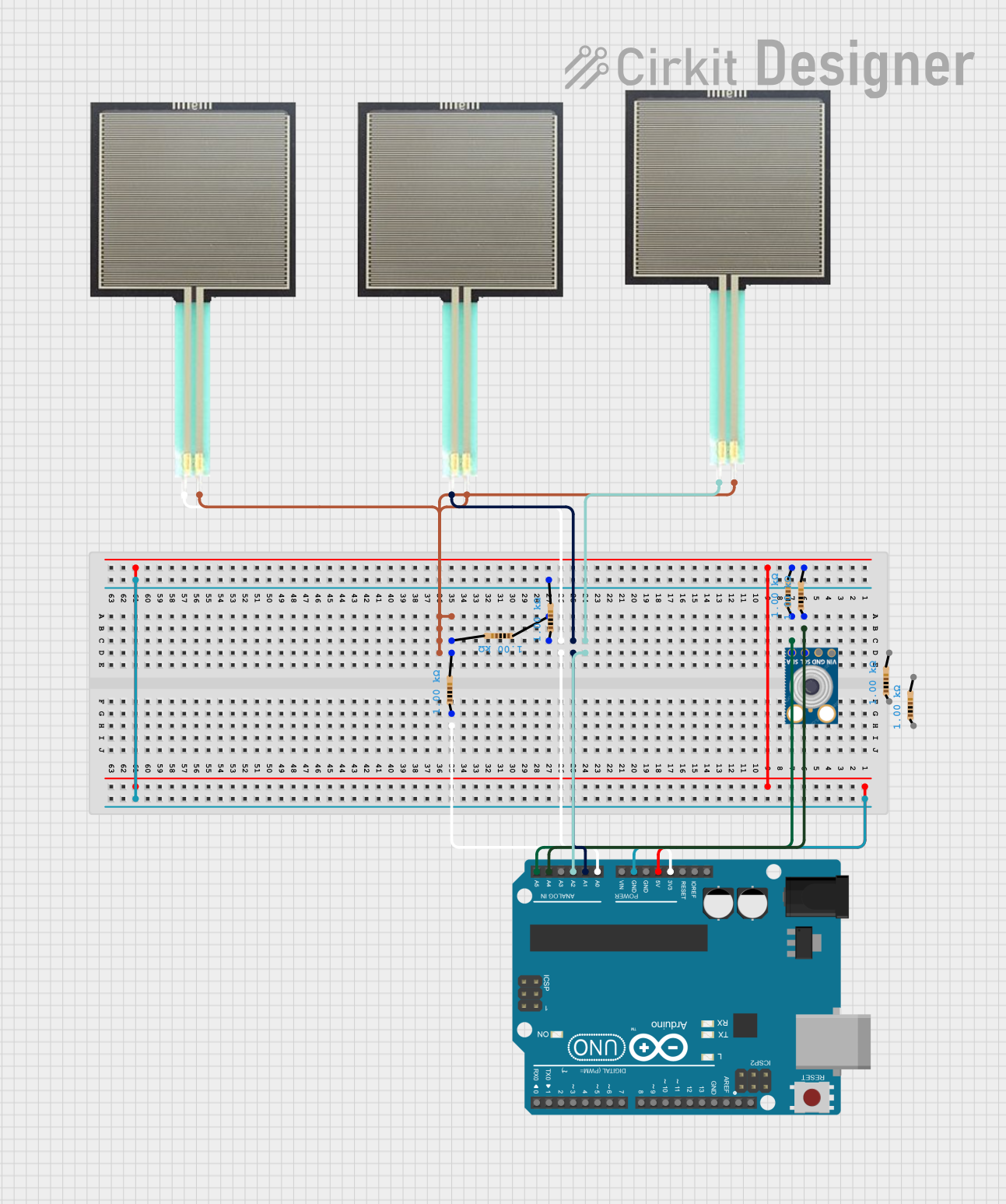 Open Project in Cirkit Designer
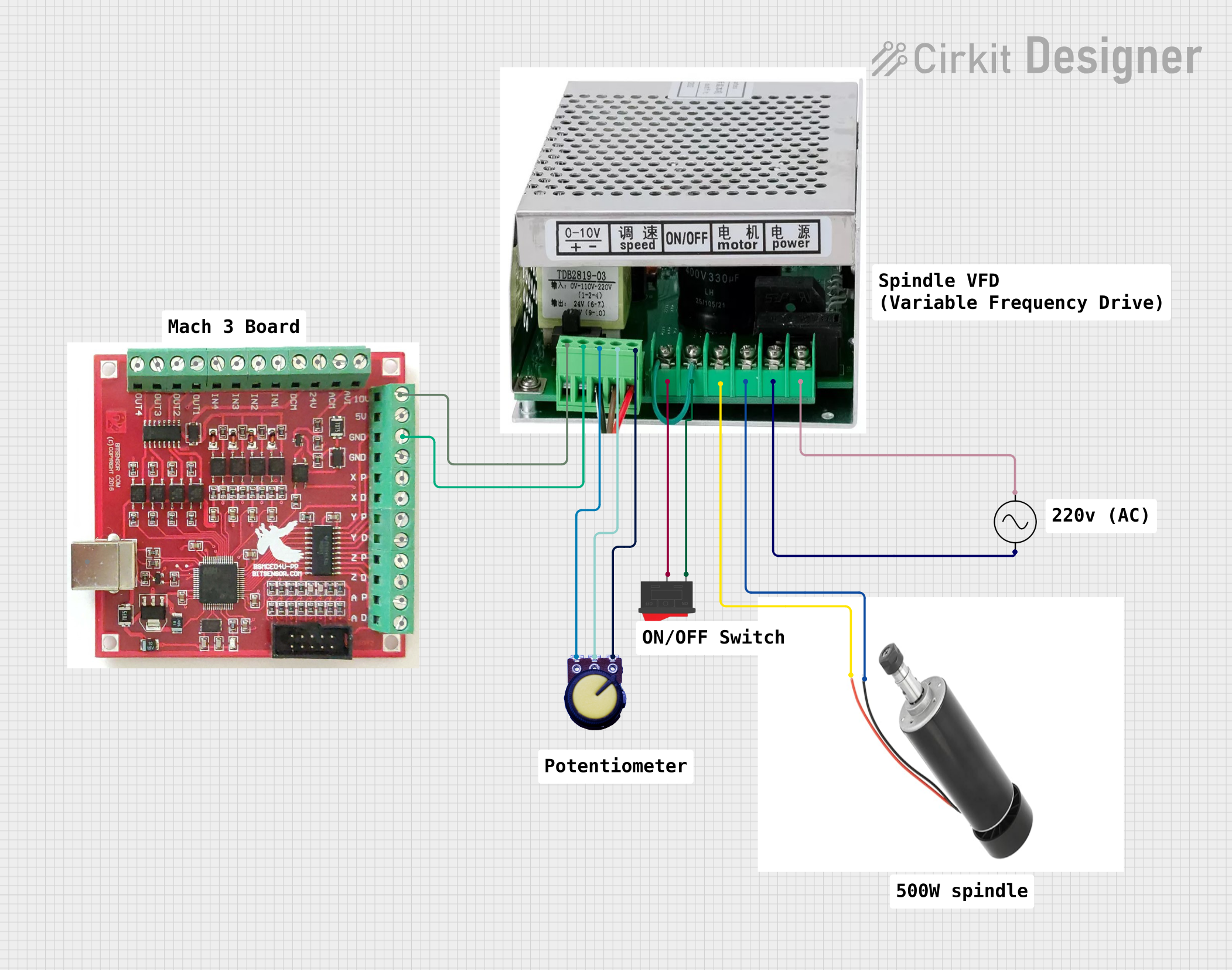 Open Project in Cirkit Designer
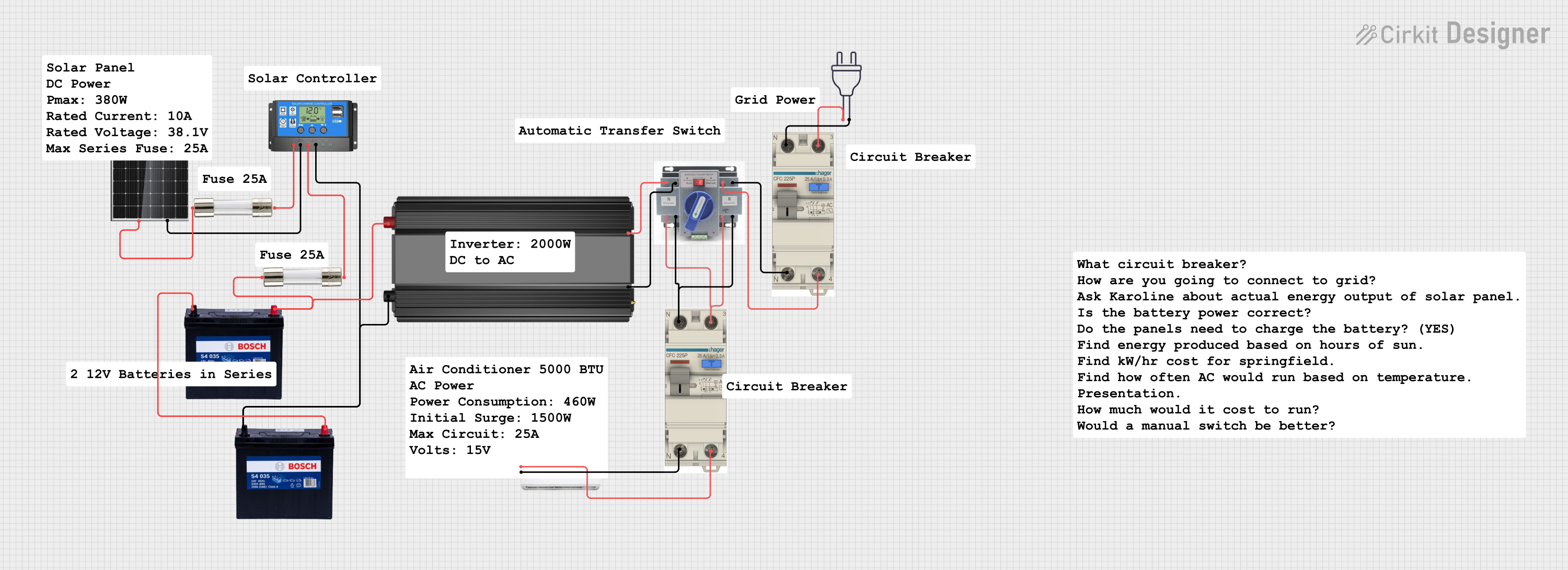 Open Project in Cirkit Designer
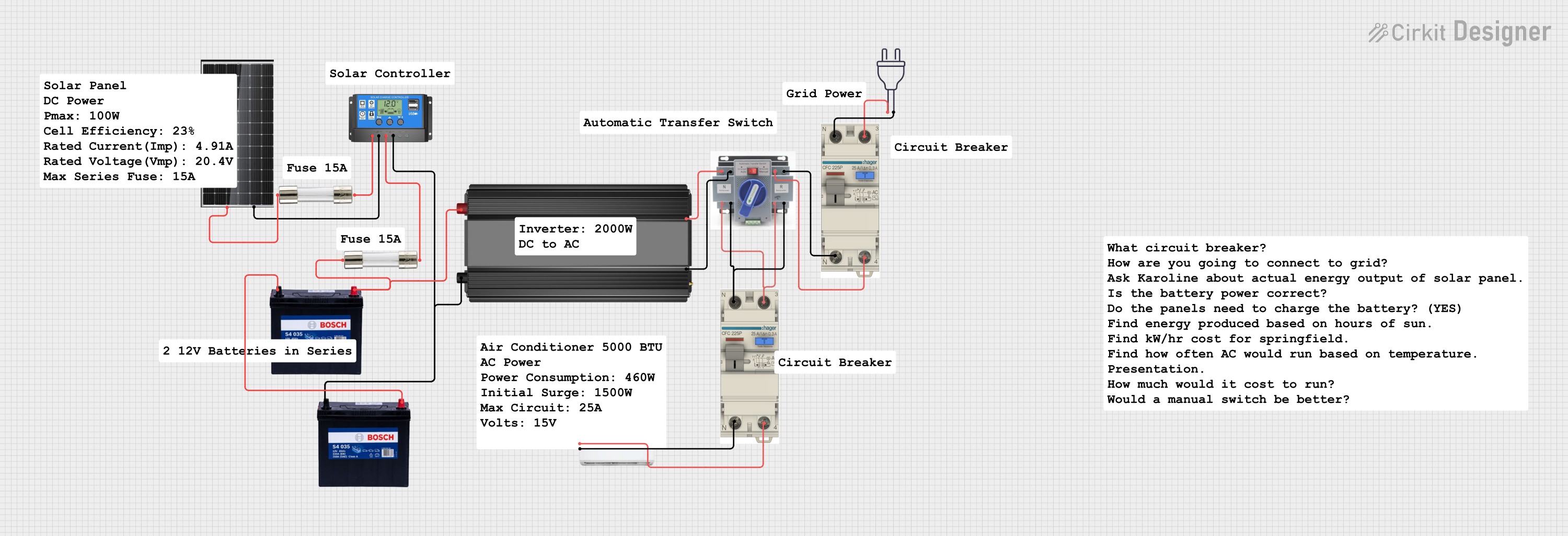 Open Project in Cirkit Designer
Explore Projects Built with AC 3 FASA SOURCHE
Open Project in Cirkit DesignerOpen Project in Cirkit DesignerOpen Project in Cirkit DesignerOpen Project in Cirkit DesignerCommon Applications and Use Cases
- Powering industrial motors and heavy machinery
- Supplying energy to large HVAC systems
- Operating pumps, compressors, and conveyor systems
- Used in power distribution systems for efficient energy transfer
- Driving variable frequency drives (VFDs) for motor speed control
Technical Specifications
The following table outlines the key technical specifications of a typical AC 3-Phase Source:
| Parameter | Specification |
|---|---|
| Voltage Range | 208V, 380V, 400V, 415V, or 480V AC |
| Frequency | 50 Hz or 60 Hz |
| Number of Phases | 3 |
| Power Output | Varies (commonly 1 kW to several MW) |
| Waveform | Sinusoidal |
| Phase Angle Difference | 120° between each phase |
| Connection Types | Star (Wye) or Delta |
Pin Configuration and Descriptions
The AC 3-Phase Source typically has three live wires (phases) and one neutral wire (optional, depending on the configuration). The table below describes the connections:
| Pin/Terminal | Description |
|---|---|
| L1 | Phase 1 (Live wire 1) |
| L2 | Phase 2 (Live wire 2) |
| L3 | Phase 3 (Live wire 3) |
| N (Optional) | Neutral (used in Star/Wye configurations) |
| PE | Protective Earth (Ground connection) |
Usage Instructions
How to Use the Component in a Circuit
- Determine Voltage and Frequency Requirements: Ensure the connected equipment matches the voltage and frequency of the AC 3-Phase Source.
- Choose the Connection Type:
- Star (Wye): Provides a neutral point and is commonly used for long-distance power transmission.
- Delta: Does not have a neutral point and is often used for high-power industrial loads.
- Connect the Phases:
- Connect L1, L2, and L3 to the corresponding terminals of the load.
- If a neutral wire is required, connect it to the neutral terminal of the load.
- Ensure the protective earth (PE) is properly grounded for safety.
- Verify Connections: Double-check all connections to avoid short circuits or phase imbalances.
- Power On: Gradually apply power to the system and monitor for any irregularities.
Important Considerations and Best Practices
- Load Balancing: Distribute the load evenly across all three phases to prevent overheating and ensure efficient operation.
- Safety Precautions: Always disconnect the power source before making or modifying connections.
- Overcurrent Protection: Use circuit breakers or fuses to protect the system from overcurrent conditions.
- Harmonics: Be aware of harmonic distortion in sensitive applications and use filters if necessary.
- Phase Sequence: Verify the phase sequence (L1, L2, L3) to ensure proper operation of motors and other equipment.
Example: Connecting to an Arduino UNO
While the AC 3-Phase Source itself cannot be directly connected to an Arduino UNO due to high voltage, you can use sensors like a voltage or current transformer to monitor the source. Below is an example code snippet for reading voltage data using a sensor:
// Example code for reading voltage data from a sensor connected to an Arduino UNO
// Ensure the sensor is rated for high-voltage AC applications and properly isolated

const int sensorPin = A0; // Analog pin connected to the sensor output
float voltage = 0.0;      // Variable to store the calculated voltage

void setup() {
  Serial.begin(9600); // Initialize serial communication
}

void loop() {
  int sensorValue = analogRead(sensorPin); // Read the sensor value
  voltage = (sensorValue / 1023.0) * 5.0;  // Convert to voltage (assuming 5V reference)

  // Scale the voltage based on the sensor's specifications
  voltage = voltage * 100; // Example scaling factor for a 100:1 sensor

  Serial.print("Voltage: ");
  Serial.print(voltage);
  Serial.println(" V");

  delay(1000); // Wait for 1 second before the next reading
}
Troubleshooting and FAQs
Common Issues Users Might Face
Phase Imbalance:
- Issue: Uneven load distribution across phases.
- Solution: Recalculate and redistribute the load to balance the phases.
Overheating:
- Issue: Excessive current draw or poor ventilation.
- Solution: Check for overcurrent conditions and ensure proper cooling.
Incorrect Phase Sequence:
- Issue: Motors running in the wrong direction.
- Solution: Swap any two phase wires (e.g., L1 and L2) to correct the sequence.
Voltage Drops:
- Issue: Long cable runs causing significant voltage loss.
- Solution: Use thicker cables or step-up transformers to compensate for losses.
Harmonic Distortion:
- Issue: Non-linear loads causing waveform distortion.
- Solution: Install harmonic filters or use power factor correction devices.
FAQs
Q: Can I use an AC 3-Phase Source for single-phase equipment?
A: Yes, you can connect single-phase equipment between any two phases or between one phase and neutral (if available). However, ensure the equipment's voltage rating matches the phase-to-phase or phase-to-neutral voltage.
Q: How do I measure the phase sequence?
A: Use a phase sequence meter to determine the order of the phases (L1, L2, L3). This is critical for motor applications.
Q: What happens if one phase fails?
A: This is called a "single-phasing" condition. It can cause severe damage to motors and other equipment. Install phase failure relays to protect against this issue.
Q: Is grounding necessary for an AC 3-Phase Source?
A: Yes, grounding is essential for safety and to prevent electrical shocks or equipment damage.
By following this documentation, users can safely and effectively utilize an AC 3-Phase Source in their applications.