The SparkFun Fuse Breakout Board is a simple and effective solution for incorporating fuse protection into your electronic projects. Fuses are critical safety devices designed to protect circuits from overcurrent conditions that could cause damage to components or create a fire hazard. This breakout board is designed to make it easy to integrate a fuse into any circuit with minimal hassle. It is commonly used in power supply circuits, automotive applications, and any project where current regulation is crucial.
Explore Projects Built with SparkFun Fuse Breakout Board
Use Cirkit Designer to design, explore, and prototype these projects online. Some projects support real-time simulation. Click "Open Project" to start designing instantly!
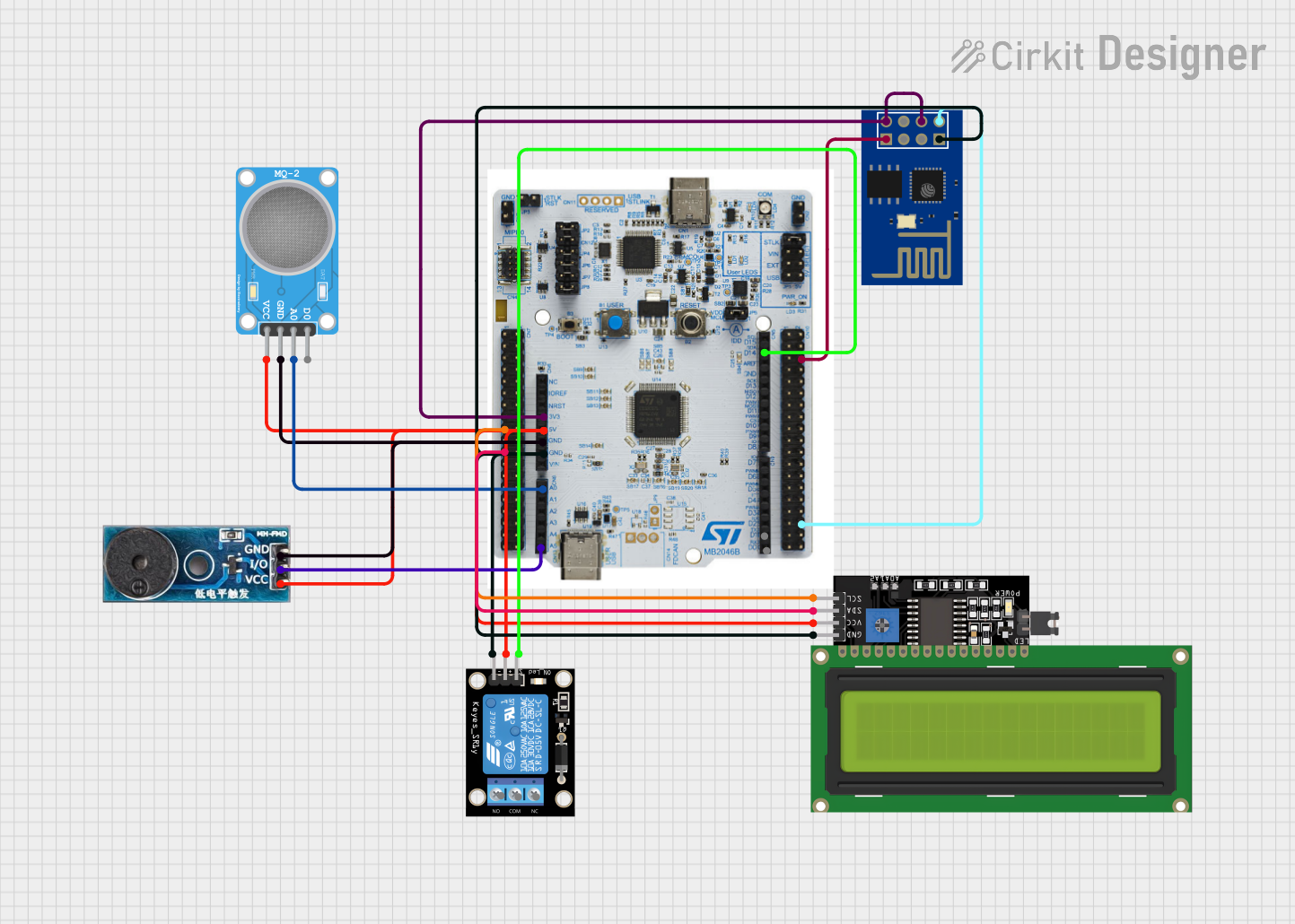
This circuit features a NUCLEO-F303RE microcontroller board interfaced with various modules for sensing, actuation, and communication. It includes an MQ-2 gas sensor for detecting combustible gases, a buzzer for audible alerts, and a relay for controlling high-power devices. Additionally, the circuit uses an ESP8266 WiFi module for wireless connectivity and an I2C LCD display for user interface and data display.
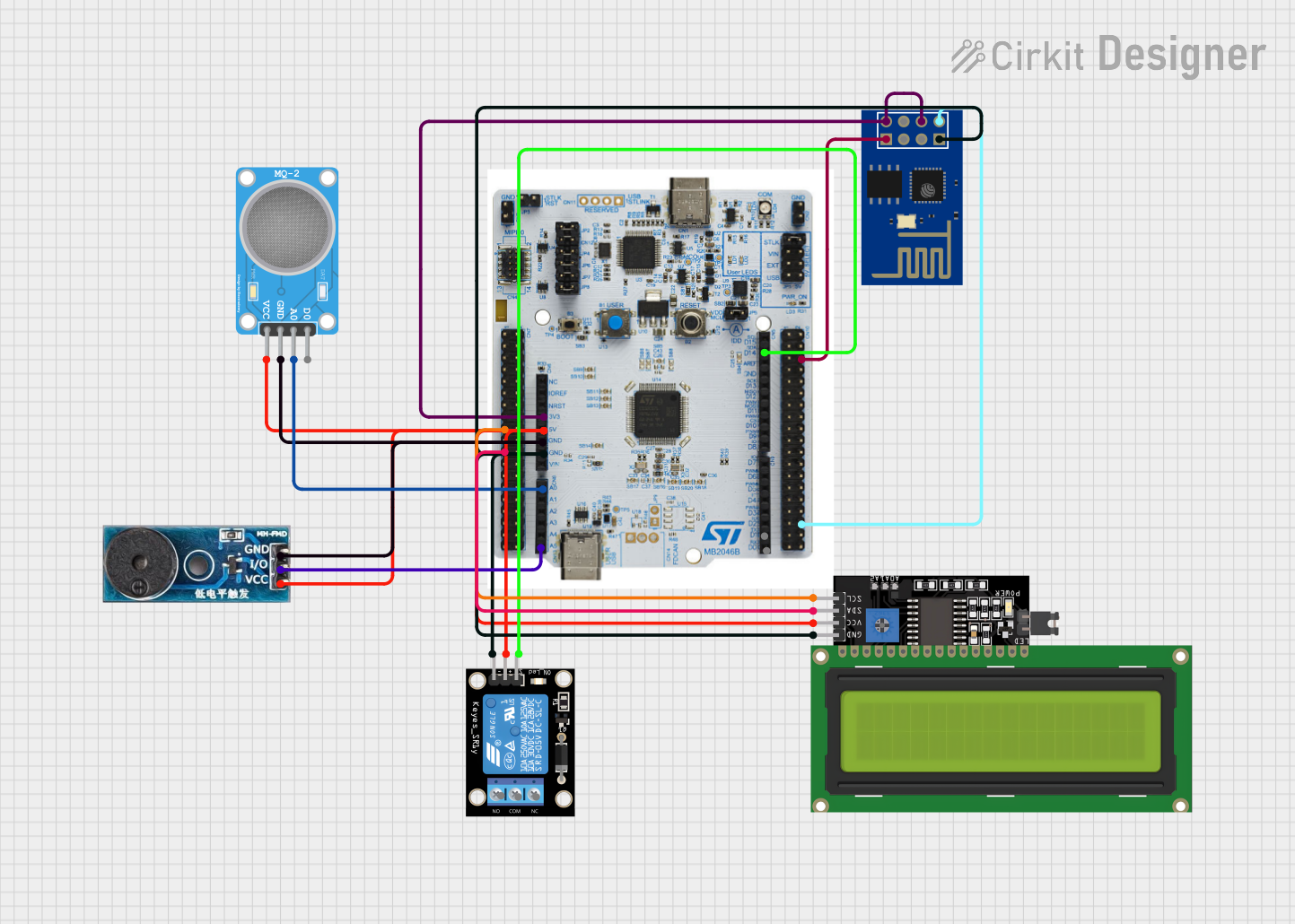
This circuit features a NUCLEO-F303RE microcontroller board interfaced with several modules for sensing, actuation, and communication. It uses I2C communication to display data on an LCD screen, UART communication to interface with an ESP8266 WiFi module, and reads an MQ-2 gas sensor via an ADC pin. The microcontroller also controls a buzzer for audible alerts and a relay module for switching higher power loads, possibly in response to sensor readings or remote commands received over WiFi.
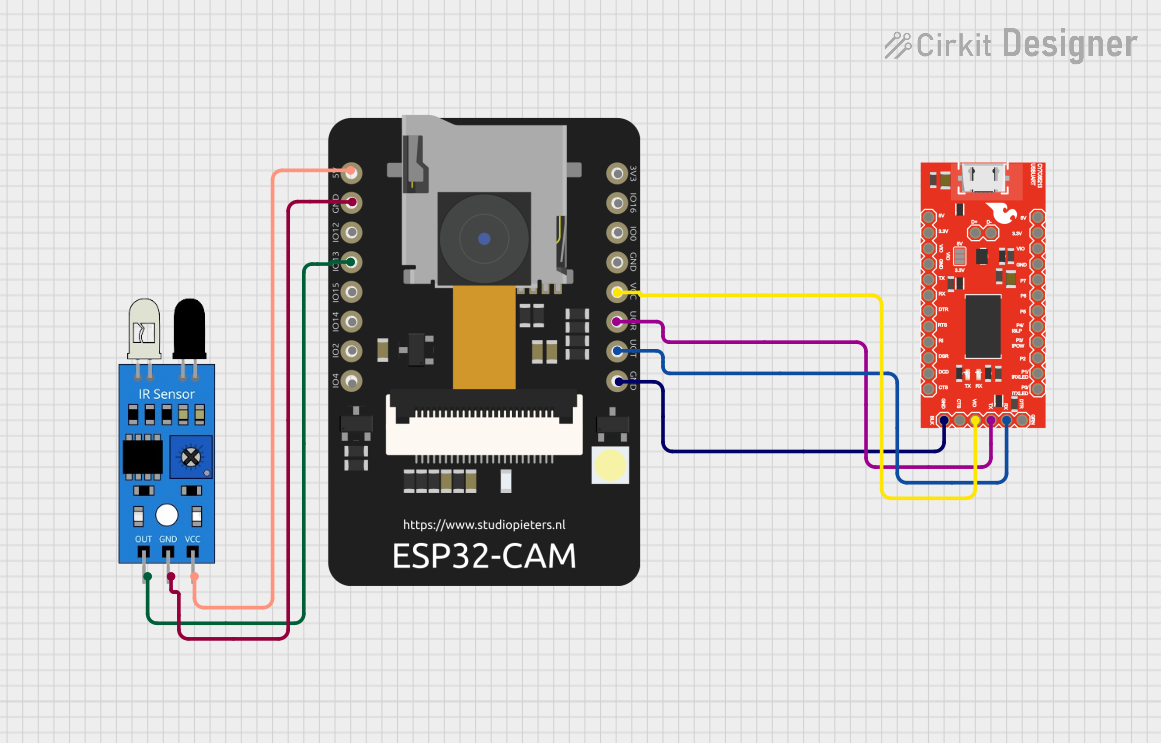
This circuit features an ESP32 CAM module interfaced with an IR sensor and a SparkFun USB UART Breakout board. The ESP32 CAM provides power to the IR sensor and receives its output signal, likely for processing or triggering camera actions based on IR detection. The USB UART Breakout board is connected to the ESP32 CAM for serial communication, enabling programming, debugging, or data exchange with a computer.
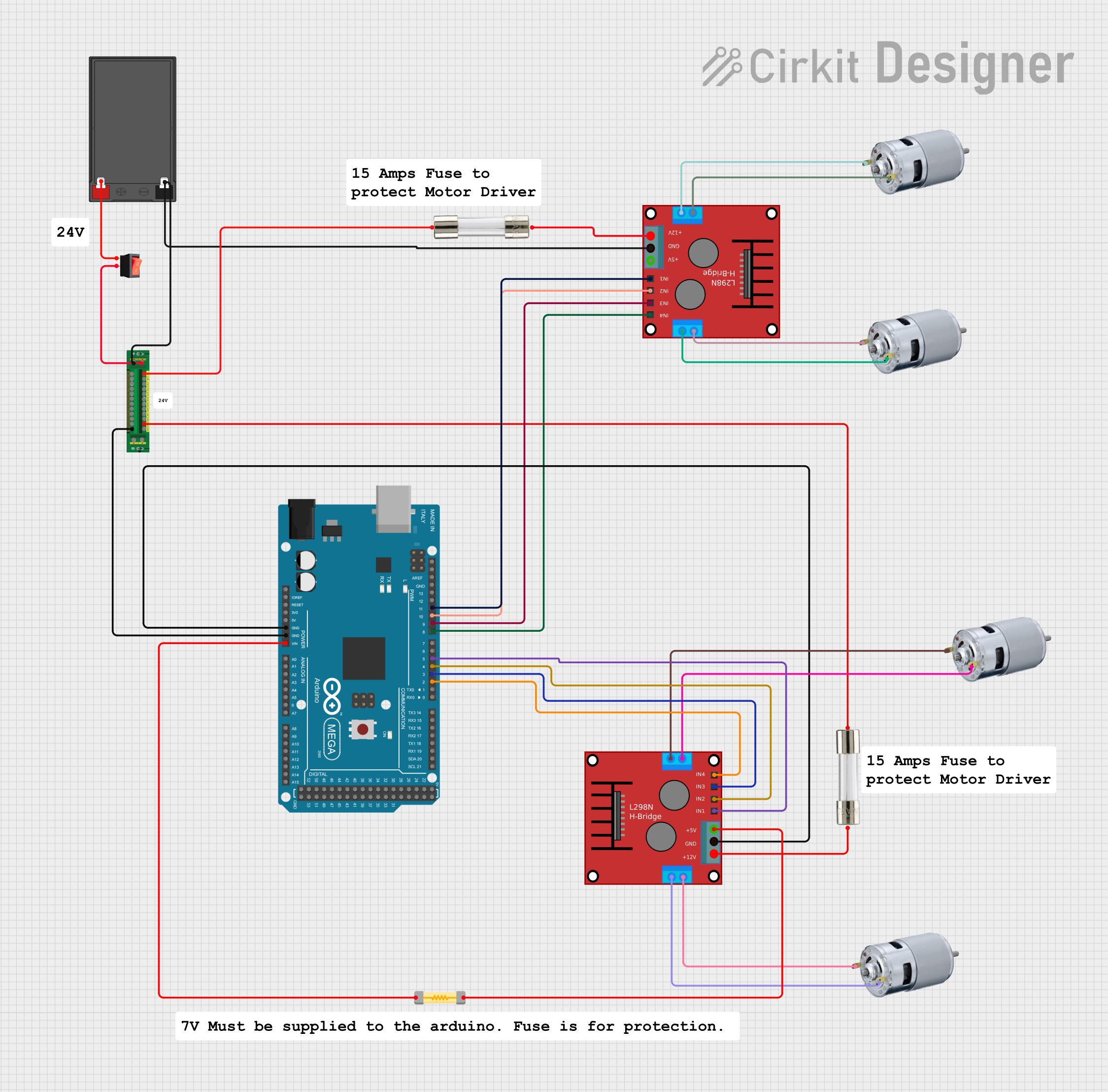
This circuit is a motor control system powered by a 12V battery, featuring an Arduino Mega 2560 microcontroller that controls multiple 775 motors through two H-bridge motor drivers. The power distribution board manages the power supply, with fuses and a rocker switch for safety and control.
Current Rating: Depends on the fuse used (commonly up to 5A)
Fuse Type: Standard automotive blade fuse (ATO/ATC/ATS)
Dimensions: 1.25" x 0.3" (31.75mm x 7.62mm)
Pin Configuration and Descriptions
Pin
Description
IN
Input voltage (connect to power source)
OUT
Output voltage (connect to the load)
Usage Instructions
Installing the Fuse
Select an appropriate fuse rating for your application. The fuse rating should be slightly above the normal operating current but below the current that would damage the circuit.
Insert the fuse into the clips on the breakout board. Ensure the fuse is seated properly.
Wiring the Breakout Board
Connect the IN pin to the positive terminal of your power source.
Connect the OUT pin to the positive terminal of your load (the circuit you want to protect).
Connect the ground of your power source directly to the ground of your load.
Best Practices
Always disconnect power before changing the fuse.
Use a fuse with a voltage rating equal to or higher than your system voltage.
Regularly inspect the fuse and fuse clips for signs of corrosion or damage.
Ensure the breakout board is mounted in a location where it is accessible for fuse replacement.
Example Code for Arduino UNO
// This example demonstrates how to use the SparkFun Fuse Breakout Board
// with an Arduino UNO to protect a simple LED circuit.

int ledPin = 13; // LED connected to digital pin 13

void setup() {
  pinMode(ledPin, OUTPUT); // Set the LED pin as output
}

void loop() {
  digitalWrite(ledPin, HIGH); // Turn the LED on
  delay(1000);                // Wait for 1 second
  digitalWrite(ledPin, LOW);  // Turn the LED off
  delay(1000);                // Wait for 1 second
}
Note: The code above does not interact directly with the Fuse Breakout Board, as the board does not have any electronic components that require control via software. The board's function is purely protective and operates independently of the microcontroller's logic.
Troubleshooting and FAQs
Common Issues
Fuse blows frequently: Ensure that the fuse rating is correct for your application. If the fuse rating is too low, it will blow under normal operating conditions.
No power to the load: Check if the fuse is blown and replace it if necessary. Also, verify that all connections are secure and that there is no damage to the breakout board.
FAQs
Q: Can I use a different type of fuse with this breakout board?
A: This board is designed for standard automotive blade fuses. Using other types of fuses is not recommended.
Q: What happens if I use a fuse with a higher rating than necessary?
A: Using a fuse with a rating much higher than the circuit's requirements may not protect the circuit effectively against overcurrent conditions.
Q: Is it possible to use this board with AC voltage?
A: This board is intended for use with DC voltage up to 24V. It is not rated for AC voltage applications.
For further assistance or questions, please contact SparkFun's technical support or refer to the community forums.


 Open Project in Cirkit Designer